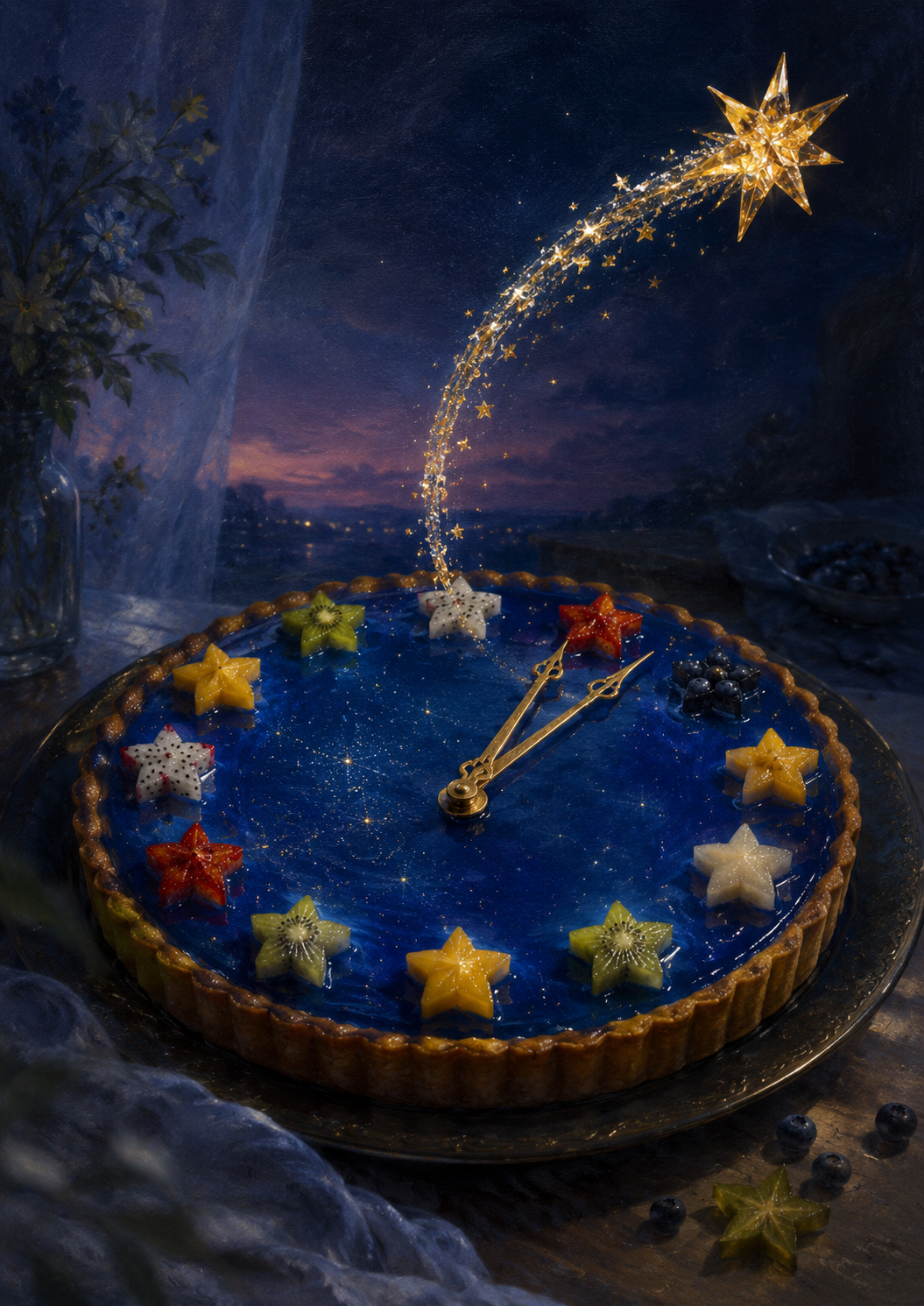
When Midnight Escapes the Clock
Critique
Introduction This blue fruit tart functions as clock and night sky. Twelve fruit stars mark its hours while golden hands point beneath a comet. Description A fluted shell contains glossy cobalt filling dusted with stars. Around the rim, twelve fruit stars alternate among mango, kiwi, strawberry, dragon fruit, and blueberries. Two gold clock hands extend from a central pivot. Near twelve, a crystal-gold comet rises in an arch of sugar threads and sparks. Evening flowers, curtain, berries, and landscape frame the tart. Analysis The circular tart and evenly spaced fruit establish a readable clock face. Radial hands interrupt that symmetry, while the comet continues their upward direction beyond the boundary. Blue glaze unifies sky and dial; saturated fruits create rhythmic color markers, and gold provides a hierarchy from hands to celestial climax. Glossy filling contrasts with baked crust and juicy fruit. The comet’s arch supplies depth and movement to the otherwise flat surface. Interpretation and Evaluation Hours become distinct flavors, suggesting time as varied experience rather than uniform measurement. The shooting star at midnight concentrates transition, wish, and disappearance into one dramatic event. Its theatrical height risks overpowering the tart, but the golden hands connect spectacle to the clock concept. Real fruit grounds cosmic fantasy in ripeness and perishability, reinforcing the theme that beautiful moments must be consumed or lost. Conclusion At first the comet captures attention. Longer viewing circles the twelve fruits and returns to the central pivot, recognizing a complete temporal system beneath the miracle. The dessert succeeds by joining repetition with exception: ordinary hours nourish the single luminous instant that seems to escape them.
Same Subcategory
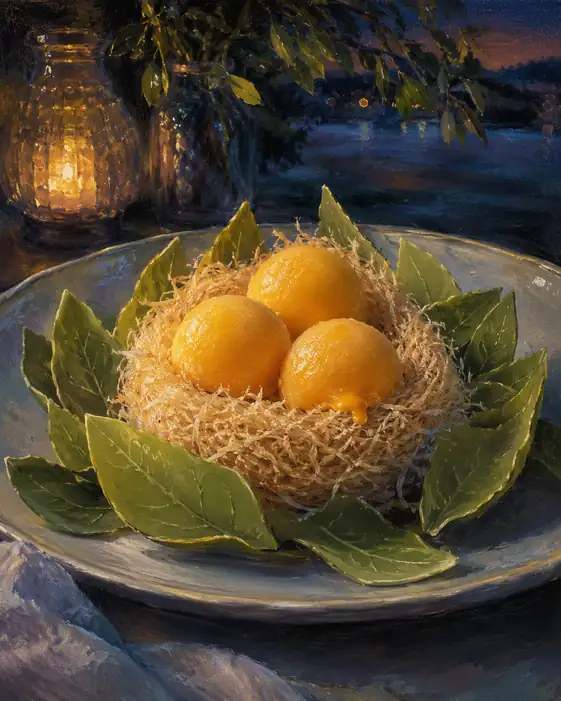 Three Small Suns Kept Through Night
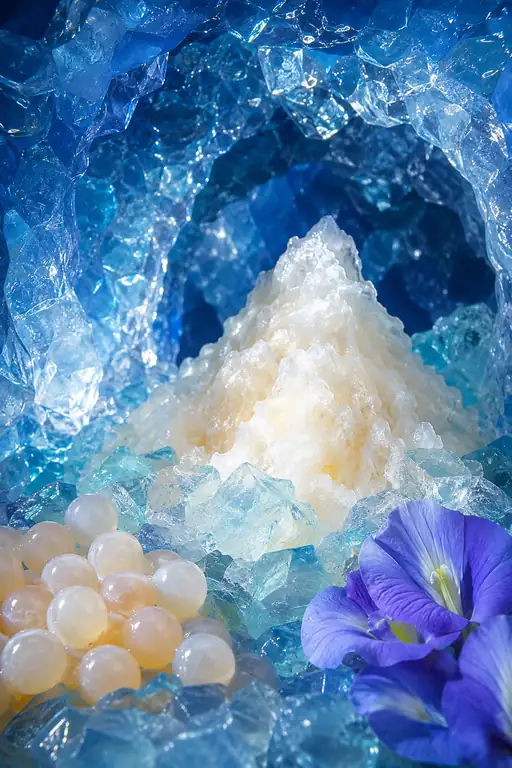 Warmth Sleeping Beneath Blue Ice
Similar Artworks
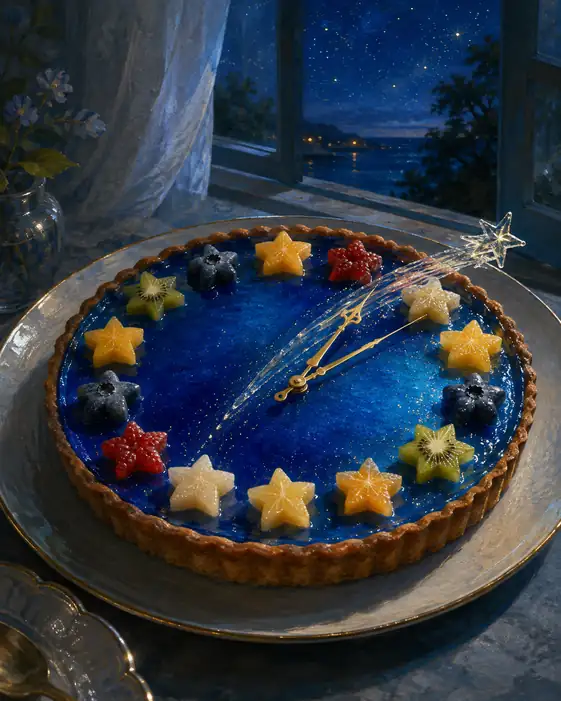 The Hour a Star Crossed My Table
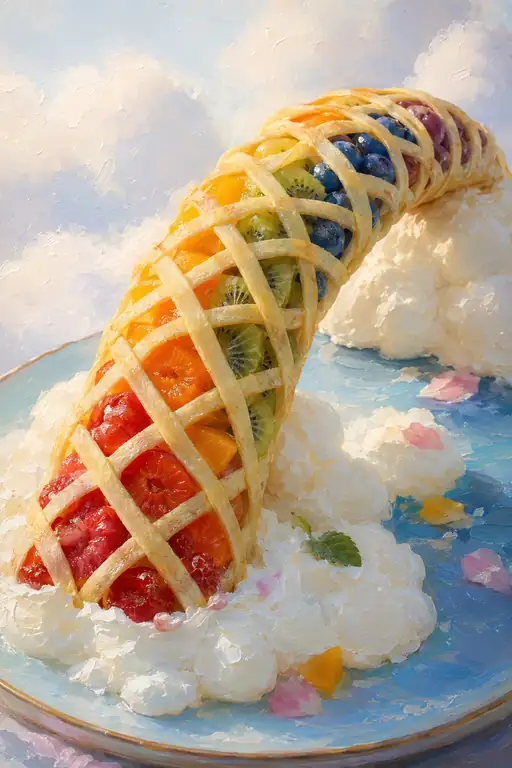 A Rainbow Baked across the Sky
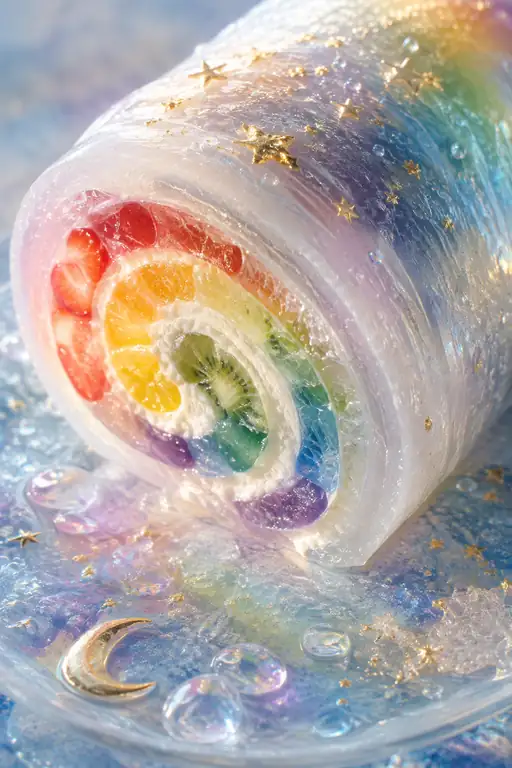 The Sky Rolled Itself Into Sweetness
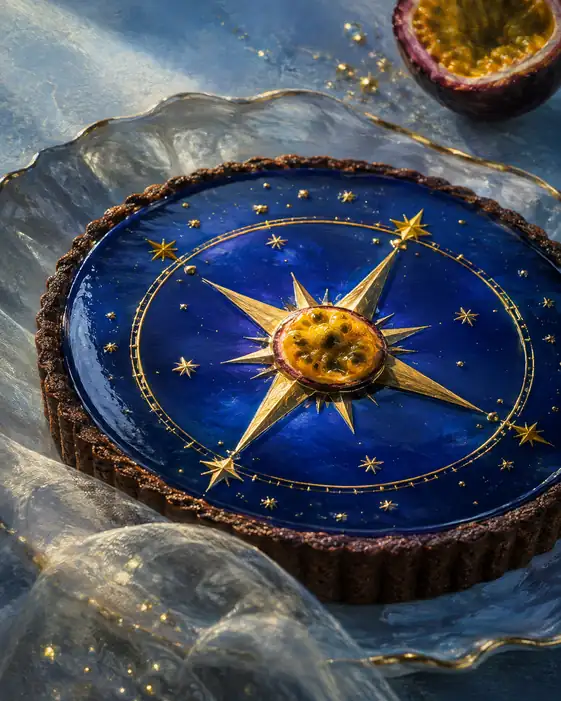 The Passion Sun Guides the Compass of Summer
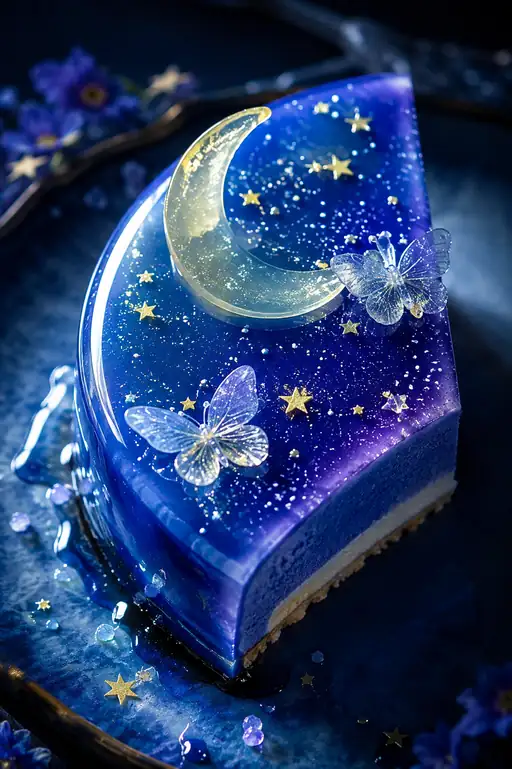 The Moon Sleeps inside a Blue Slice
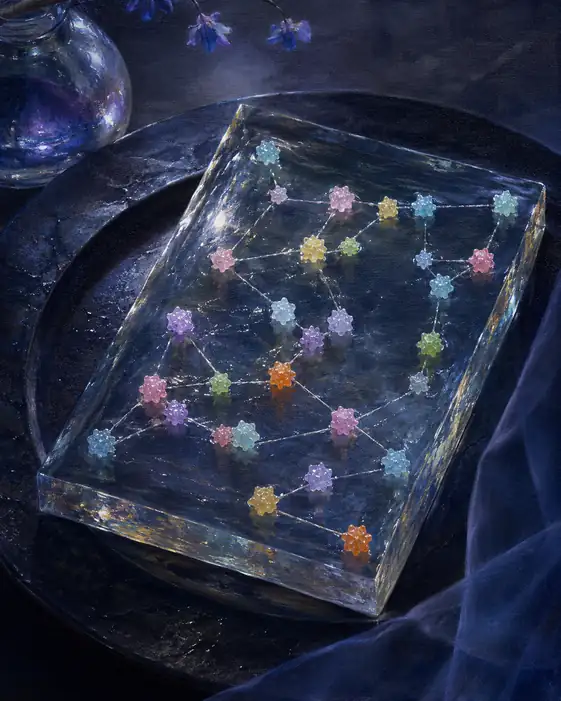 Stars Preserved in Clear Night
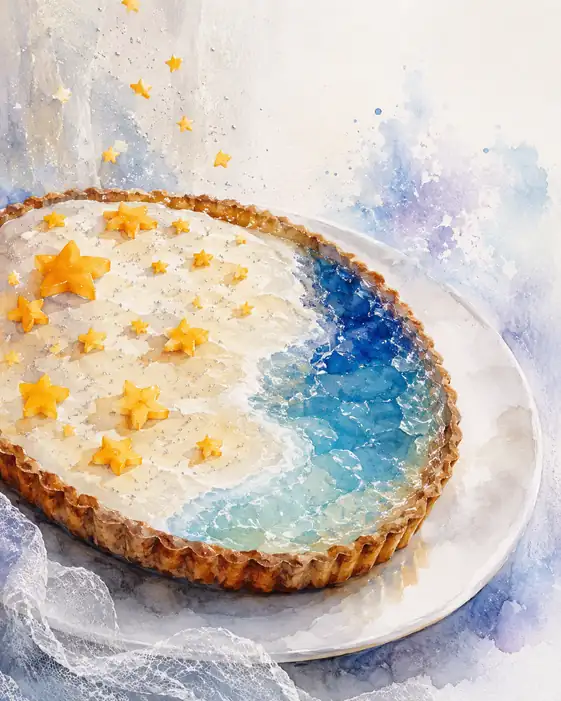 Stars Come Ashore for Cheese
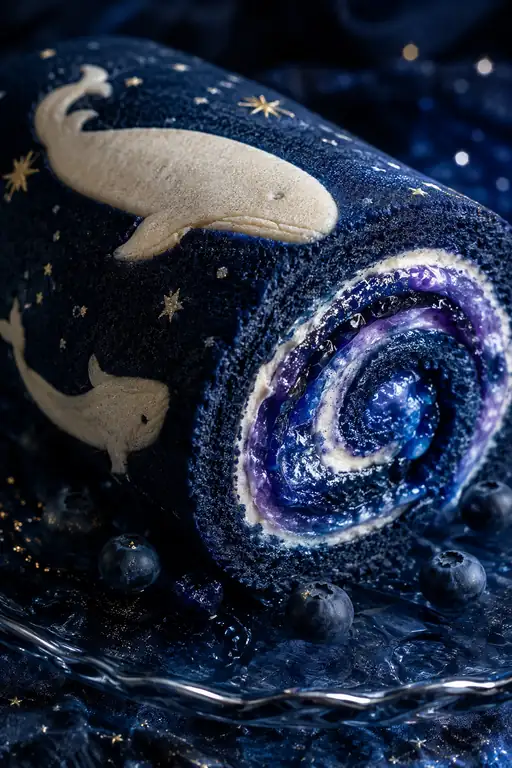 Whales Dream in the Spiral of Night
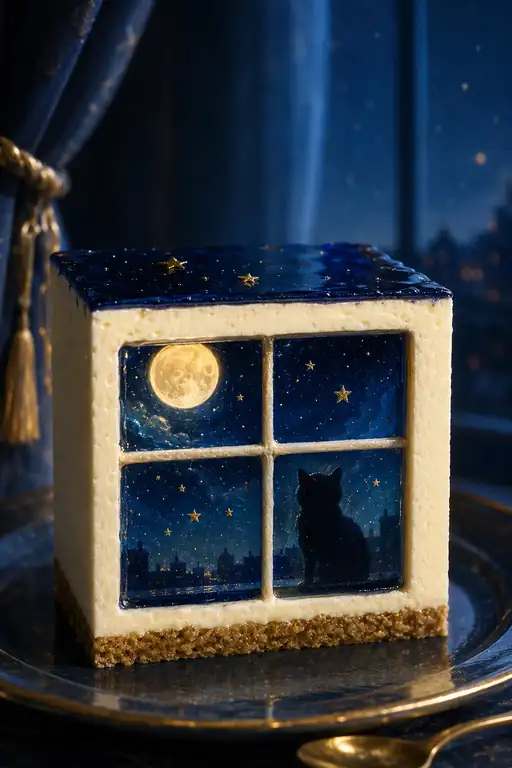 The Night We Watched the Moon Together
 When the Blue Moon Learned to Spark