A Letter from the End of Winter
Critique
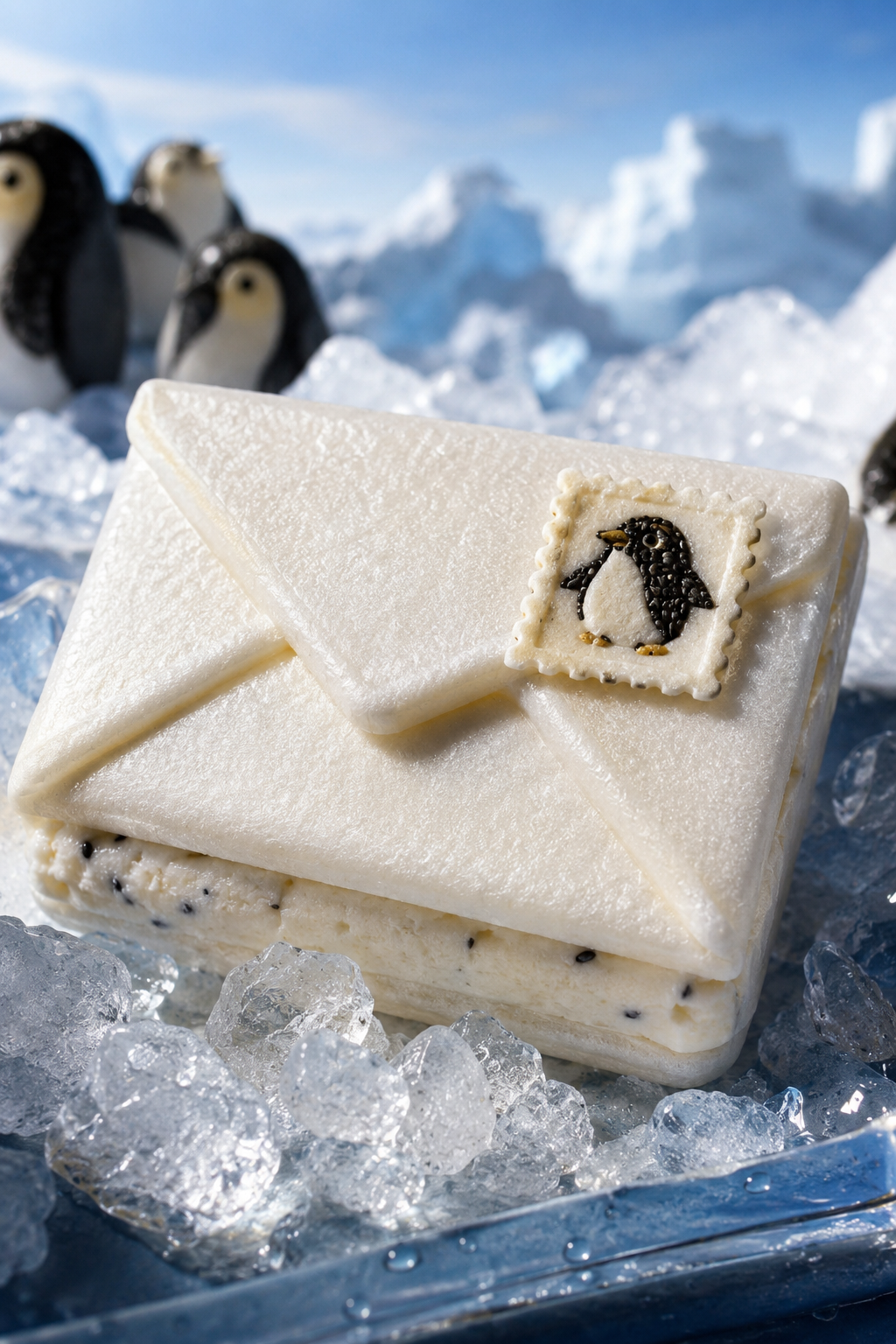
Introduction An edible envelope with a penguin stamp lies among ice. Three penguins wait beneath blue sky, joining communication, food, and polar habitat. Description The rectangular confection lies diagonally on translucent ice chunks. Thin ivory panels fold inward like an envelope flap, their surfaces carrying a fine crystalline sheen. A square, scalloped stamp at the upper right contains a black-and-white penguin with a yellow beak and feet. The thick side reveals a creamy filling dotted with black seeds. Blue ice frames the foreground while distant penguins and snowy ridges soften into blur. Analysis Overlapping triangular folds make the envelope immediately legible and guide attention toward the stamp. The dominant whites are separated through temperature and texture: warm cream contrasts with blue ice and sky. Black seed flecks connect the filling to the penguin’s dark plumage, while tiny yellow accents animate the limited palette. Smooth folded sheets, porous filling, embossed stamp, wet ice, and soft feathers remain distinct. Shallow focus gives the confection authority while retaining its environmental story. Interpretation and Evaluation The image imagines food as a message delivered from a distant climate. The penguin stamp identifies both sender and destination, and the waiting birds make the sealed object feel genuinely addressed. Because the filling contains black marks, even the interior seems to carry traces of its makers. The metaphor is legible without text, a notable strength. Precise geometry and controlled whites support an original union of postal ritual and dessert. Conclusion What begins as a charming novelty becomes a meditation on contact across distance. The unopened flap preserves anticipation, while melting ice implies that delivery cannot wait forever. Clear symbolism, tactile precision, and the quiet exchange between foreground emblem and background birds make the work complete.
Same Subcategory
 The City Waiting to Be Born
 Infinity Blossoms Close to Me
Similar Artworks
 A Letter from the Edge of Winter
 Summer Looked Back at Me
 After the Rainbow, I Rest
 White Rabbits Build a Ladder to the Moon
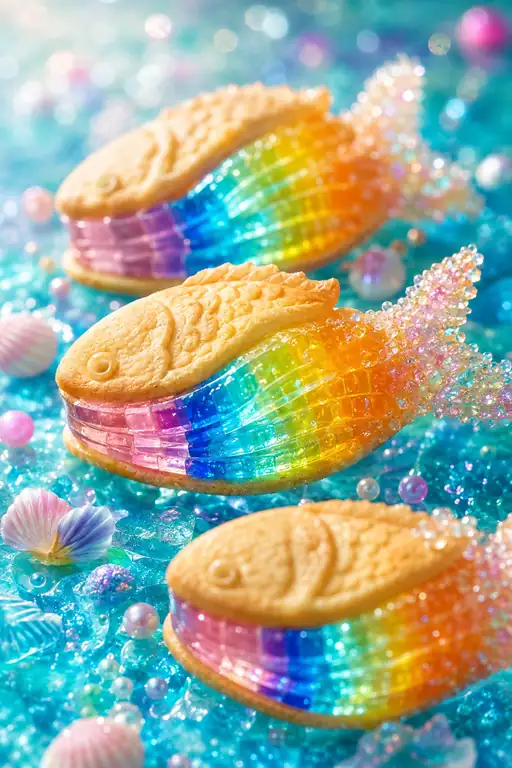 Rainbow Fish Carry the Festival Home
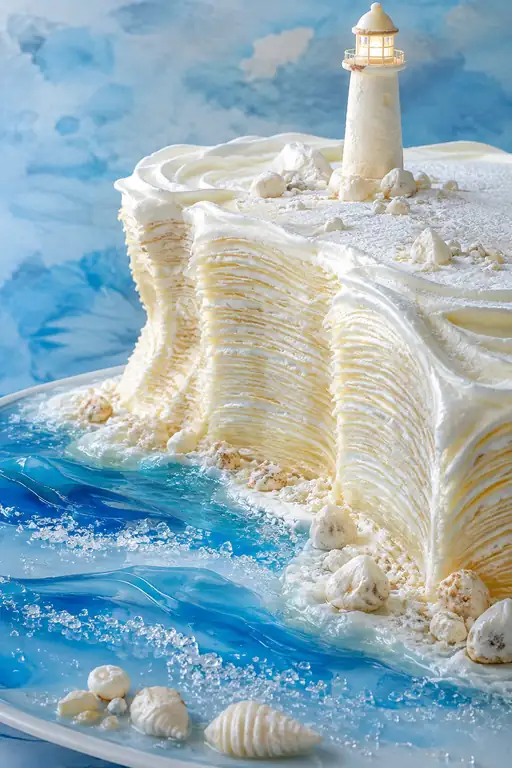 The Lighthouse Built from a Thousand Layers
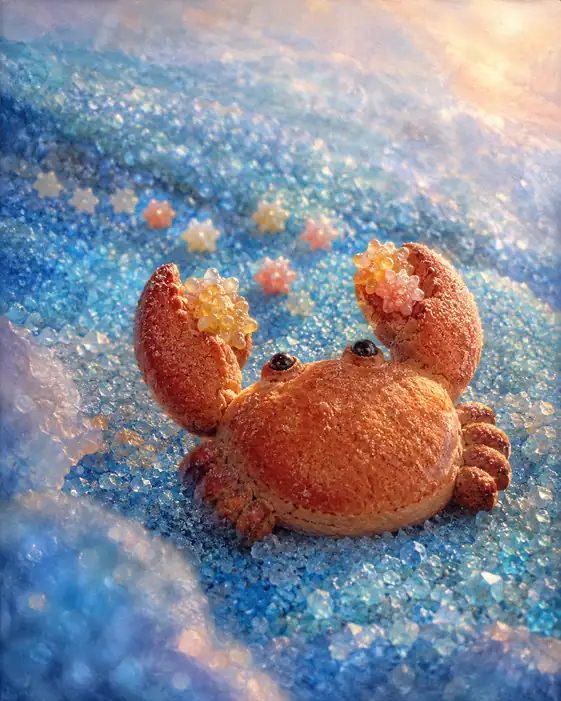 Gifts Gathered from the Morning Tide
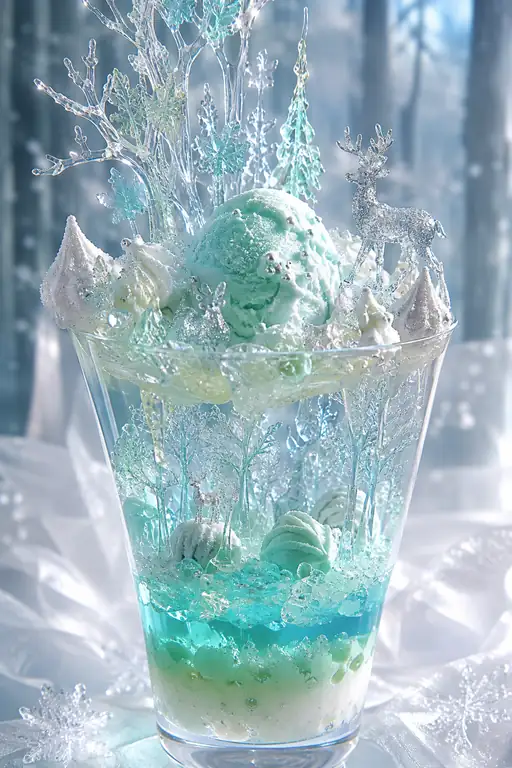 Winter Grows Beyond the Glass
 I Brought You Stars from the Shore
 Together Through the River of Colors