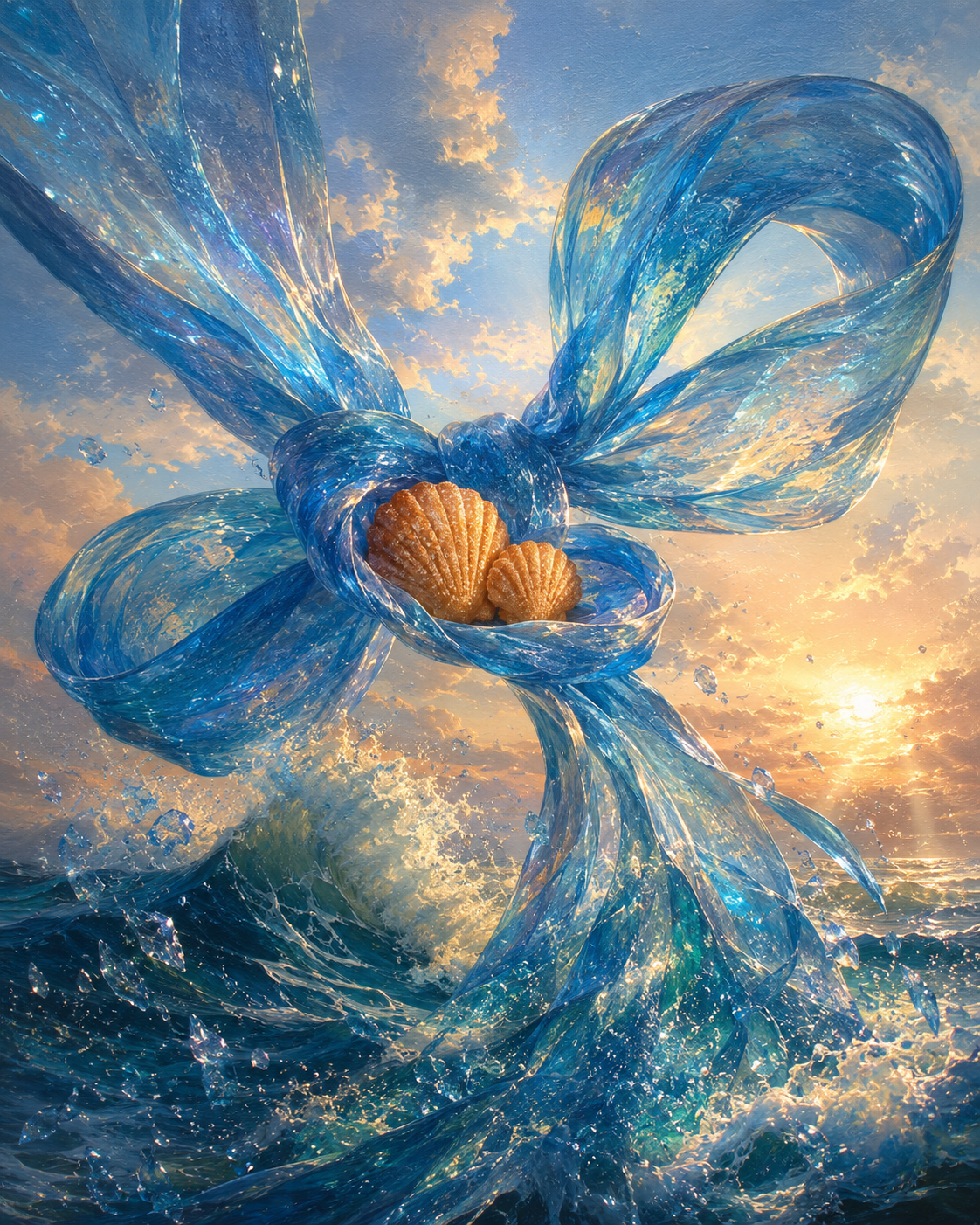
The Sea Ties Itself into a Blue Bow
Critique
Introduction This confection ties transparent blue water around two golden shell cakes. Above a stormy sea at sunset, the edible gift appears formed from the ocean itself. Description At center, two ridged shell cakes glow gold inside a translucent cobalt knot. Four loops and trailing ends twist outward, resembling gift ribbon and cresting water. Below, dark waves break into spray and crystal droplets. A low sun burns at right, sending amber highlights through the bands. Analysis The knot fixes the composition while loops radiate diagonally and repeatedly reverse direction. Their overlapping arcs create depth and imply continuous motion around the still shells. Saturated blue dominates, opposed by the cakes and sunset in orange-gold. Transparent bands contain bubbles, striations, and refracted light, making water read as flexible glass. The low horizon and close scale monumentalize the bow; spray connects its descending tails to the actual sea. Interpretation and Evaluation A gift bow normally decorates an external package, but here the sea becomes both wrapping and spectacle. The modest shell cakes act as the precious contents of an enormous natural offering. Their baked opacity is crucial against the weightless blue material. The image is deliberately impossible, and the ribbons’ mass may overwhelm appetite, yet their knot provides convincing structural logic. Sunset warmth prevents the scene from becoming cold or merely technical. Conclusion At first the giant aqueous bow astonishes through scale. Longer viewing recognizes the small cakes as the stable emotional center around which turbulence organizes itself. The work succeeds by making abundance protective: violent water is retied into a gesture of giving, without losing its energy.
Same Subcategory
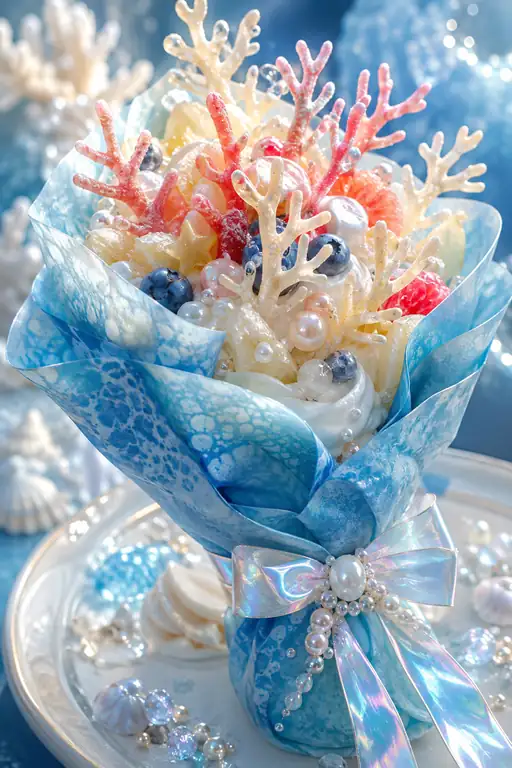 A Reef Gathered as a Gift
Similar Artworks
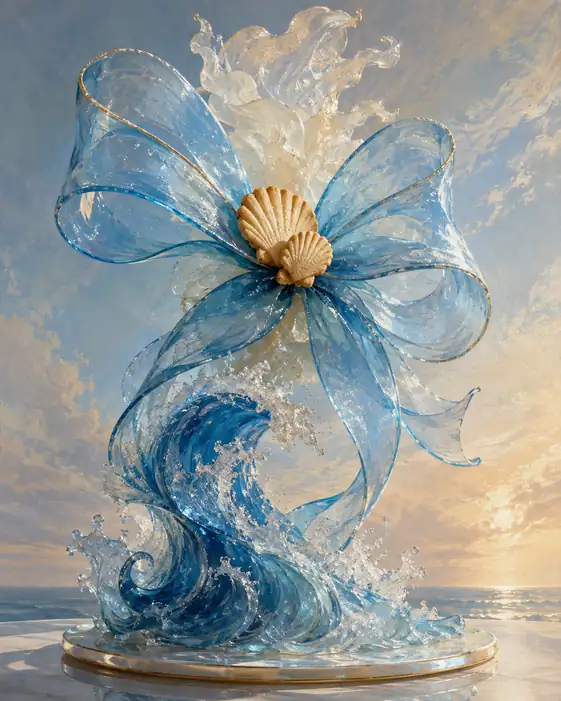 The Sea Tied with Sunlight
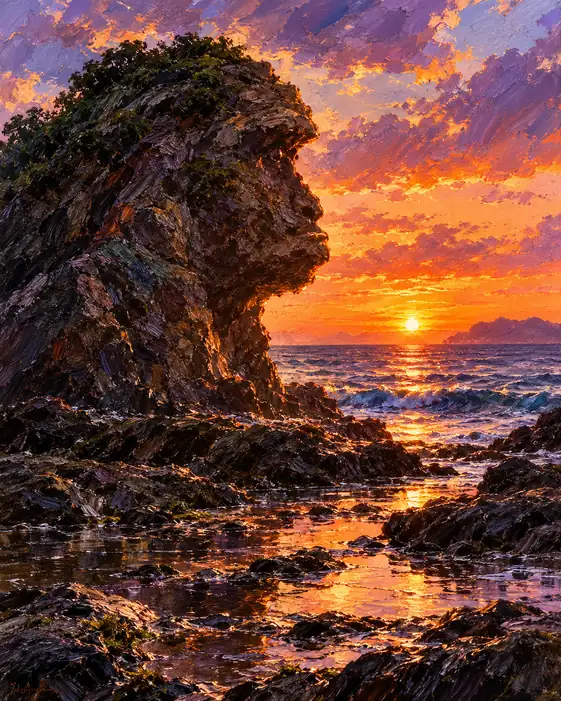 The Sea Carved a Face for Sunset
 Collision of Eternity
 The Cloud Builds a Palace of Light
 The Long Path to the Evening Star
 The Bridge Between Thunder and Light
 Whispers of the Eternal Tide
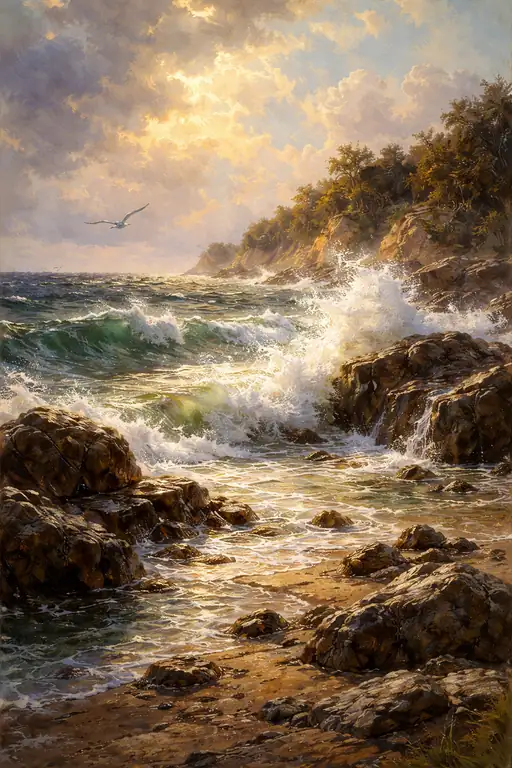 Eternal Clash of Sea and Stone
 Where Two Rainbows Return to the Sky
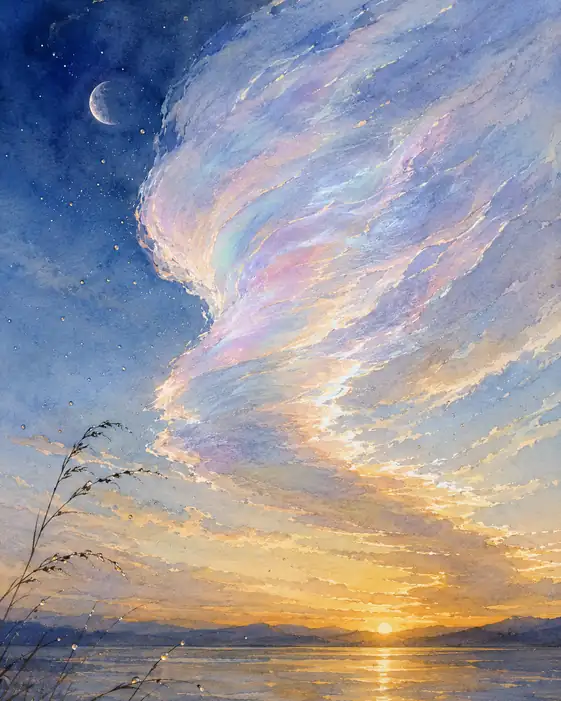 The Sky Remembers How to Fly