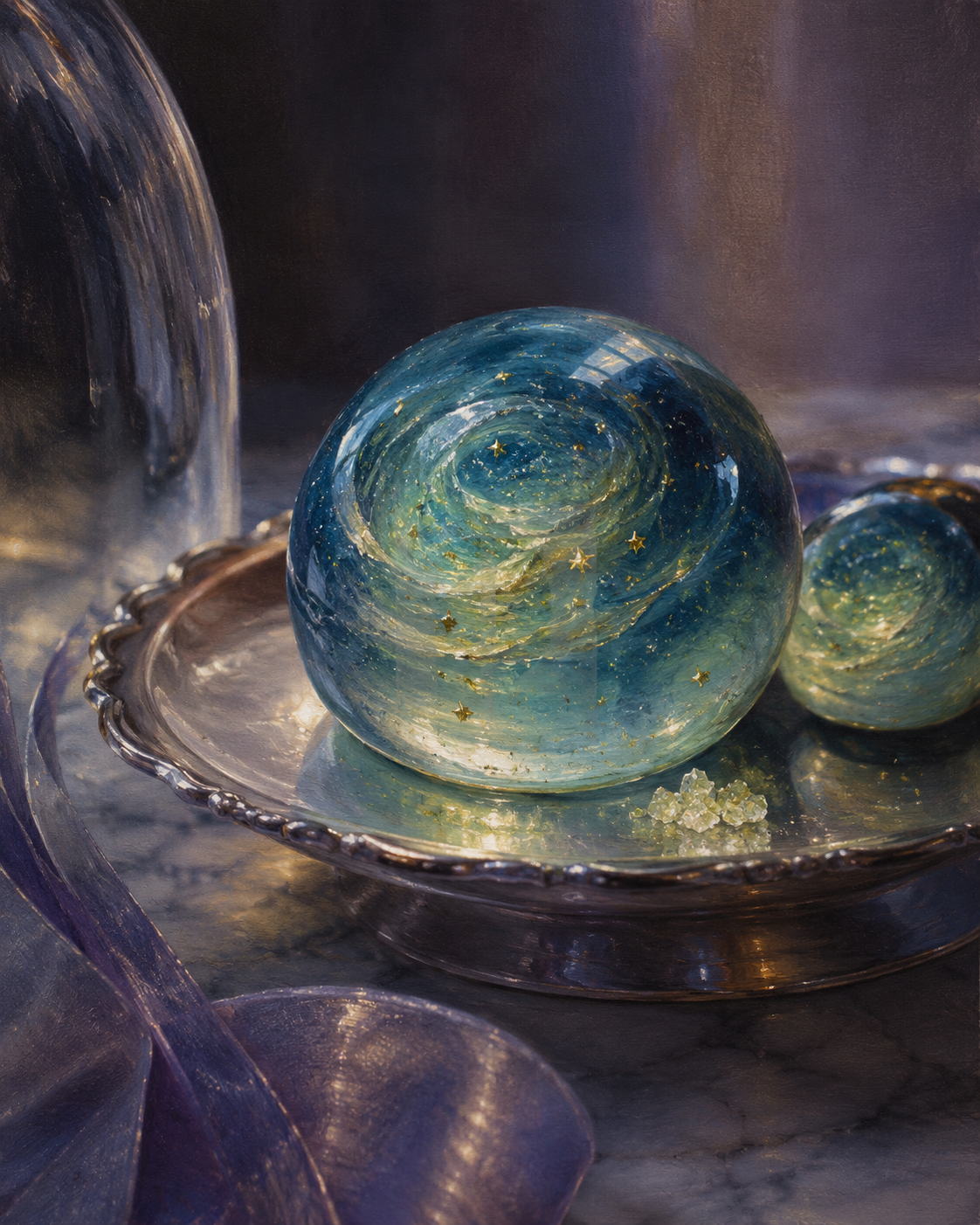
Glass Planets Rest after the Rain
Critique
Introduction Two translucent spheres hold spiral galaxies in blue-green sugar. On a silver tray among violet forms, they resemble planets, crystal balls, or compact universes. Description A large sphere dominates the center, with a smaller orb behind at right. Inside, turquoise, navy, and cream sweep around a spiral center. Gold stars and flecks scatter through the transparent mass. Pale crystals rest before the larger sphere. Both sit on a reflective scalloped stand; blurred purple vessels curve along the edges. Analysis The unequal spheres create depth through repetition and scale. Circular internal strokes reinforce their outer contours, while the spiral draws the eye inward against the outward bulge of glassy surfaces. Cool teal dominates, warmed by gold particles and reflections from the tray. Transparency permits several layers to occupy one volume; strong rectangular highlights establish the smooth shell. The surrounding curved vessels echo the orbs without competing sharply. Interpretation and Evaluation The dessert compresses a galaxy into something held and consumed, converting astronomical distance into sensory closeness. It also evokes divination, since the viewer peers into a crystal ball whose future is cosmic rather than personal. Gold stars verge on literal illustration, but varied flecks dissolve into believable depth. The smaller orb is useful as comparison, proving the design is a family of worlds rather than one isolated trick. Conclusion At first the large sphere impresses through polished transparency. Longer viewing follows the milky spiral beneath its surface and recognizes depth as the true subject. The piece succeeds by making the universe feel simultaneously contained and unreachable: its boundary is close, but its visual center continues to recede.
Same Subcategory
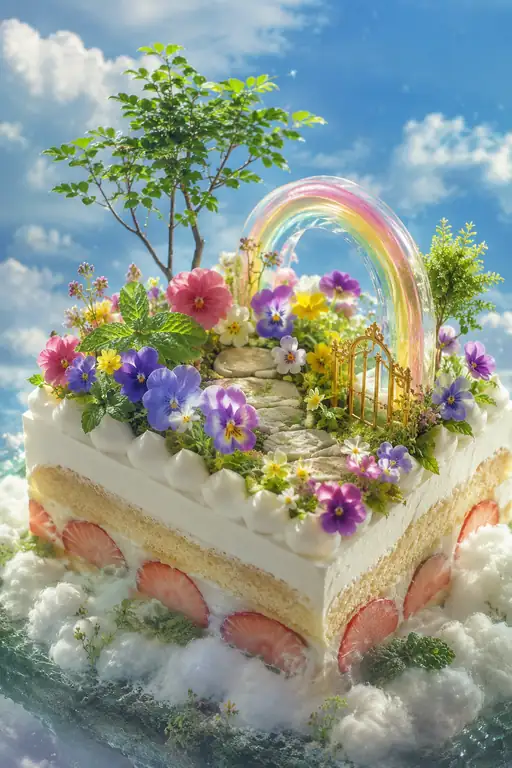 A Rainbow Garden Rises from the Cake
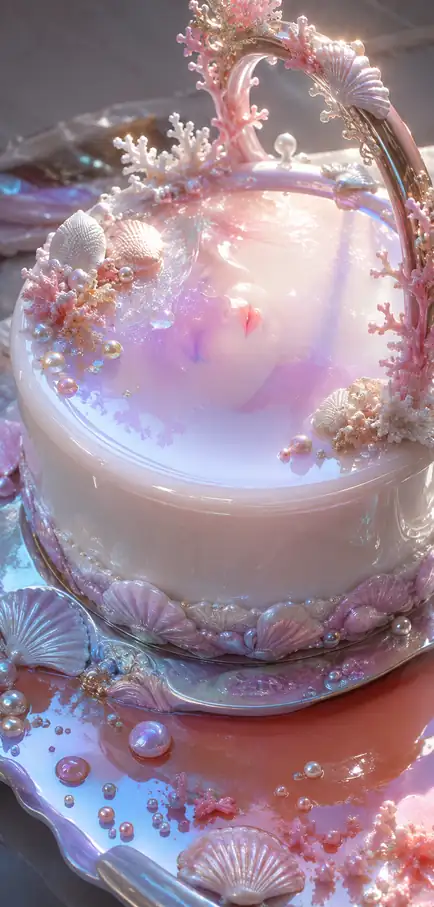 The Pink Moon Wakes in Its Silver Nest
Similar Artworks
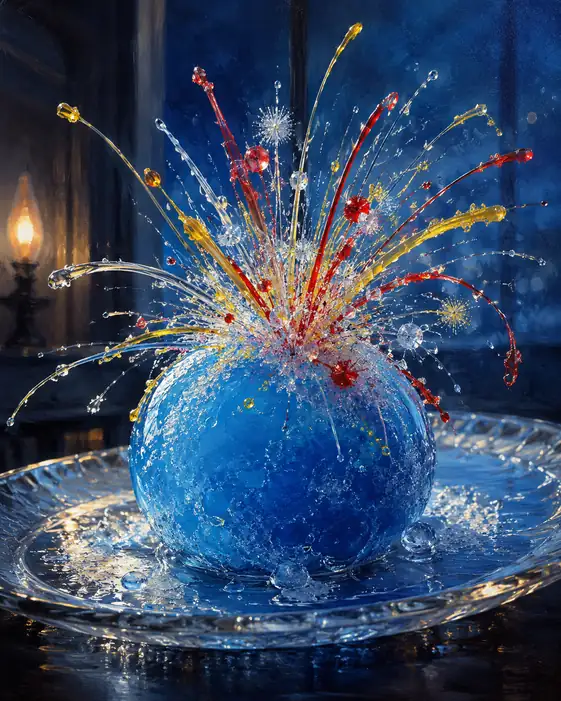 When the Blue Moon Learned to Spark
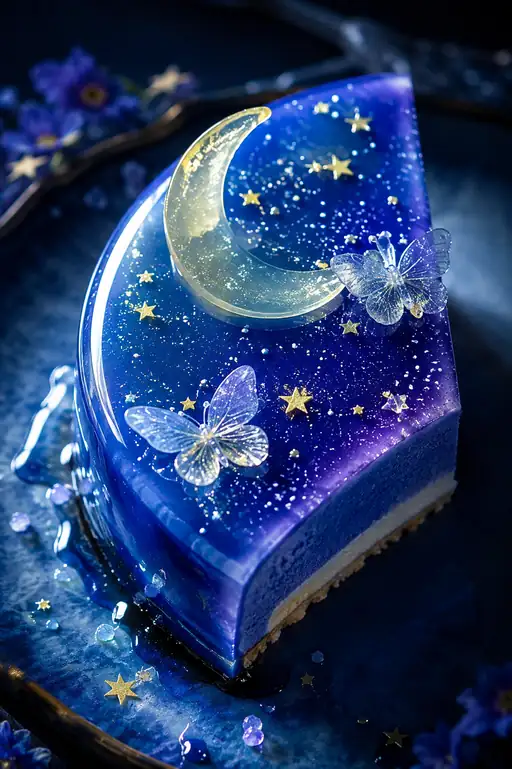 The Moon Sleeps inside a Blue Slice
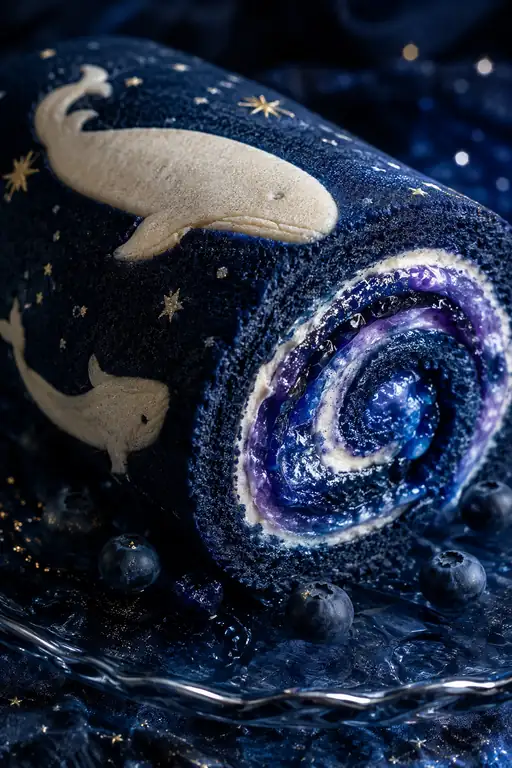 Whales Dream in the Spiral of Night
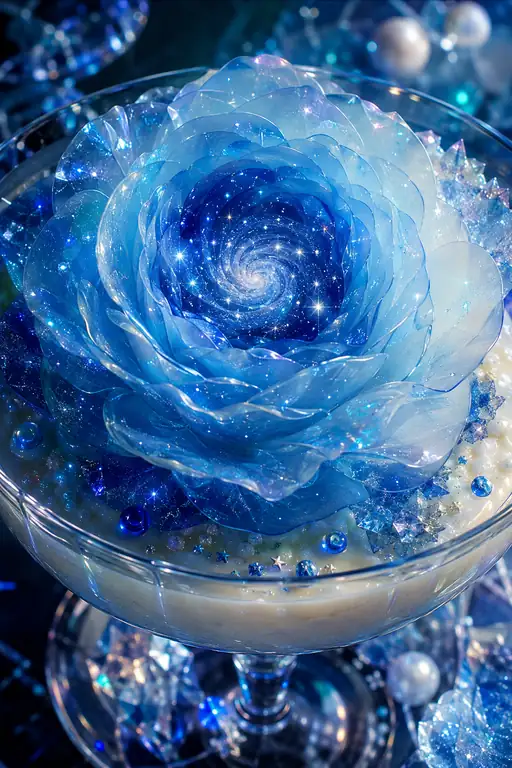 A Rose Blooming Beyond Infinity
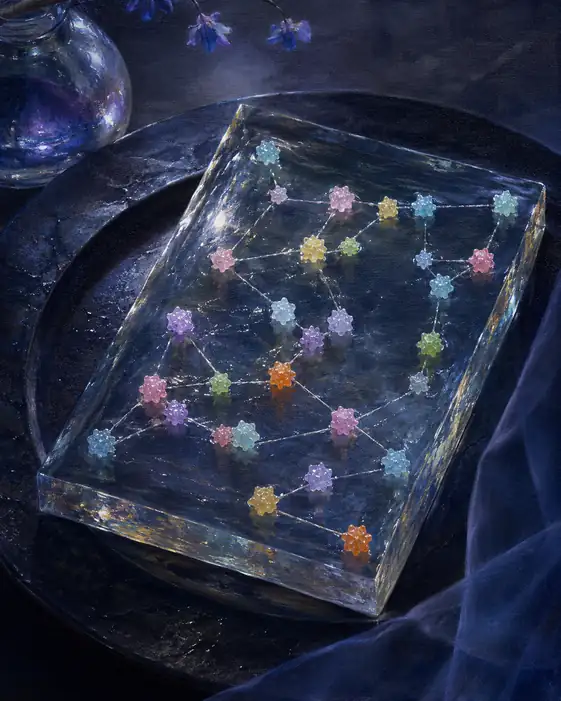 Stars Preserved in Clear Night
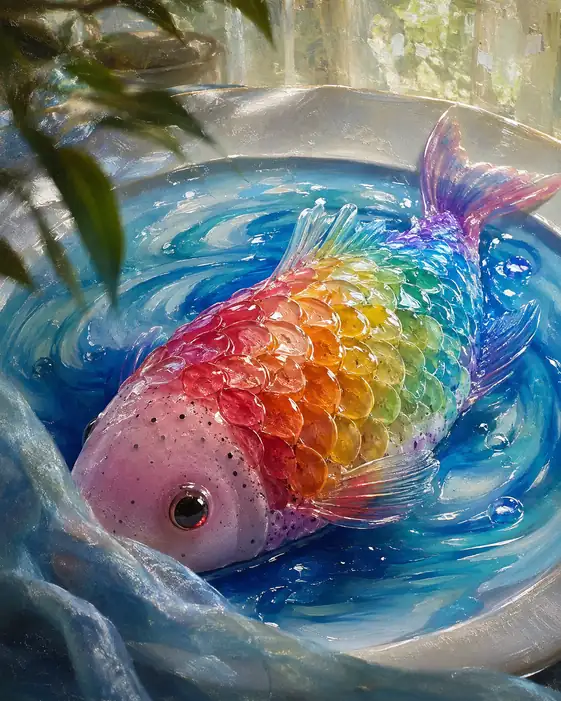 Rainbow Scales Learn to Swim
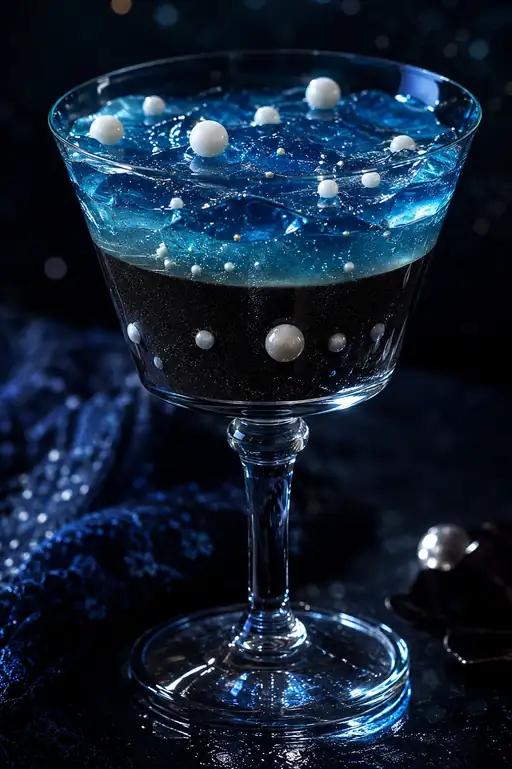 Pearls Sink into the Deepest Night
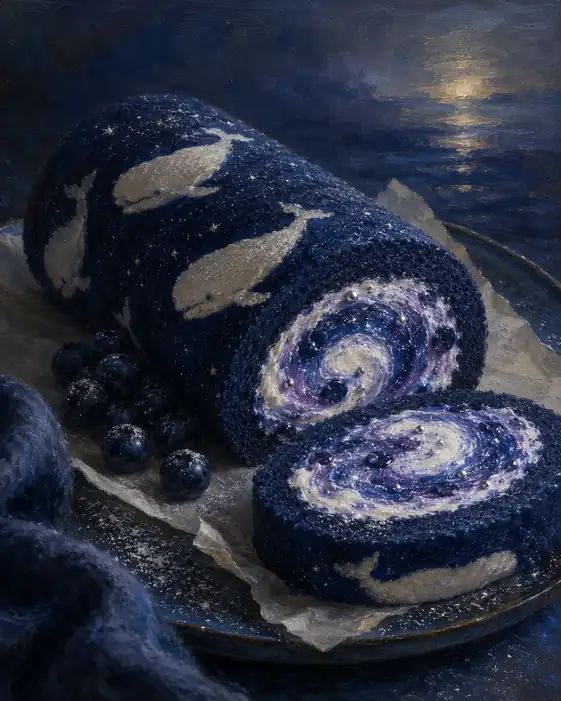 Where Moonlit Whales Circle Home
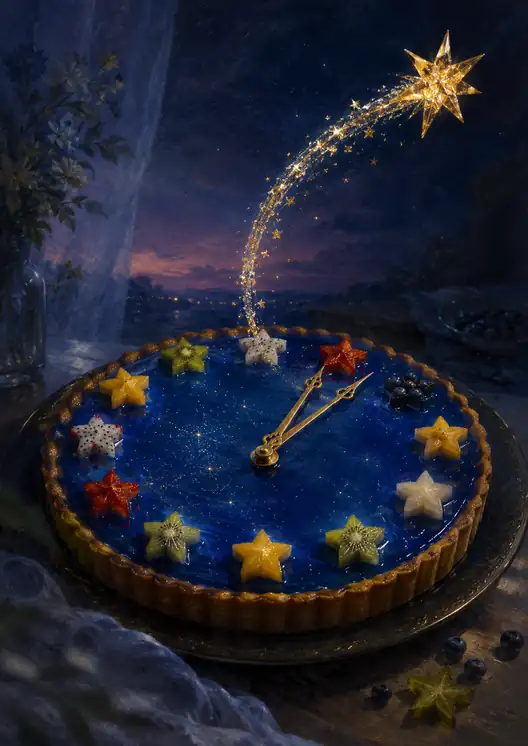 When Midnight Escapes the Clock
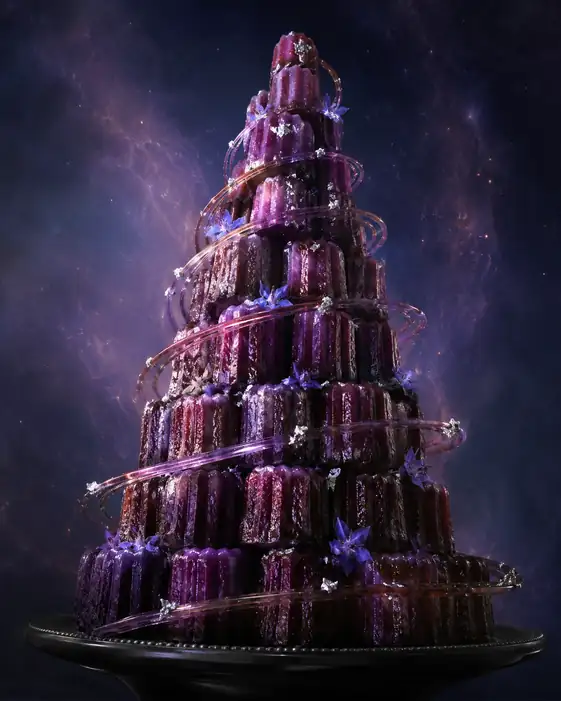 The Canele Tower Summons the Night