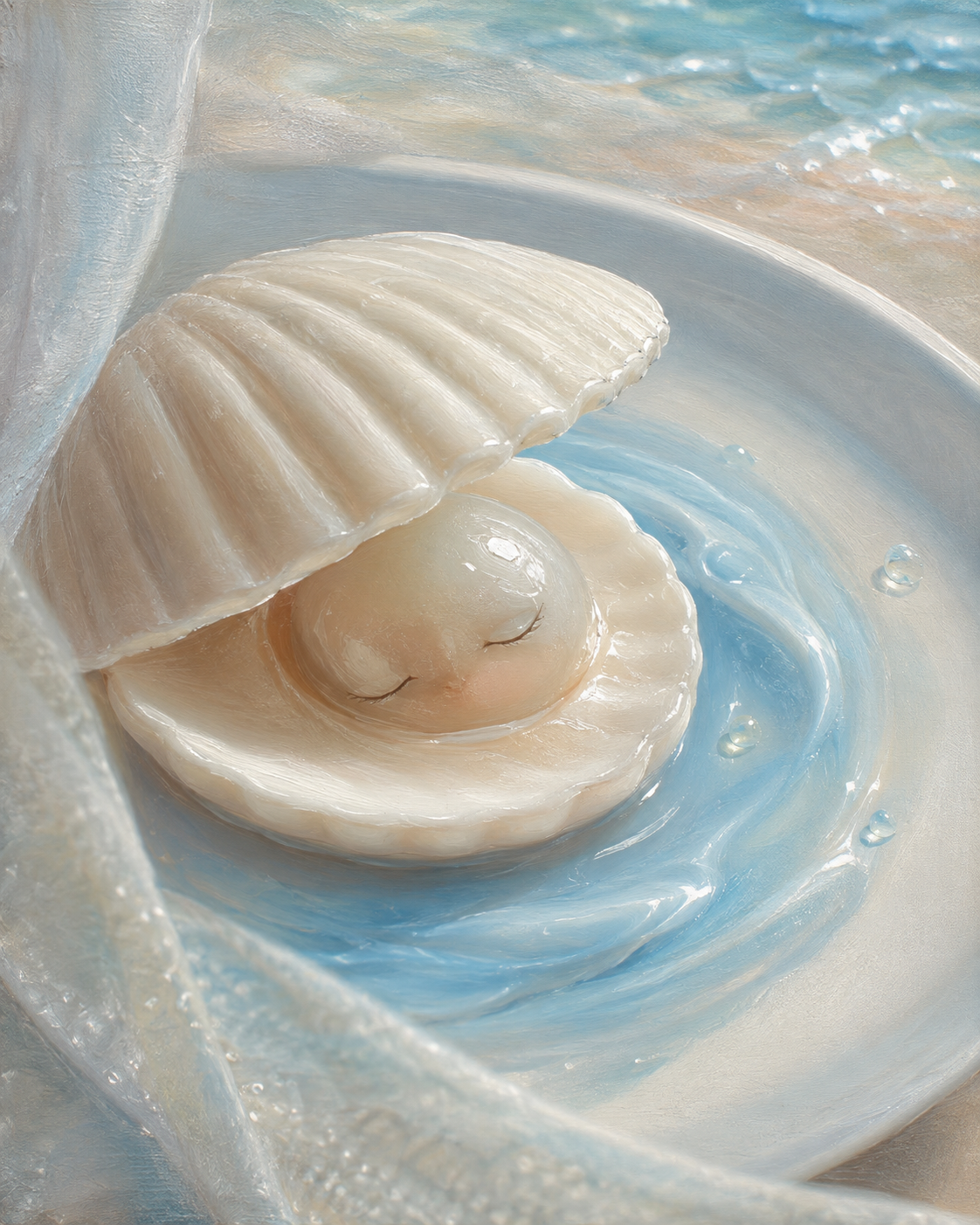
The Pearl Keeps the Sound of the Tide
Critique
Introduction This pale confection imagines a pearl asleep inside an open shell. Facial features transform treasure into a vulnerable being, while blue water cradles both forms. Description An ivory scallop opens near the center, its ridged upper valve raised like a canopy. Below rests a glossy pearl with closed lashes and peach cheeks. The shell floats in translucent blue water whose ripples circle outward. Clear droplets punctuate the pale surface. White fabric or sugar sheets frame the scene, while blue-and-cream light shimmers above. Analysis The composition relies on nested curves: pearl, scalloped valves, ripple, and enclosing vessel. Repetition makes the scene protective. An ivory, blush, and blue palette reduces contrast, so dark eyelashes become the smallest but strongest focal marks. Glossy pearl and water contrast with brushed shell ridges. The diagonal opening creates depth and shields the face. Interpretation and Evaluation Pearls conventionally signify rarity and perfection; giving this one a sleeping face replaces display value with personhood. The shell reads as parent, bed, and shelter, turning possession into care. Anthropomorphism could easily become sentimental, but restrained features and broad empty space preserve calm. The nearly monochrome treatment risks merging shell and pearl, yet that kinship supports the idea that the sleeper belongs to its refuge. Sparse droplets extend the dream without clutter. Conclusion At first the closed eyes produce immediate affection. Longer viewing shows that tenderness is built through form: every larger curve shelters a smaller one. The confection succeeds by presenting preciousness not as brilliance for public admiration, but as a quiet life allowed to rest securely within surrounding layers.
Same Subcategory
 The Hour a Star Crossed My Table
 A Rainbow Garden Rises from the Cake
Similar Artworks
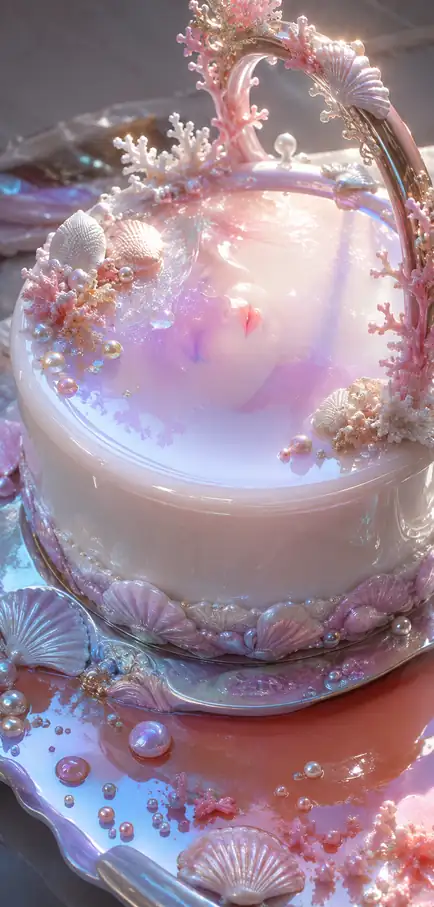 The Pink Moon Wakes in Its Silver Nest
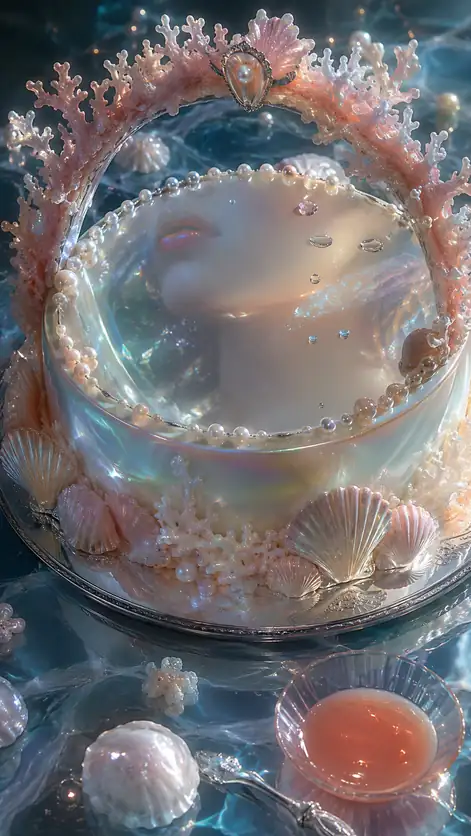 The Sea Remembers My Reflection
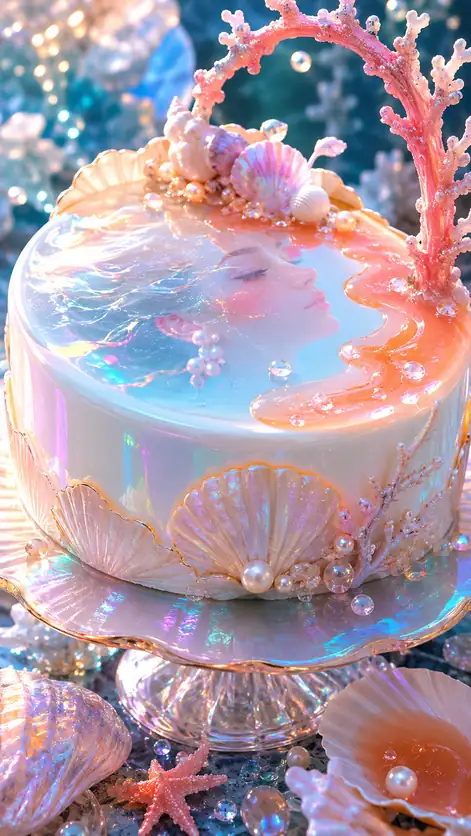 Dreaming Beneath the Tides of Light
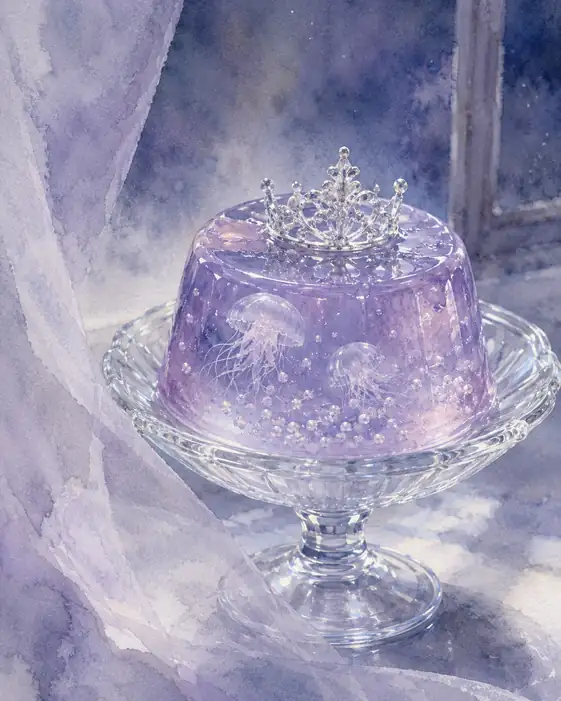 The Crown of a Silent Kingdom
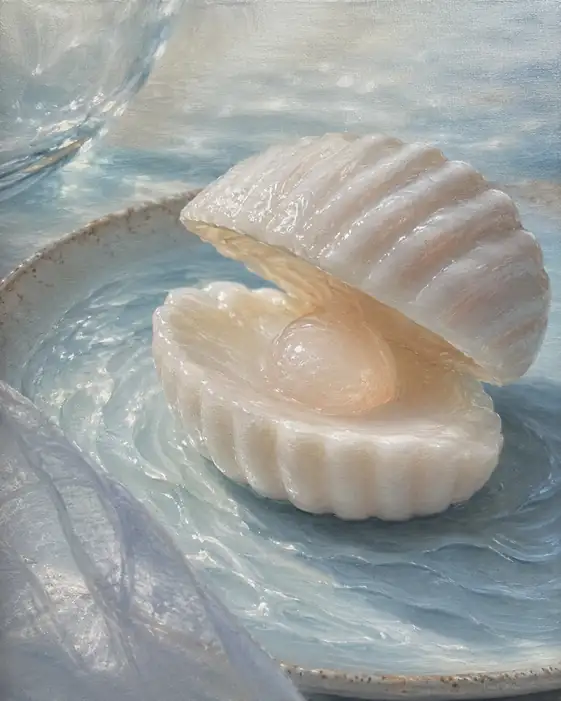 The Quiet Courage to Open
 The Stillness All Lives Choose
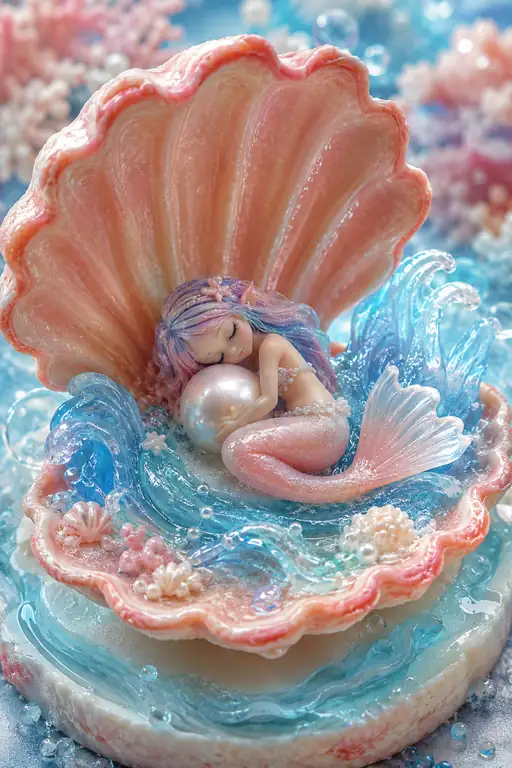 The Mermaid Sleeps Where Pearls Are Born
 For the One I Have Yet to Meet
 The Moonbow Hidden in Every Fold
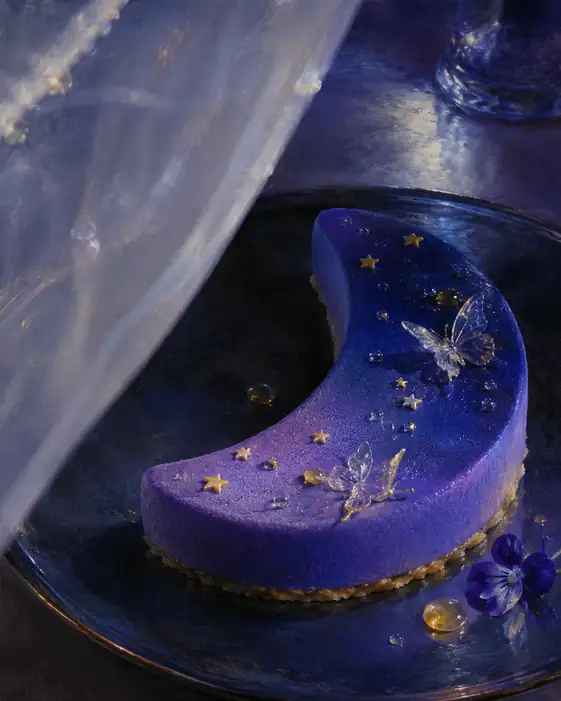 Where Night Learns to Flutter