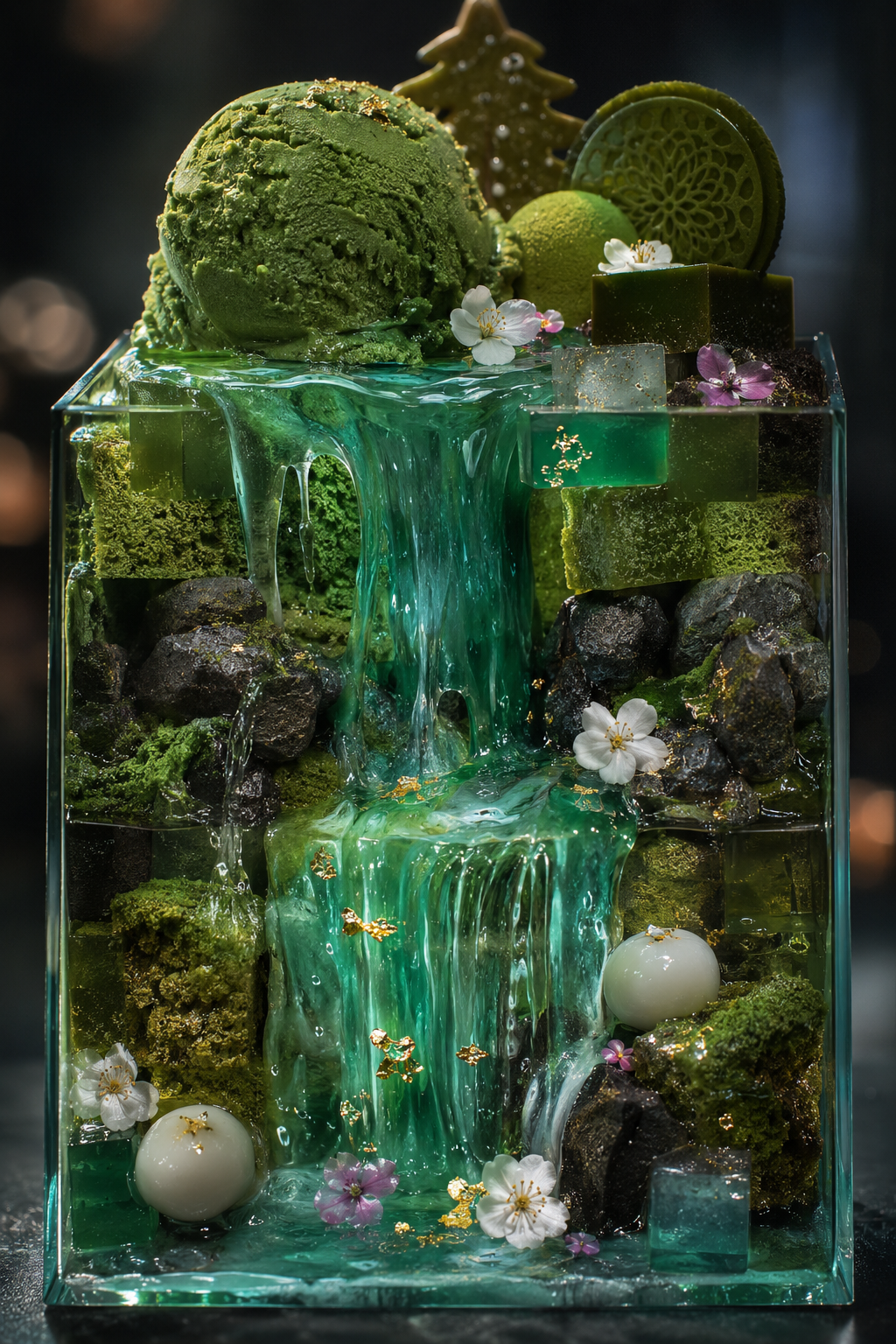
A Green Waterfall Hidden in Dessert
Critique
Introduction This boxed confection constructs a ravine from matcha, dark stones, flowers, and turquoise jelly. Its waterfall appears arrested yet fluid, making nature seem compressed rather than represented. Description A clear box contains two turquoise cascades. They flow between black rocks, mossy cake, translucent olive cubes, and white sweets. Gold leaf and blossoms dot the terrain. Above sit green ice cream, a smooth sphere, a matcha block, a patterned wafer, and a tree-shaped piece. Clear jelly folds over ledges and pools below. Analysis The falls establish a central route from crowded summit to open foreground. Cubes and rocks form alternating banks, while diagonal ledges create stages. Emerald, olive, and black dominate; white spheres and flowers provide relief, and gold leaf supplies highlights. Crumbly cake contrasts with glasslike jelly, making moving water legible. The box frames the landscape and reveals its construction. Interpretation and Evaluation The dessert treats a garden waterfall as an accumulation of flavors rather than a distant view. Matcha’s vegetal bitterness plausibly supports the moss imagery, while jelly supplies coolness and flow. The dense top risks visual congestion, especially among unrelated geometric and botanical motifs. Yet the waterfall cuts a lucid channel through that abundance, and repeated green values unify the parts. Flowers scale the scene effectively, turning ordinary sweets into boulders and hills. Conclusion At first this appears to be maximal decoration packed into a box. Sustained viewing follows the turquoise descent and discovers a strong spatial sequence. Its success lies in converting texture into geography: porous cake becomes moss, dark confection becomes rock, and transparent jelly becomes the force that organizes every level.
Same Subcategory
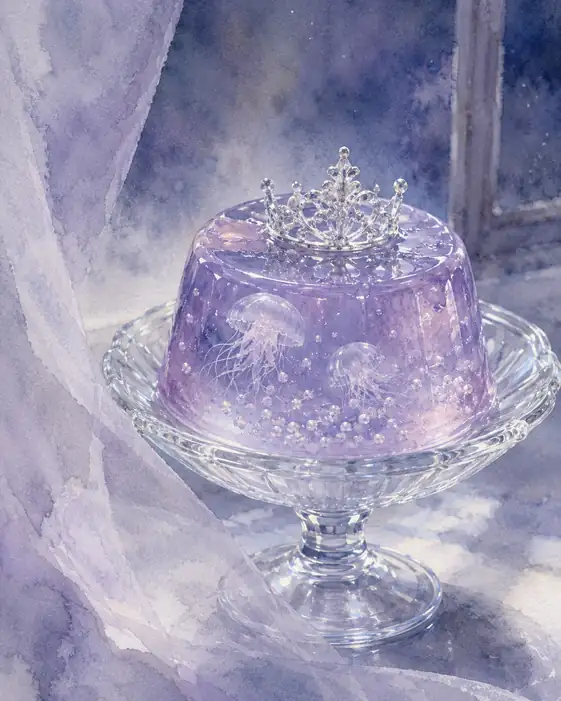 The Crown of a Silent Kingdom
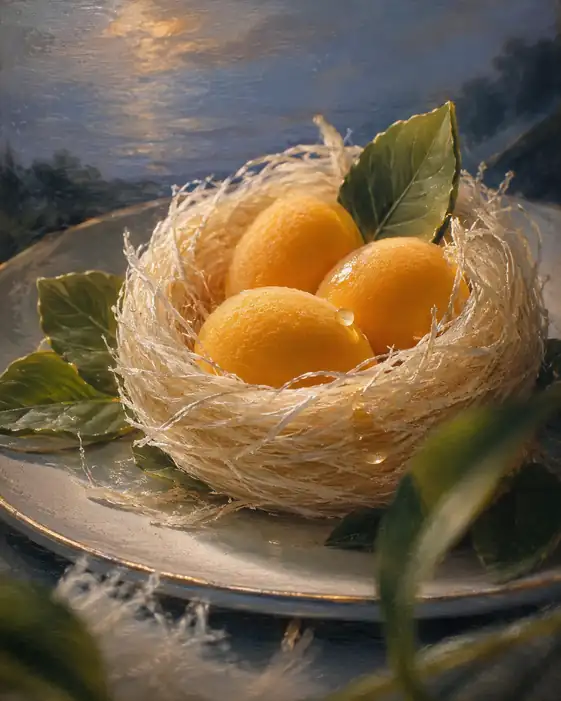 Fragile Hands That Hold Tomorrow
Similar Artworks
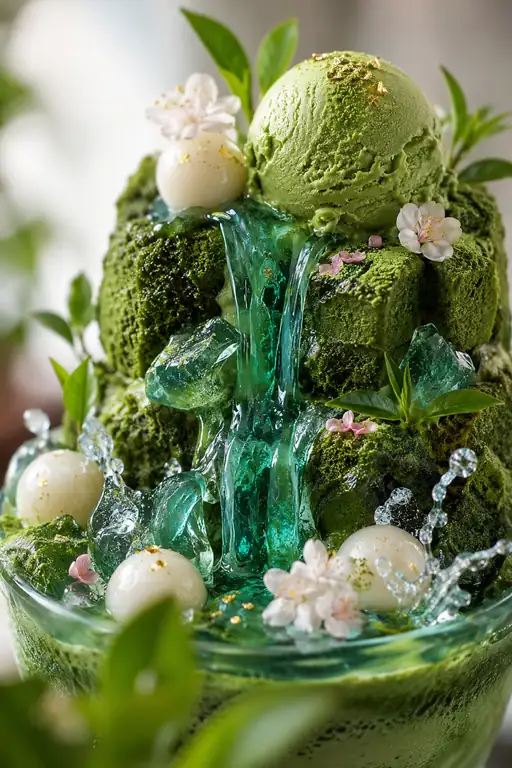 The Hidden Spring Remembers Spring
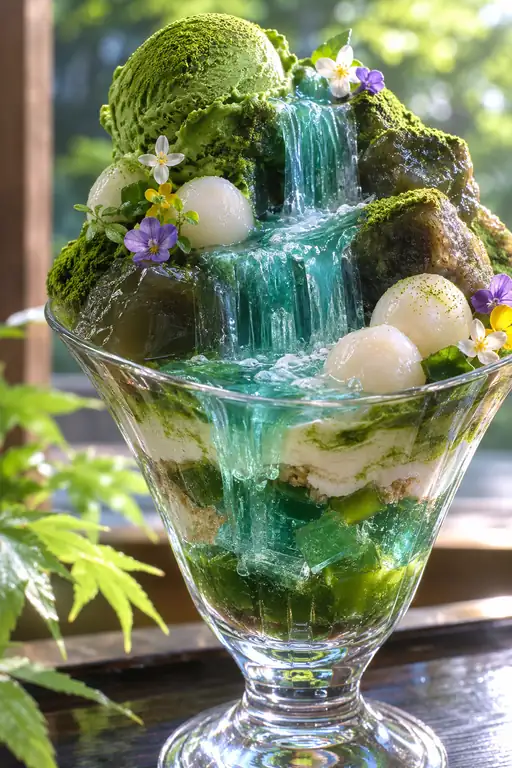 Where Sweetness Learns to Flow
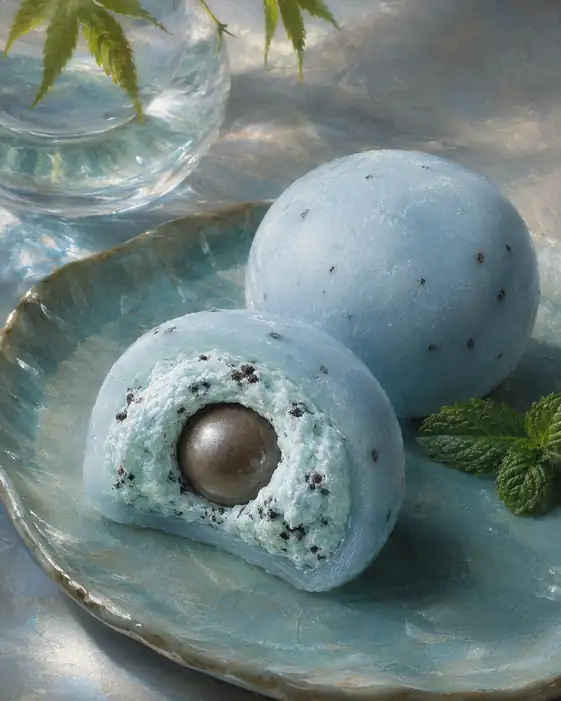 The Secret at the Heart of Coolness
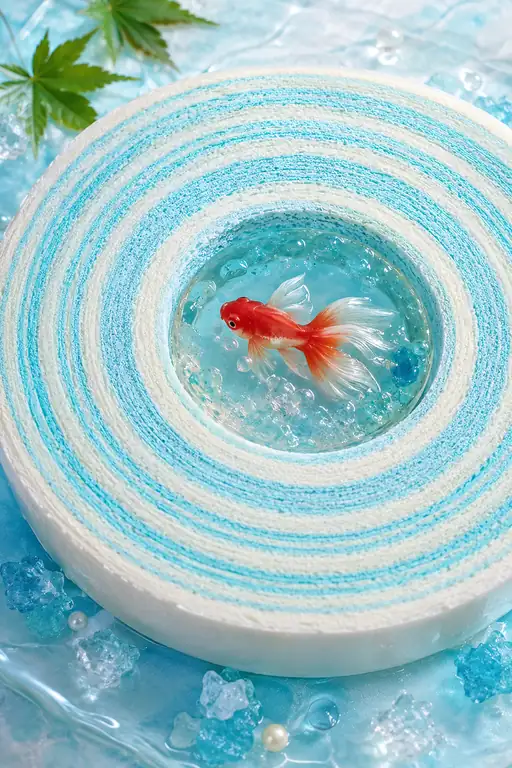 One Red Heart Inside the Ripples
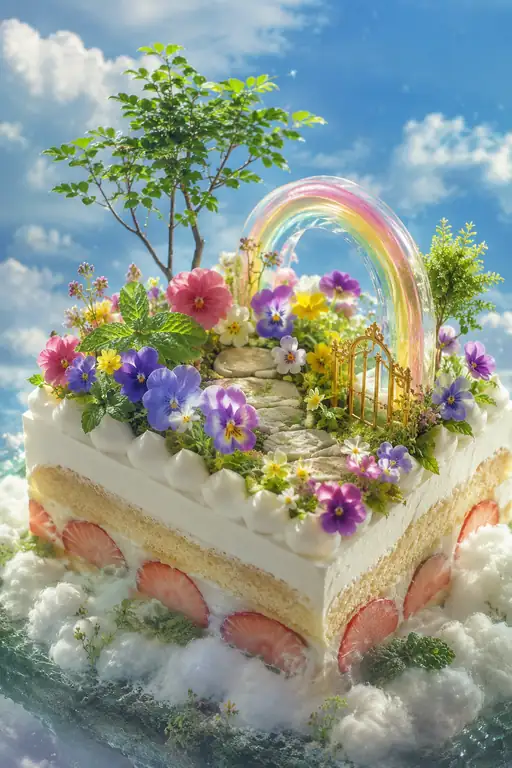 A Rainbow Garden Rises from the Cake
 The Sky Rolled Itself Into Sweetness
 Every Step Already Holds the Sun
 Trusting the Soft Stones of Night
 Spring Unwraps a Gift of Stars
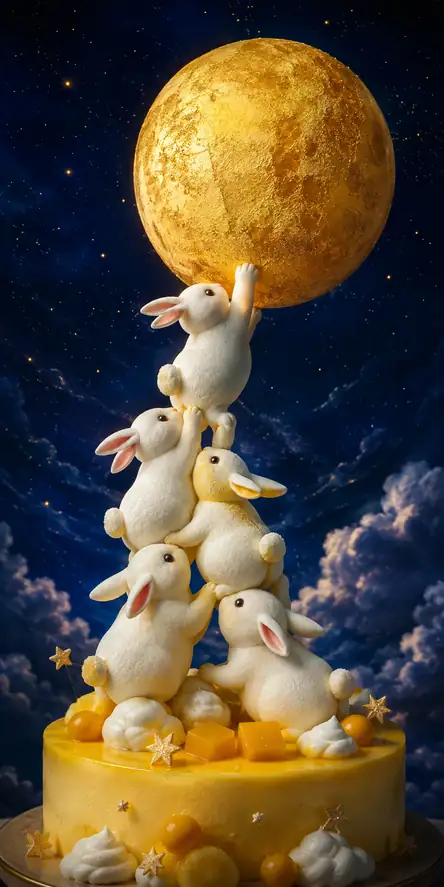 White Rabbits Build a Ladder to the Moon