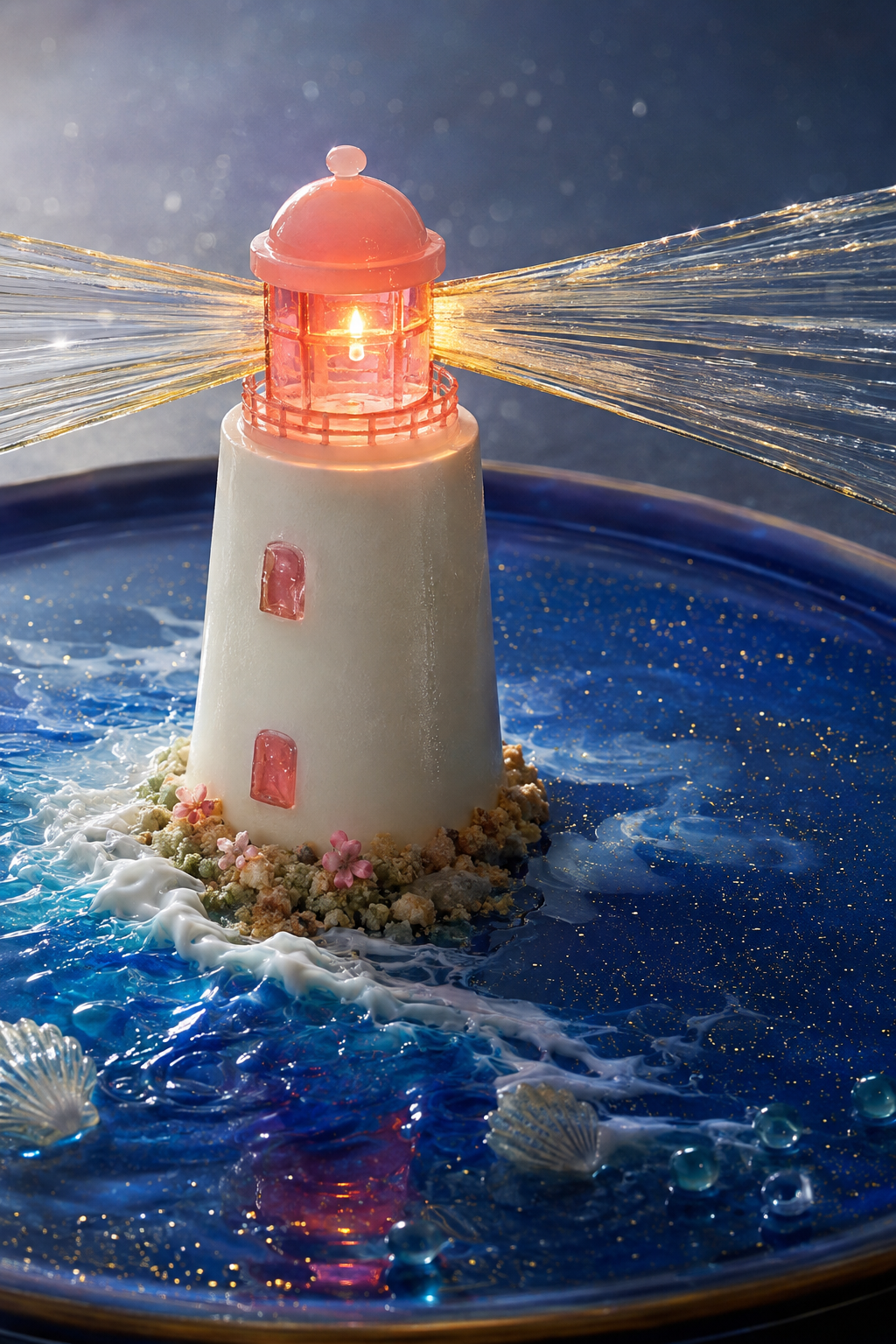
The Lighthouse Sends Sugar Light to Sea
Critique
Introduction This confection turns a lighthouse into a beacon amid an edible sea. A coral lantern glows above a white tower as transparent golden sheets spread like rays. Description An ivory tower rises from sandy crumbs and pink flowers. Two rose windows punctuate its wall. Above, a transparent coral lantern contains a flame beneath a domed cap and railing. Clear sugar ribbons extend behind it, edged in gold. Blue water swirls with foam, shells, bubbles, and golden specks. Analysis The vertical tower anchors the image, while sugar ribbons establish a horizontal axis. Their opposing directions create crosslike stability. Coral and gold concentrate attention against cobalt water and the pale tower. Smooth mousse, granular shore, glossy sea, and brittle sugar form varied textures. The low viewpoint enlarges the beacon, and reflected pink light creates a path through the water. Interpretation and Evaluation The lighthouse symbolizes orientation, yet here its beam becomes tangible sugar, as if guidance could be broken and tasted. Waves circle the base without threatening its upright calm. The miniature flowers soften the architecture and make the shore feel cared for rather than desolate. The radiant sheets are theatrically literal and may overpower the small tower, but their fine striations keep them light. Most effective is the reflected glow, which connects distant signal to nearby water. Conclusion At first the luminous lantern commands attention as spectacle. Longer viewing reveals a disciplined exchange between vertical shelter, horizontal light, and circular waves. The dessert succeeds because illumination is not merely an applied effect: color, reflection, transparent sugar, and the warm center all make reassurance into a material presence.
Same Subcategory
 Softness Blooming Through Light
 The Crown of a Silent Kingdom
Similar Artworks
 Until My Light Reaches You
 The Stillness All Lives Choose
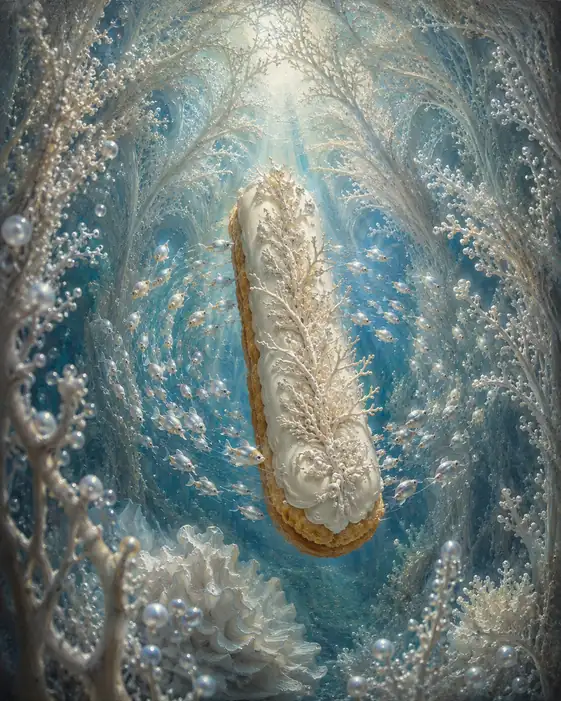 Where the Sea Learns Reverence
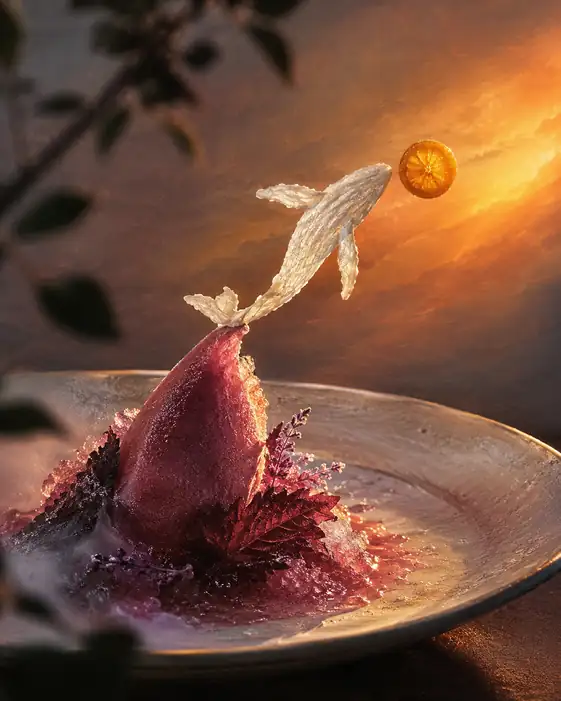 The Whale Who Chased the Last Light
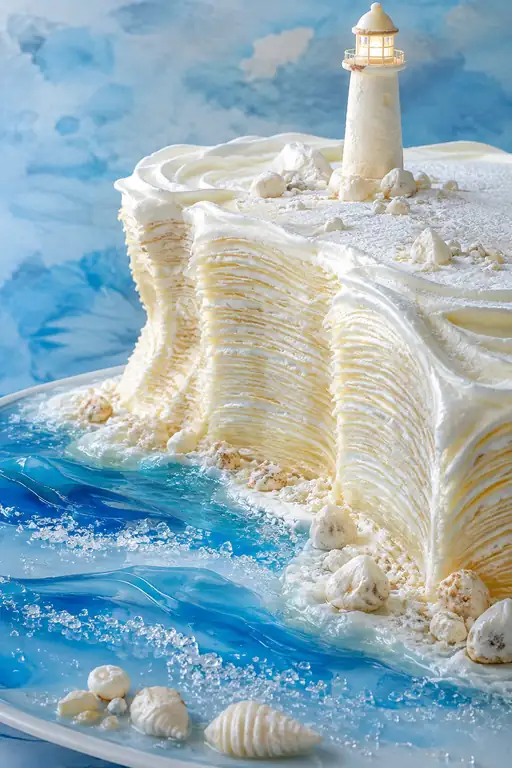 The Lighthouse Built from a Thousand Layers
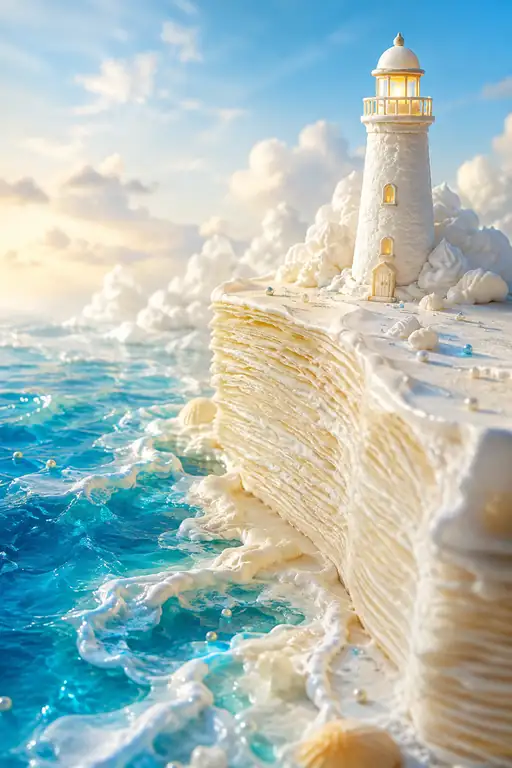 Tomorrow Glows on the Sweetest Shore
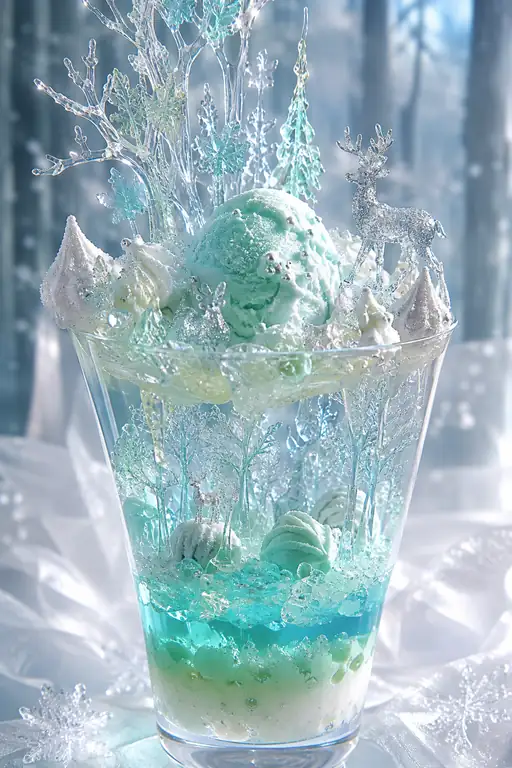 Winter Grows Beyond the Glass
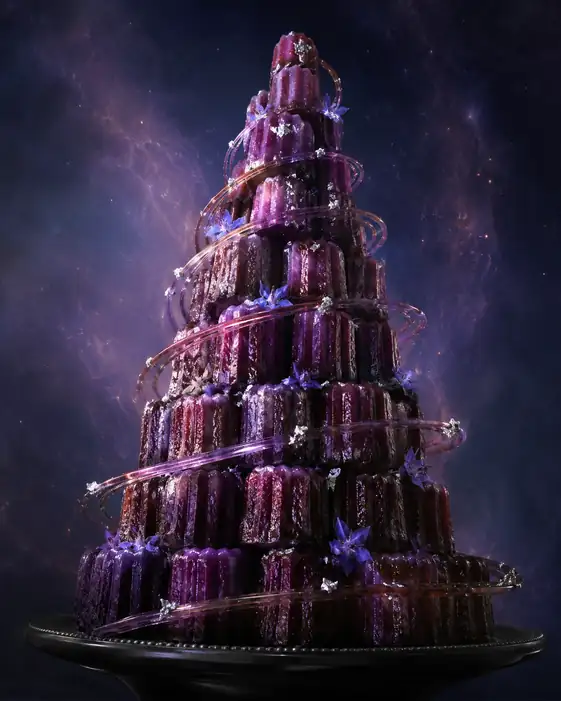 The Canele Tower Summons the Night
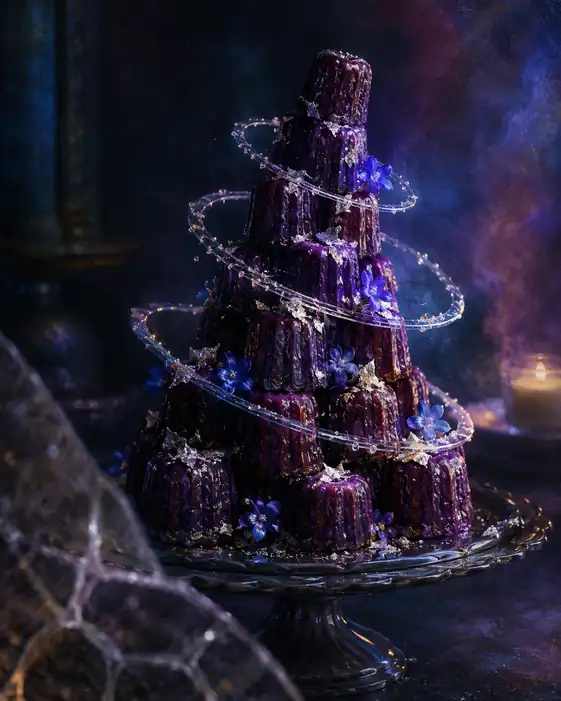 The Night Ascends in Spirals
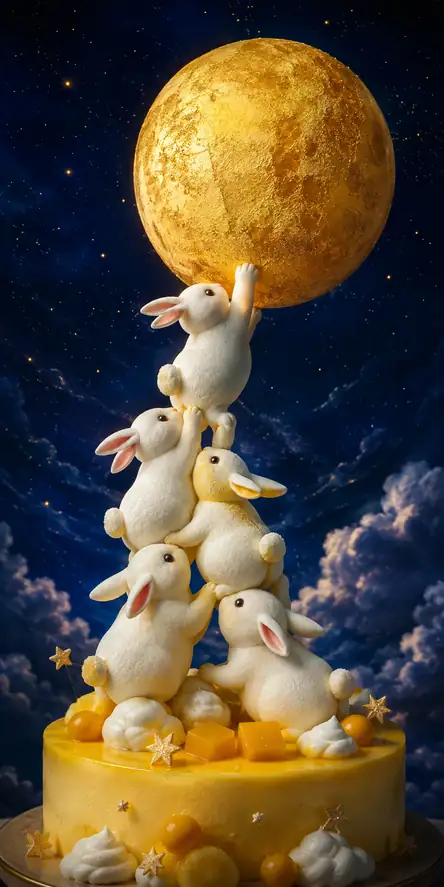 White Rabbits Build a Ladder to the Moon