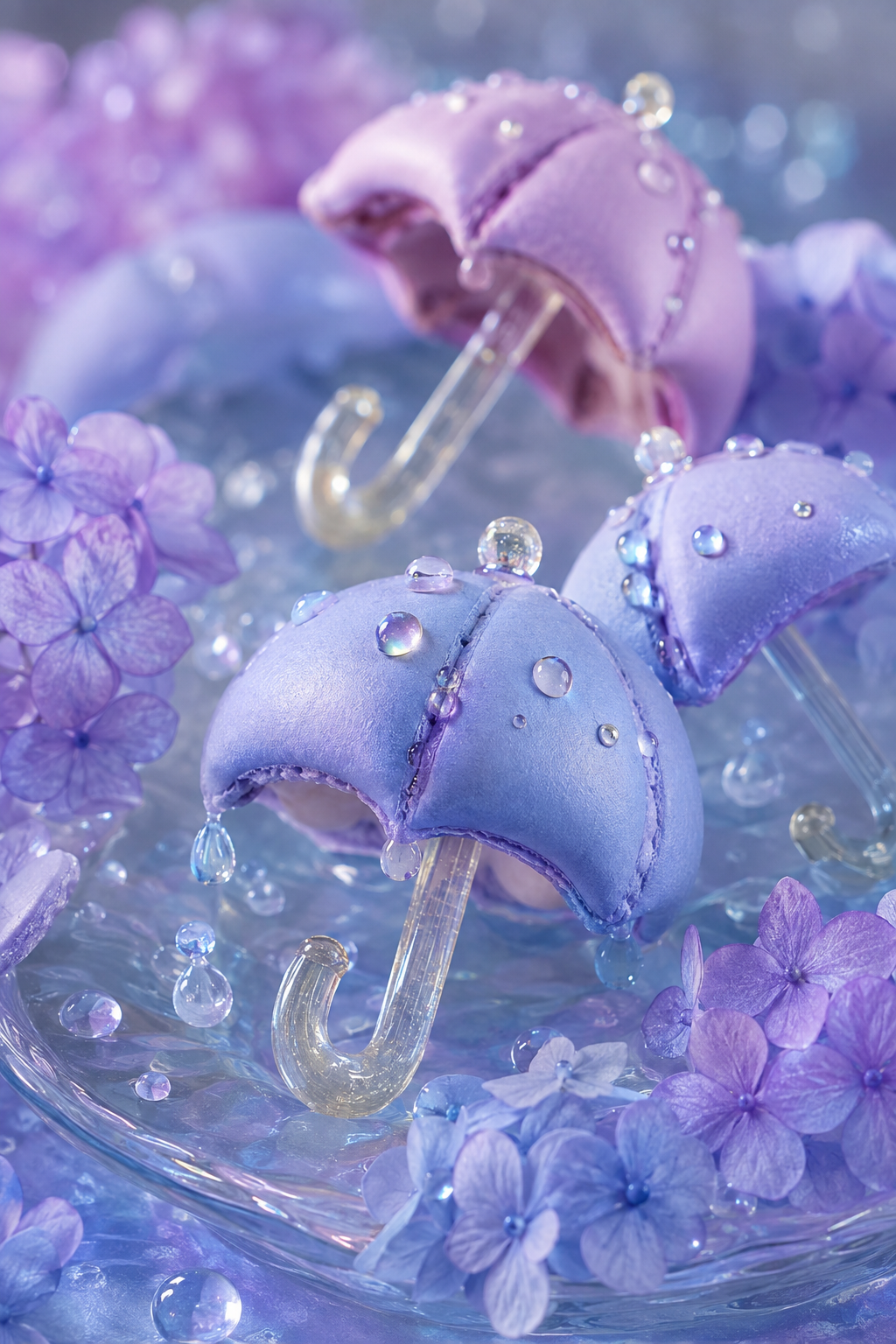
Purple Rain Opens Tiny Umbrellas
Critique
Introduction This confection stages three umbrellas among water, flowers, and droplets. Lavender and pink domes with clear handles turn rainy objects into edible fantasy. Convincing wetness and restrained color sustain the scene. Description A blue-violet umbrella occupies the lower center, with a pink one behind and a pale violet form at right. Each has segmented panels, stitched seams, scalloped edges, and a transparent J-shaped handle. Drops rest on the domes and fall from their rims. Purple and blue hydrangeas surround them on a rippling glasslike surface, with clear beads scattered throughout. Analysis The three umbrellas form a loose triangle and vary in scale to imply depth. Their rounded caps echo hydrangea heads and droplets, while hooked handles add strong curves below. Color shifts gently from pink through lavender to periwinkle, unified by cool blue surroundings. Matte domes contrast with glass handles and brilliant water beads. Shallow focus emphasizes the central umbrella and turns the rear forms into atmospheric repetition. Interpretation and Evaluation Umbrellas normally protect against rain, but here they carry and release drops, becoming participants rather than barriers. Their tiny scale invites play and transforms gloomy weather into sweetness. The stitched seams create textile illusion despite the edible context, though they may suggest toughness rather than tenderness. Abundant droplets approach decorative excess, yet their sizes and placements vary enough to maintain natural rhythm. Conclusion At first the miniature umbrellas read as charming novelty pieces. Longer viewing notices how domes, blossoms, and water share one rounded vocabulary. The confection succeeds by dissolving the boundary between shelter and weather: rain becomes not an inconvenience outside the dessert, but the very material from which its cool beauty is made.
Same Subcategory
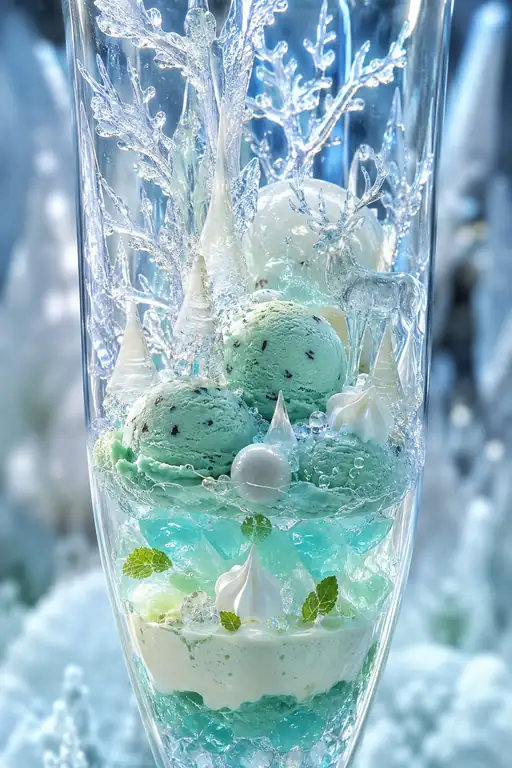 The Forest Sleeping Inside Winter
Similar Artworks
 We Bloomed Inside the Rain
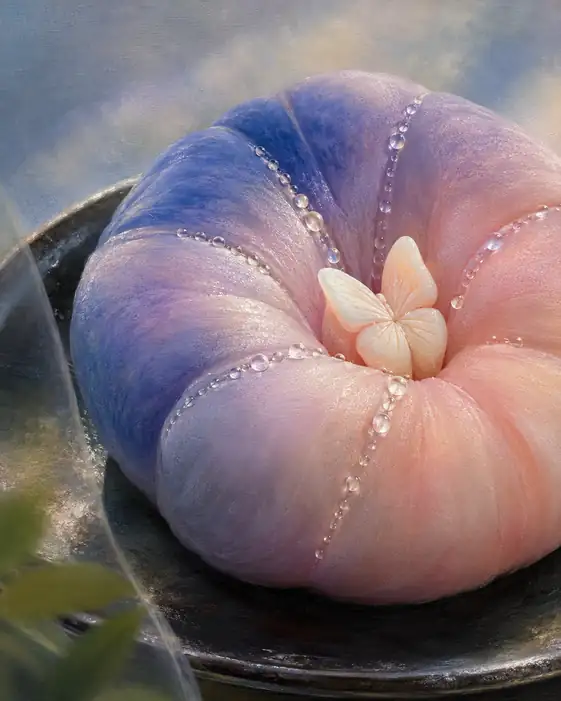 A Flower Dreams beneath Violet Silk
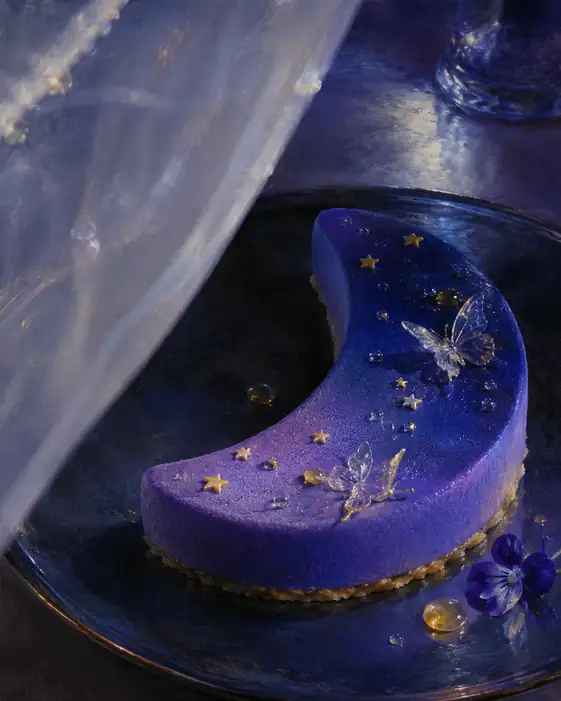 Where Night Learns to Flutter
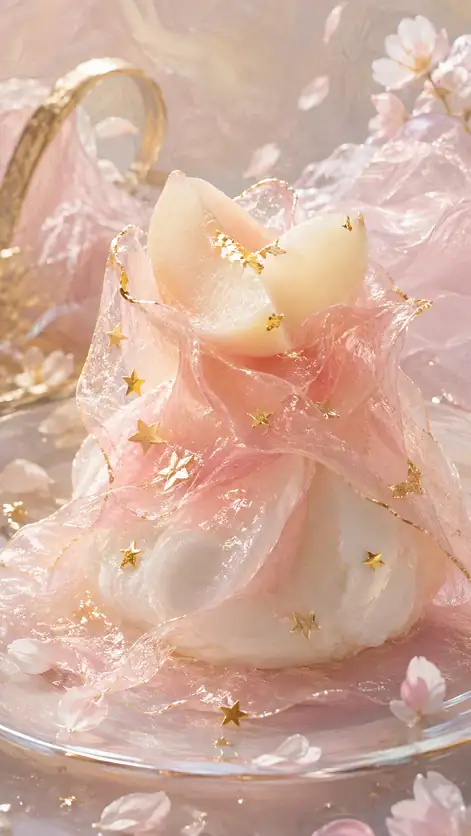 Spring Unwraps a Gift of Stars
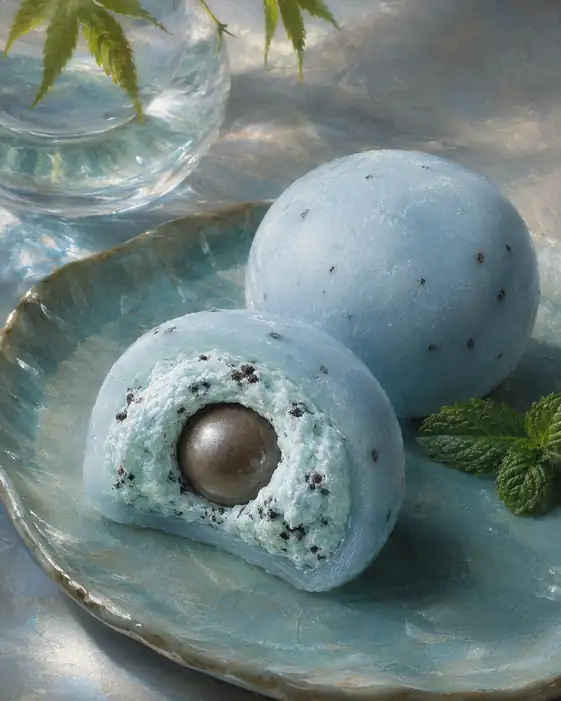 The Secret at the Heart of Coolness
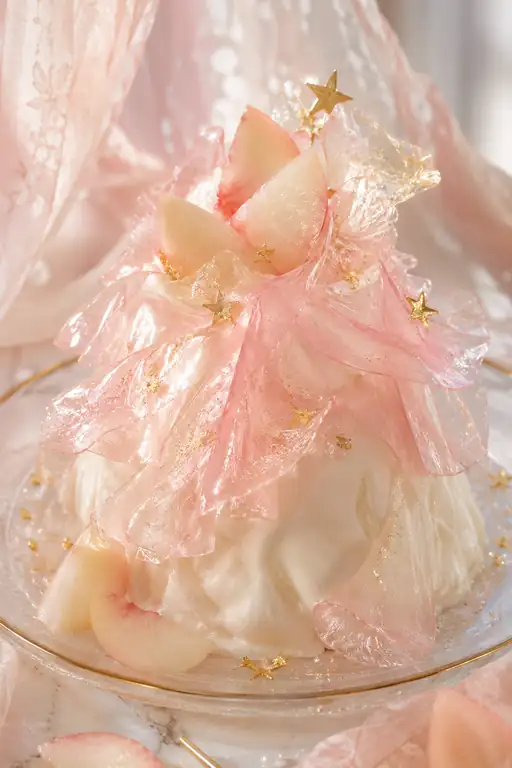 Softness Blooming Through Light
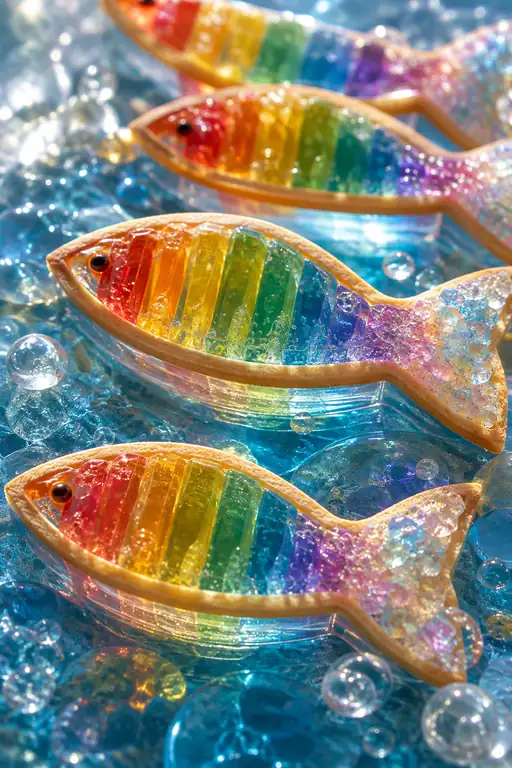 Together Through the River of Colors
 Between Arrival and Flight
 Hydrangea Rain Between Two Clouds
 The Sky Rolled Itself Into Sweetness