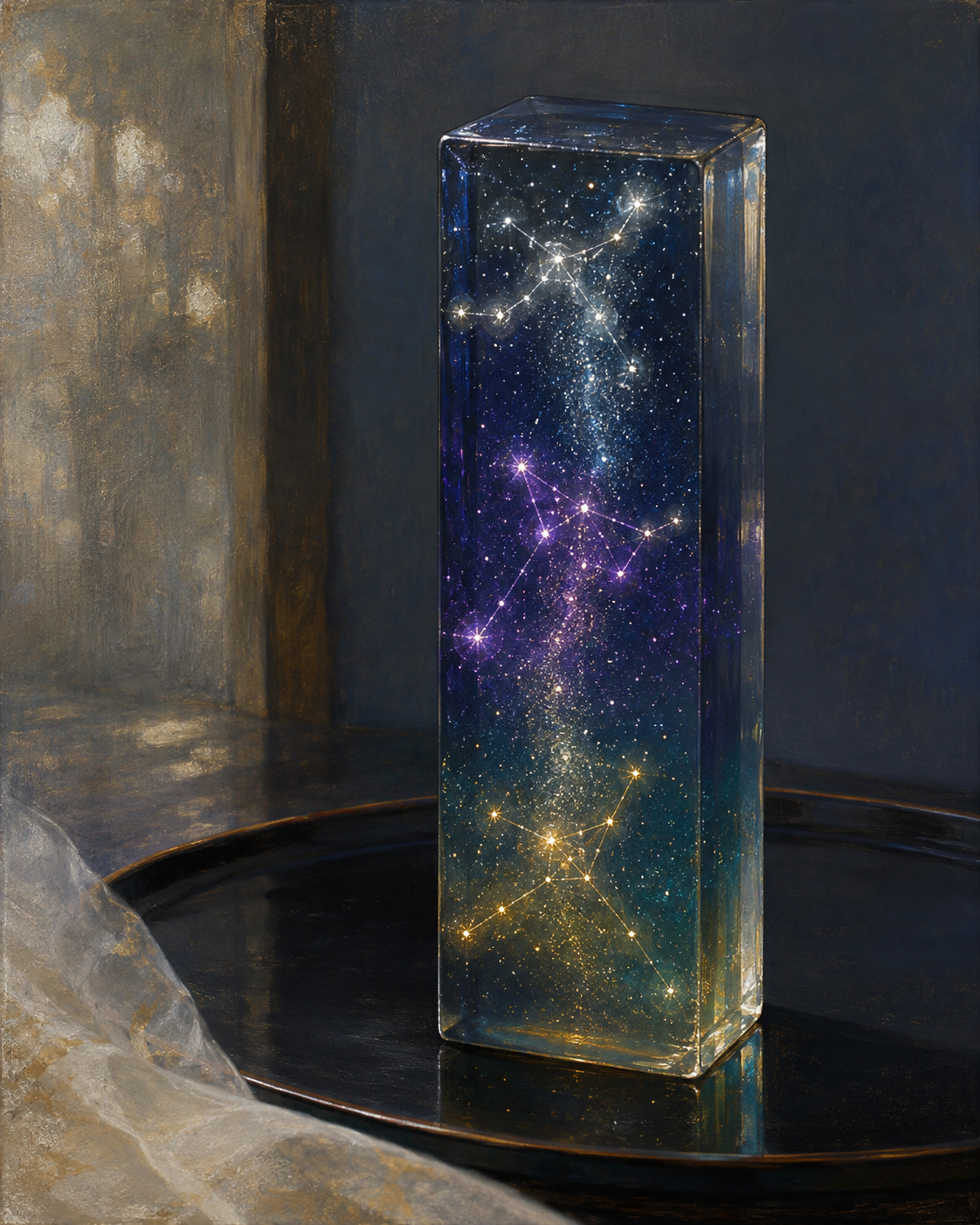
The Solitude That Holds a Universe
Critique
Introduction This work depicts a transparent block filled with constellations. Alone on a dark tray, it glows from gold through violet to cold white. The frontal view gives the object the presence of a celestial monument. Description The rectangular prism occupies the center-right and casts a narrow reflection beneath it. A gold constellation spreads across the lower green-blue field, a purple angular network crosses the middle, and a broad white figure opens near the upper edge. Fine stars, glittering dust, and a pale vertical band fill the intervals. Translucent fabric enters at lower left, while warm light mottles the left wall and tray rim. Analysis Strict vertical edges contain an internally expansive pattern. The three constellations create successive focal levels, with the brightest white points balancing the luminous gold base. Sharp corners contrast with dispersed particles and delicate connecting lines. Blue-black surroundings intensify the internal color gradient. The absence of a companion cube or utensil leaves more negative space, making the prism appear isolated and taller. Interpretation and Evaluation The object suggests a night sky made portable but not fully possessed. Its transparent walls expose every star, yet depth and scattered dust prevent complete visual mastery. The vertical order can be read as ascent from warmth toward distance. Precise edge reflections and individualized light intensities demonstrate technique, while the solitary presentation gives the cosmic confection an austere originality. Conclusion What first appears to be a luminous ornament gradually becomes a study of solitude and scale. The surrounding emptiness is as important as the embedded stars, allowing the object to stand between specimen and shrine. Controlled color, layered transparency, and disciplined geometry make its vast inner field credible.
Same Subcategory
Similar Artworks
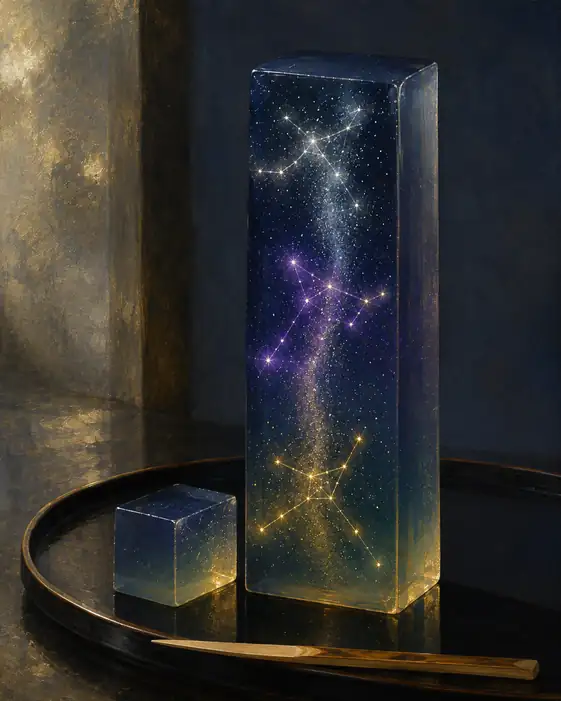 An Archive for the Uncontainable
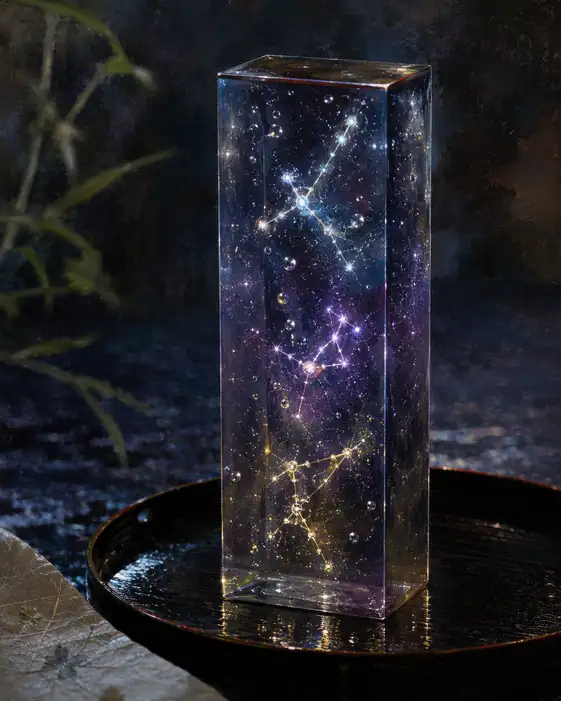 The Galaxy Cut into a Clear Rectangle
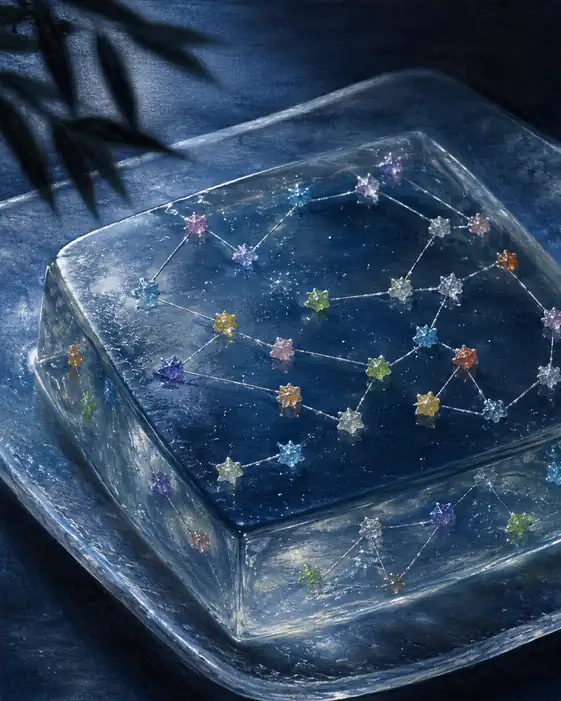 A Sky I Could Hold
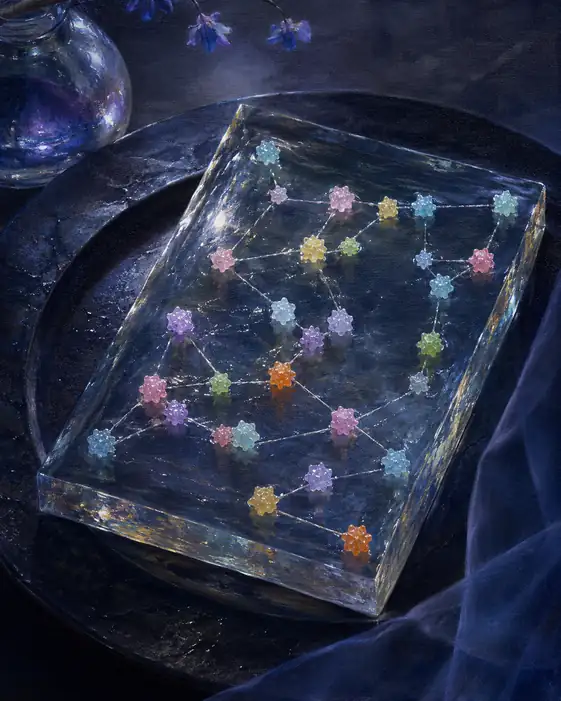 Stars Preserved in Clear Night
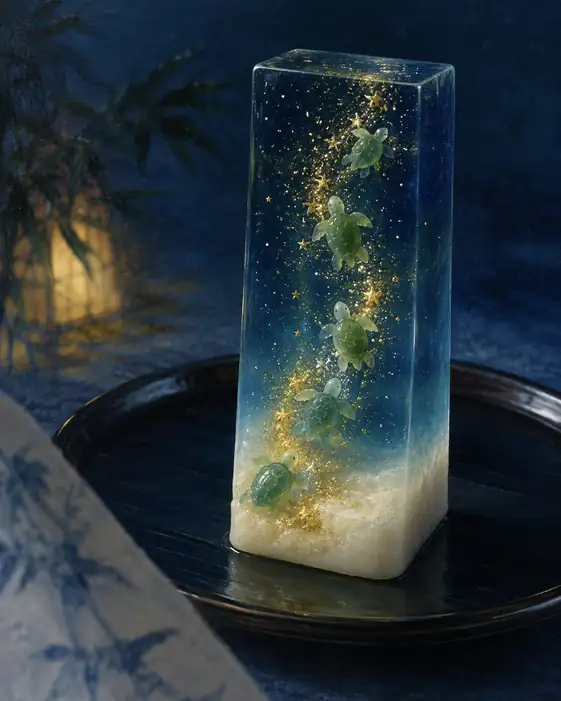 The Turtles Climb a River of Stars
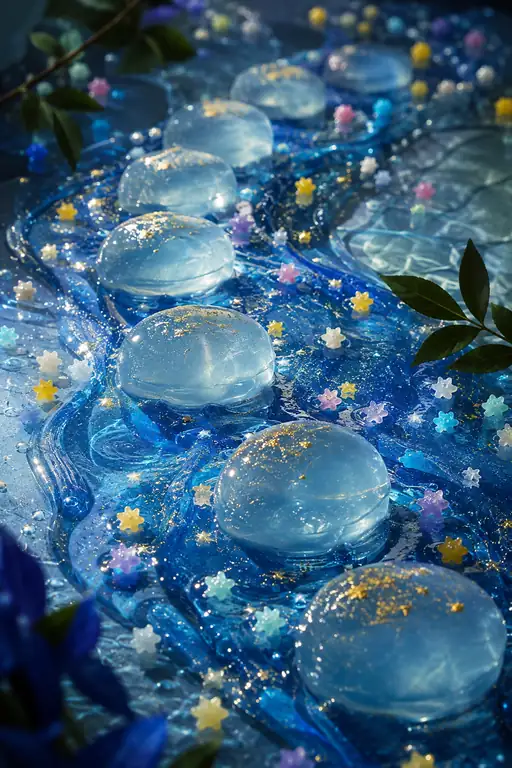 Trusting the Soft Stones of Night
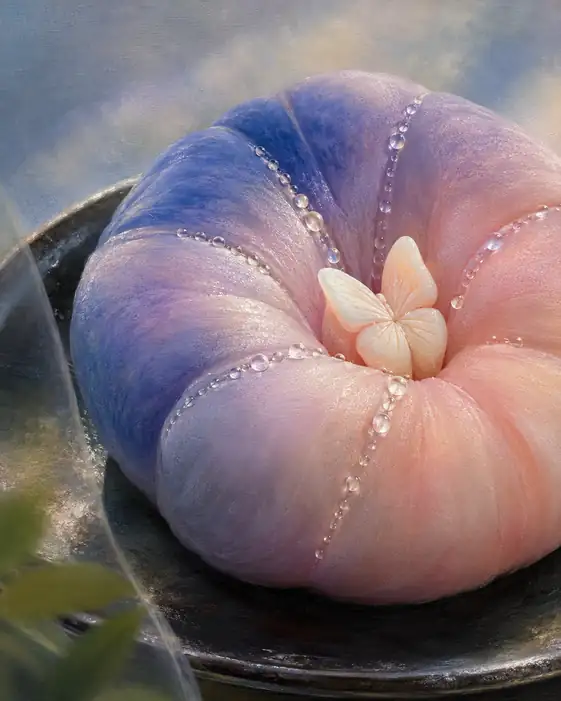 A Flower Dreams beneath Violet Silk
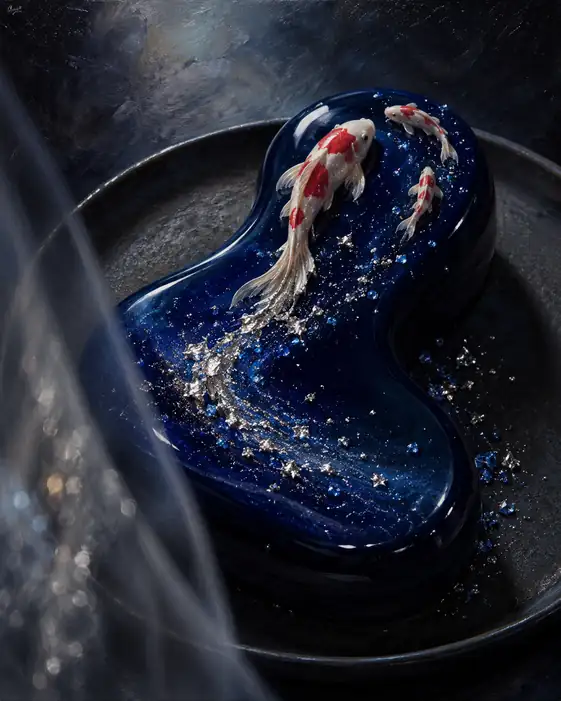 We Swam Beyond the Measure of Night
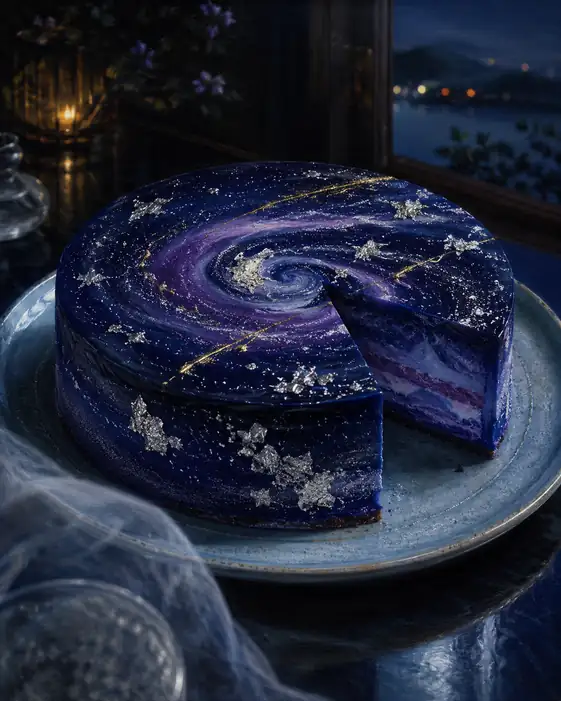 A Slice Taken from the Heart of the Galaxy
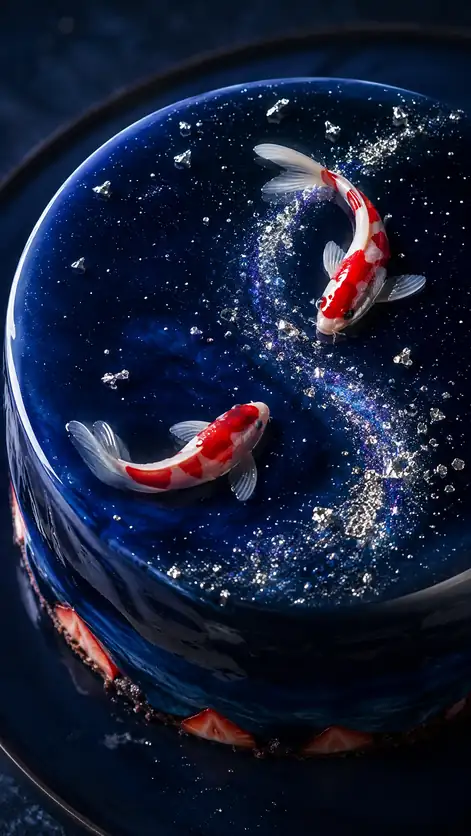 Two Koi Circle the Midnight Sky