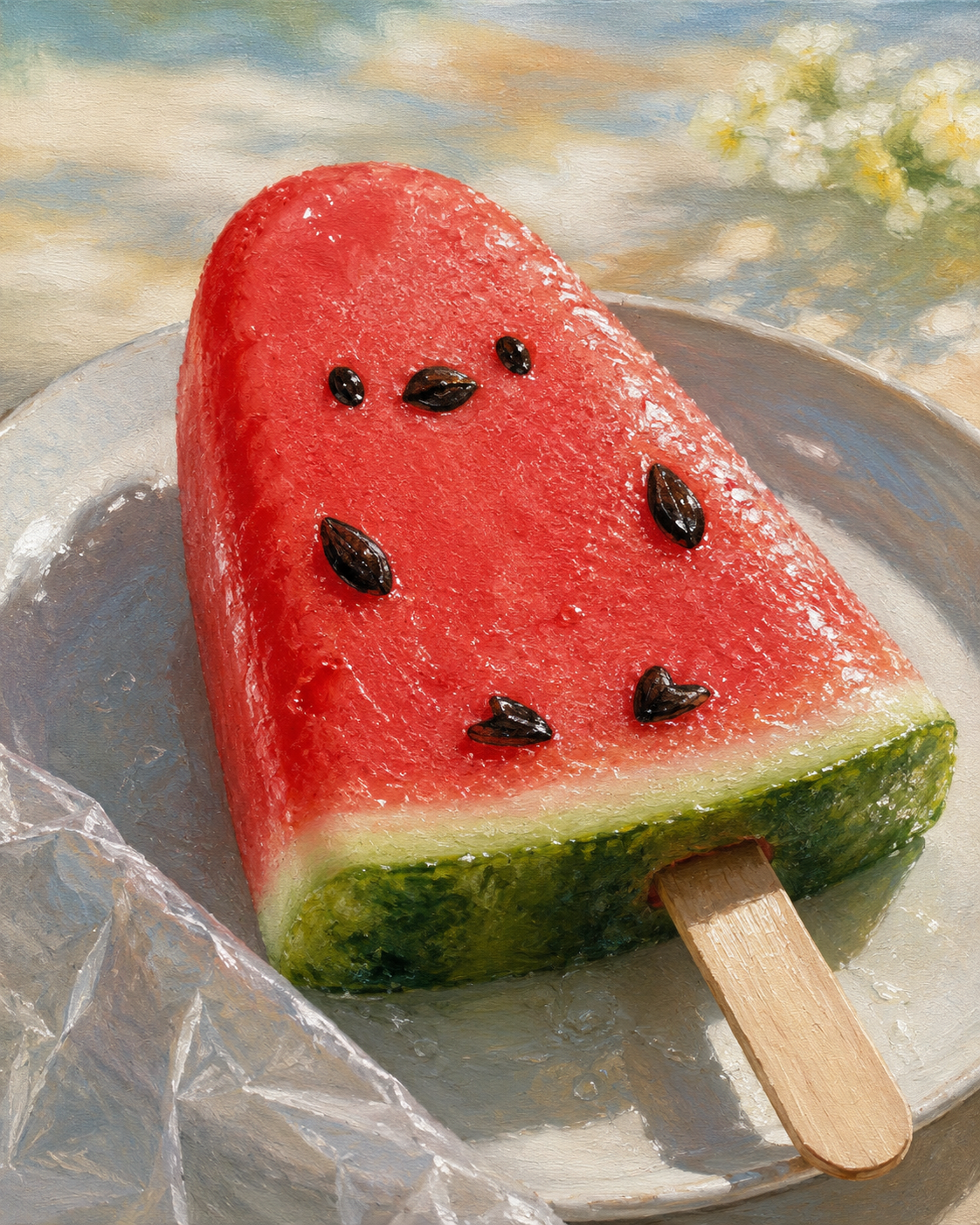
Midsummer Held on a Wooden Stick
Critique
Introduction This watermelon pop makes summer refreshment instantly legible. Red ice, pale rind, green skin, black seeds, and wooden stick reproduce a wedge directly. Painterly texture keeps the novelty cheerful. Description A thick rounded triangular pop rests diagonally on a light gray plate, its stick extending toward the lower right. The main body is glossy red with several black teardrop seeds, including three arranged like a simple face. A narrow white band and thicker mottled green rind form the base. A translucent ice block enters from the lower left. Behind, pale sky, soft clouds, and small white flowers create a breezy outdoor atmosphere. Analysis The wedge supplies a simple stable silhouette, animated by the stick’s diagonal. Red dominates against neutral plate and pale background, while green establishes a complementary edge. Black seeds provide rhythmic accents and an accidental expression that adds character. Fine frost and wet highlights convey coldness; rougher green texture distinguishes rind from smooth fruit ice. The plate’s oval frames the object without competing with it. Interpretation and Evaluation The pop celebrates recognition: viewers understand watermelon and frozen treat at once. Face-like seeds invite affection without requiring elaborate storytelling. Unlike more architectural desserts, its strength lies in economy and immediate appetite. The rind may be decorative rather than texturally practical, but its layered color is essential to the illusion. Melting gloss introduces urgency appropriate to summer pleasure. Conclusion At first the seed-face makes the dessert seem primarily cute. Longer viewing returns attention to temperature, fruit color, and the simple ergonomic form of a handheld treat. The work succeeds through restraint: a few unmistakable signals create humor, seasonal memory, and a convincing promise of refreshment.
Same Subcategory
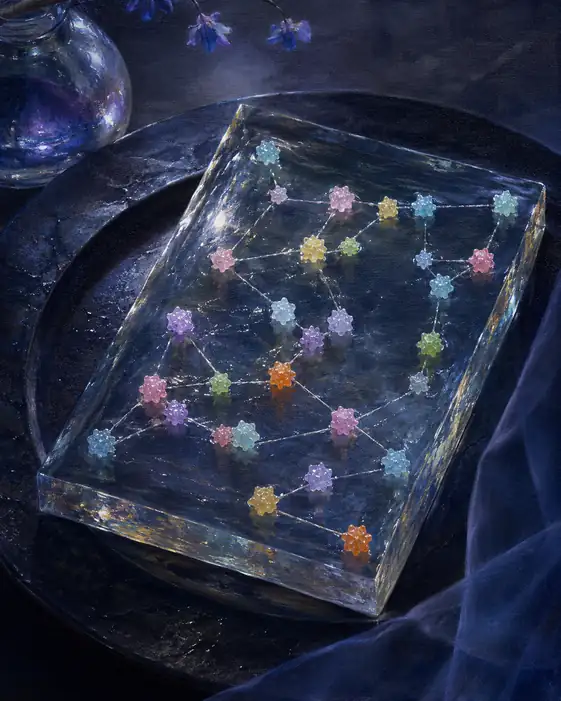 Stars Preserved in Clear Night
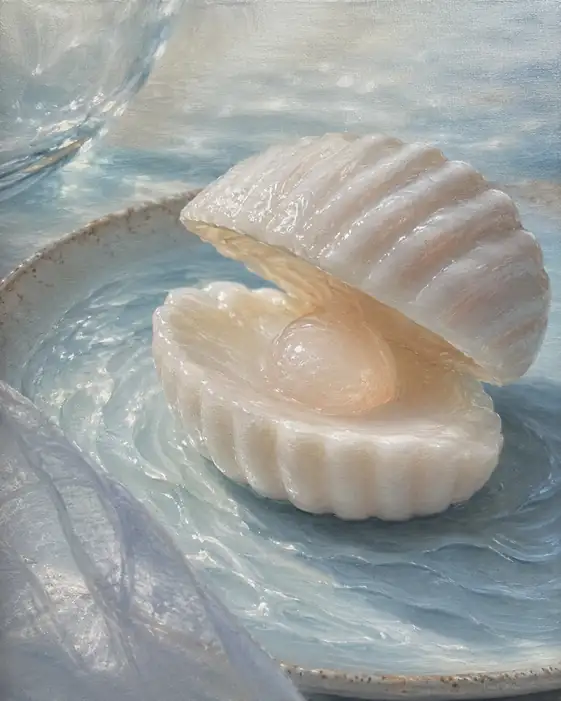 The Quiet Courage to Open
Similar Artworks
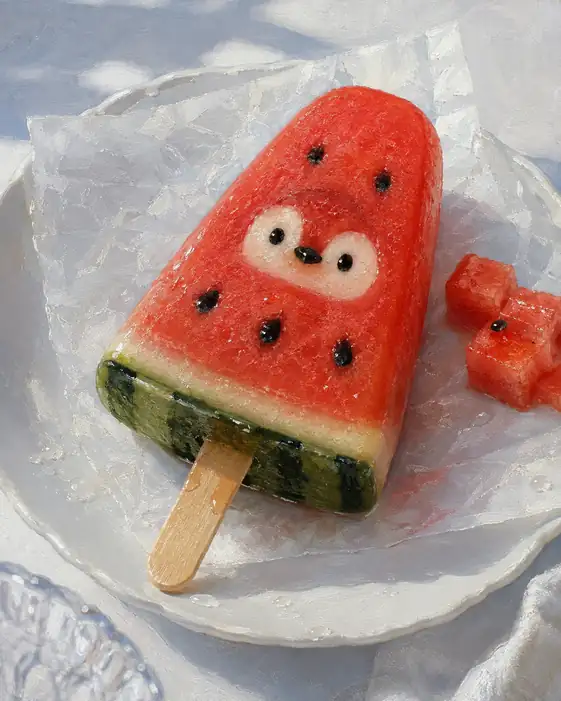 Summer Looked Back at Me
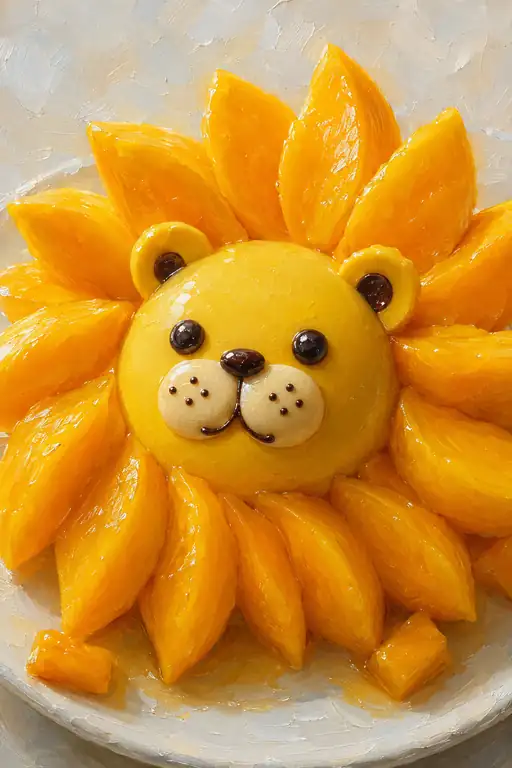 The Sun Learned to Smile
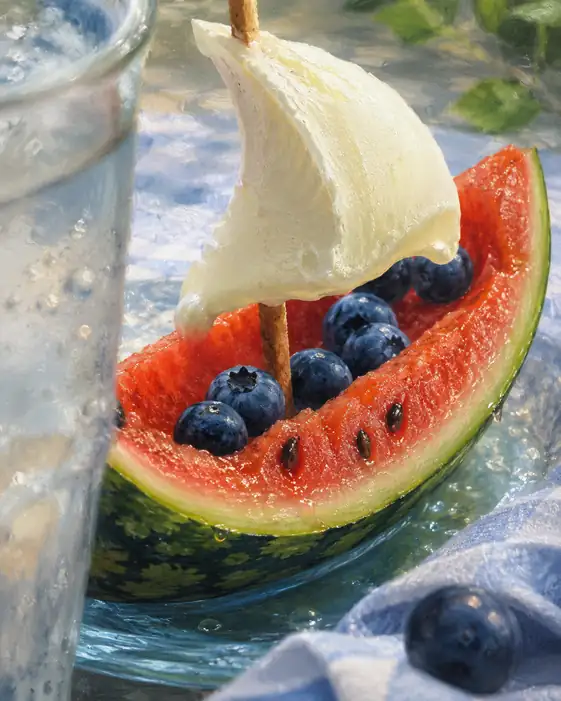 A Watermelon Boat Carries Blueberries into Summer
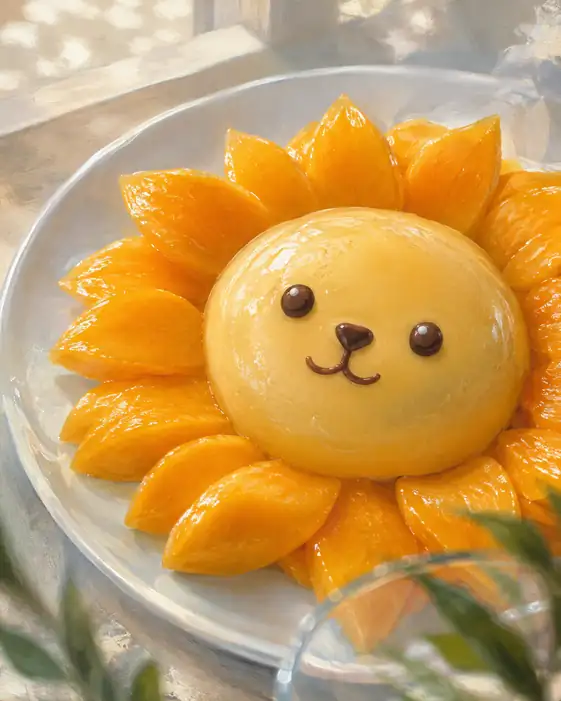 You Are My Small Summer Sun
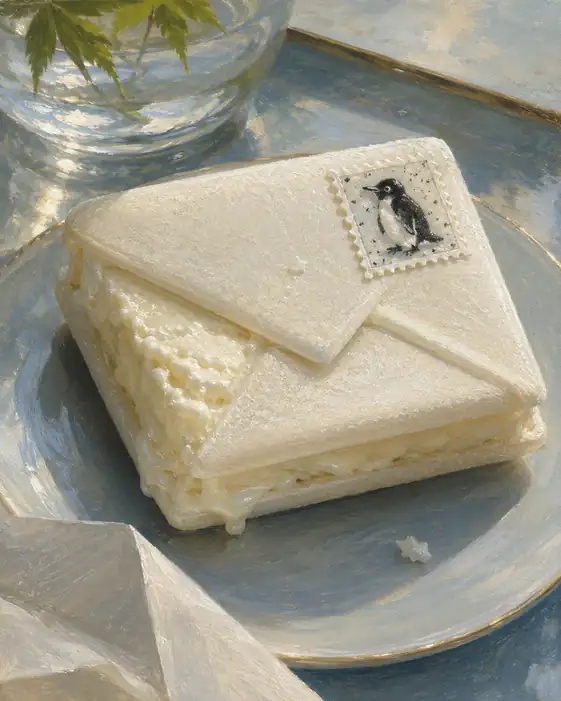 A Letter from the Edge of Winter
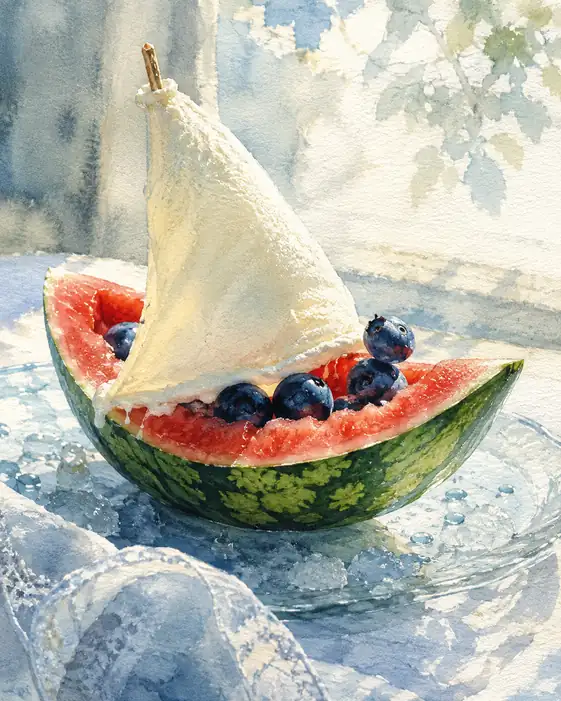 The Watermelon Boat Sails the White Noon
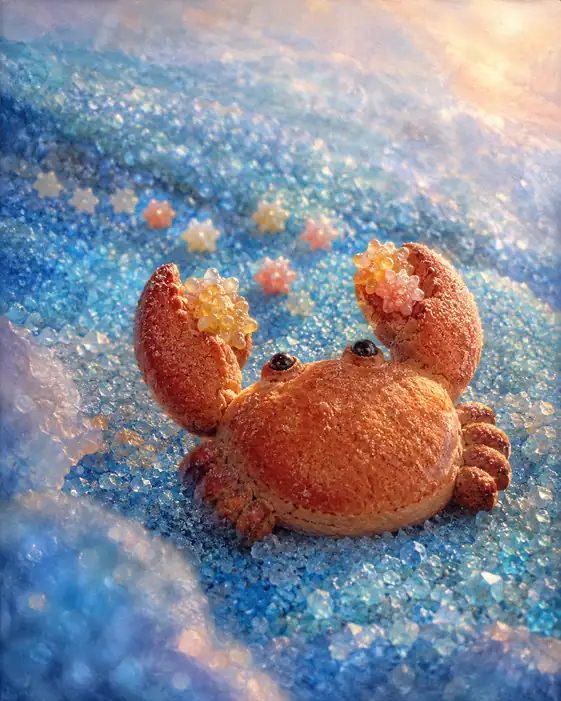 Gifts Gathered from the Morning Tide
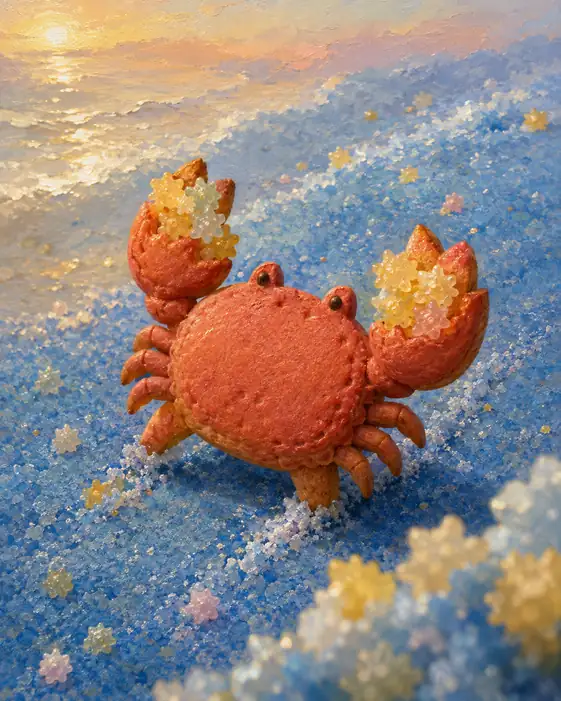 I Brought You Stars from the Shore
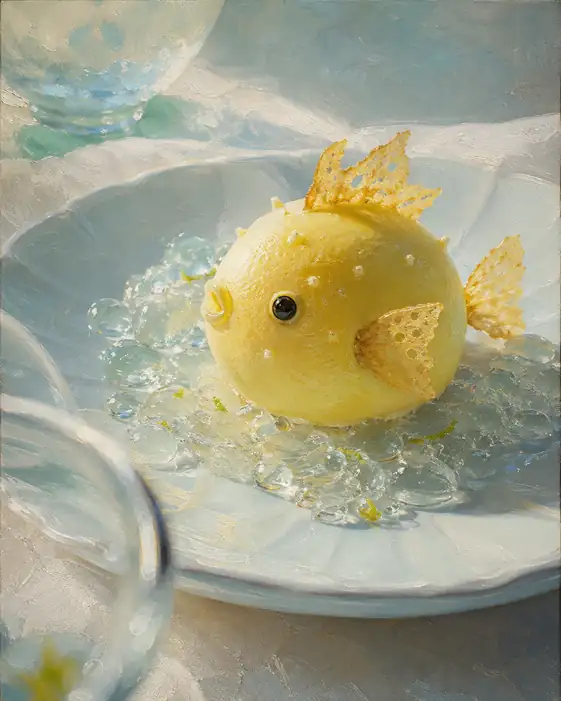 The Little Lemon Fish Blows Bubbles of Sunlight
 After the Rain, I Carry Summer