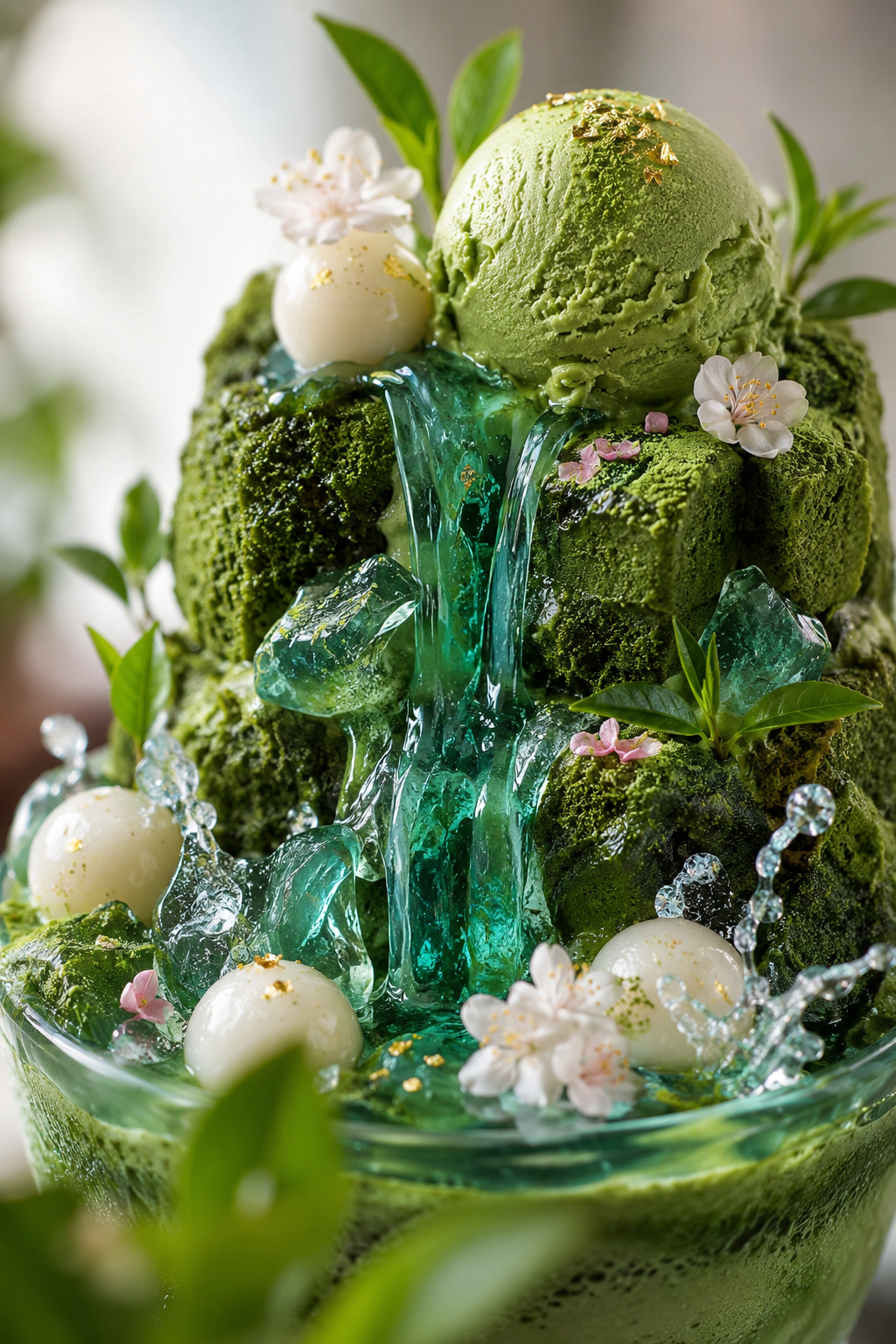
The Hidden Spring Remembers Spring
Critique
Introduction This work depicts a green mountain dessert divided by a turquoise waterfall. A matcha scoop, white spheres, blossoms, and leaves occupy its rocks, while splashes gather below. Tight framing suggests a secluded spring. Description A large green scoop rests near the upper right and carries scattered gold leaf. Beneath it, a narrow glossy stream drops through a central cleft, widens over angular ledges, and reaches the lower pool. Dark moss-covered blocks rise on both sides. Four white balls appear at upper left and around the base. White blossoms, tiny pink petals, pointed leaves, clear crystals, and arcing droplets punctuate the slopes. Analysis The central waterfall establishes a strong descending axis, while rocks and foliage build asymmetrical weight around it. Deep moss green contrasts with luminous blue-green and opaque white. Powdery matcha, rough porous blocks, smooth spheres, glasslike liquid, crystalline edges, and delicate petals create an unusually broad tactile range. Side light catches wet surfaces and gold accents, whereas shaded recesses make the stream appear embedded within a deep terrain. Interpretation and Evaluation The dessert presents sweetness as a hidden natural resource. Liquid emerges from beneath the summit and organizes every surrounding form, suggesting renewal within an enclosed world. White spheres act as quiet resting points beside the energetic flow. Precise differences among moisture, powder, vegetation, and stone demonstrate technical control, and the compressed ravine gives the landscape metaphor intensity and originality. Conclusion What first appears to be abundant matcha decoration gradually becomes a study of water carving order through dense matter. The downward current links summit, ledges, and pool in one continuous gesture. Controlled green variations, layered depth, and the contrast between soft food and hard-looking geology make the miniature environment convincing.
Same Subcategory
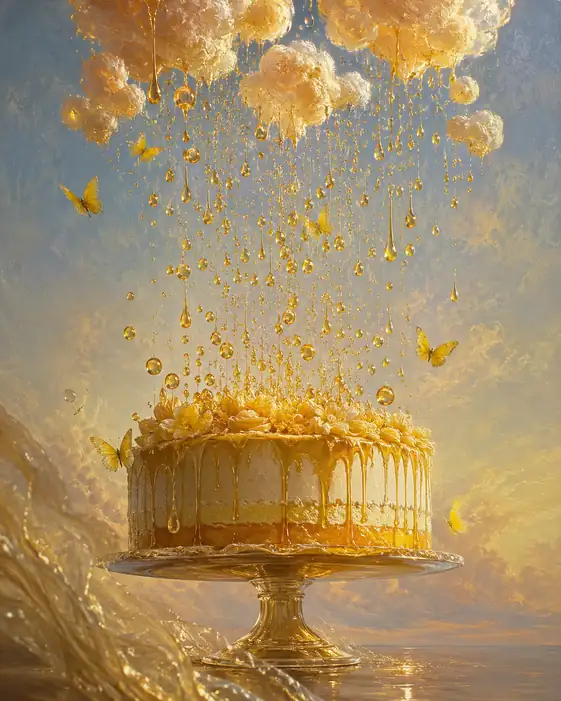 Honey Falls from Heaven's Garden
Similar Artworks
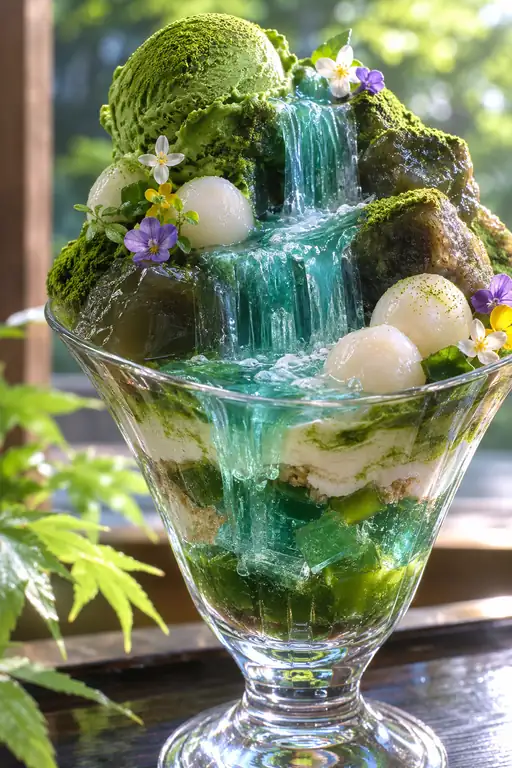 Where Sweetness Learns to Flow
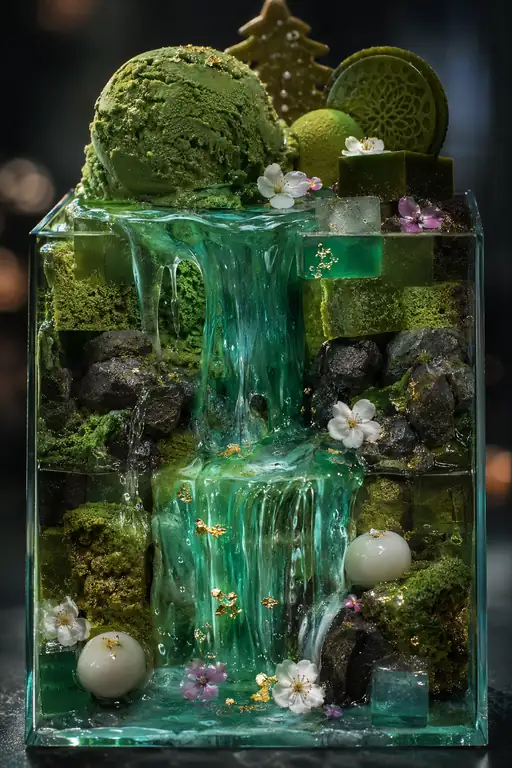 A Green Waterfall Hidden in Dessert
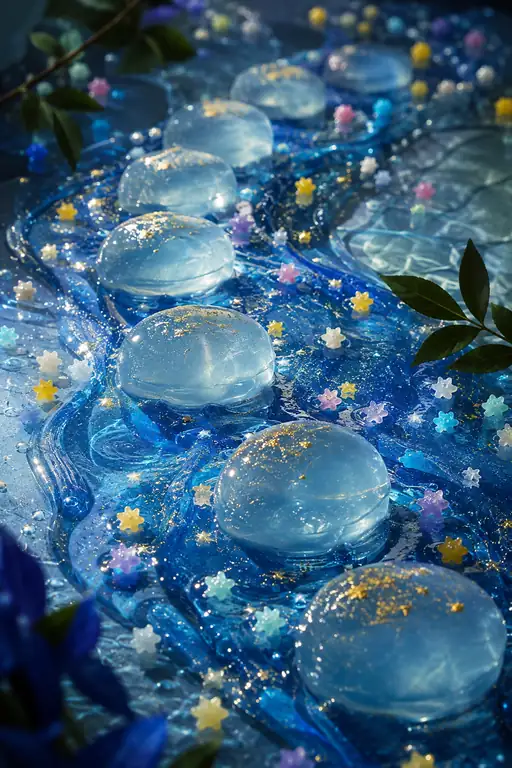 Trusting the Soft Stones of Night
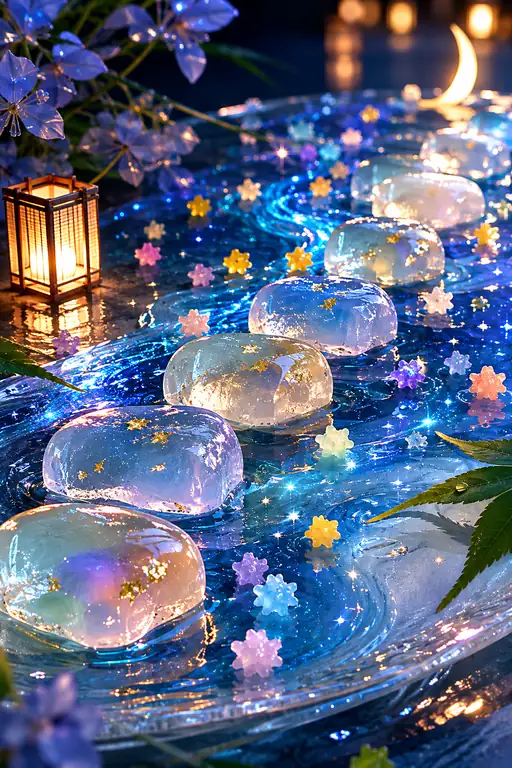 The Starry Floating Bridge from the Crescent Moon
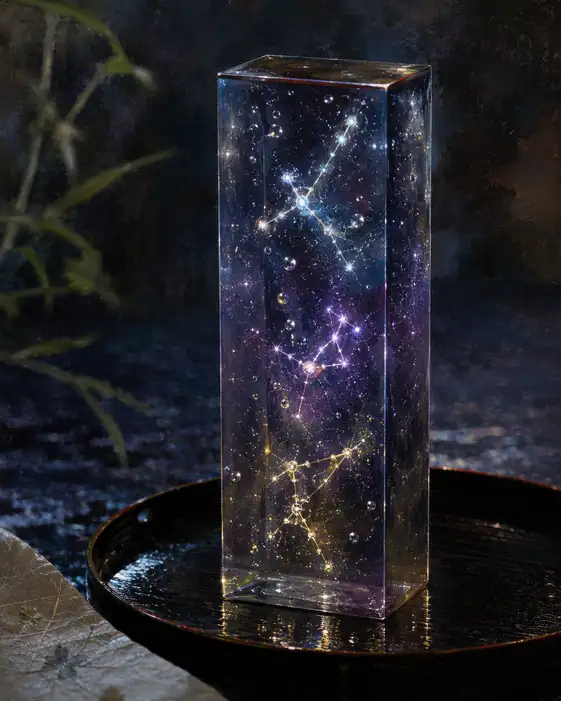 The Galaxy Cut into a Clear Rectangle
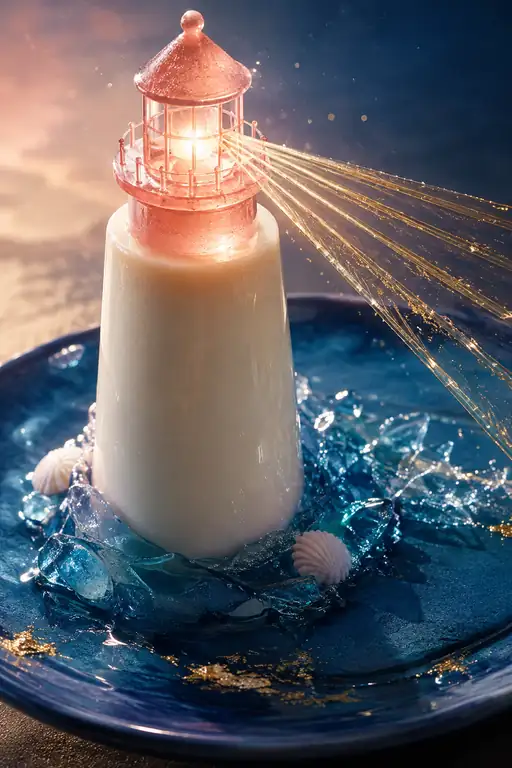 Until My Light Reaches You
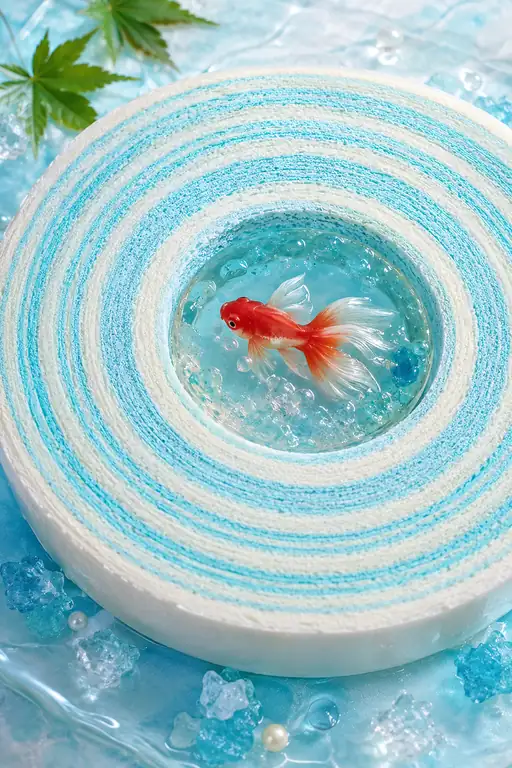 One Red Heart Inside the Ripples
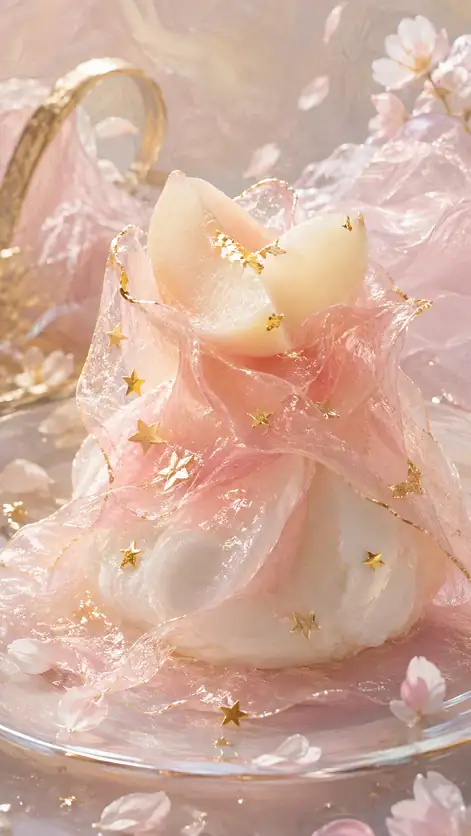 Spring Unwraps a Gift of Stars
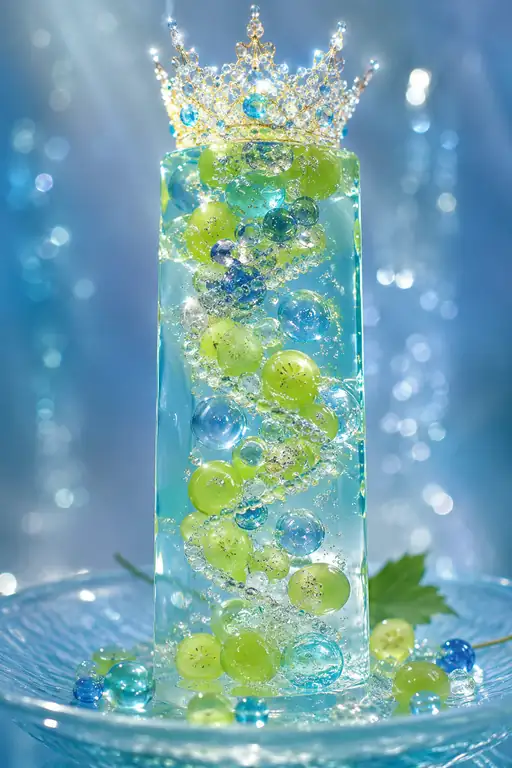 Crowned by the First Drop of Summer
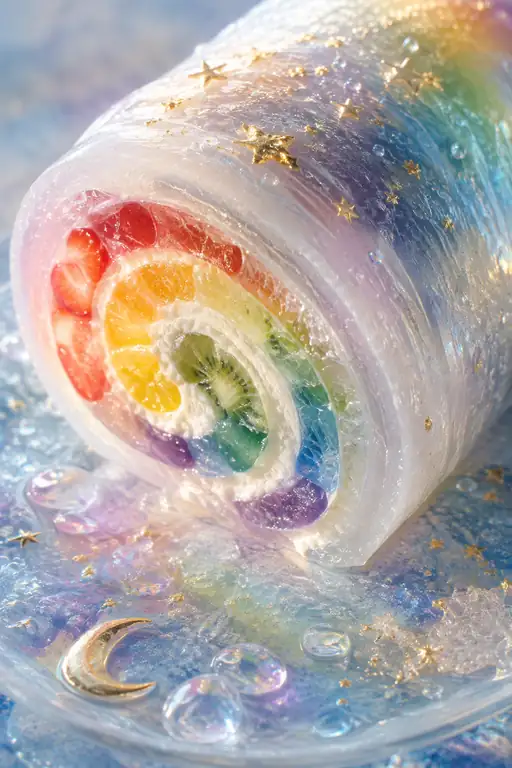 The Sky Rolled Itself Into Sweetness