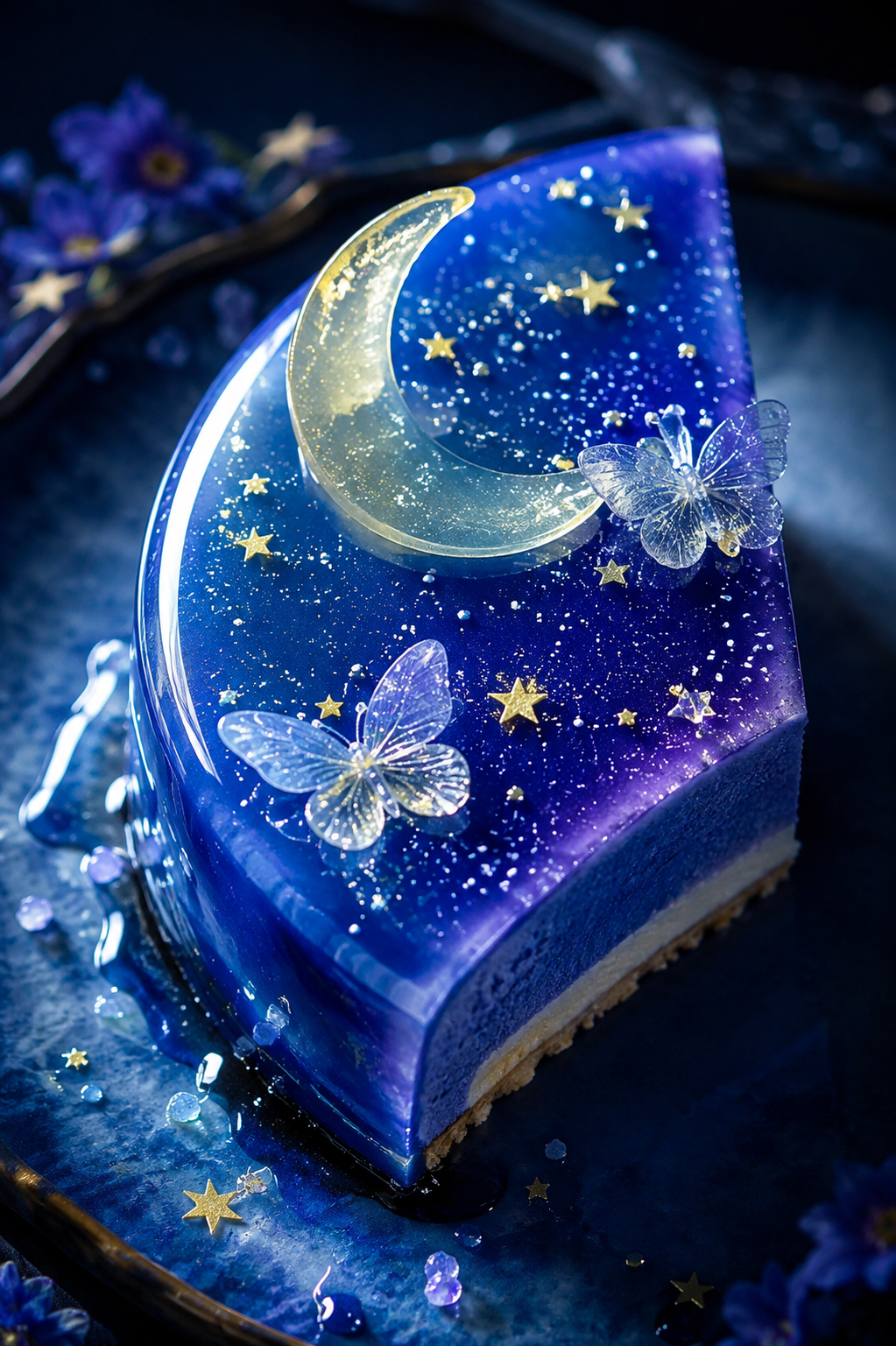
The Moon Sleeps inside a Blue Slice
Critique
Introduction This cake turns night into mousse, glaze, moon, stars, and butterflies. Its compact wedge carries density. A precise base supports weightless decorations. Description The triangular slice has a pale biscuit base, deep blue mousse, a violet transition, and a glassy dark top. A translucent crescent dusted with gold rises near the back. Two clear butterflies rest on the surface among small gold stars, sugar crystals, and white specks. Blue glaze drips over the left edge and pools on a dark plate surrounded by scattered stars, gems, and blurred blue flowers. Analysis The wedge creates firm diagonals and a stable low volume, while crescent and butterflies add upward curves. Color moves from pale base through navy to luminous cobalt and purple, making the cut side reveal depth. Gold accents punctuate the cool field without breaking its unity. Glossy glaze, matte mousse, translucent sugar, and brittle decorations are clearly differentiated. Directional highlights trace the cake’s edges and prevent the dark palette from losing form. Interpretation and Evaluation The cake imagines night as a habitat where moon and butterflies coexist, merging celestial distance with fragile life. Butterflies can suggest transformation, while the crescent provides calm orientation. The symbolism is overt and the surface crowded, yet the limited blue-gold palette and triangular hierarchy maintain coherence. Practical cutting may disturb the ornaments, but that inevitable collapse suits a dessert centered on transience. Conclusion At first the mirrored surface reads as a miniature sky. Longer viewing notices the layered interior and recognizes that visual wonder is supported by contrasting textures. The cake succeeds not simply as decoration, but as an edible sequence in which crisp, transparent, creamy, and glossy elements make night feel sensorially varied.
Same Subcategory
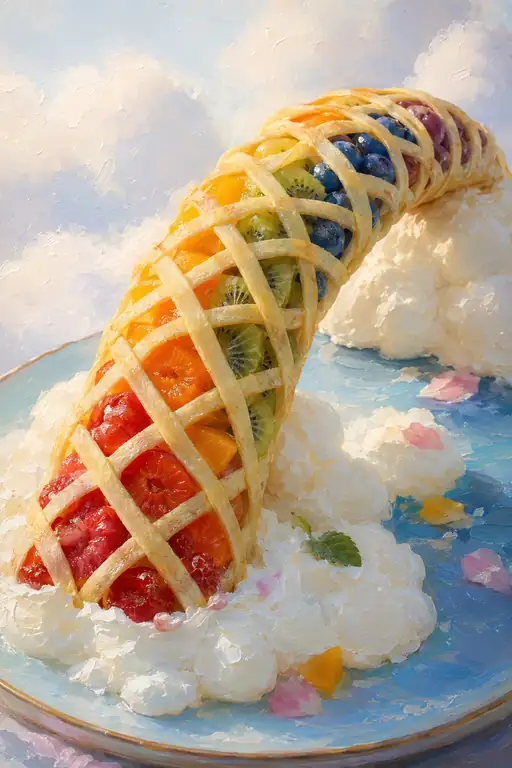 A Rainbow Baked across the Sky
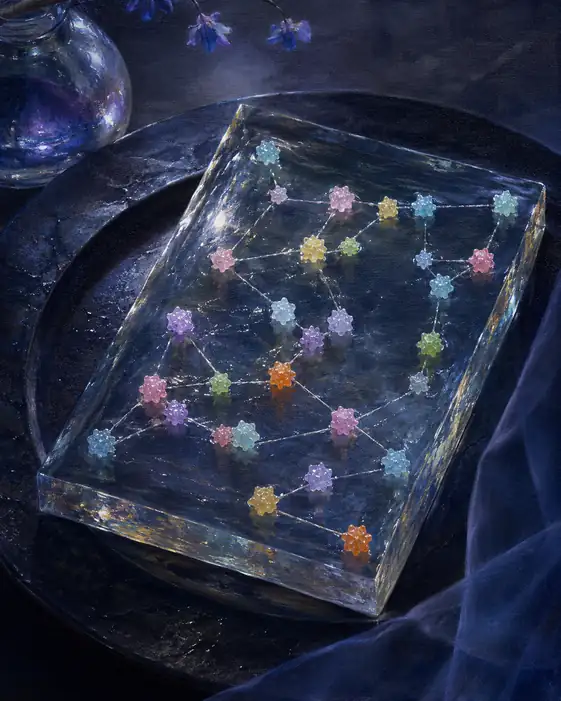 Stars Preserved in Clear Night
Similar Artworks
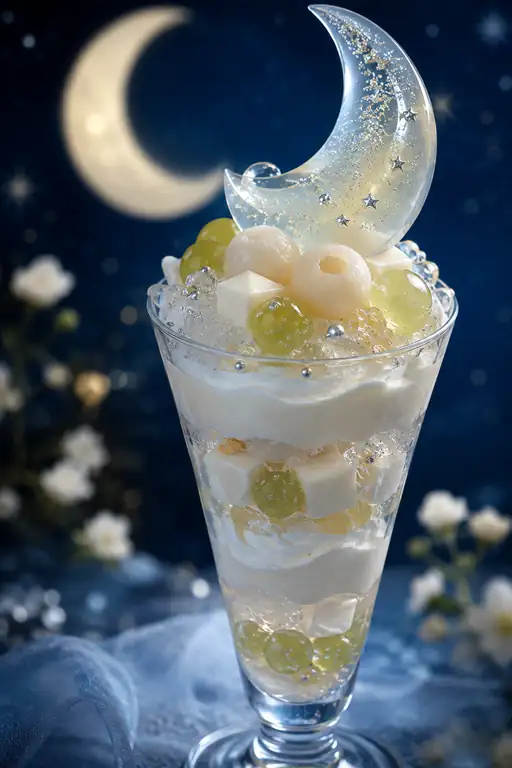 The Crescent Moon Melts into the Parfait
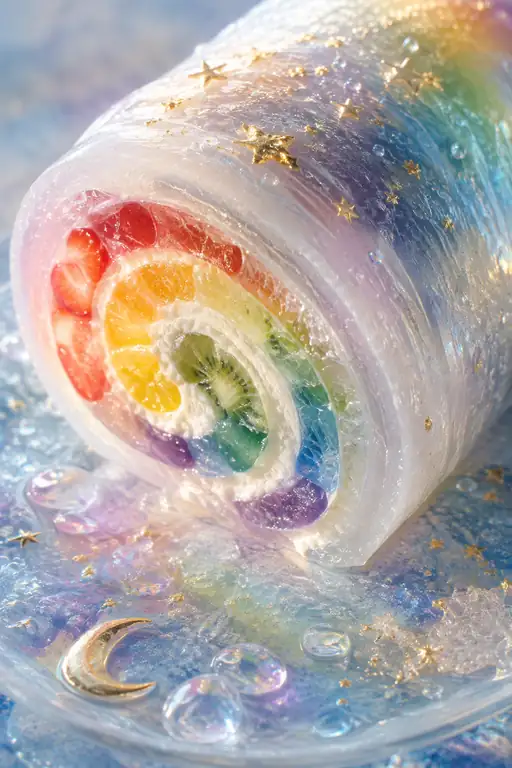 The Sky Rolled Itself Into Sweetness
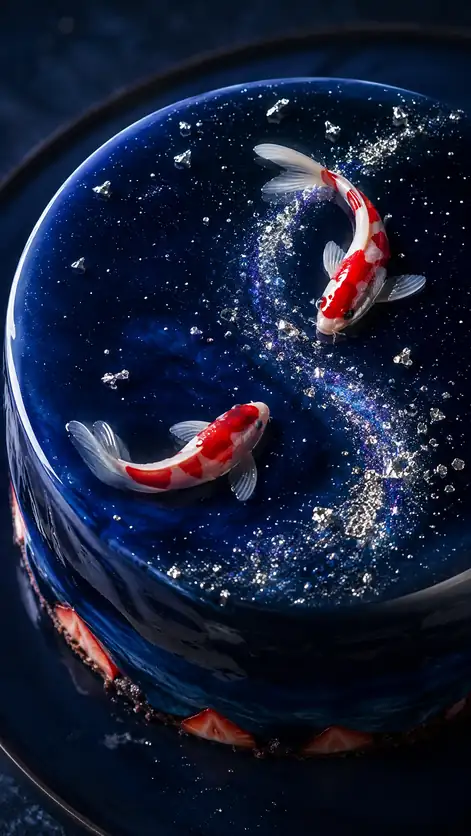 Two Koi Circle the Midnight Sky
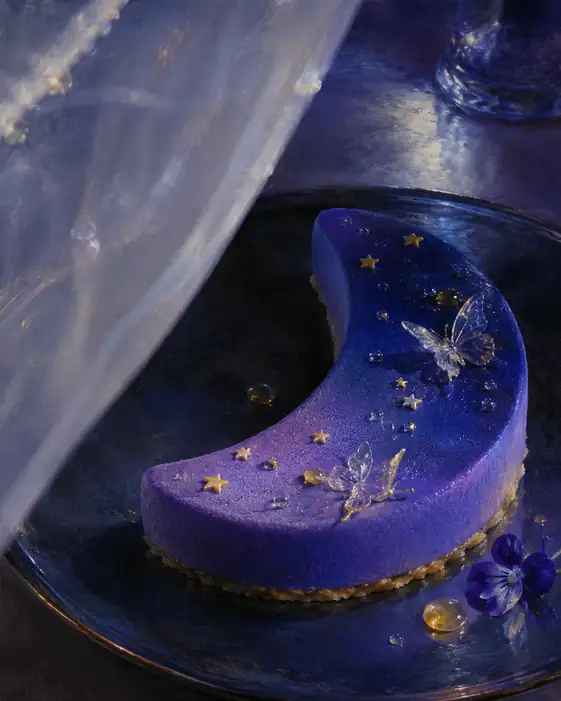 Where Night Learns to Flutter
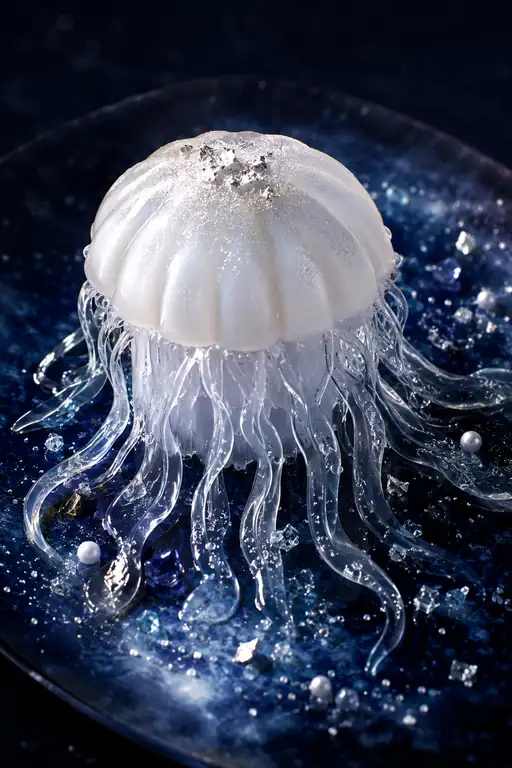 Moonlit Jellyfish Rings the Deep
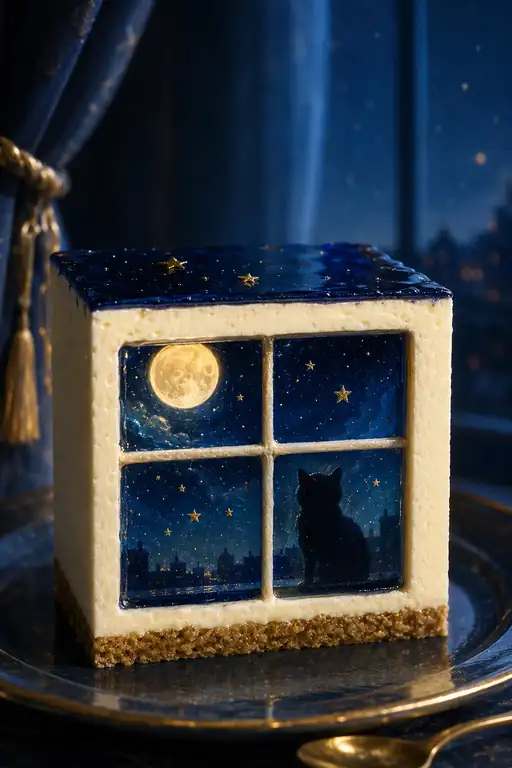 The Night We Watched the Moon Together
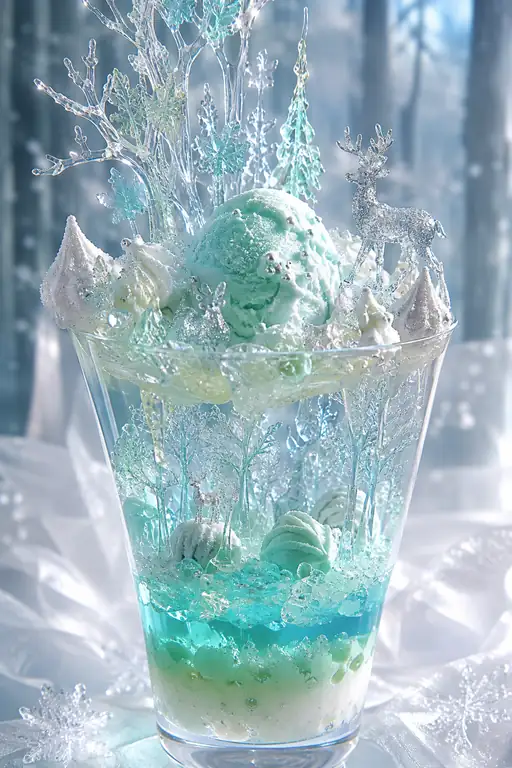 Winter Grows Beyond the Glass
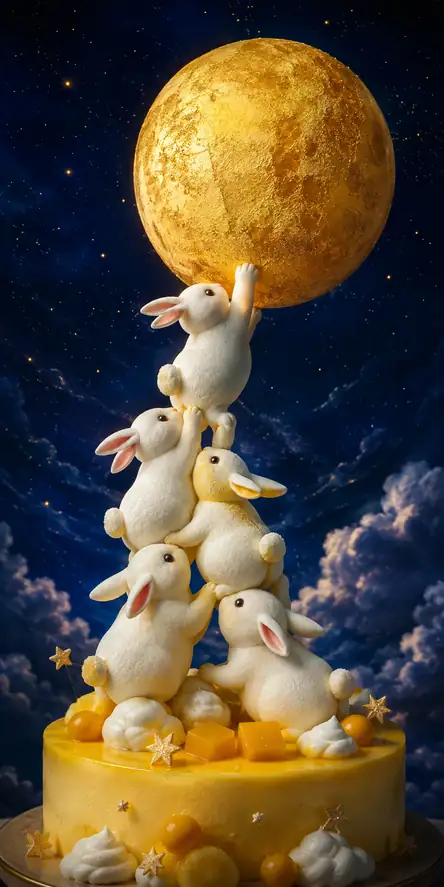 White Rabbits Build a Ladder to the Moon
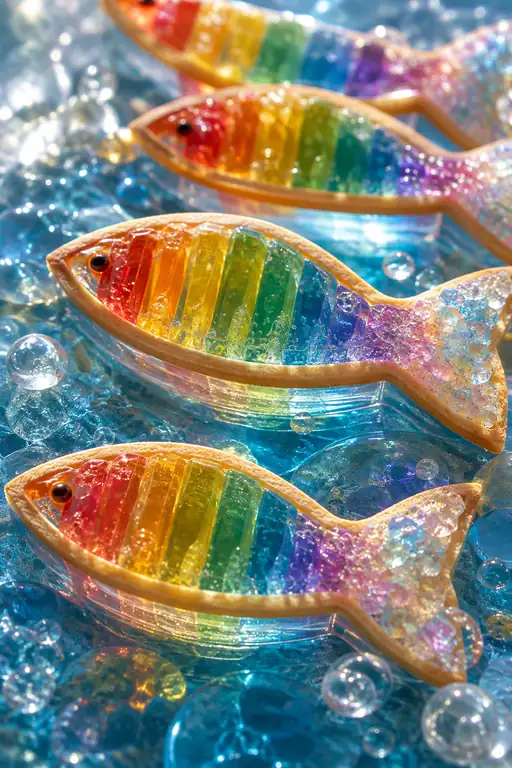 Together Through the River of Colors
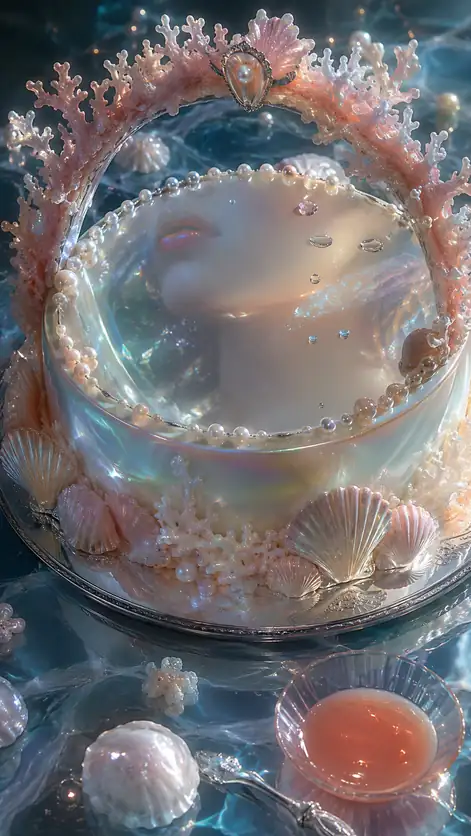 The Sea Remembers My Reflection