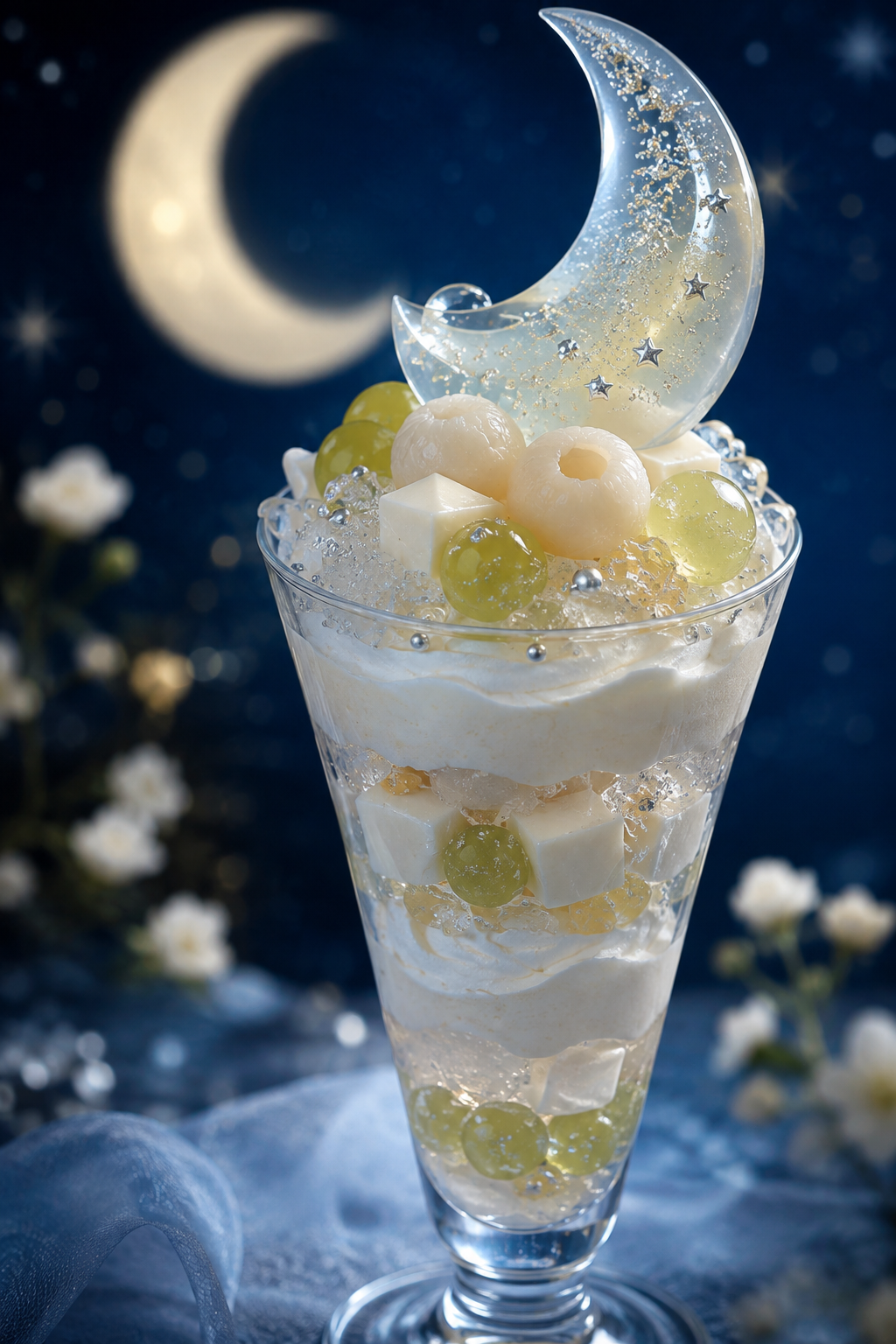
The Crescent Moon Melts into the Parfait
Critique
Introduction This parfait translates moon and night into sugar, cream, fruit, and ice. The tall glass stands sharply against deep blue. Celestial imagery becomes edible without losing individual textures. Description Layers of white cream, clear jelly, pale cubes, green grapes, and round translucent fruit fill a fluted parfait glass. Crushed ice and silver pearls crown the top with grapes, white ring-shaped fruit, and cubes. A large clear crescent rises above them, embedded with gold dust and silver stars. A luminous crescent shape appears blurred in the dark background beside soft white flowers and blue fabric. Analysis The glass establishes a strong central vertical, widening upward toward the crescent. Repeated spheres—grapes, pearls, bubbles, fruit rings, and background lights—create a playful orbital rhythm. White and yellow-green ingredients glow against saturated navy, while silver details add sharp accents. Transparent jelly, brittle ice, dense cream, and smooth fruit are carefully differentiated. Shallow depth of field isolates the dessert and makes the background moon an atmospheric echo. Interpretation and Evaluation The parfait turns distant night into an intimate, consumable fantasy. Its crescent topper acts as emblem and structural climax, while layered contents suggest descending through clouds and stars. The concept risks prioritizing spectacle over appetite, yet fresh grapes, creamy folds, and visible chill preserve sensory credibility. Gold and silver decorations are lavish, but the restricted palette keeps them coherent. Conclusion At first the sugar moon commands attention as a showpiece. Longer viewing moves downward through the contrasting layers and recognizes the glass as a carefully paced sequence of tastes and textures. The dessert’s strongest achievement is not mere resemblance to the sky, but the conversion of celestial distance into a varied, inviting experience.
Same Subcategory
 Where the Tea Sets Life Free
 A Rainbow Baked across the Sky
Similar Artworks
 The Moon Sleeps inside a Blue Slice
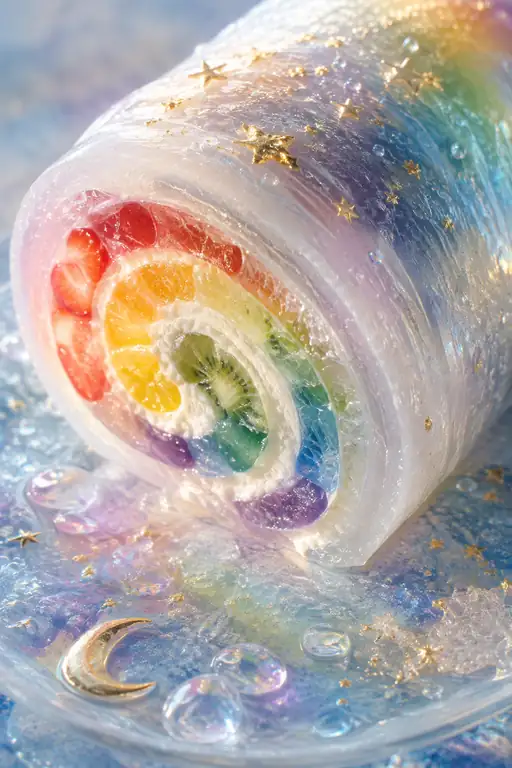 The Sky Rolled Itself Into Sweetness
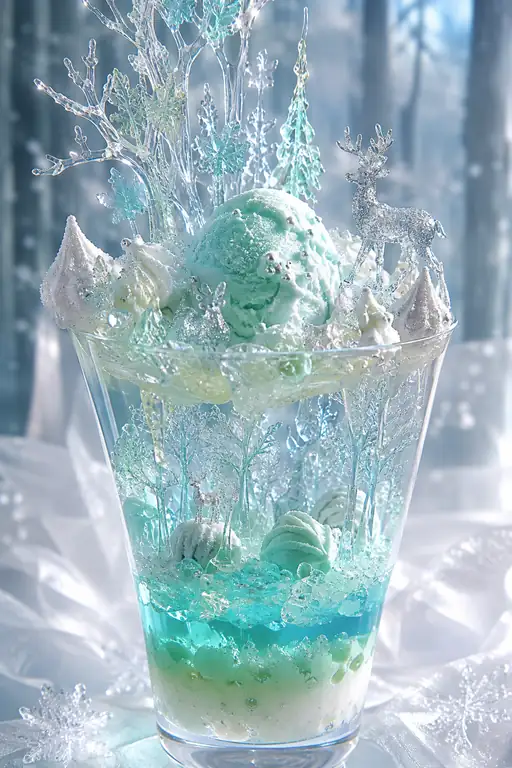 Winter Grows Beyond the Glass
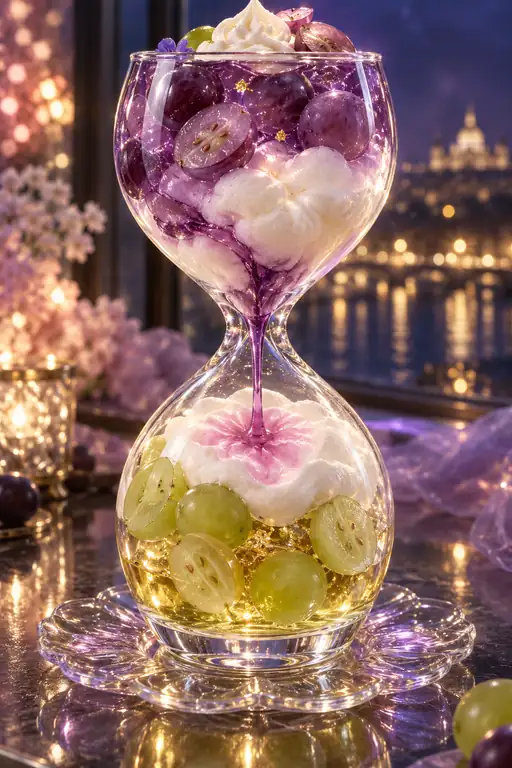 Hourglass of Violet and Emerald Wine
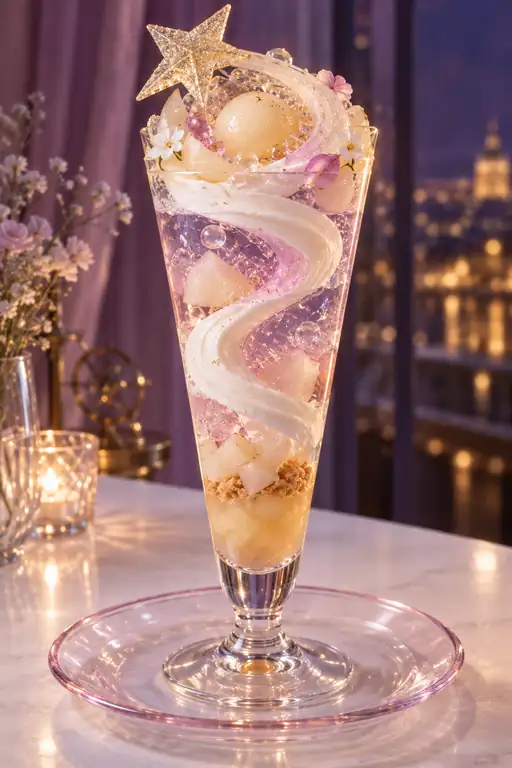 Starlight Serenade of Autumn Pear
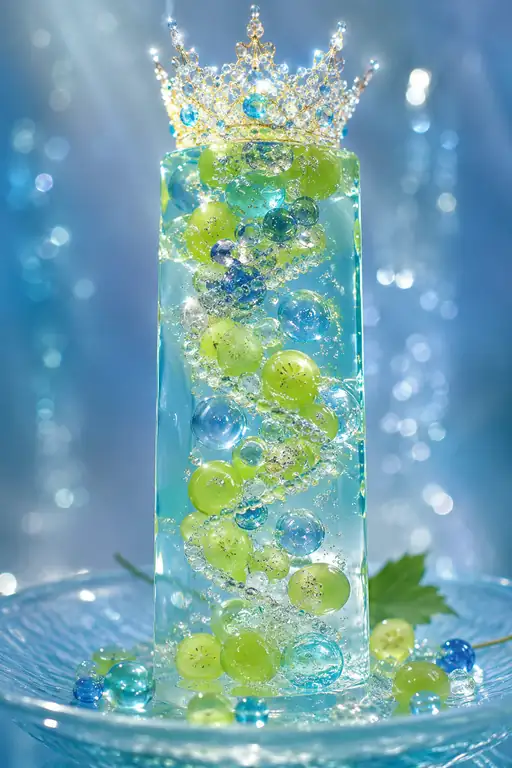 Crowned by the First Drop of Summer
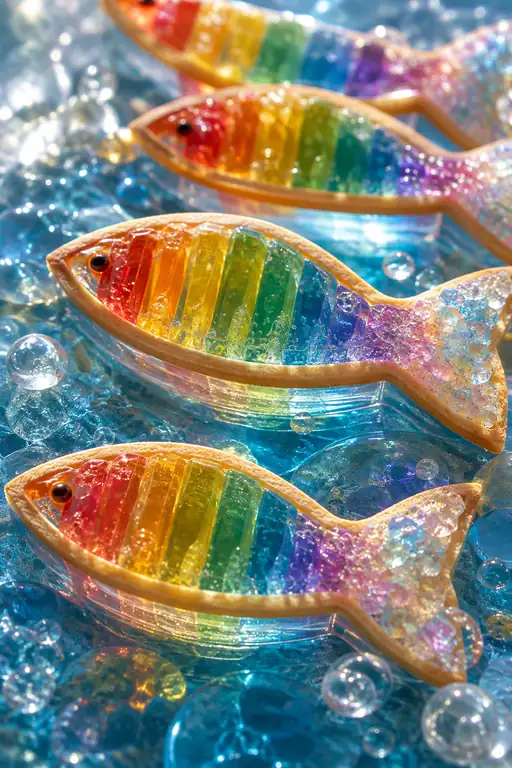 Together Through the River of Colors
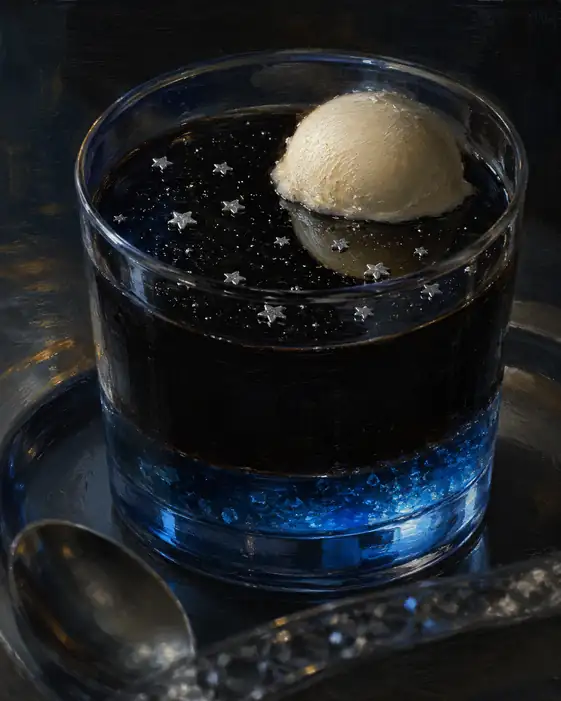 The Moon Rests in Black Coffee
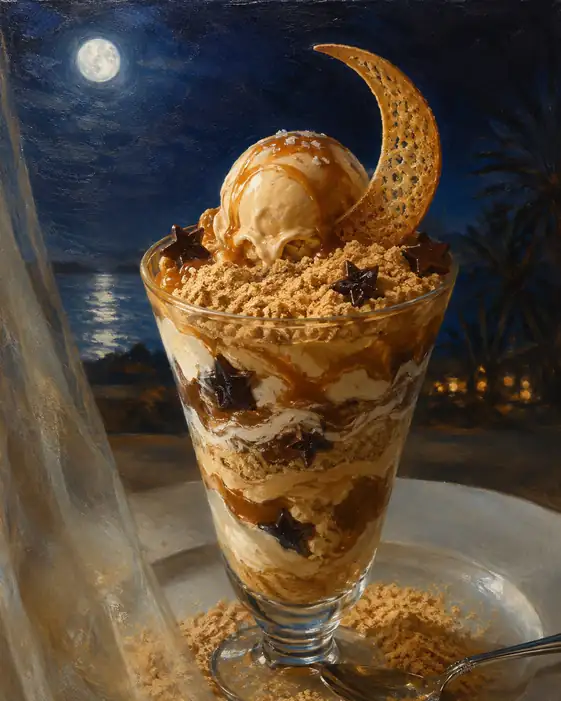 Midnight Melts into Caramel
 The Forest Sleeping Inside Winter