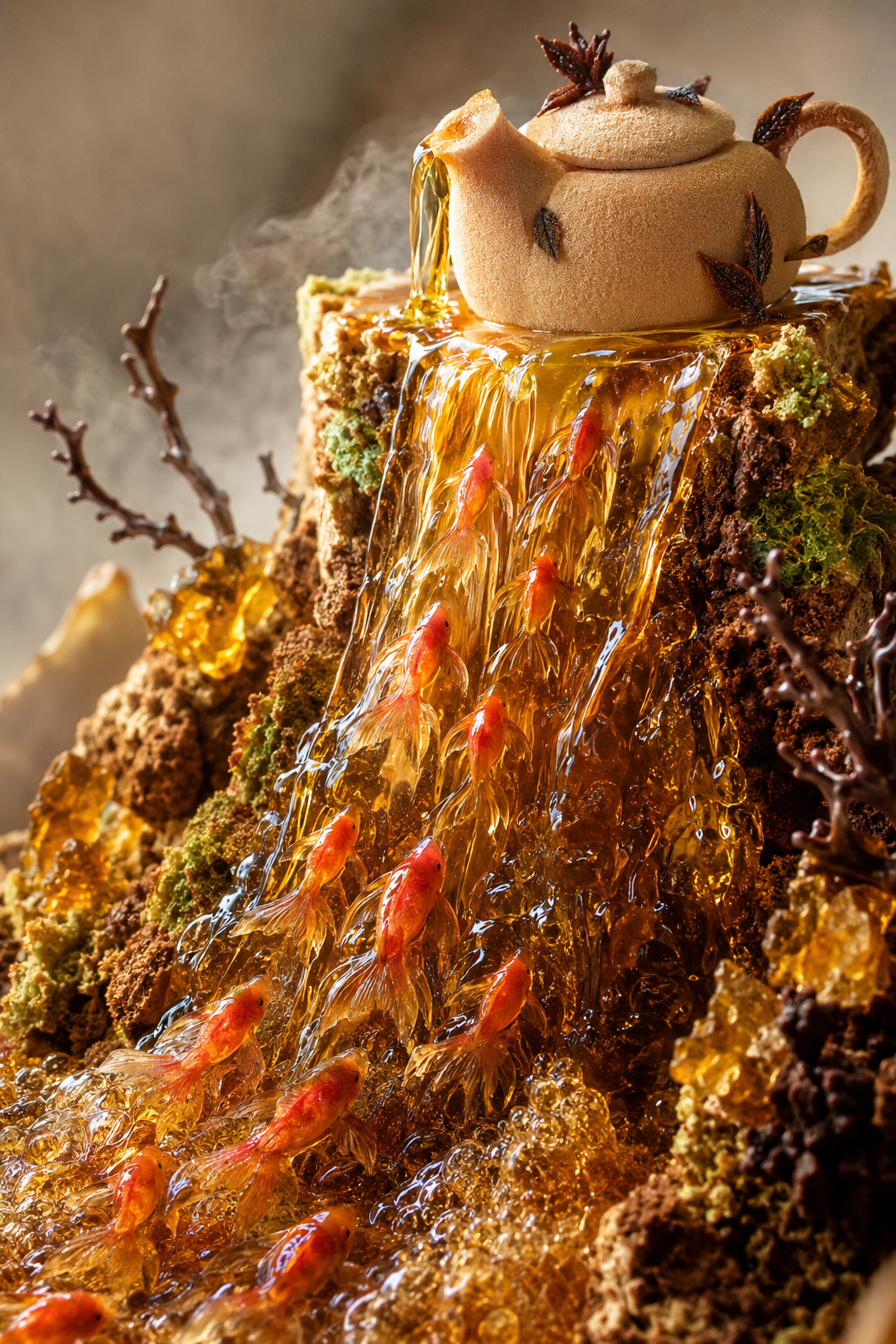
Where the Tea Sets Life Free
Critique
Introduction This work presents a teapot pouring amber liquid down an edible slope. Red-orange fish appear within the transparent flow, transforming tea into a river. The vertical composition combines still life, landscape, and migration. Description A rounded tan teapot rests at the upper right on a mossy brown ledge. Dark leaf ornaments cling to its textured body and lid. From the raised spout, clear golden liquid spills over the edge in a broad sheet filled with bubbles and elongated fish. The stream descends diagonally toward the lower left, bordered by porous rocklike cake, green moss, amber crystals, and dark branching forms. Analysis The teapot provides a compact horizontal weight above the long descending current. Bright backlight enters the liquid, producing layers of honey, orange, and white against the matte earth colors. Smooth fish bodies, stretched fins, glassy bubbles, granular rock, velvet-like pot, and brittle branches create strong tactile differentiation. Repetition of the fish guides the eye down the cascade, while their changing size establishes depth and direction. Interpretation and Evaluation The pouring action becomes an act of releasing life. Fish emerge from a domestic vessel and travel through a landscape formed from the same edible world, suggesting nourishment transformed into movement. The visual hierarchy remains clear despite abundant detail: spout, upper fish, and widening lower stream create successive focal points. Convincing transparency and the union of tea ceremony with migration demonstrate both technique and originality. Conclusion What first appears to be spectacular food decoration gradually reads as a narrative of passage. Gravity links vessel, river, and creatures in one continuous gesture. Warm color, varied surfaces, and the diagonal composition give the imagined ecosystem physical force, while the stationary teapot preserves a calm source above the active flow.
Same Subcategory
 Summer Looked Back at Me
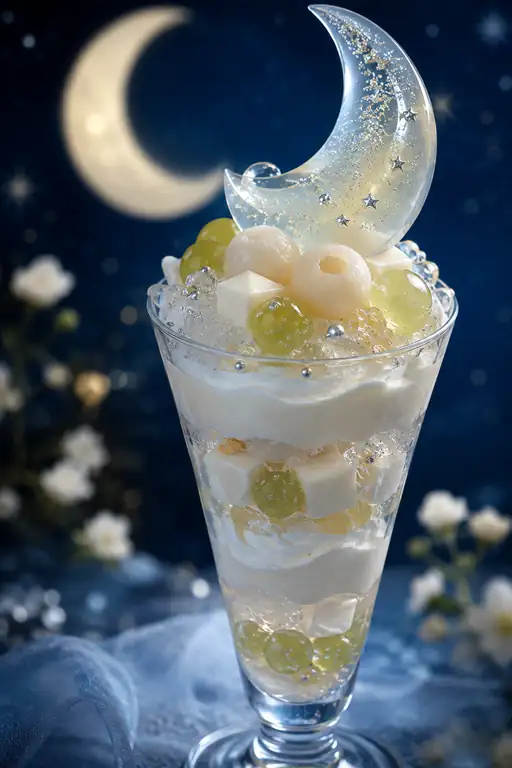 The Crescent Moon Melts into the Parfait
Similar Artworks
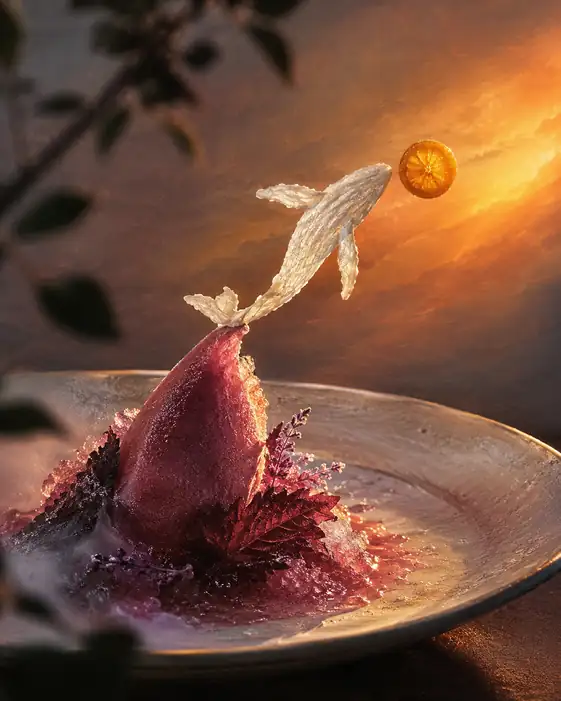 The Whale Who Chased the Last Light
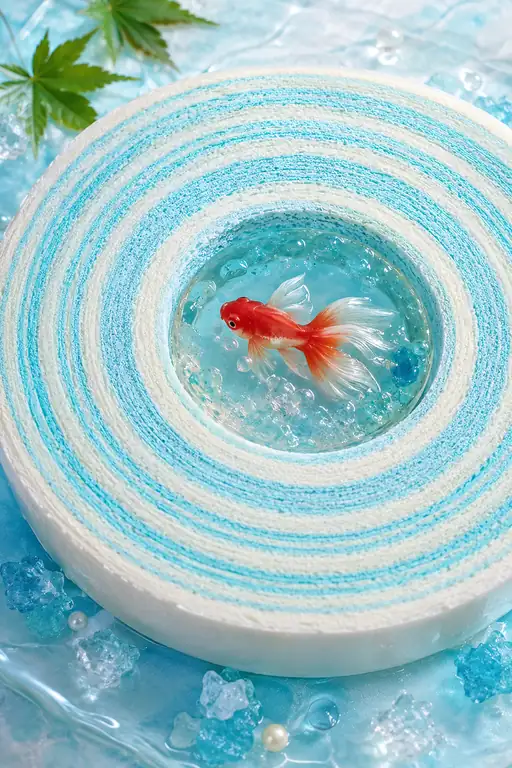 One Red Heart Inside the Ripples
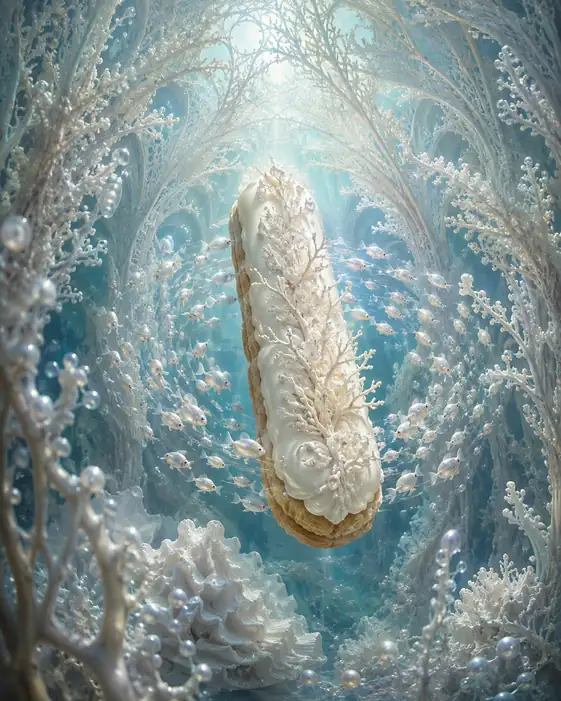 The Stillness All Lives Choose
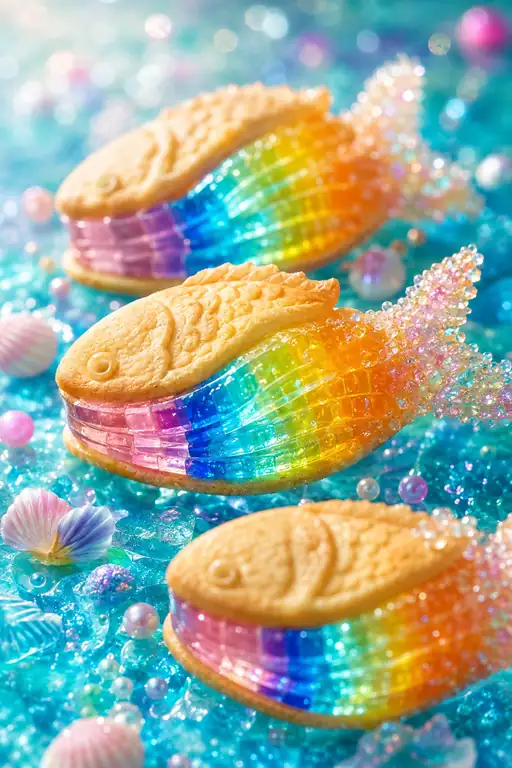 Rainbow Fish Carry the Festival Home
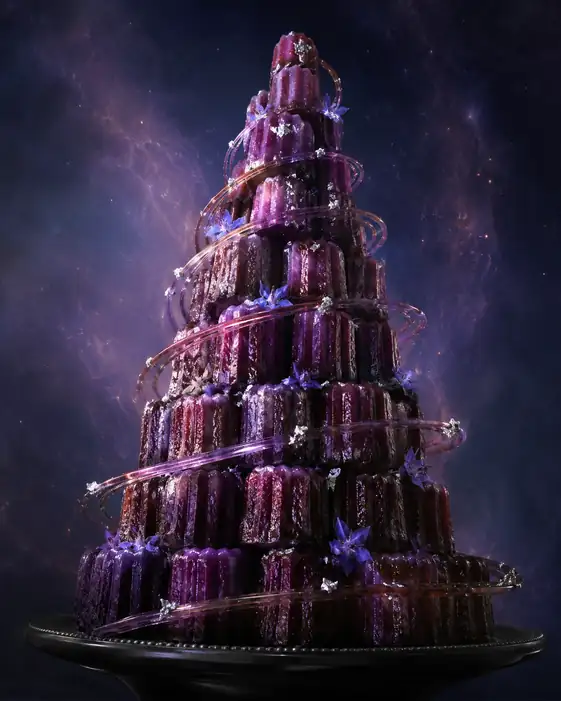 The Canele Tower Summons the Night
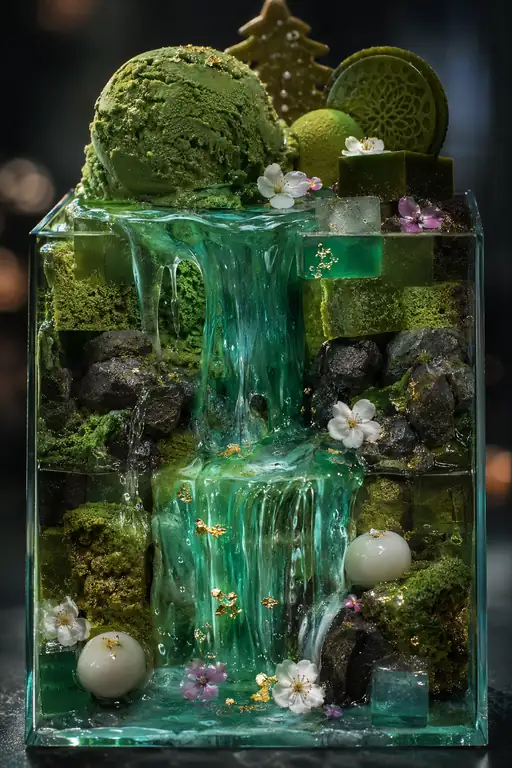 A Green Waterfall Hidden in Dessert
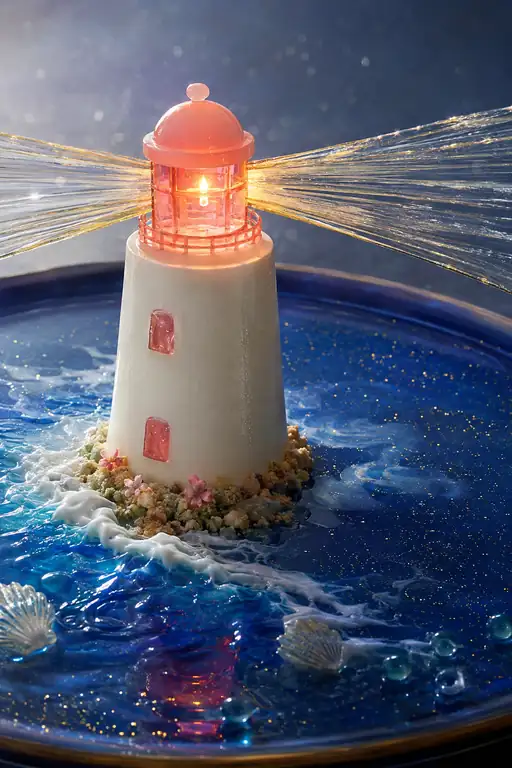 The Lighthouse Sends Sugar Light to Sea
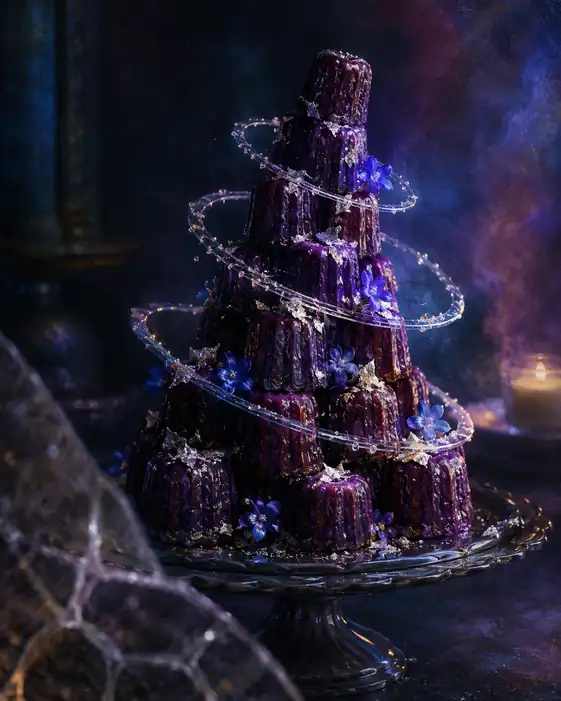 The Night Ascends in Spirals
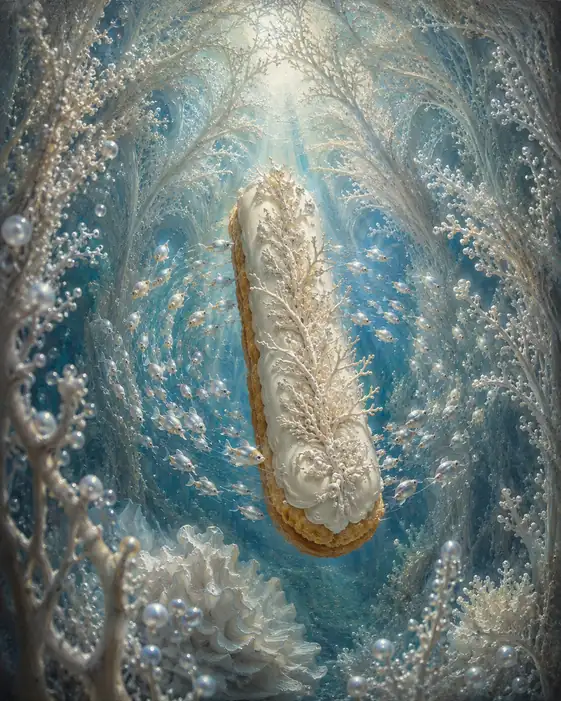 Where the Sea Learns Reverence
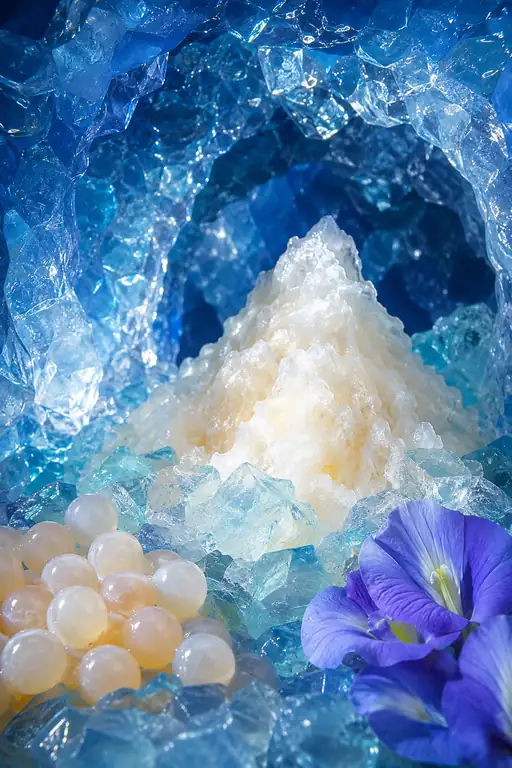 Warmth Sleeping Beneath Blue Ice