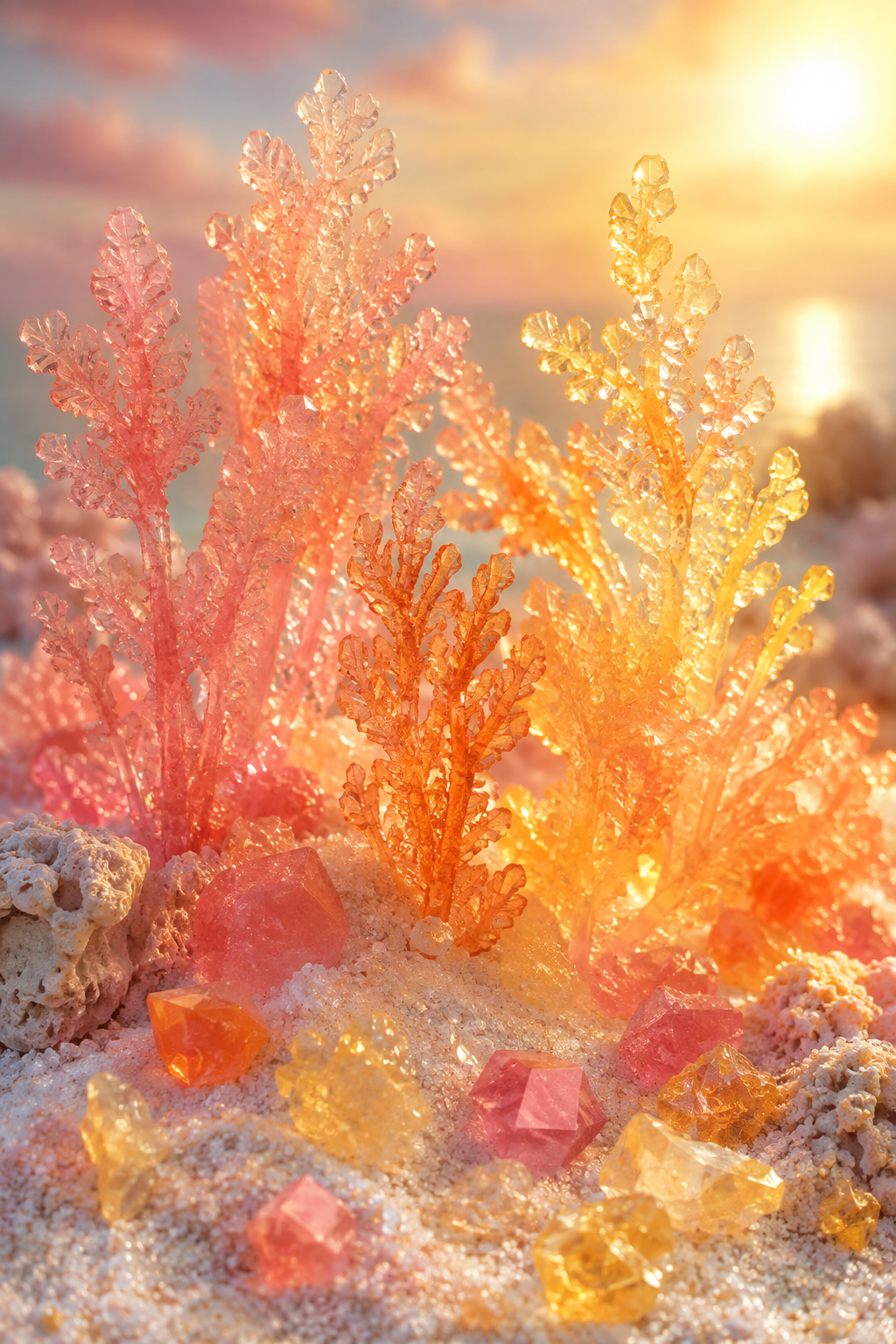
Morning Coral Learns the Colors of the Sun
Critique
Introduction This image depicts a miniature landscape of branching crystal forms and scattered faceted stones. Seen from a low, close viewpoint, the arrangement resembles a coral garden illuminated by sunrise. Its warm palette and shallow focus turn hard materials into an atmosphere of growth and heat. Description Tall pink branches rise on the left, while golden clusters occupy the right and a smaller orange spray anchors the center. Their segmented tips catch sharp highlights. Across the sandy foreground lie pink, amber, and pale-yellow polyhedral pieces among porous white rocks. A bright sun appears at upper right, with a second vertical reflection near the distant horizon. Analysis Backlighting passes through the translucent structures, shifting their color from rose in shadow to fiery orange and yellow at the edges. Overlapping branches build depth despite the compressed space, and their upward rhythms contrast with the low, angular stones. Crisp foreground facets gradually dissolve into soft background shapes. The diagonal exchange between the tall pink group and the sun keeps the composition balanced rather than symmetrical. Interpretation and Evaluation The work imagines mineral matter as a living ecosystem. Branches appear to germinate from sand, while cut stones resemble seeds or fallen fruit. This ambiguity gives the scene originality without sacrificing visual clarity. The rendering of refraction, granular ground, and porous rock is persuasive, and the controlled progression of warm hues produces harmony while retaining distinct focal accents. Conclusion What first reads as a decorative collection of crystals becomes a study of growth expressed through light. The upward structure, material contrasts, and gradual softening of depth support a convincing invented world. Its chief achievement is making rigid, artificial forms feel temporarily animated by the passing sun.
Same Subcategory
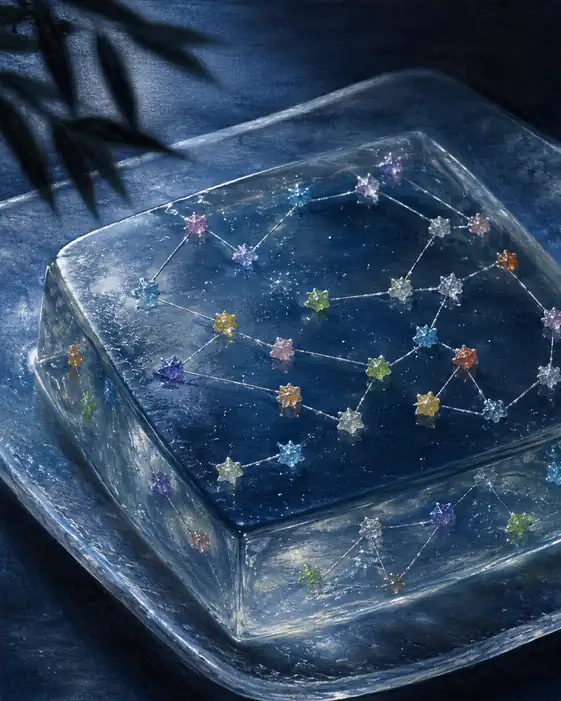 A Sky I Could Hold
Similar Artworks
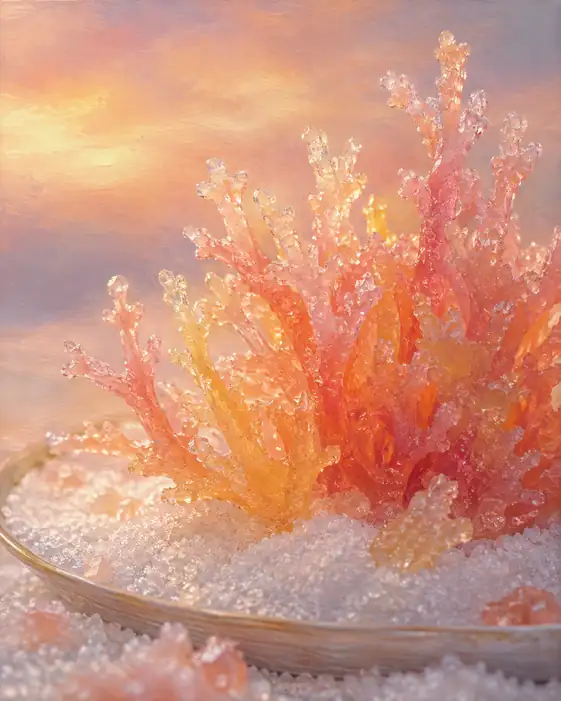 Coral Eats the Morning Light
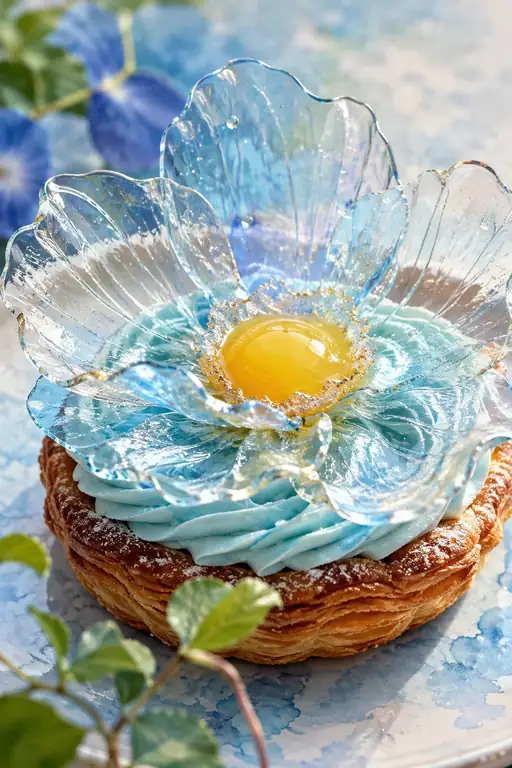 Morning Glory Holds a Drop of Sun
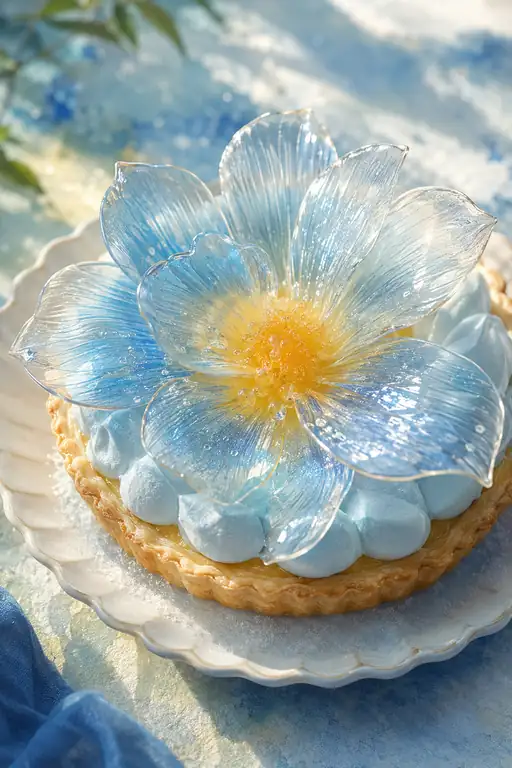 A Flower Made of Morning Water
 I Tied the Sunset to a Golden Thread
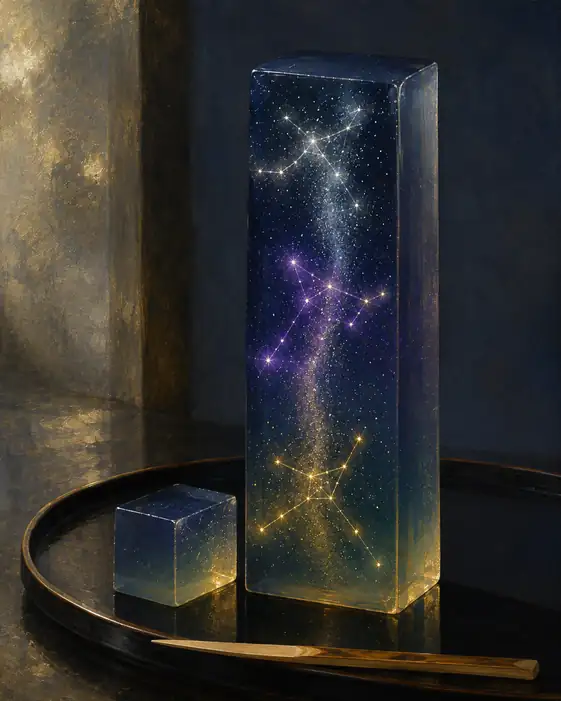 An Archive for the Uncontainable
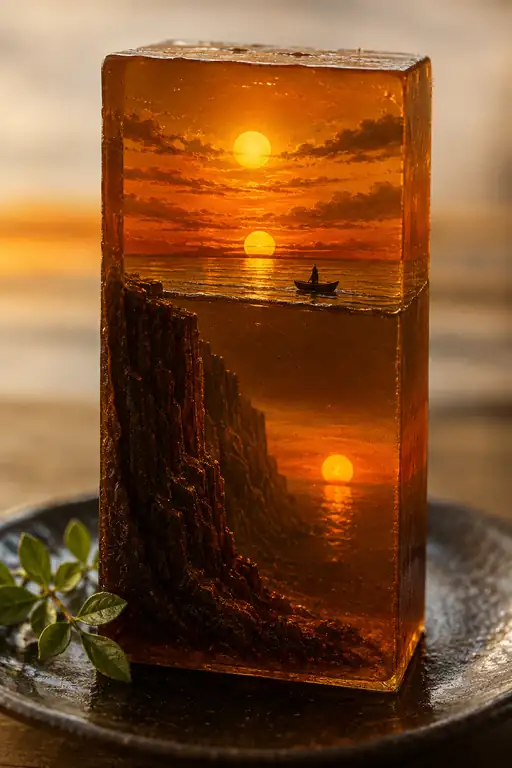 Three Suns Wait Inside Amber
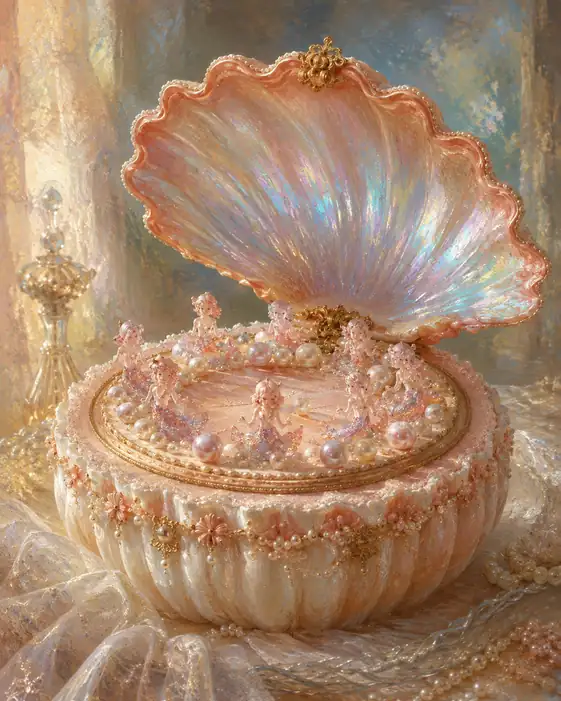 A Seashell Plays the Mermaid's Dream
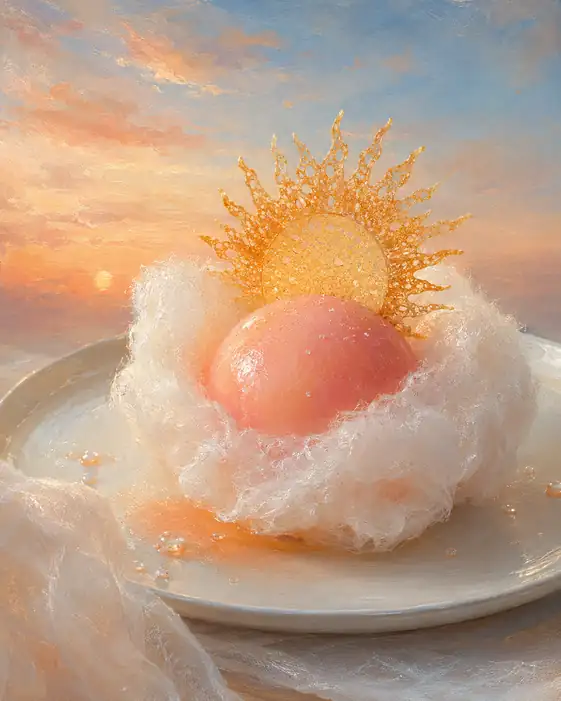 The Sweet Sun Wakes in a Bed of Clouds
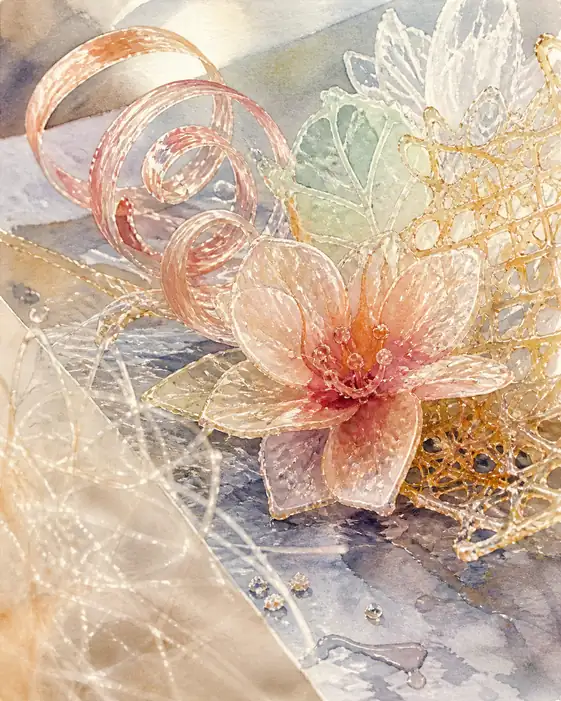 The Spiral of Glass and Light
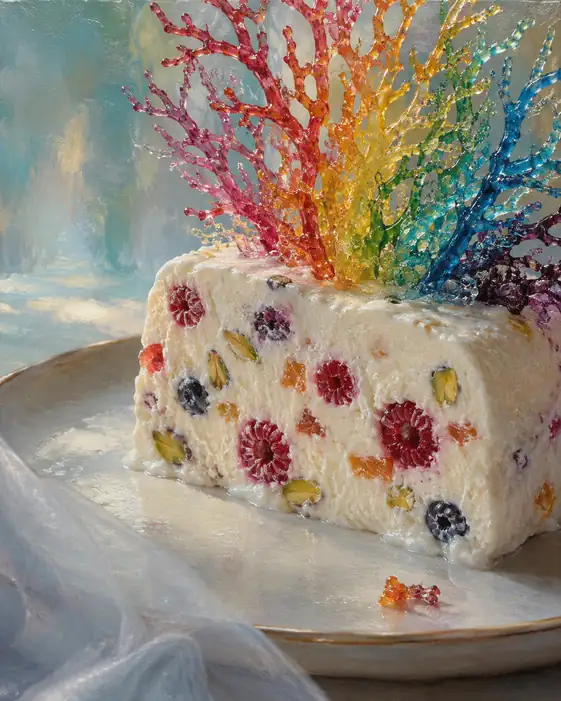 Where a Rainbow Grows from Sweet Winter