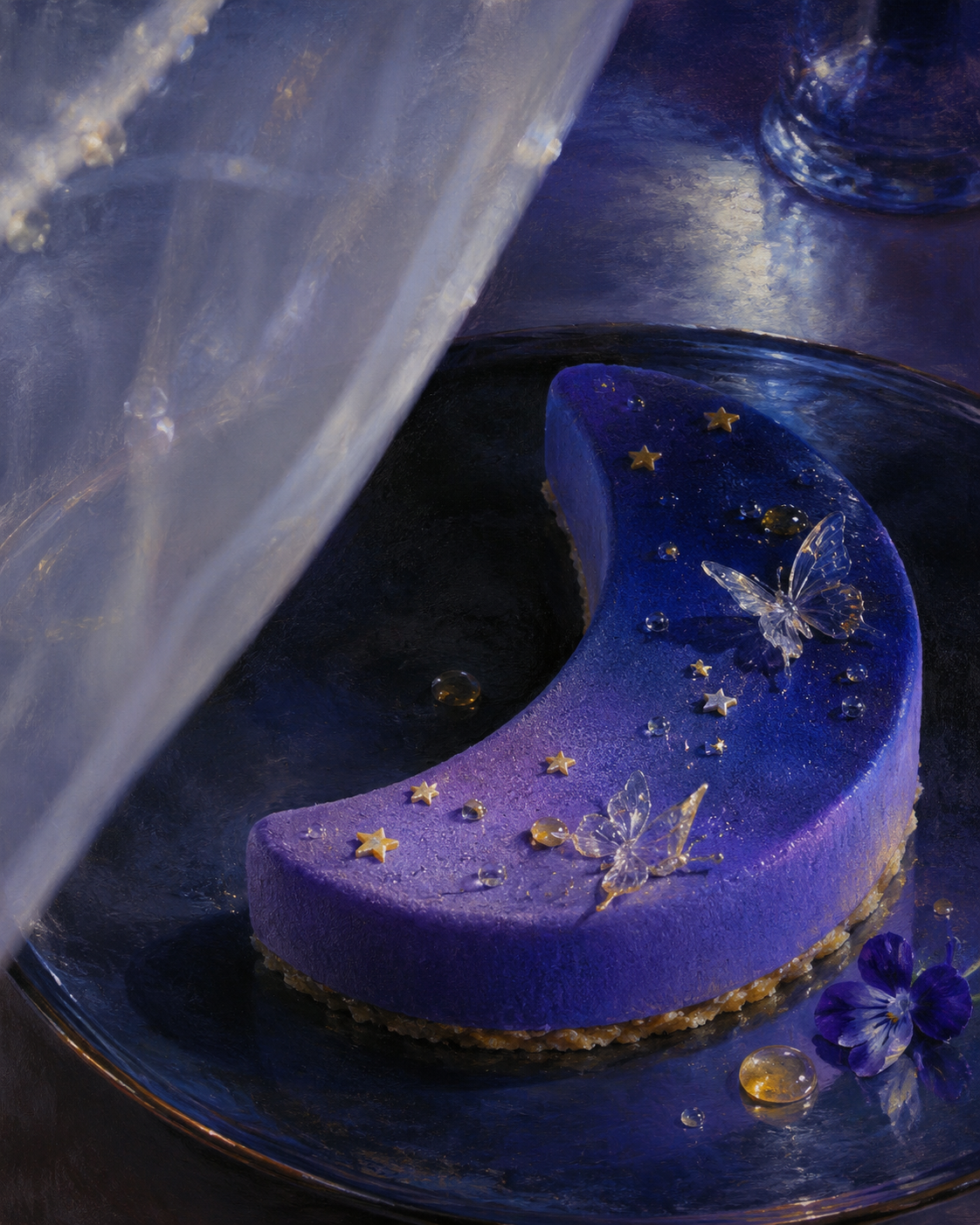
Where Night Learns to Flutter
Critique
Introduction This still life presents a violet crescent cake on a dark plate. Gold stars, clear droplets, two transparent butterflies, and a pansy turn dessert into a quiet nocturnal emblem. Description The crescent lies diagonally, its hollow facing the sweeping white curtain. Its surface shifts from lavender at the near tip to ultramarine at the far curve. A granular biscuit layer shows beneath smooth mousse. Stars and amber beads scatter across the arc; one butterfly stands near the center and another rests lower down. Cool reflections repeat in the plate. Analysis The crescent’s broad curve establishes the composition and gathers the small decorations into an orbital rhythm. The pale curtain occupies almost half the frame, creating a large soft counterform against the cake’s dense blue. Directional light from the upper left grazes the mousse and passes through the butterflies, distinguishing velvety, crystalline, and liquid surfaces. The diagonal placement prevents the heavy plate from becoming static, while the pansy at lower right closes the circular movement. Interpretation and Evaluation The dessert condenses a night sky into an intimate object. Stars become tangible ornaments, and butterflies suggest movement within a hushed arrangement. The restrained palette gives the fantasy coherence, while amber accents provide warmth. Precise edges and reflections make the materials credible. The veil-like curtain introduces privacy, as though the crescent were discovered after dusk. Conclusion The first impression of elegant decoration develops into an image about distance made touchable. Through its clear crescent silhouette, controlled blue-violet color, and sensitive contrast of opaque cake with transparent insects, the work converts cosmic imagery into a contemplative still life.
Same Subcategory
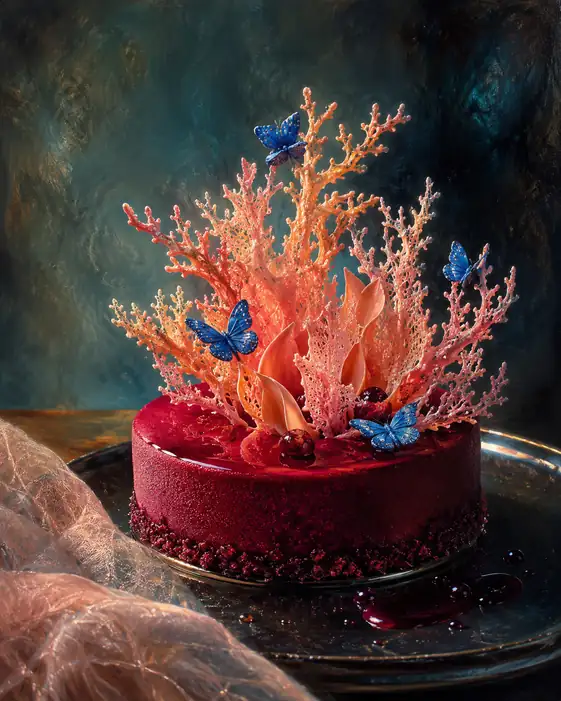 Blue Butterflies Wander through the Cassis Coral Forest
 Penguins Dream upon the Midsummer Ice Floes
Similar Artworks
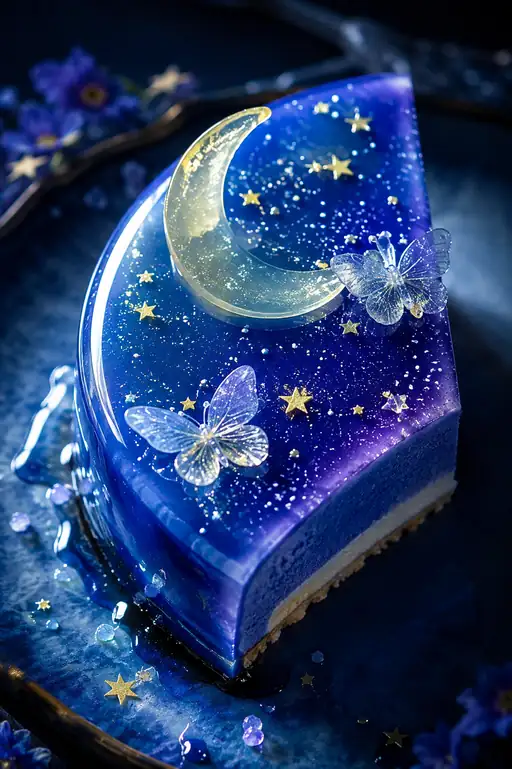 The Moon Sleeps inside a Blue Slice
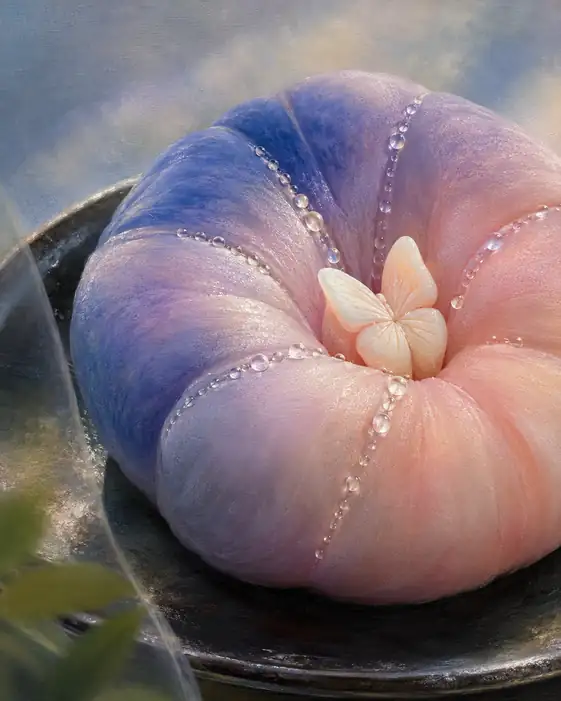 A Flower Dreams beneath Violet Silk
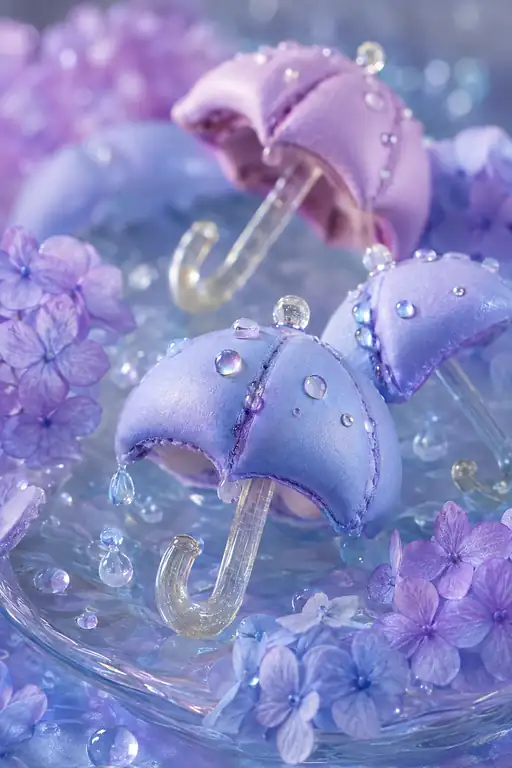 Purple Rain Opens Tiny Umbrellas
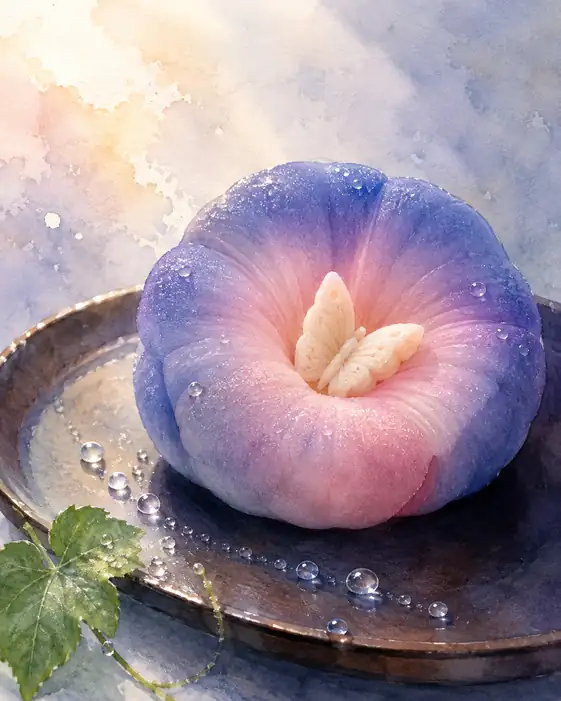 Between Arrival and Flight
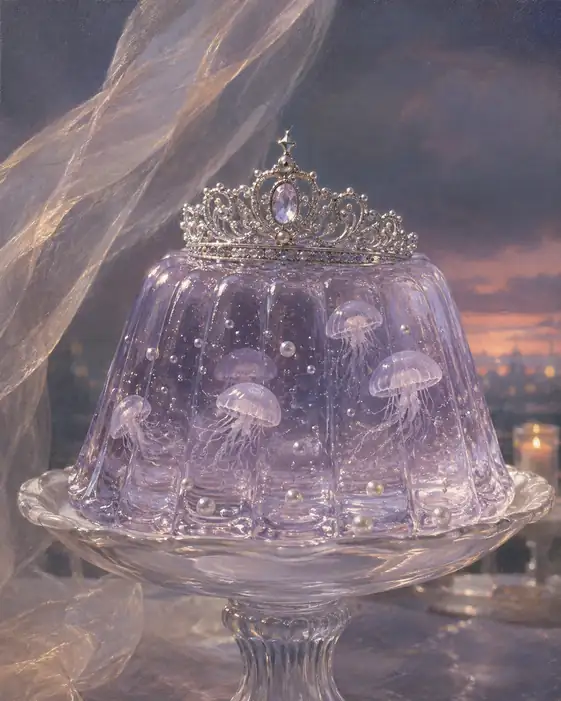 The Crown above the Unruled Sea
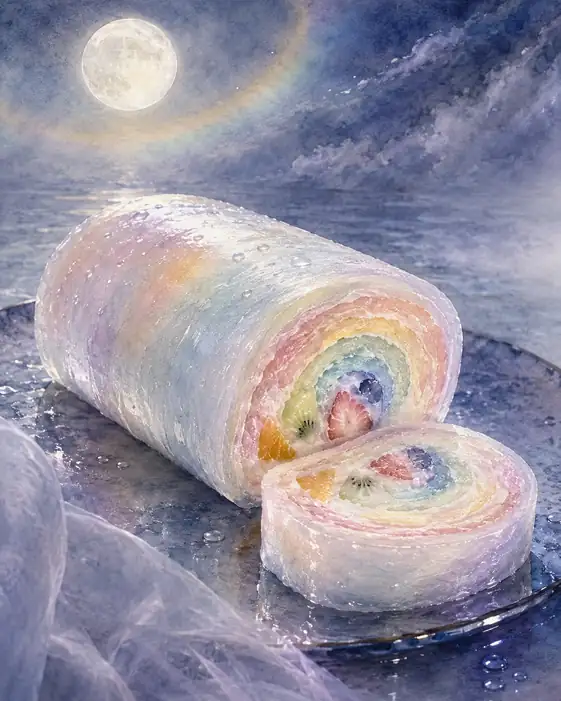 The Moonbow Hidden in Every Fold
 The Sea Remembers My Reflection
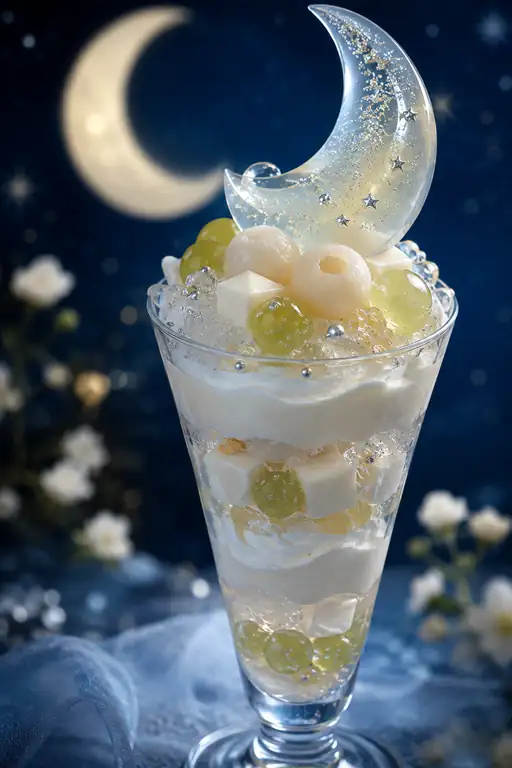 The Crescent Moon Melts into the Parfait
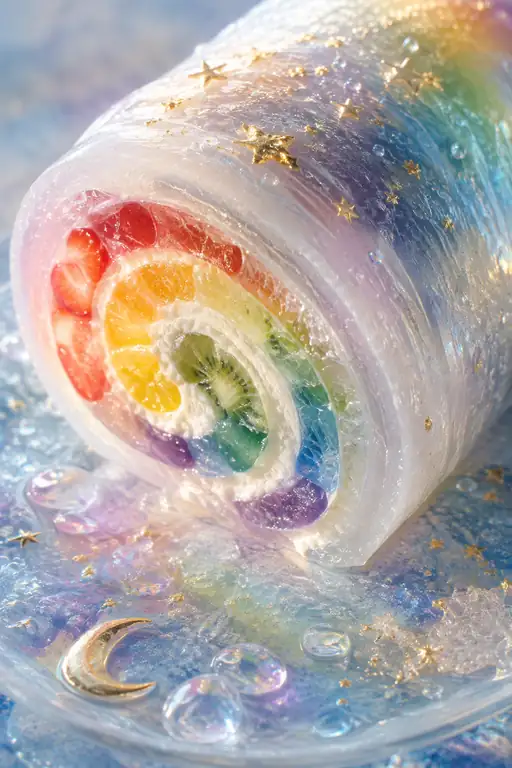 The Sky Rolled Itself Into Sweetness
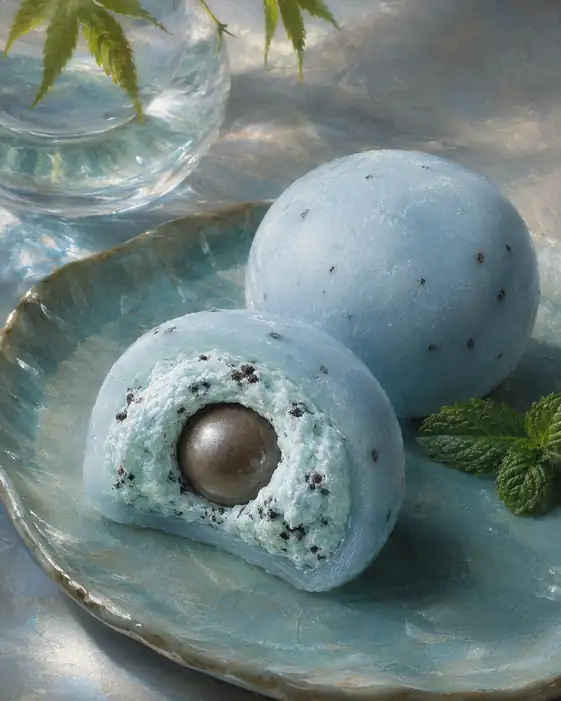 The Secret at the Heart of Coolness