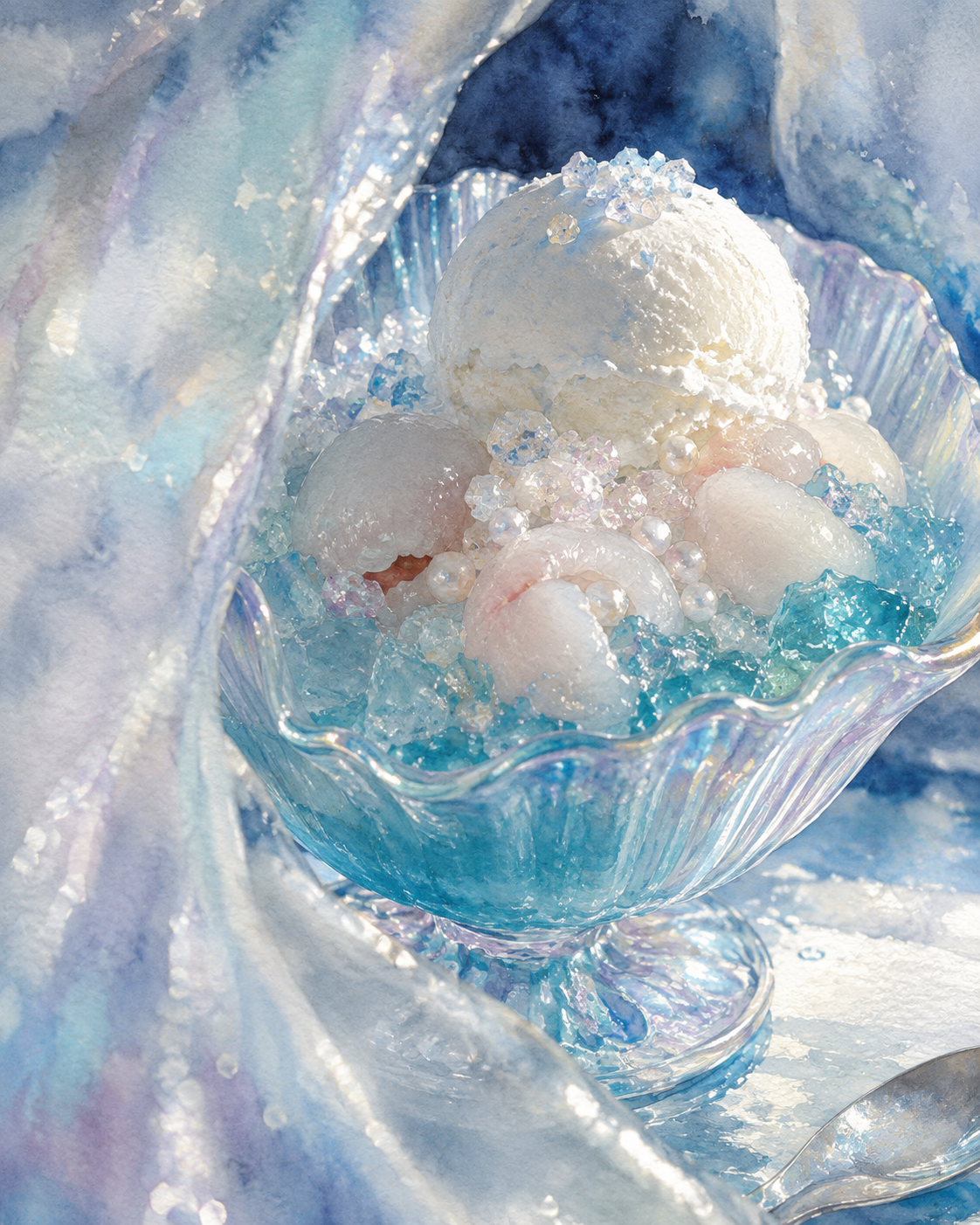
Moon-Drop Almond Parfait
Critique
Introduction This painting presents a fluted glass holding translucent blue ice, white cream, and rounded fruit-like forms. The object is described with enough specificity to make its materials immediately legible, while the surrounding light gives the arrangement an imaginative, almost ceremonial presence. The work approaches confectionery as both an edible subject and a carefully constructed visual world. Description The palette is organized around icy blue, pearl white, and faint pink. Transparent, glossy, powdered, or creamy passages are separated through changes of edge, reflection, and density. The setting stabilizes the object, while accents clarify scale. Analysis The composition is governed by the diagonal rim and rising mound of white forms. This arrangement establishes a clear hierarchy and preserves depth even when ornament is abundant. The technique shifts between crisp highlights and softened color transitions; layered strokes describe fragile surfaces without making them rigid. Light therefore functions not only as illumination but also as a structural device joining the confection to its setting. Interpretation and Evaluation The image balances close observation with controlled fantasy. Its descriptive skill is especially visible in the distinction among glass, sugar, cream, fruit, and pastry, while the color design creates mood without obscuring form. The composition remains readable, the handling is varied, and the transformation of familiar sweets into sculptural imagery gives the work a distinct and appealing originality. Conclusion What first appears to be a decorative dessert gradually reveals a disciplined study of transparency, texture, balance, and light. Coherent structure and responsive brushwork allow minute details to reward close viewing without weakening the overall silhouette. The painting succeeds by making sensory attraction and formal order equally important parts of the viewing experience.
Same Subcategory
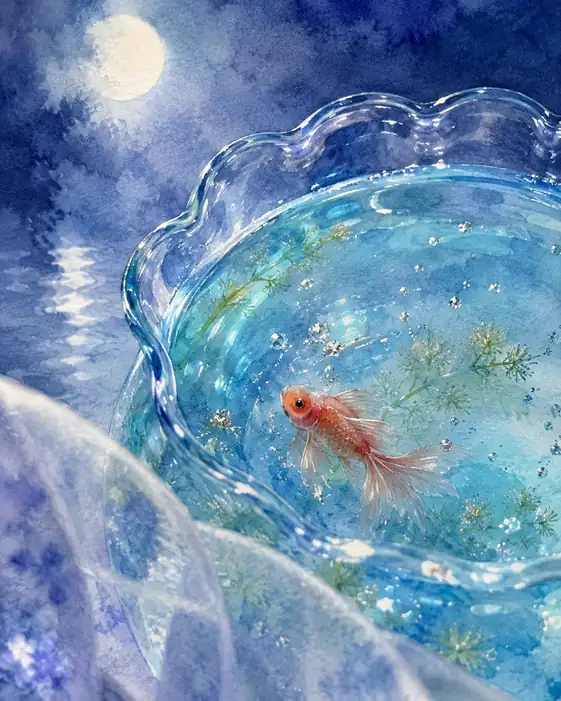 The Moon Keeps a Goldfish Dream
Similar Artworks
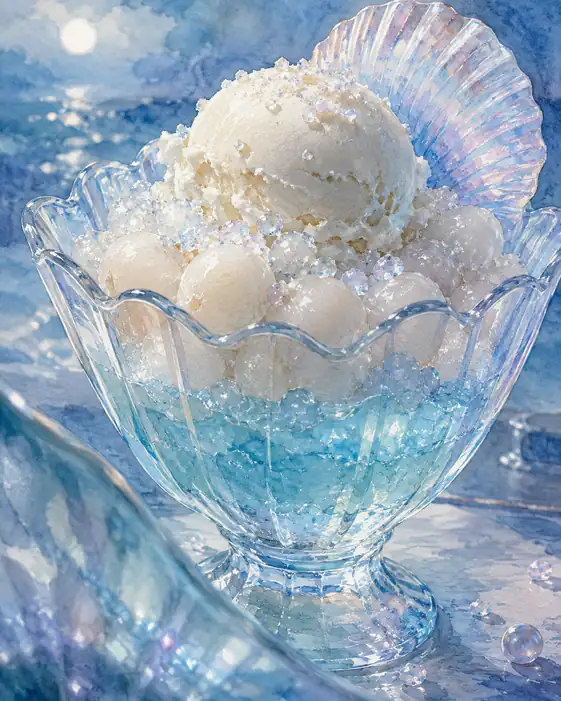 Pearl Tide in a Shell
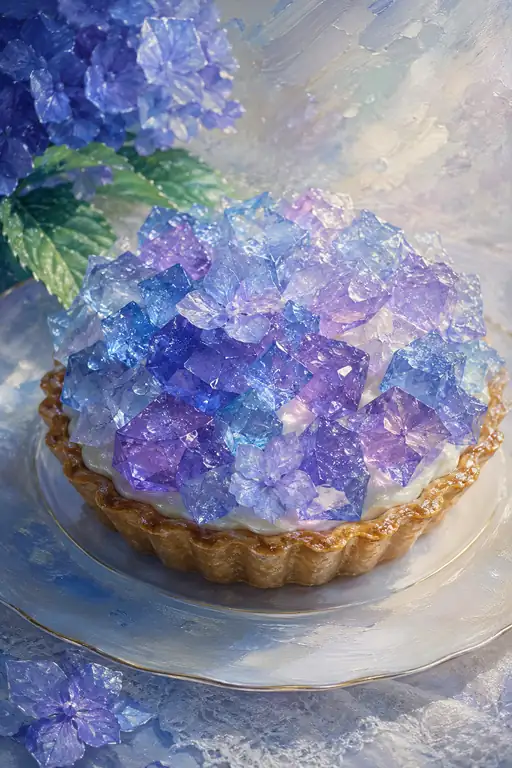 Hydrangeas Cut from Summer Glass
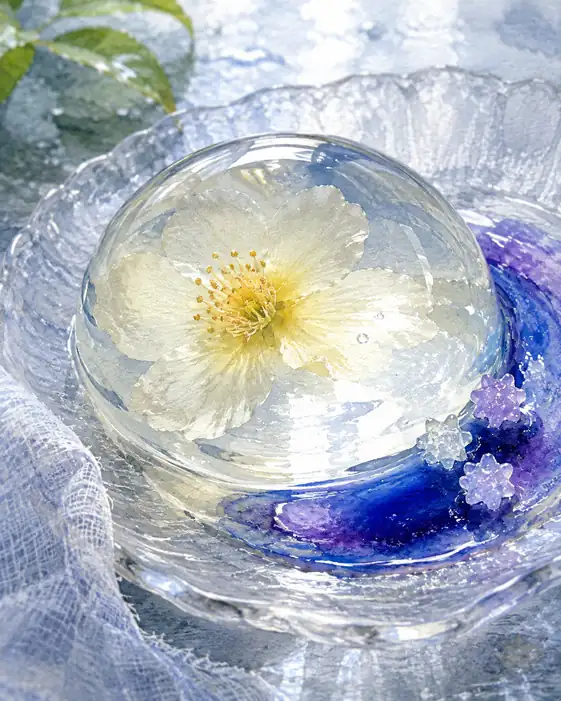 Rain Holds a Lemon Blossom
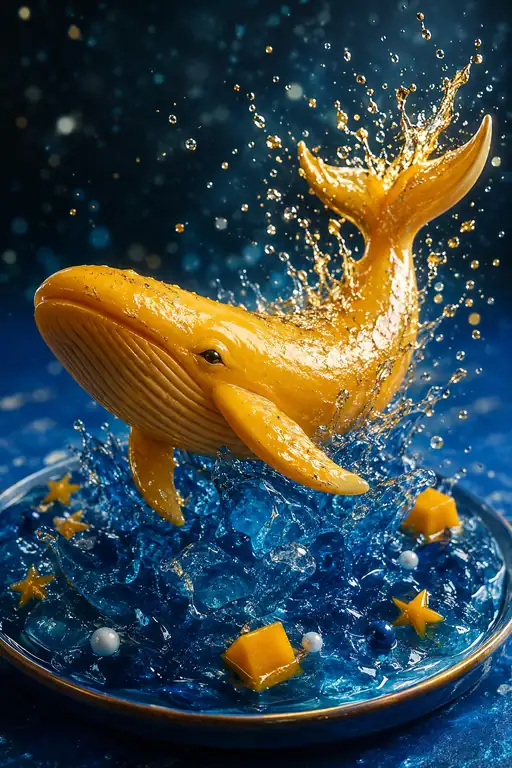 The Golden Whale Leaps beyond the Mango Stars
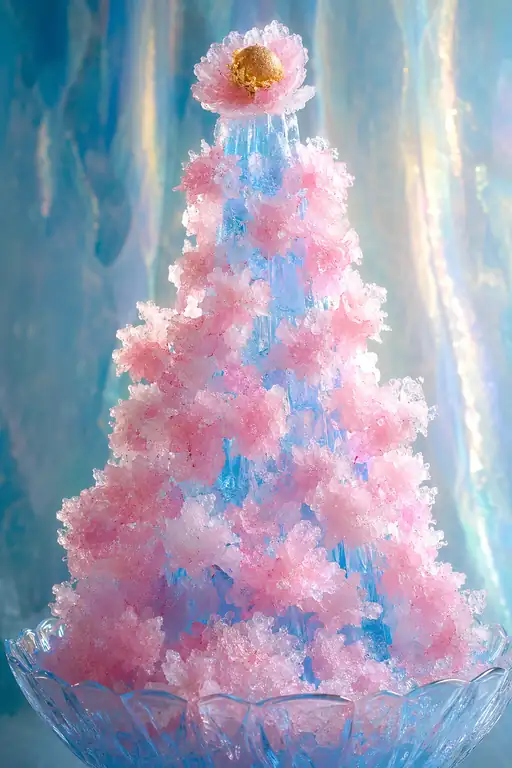 Peach Blossoms Climb the Ice
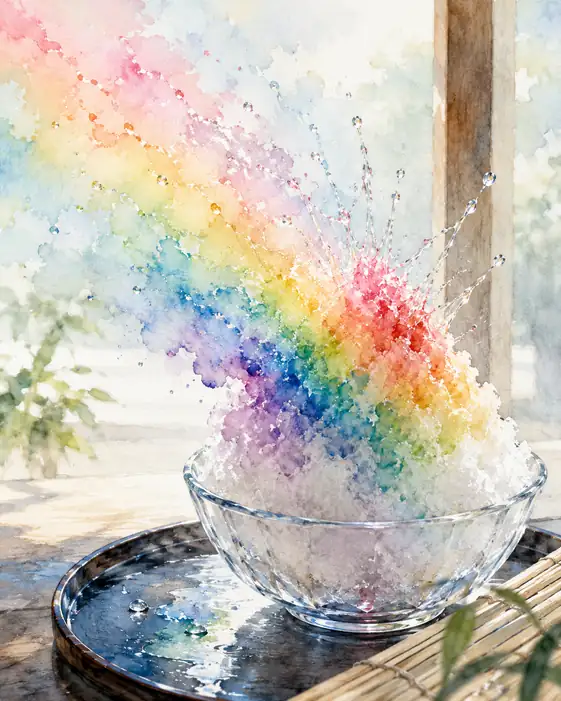 Rainbow Falls on a White Mountain
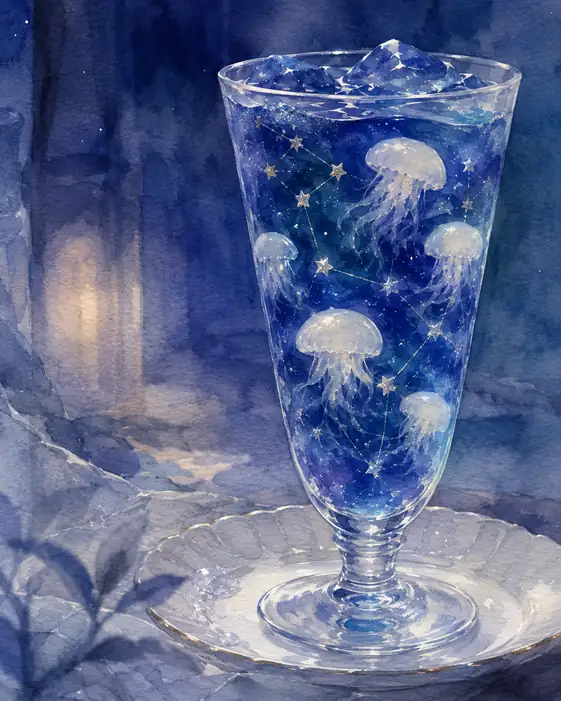 Constellations Where Jellyfish Sleep
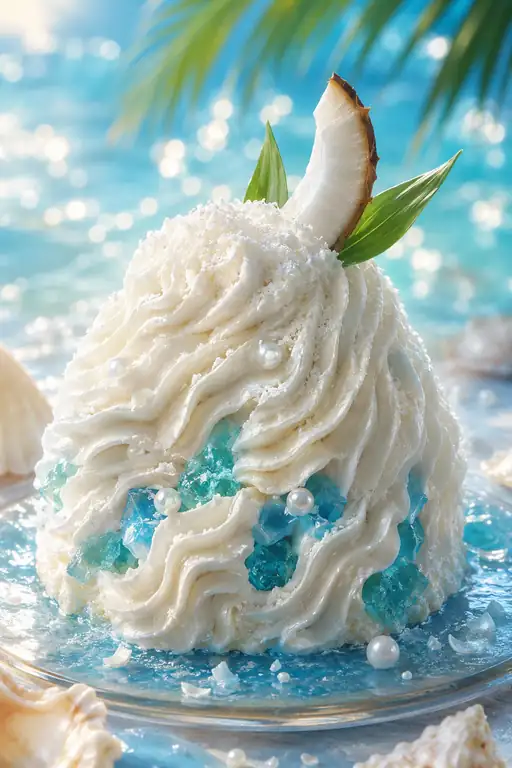 White Waves Remember the Tropics
 Morning Glory Rings in Glass
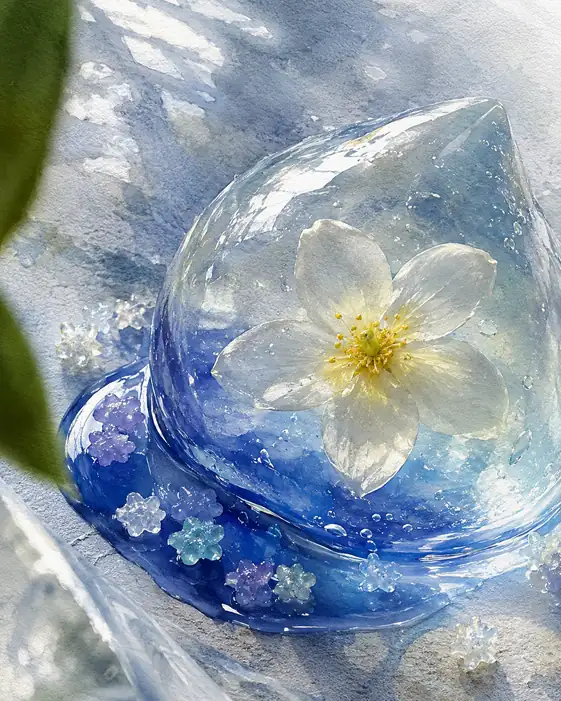 A White Blossom Kept Inside a Raindrop