
Winter Finds a Rainbow on the Ground
Critique
Introduction This terrace is reduced to pale stone, drops, plants, sun, and lingering moon. A short foreground rainbow turns an empty architectural surface into a record of changing weather. Description The terrace stretches toward a low parapet and distant hazy hills. The sun shines near the right horizon through golden foliage, casting a long reflection across wet paving. A pale moon hangs at upper left. Blue-green grasses and a single white flower enter from the left foreground; small stones rest nearby. Droplets scatter over the floor around a diagonal patch of rainbow color. Analysis The wide stone plane gives negative space unusual prominence. Paving seams and the solar reflection lead toward the horizon, while long grasses cross them with loose diagonals. The moon and sun balance opposing upper corners. Cool blue shadows occupy the left foreground and warm gold gathers at right, with the rainbow acting as a chromatic bridge. Sharp droplets and stones anchor the immediate surface against softened distance. Interpretation and Evaluation The simultaneous moon and sun mark a transitional hour, while rain remains as evidence rather than ongoing event. The grounded rainbow suggests that wonder can appear on ordinary surfaces when conditions align. Its bright color could feel added, but irregular edges, puddled stone, and surrounding debris integrate it. The solitary flower introduces vulnerability without turning the terrace into a conventional garden scene. Conclusion At first the rainbow seems to animate an otherwise empty platform. Longer viewing reveals that emptiness as receptive space, holding moonlight, sunlight, water, shadow, and a fragile plant together. The painting’s calm optimism rests on readiness: after weather passes, even bare stone can receive and briefly display a spectrum.
Same Subcategory
Similar Artworks
 Two Rainbows Promise the Same Tomorrow
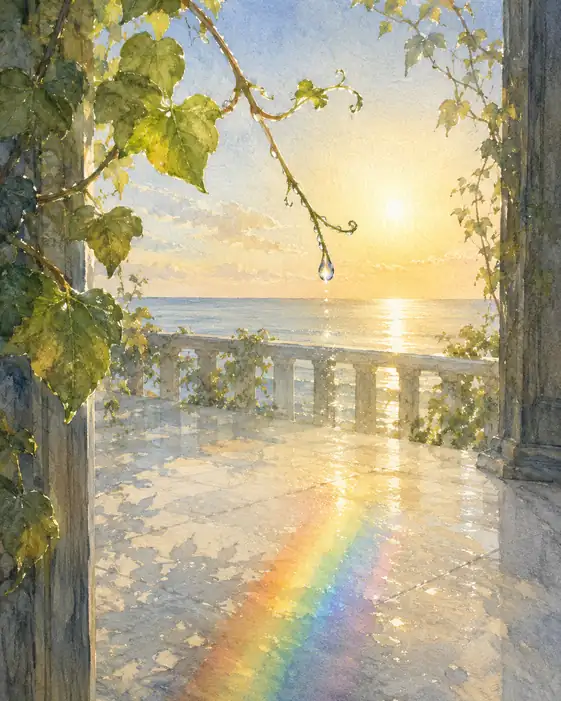 A Rainbow Comes Home to the Balcony
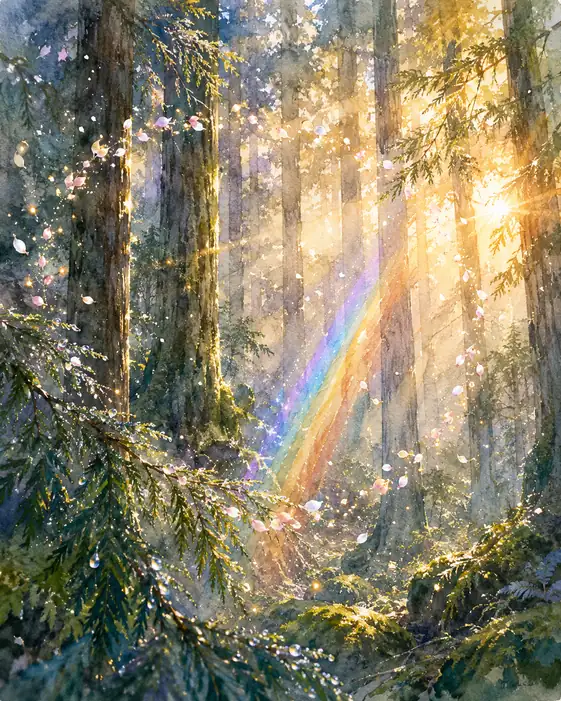 The Forest Opens a Rainbow Door
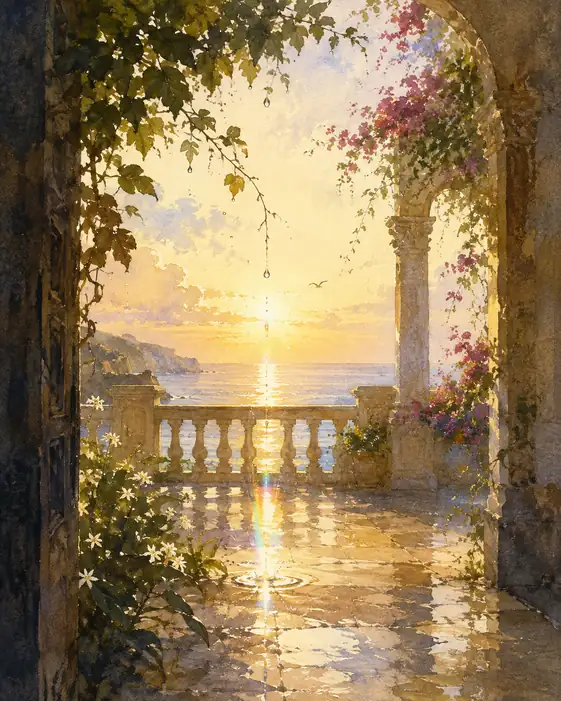 A Raindrop Holds the Mediterranean Sun
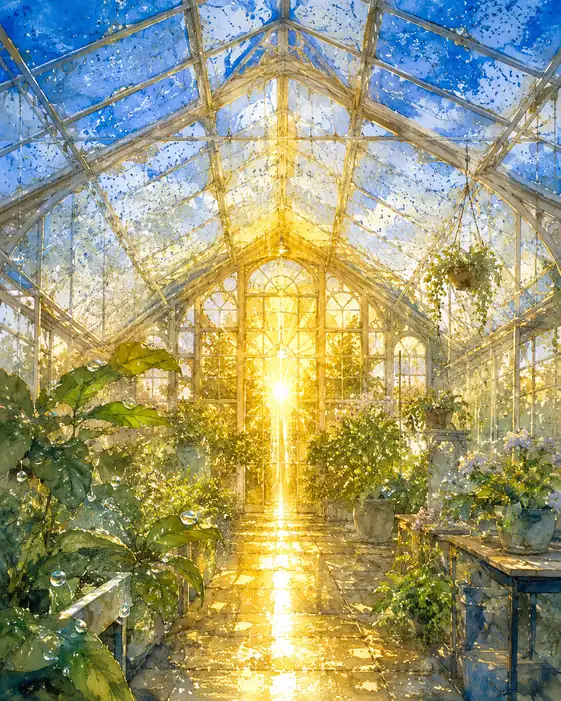 The Greenhouse Keeps a Private Sun
 After the Storm, the World Becomes Whole
 One Drop Opens the Hidden Rainbow
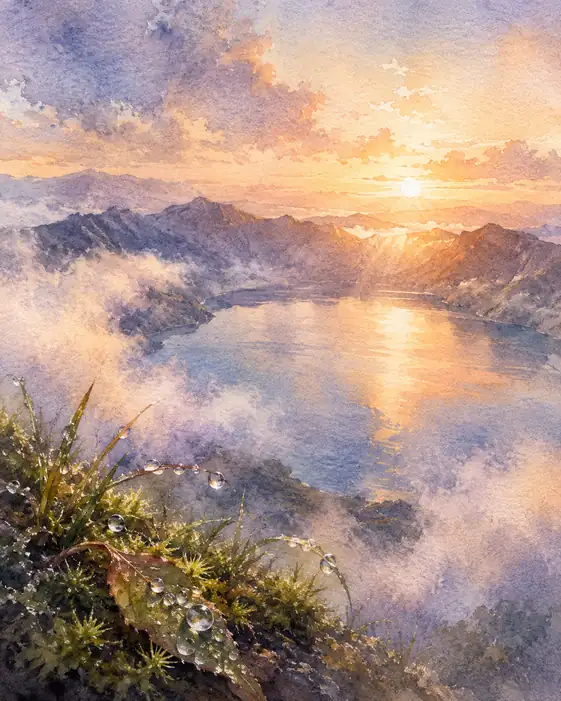 The Crater Lake Receives the Evening
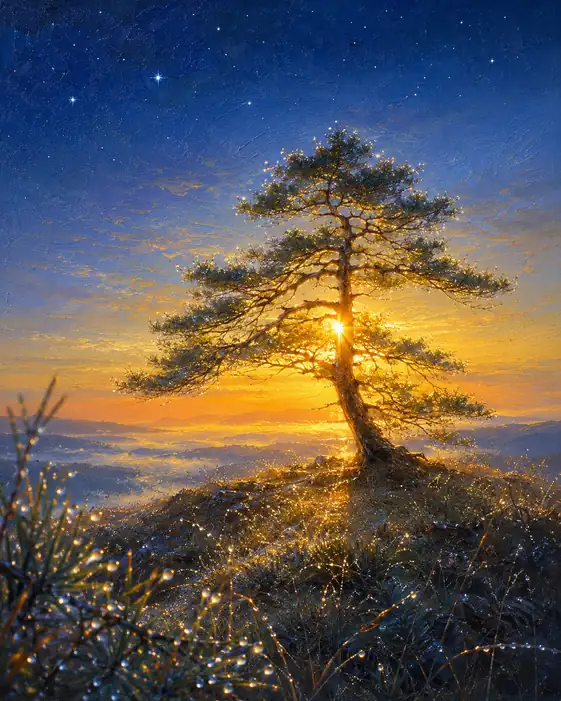 The Lone Pine Carries the Dawn
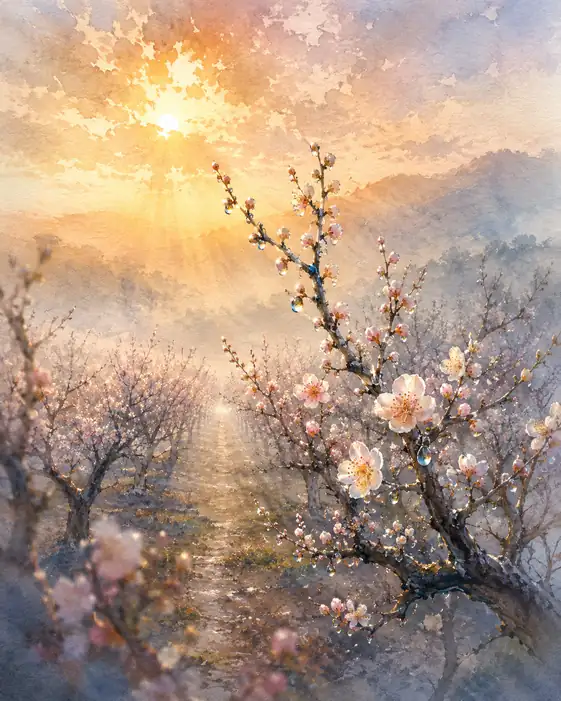 Plum Blossoms Wake the Mountain Mist