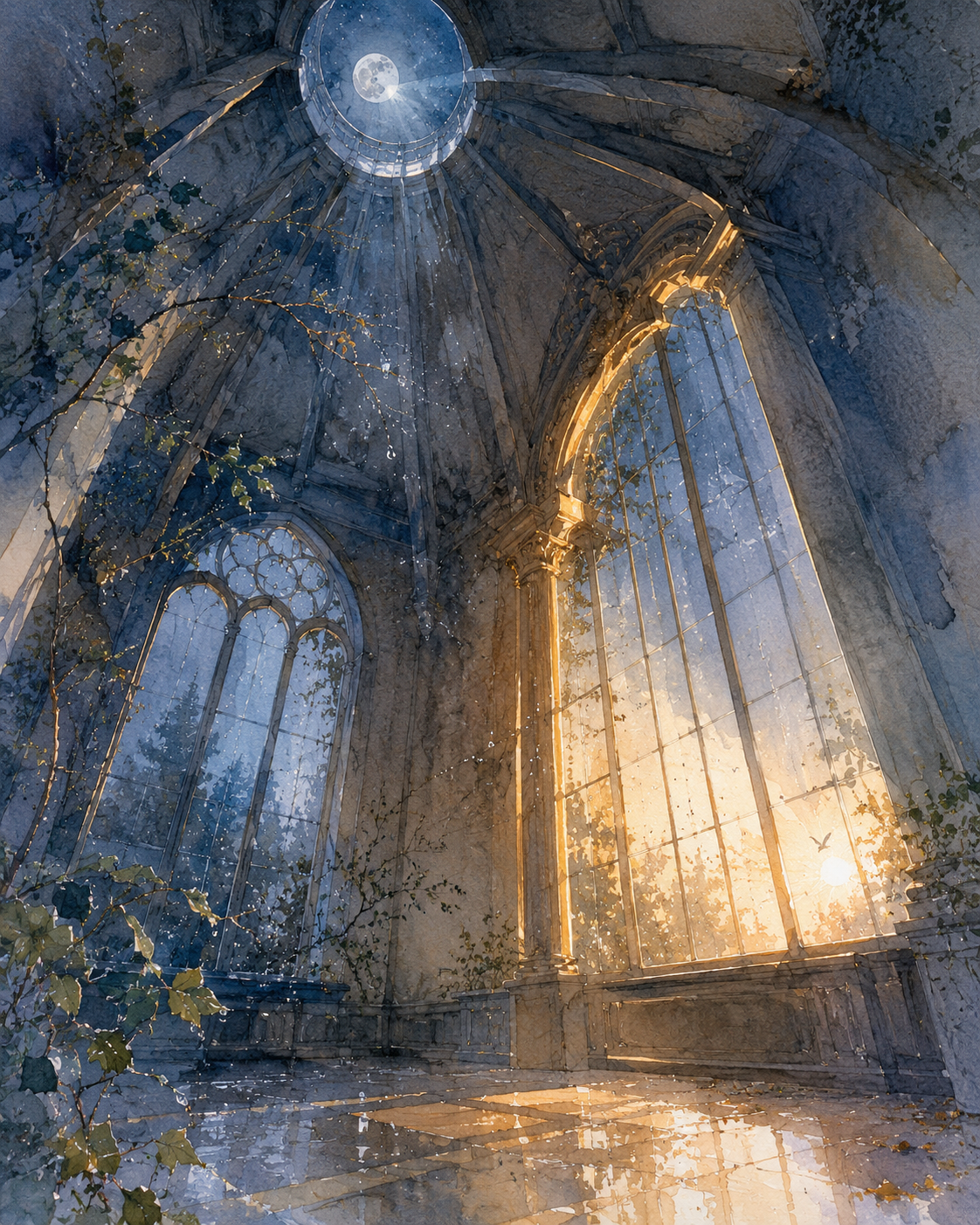
Moonlight Opens the Empty Chapel
Critique
Introduction This Gothic ruin joins moonlight through an oculus with sunset through tall windows. Broken stone and climbing plants reveal neglect, yet converging lights make ruin active rather than inert. Description A circular opening crowns the vaulted ceiling and frames a full moon. Cool beams fall from it through drifting moisture. Two pointed windows rise below: the left remains blue and shadowed, while the larger right window glows gold around a low sun. Vines climb walls, arches, and mullions. Wet paving reflects the right window in the foreground; cracked masonry and scattered growth occupy the edges. Analysis Ribs radiate from the oculus like spokes, directing attention from moon downward into the chamber. Tall window verticals counter this circular expansion. The cool left and warm right halves create temporal and chromatic duality, joined on the reflective floor. Sharp tracery survives within softened, eroded walls. Droplets and fine lights repeat across beams, glass, leaves, and paving, binding upper architecture to ground. Interpretation and Evaluation Moon and sun suggest simultaneous past and future, or contemplation and renewal, within a structure no longer serving its original function. Vegetation does not merely conquer the ruin; it reoccupies empty surfaces and redirects attention. The coincidence of two celestial lights is highly idealized, but physical decay gives the allegory resistance. Beauty emerges from altered use rather than restoration to a pristine state. Conclusion At first the paired lights seem to rescue the building from darkness. Longer viewing shows that cracks, vines, and water are not defects to be erased, but the means by which the space has continued. The work presents ruin as transformation: loss remains visible while new relations of light and life take form.
Same Subcategory
 Through the Crimson Veil
Similar Artworks
 Morning Walks the Temple Corridor
 The Greenhouse Keeps a Private Sun
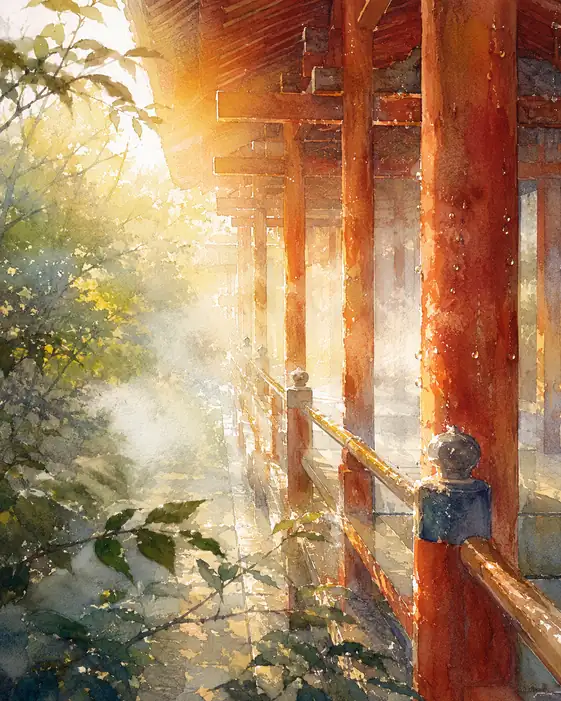 Morning Walks the Empty Corridor
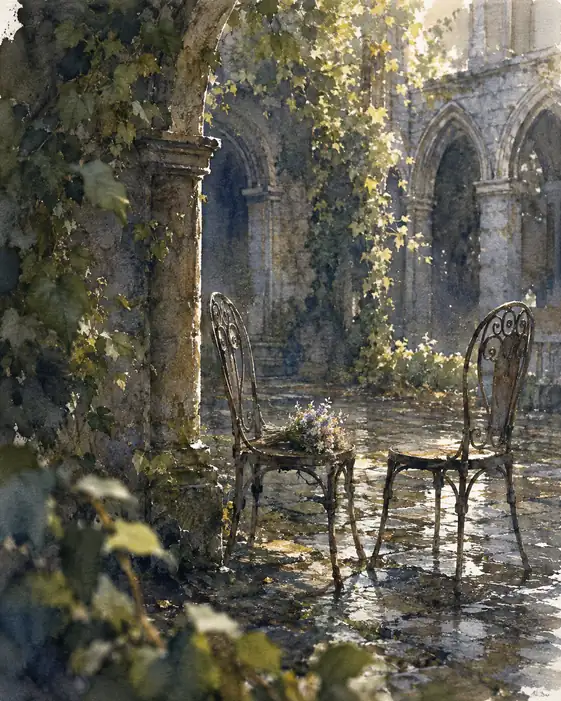 Silent Soliloquy of the Forgotten Garden
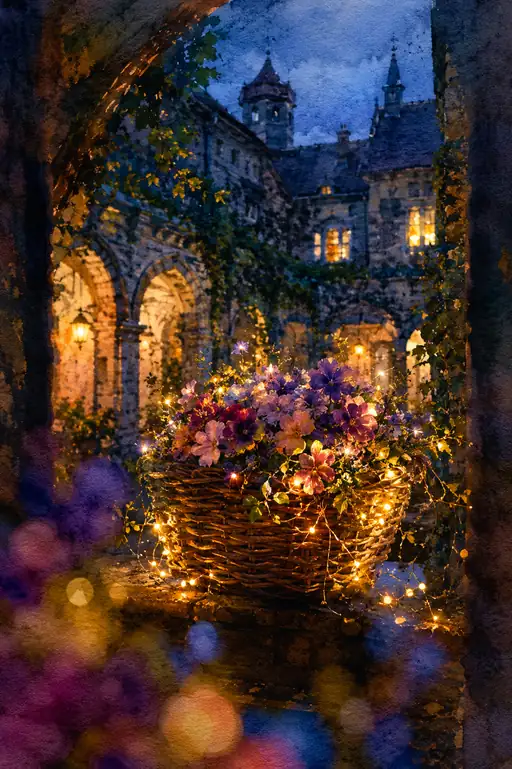 Fairy Lights Amongst the Night Blossoms
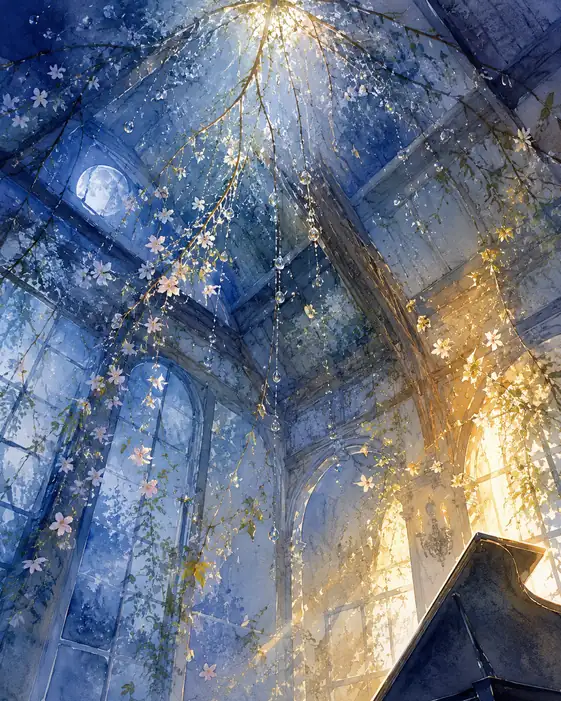 Moonlight Waiting for the First Note
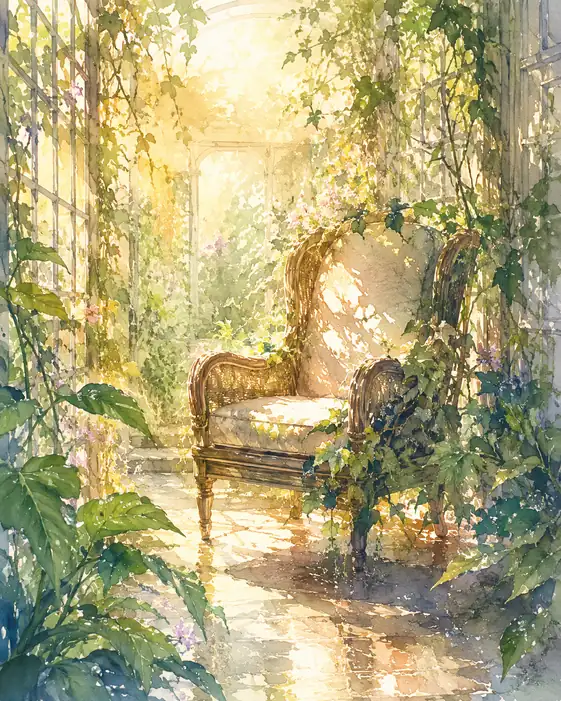 The Garden Chair Waits for One Dreamer
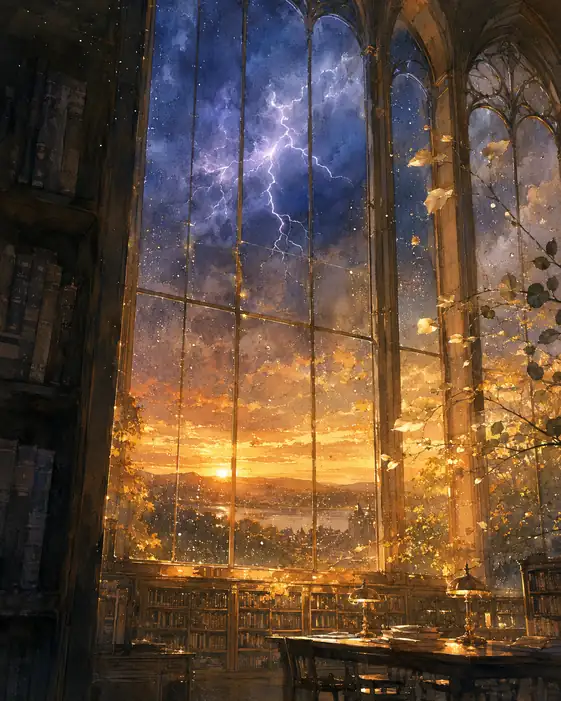 The Library Holds the Last Light
 Stone Lanterns Guard the Blue Hour
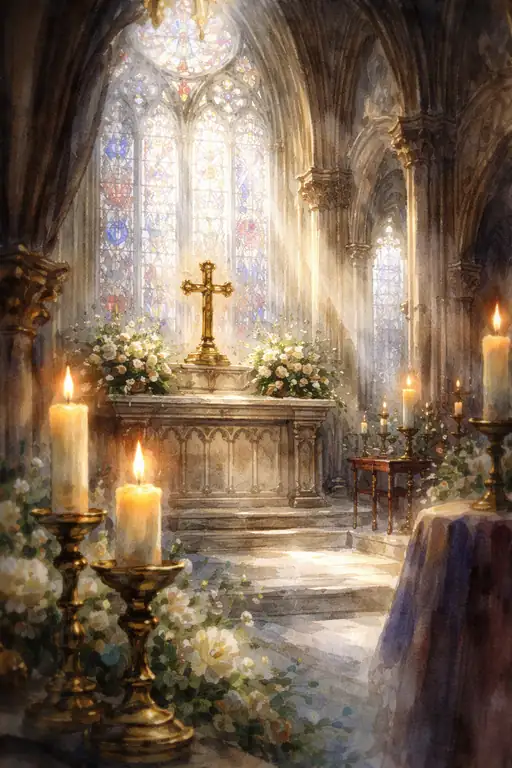 Illumination of the Gothic Rose