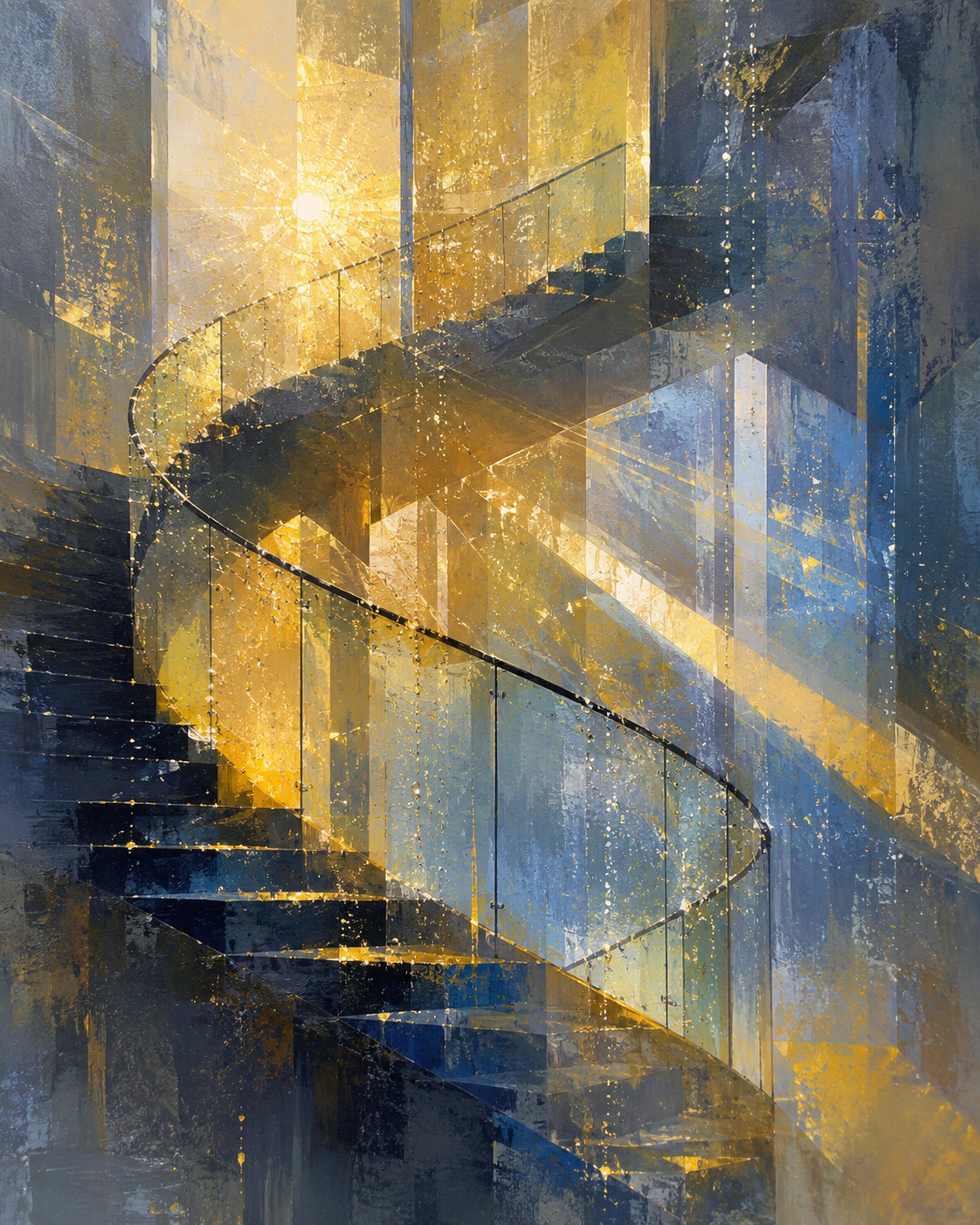
The Staircase Turns toward Golden Silence
Critique
Introduction This interior transforms a spiral staircase into a mechanism for carrying sunlight. Curved glass, dark steps, vertical panes, and gold-blue reflections make construction and atmosphere difficult to separate. Movement appears without a traveler. Description A broad stair curves upward from the lower left, sweeps across the center, and rises again toward the upper right. Transparent balustrades trace its edge with thin dark rails. Tall glass walls divide the background into blue-gray and yellow rectangles. A low sun flares at upper left, sending diagonal beams through the structure. Fine droplets and gold flecks cover glass and surrounding surfaces. Analysis The stair’s S-shaped curve supplies continuous motion against a grid of vertical mullions and rectangular planes. Overlapping transparent panels create ambiguous depth: a railing may appear near, reflected, or seen through another surface. Saturated gold and deep blue establish the principal tension, moderated by gray. Repeated diagonal beams echo stair flights, while the curved rail maintains continuity through fragmented geometry. Small highlights give immense planes a tactile skin. Interpretation and Evaluation The staircase suggests ascent, transition, and choice, yet no destination is visible. Instead of promising arrival, the composition emphasizes orientation within complexity. Light penetrates the building but is repeatedly divided, reflected, and redirected, offering an apt image of knowledge or experience shaped by structure. Visual density can disorient, though the uninterrupted handrail provides a reliable thread through the abstraction. Conclusion At first the golden sun seems to clarify the architecture. Longer viewing shows that illumination also multiplies surfaces and uncertainties. The work treats clarity not as simplicity, but as the ability to continue through layered conditions. Its empty stair becomes a dynamic invitation to navigate rather than merely admire space.
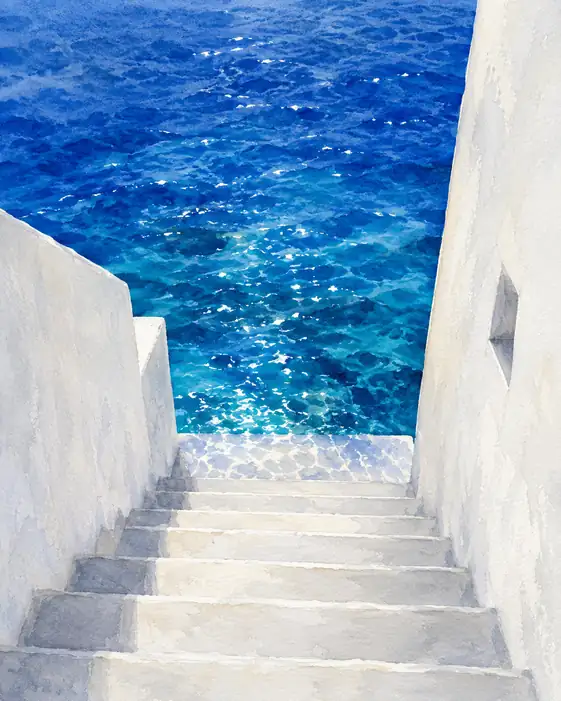 White Steps Descending into Blue
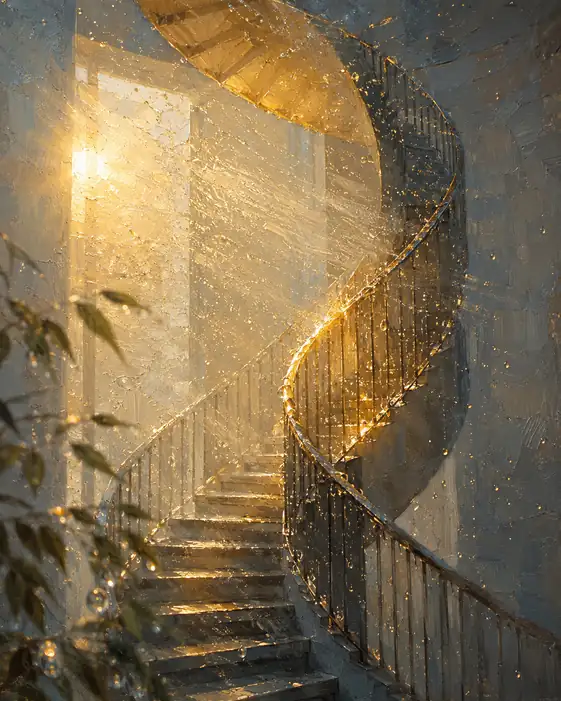 The Stairway That Caught the Evening
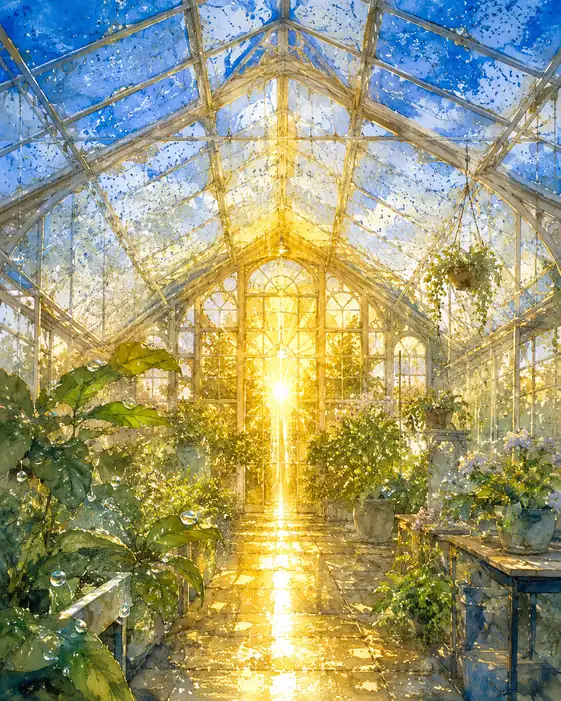 The Greenhouse Keeps a Private Sun
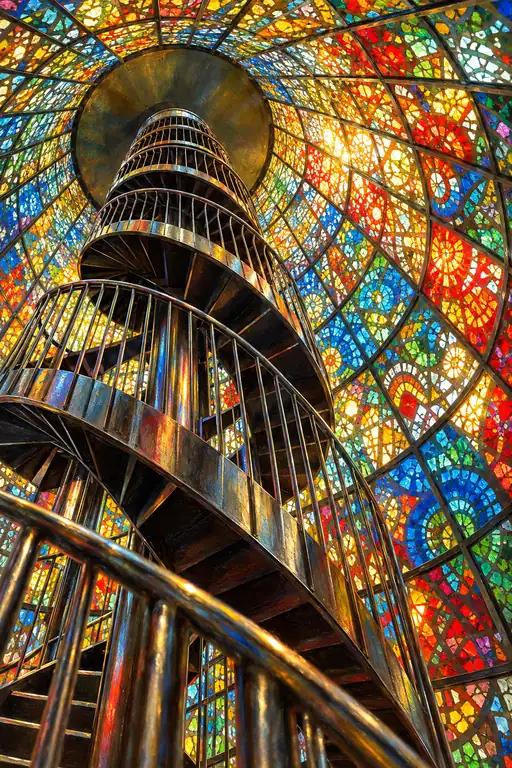 Symphony of Glass and Bronze Spiral
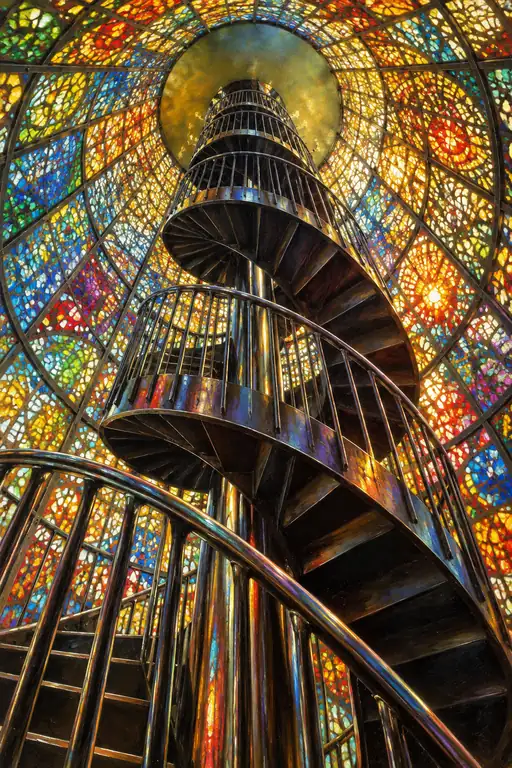 Spiral Ascent Through Stained Radiance
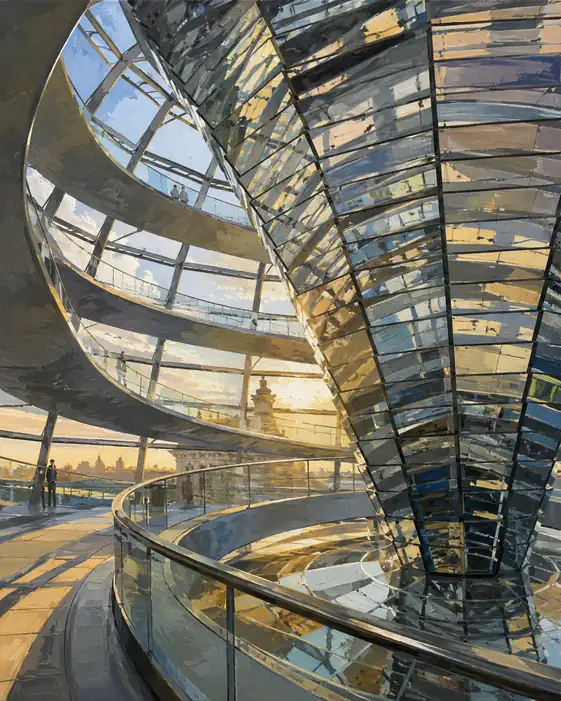 Glass Dome of Twilight Dreams
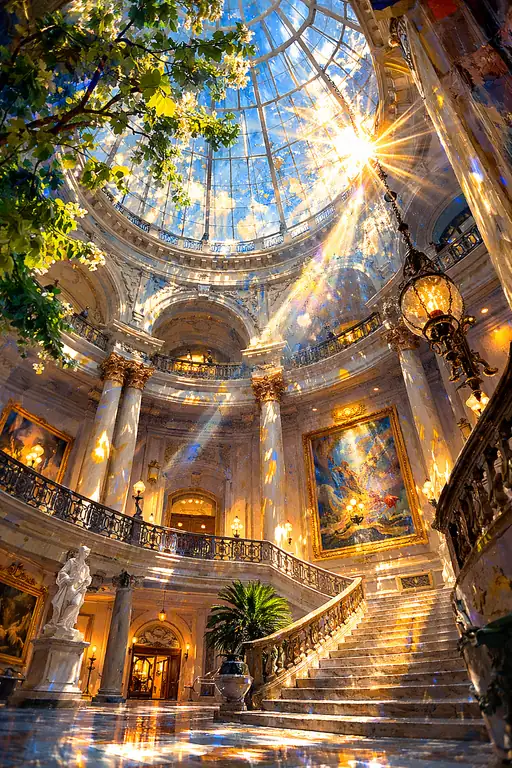 The Radiant Ascent
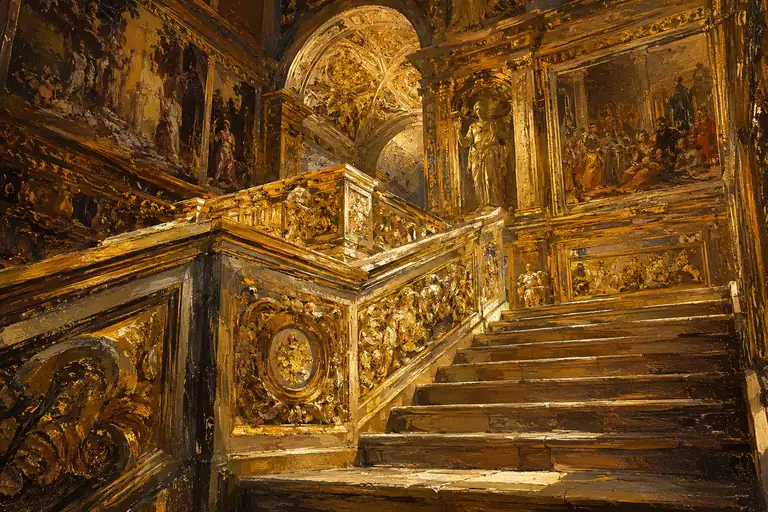 The Golden Ascent
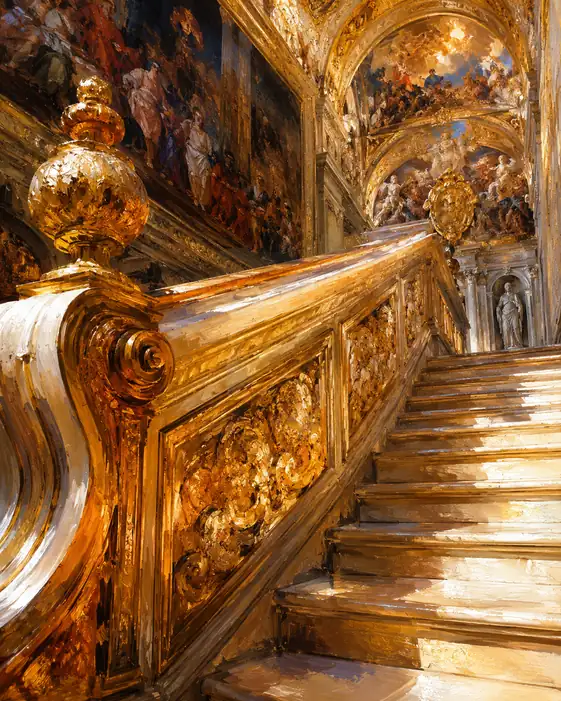 Ascent to the Divine
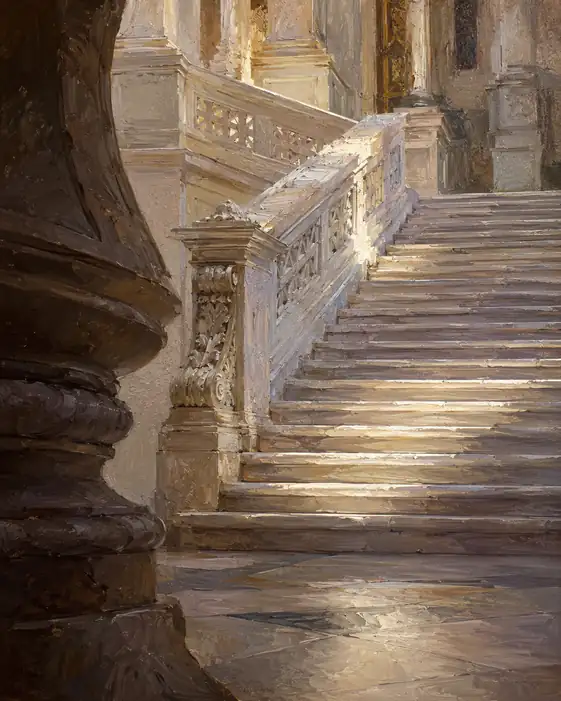 Pilgrimage to the Light
 Steps of Silent Splendor