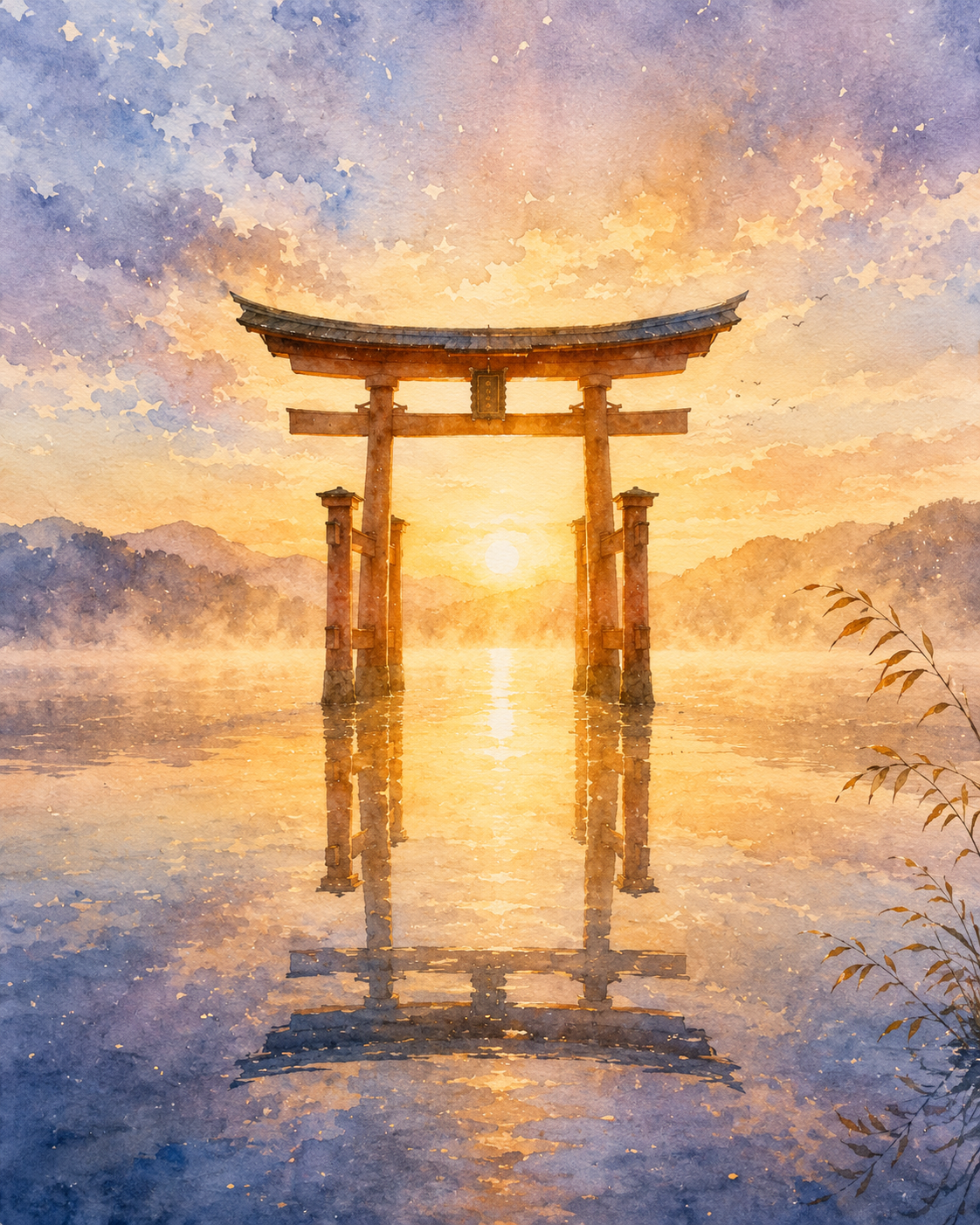
The Sun Waits inside the Torii
Critique
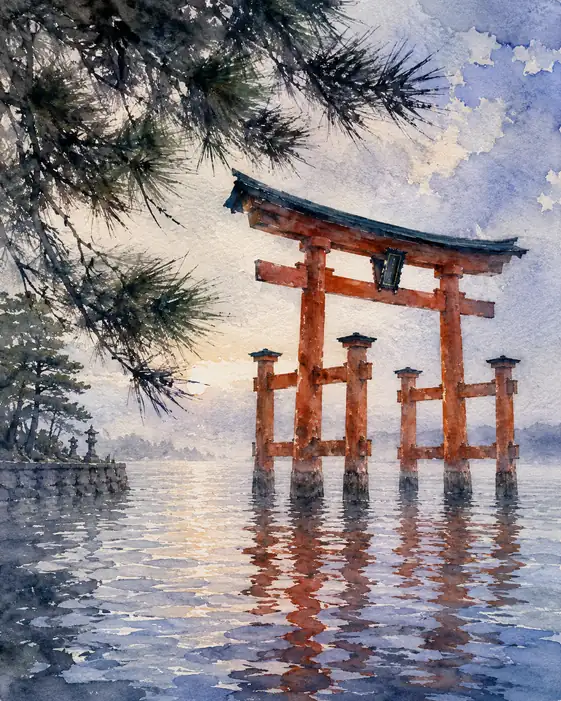
Introduction This waterscape aligns a gate with a low sun and reflection. Its restrained mist, mountains, water, and one branch make architecture appear commanding and permeable. Description A red gate rises from still water at center, its two main posts accompanied by narrower supports. The sun rests in the opening near the horizon between purple-brown mountains. Gold reflection descends through the gate’s mirrored image toward the foreground. Peach, cream, and lavender clouds fill the sky. A slender leafy branch enters from the lower right, and faint birds cross the distant air. Analysis Strict bilateral balance organizes gate, sun, and reflection along a vertical axis. The roof beam provides a broad horizontal counterweight, while mountain slopes lead inward toward the solar disk. Warm orange dominates the center and fades to cool violet at the edges. The reflected gate is softened and fragmented by water, preventing symmetry from becoming inert. The small asymmetrical branch introduces proximity and a living curve against monumental straight lines. Interpretation and Evaluation The gate functions as a threshold between viewer and distant light, but because it stands in water, passage is visual rather than literal. It frames aspiration while preserving separation. The sun may suggest renewal or arrival, yet mist obscuring the mountains keeps the destination uncertain. Idealized symmetry is balanced by shifting reflection, passing birds, and delicate foliage—elements that register time within an apparently timeless structure. Conclusion At first the gate appears to contain and organize the entire sunset. Longer viewing shows that light exceeds its frame, spreading through clouds and water. The work’s strength lies in this correction: architecture can focus wonder without owning it, and a threshold can clarify distance without promising immediate access.
Same Subcategory
Similar Artworks
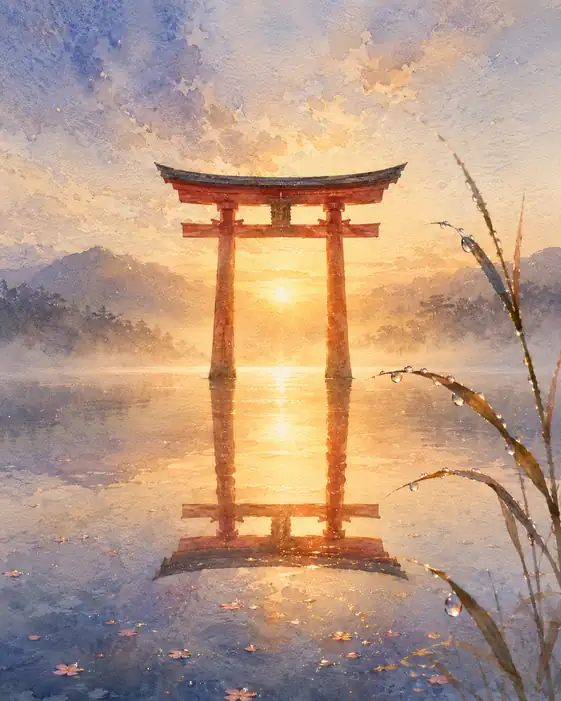 The Gate Between This Morning and the Next
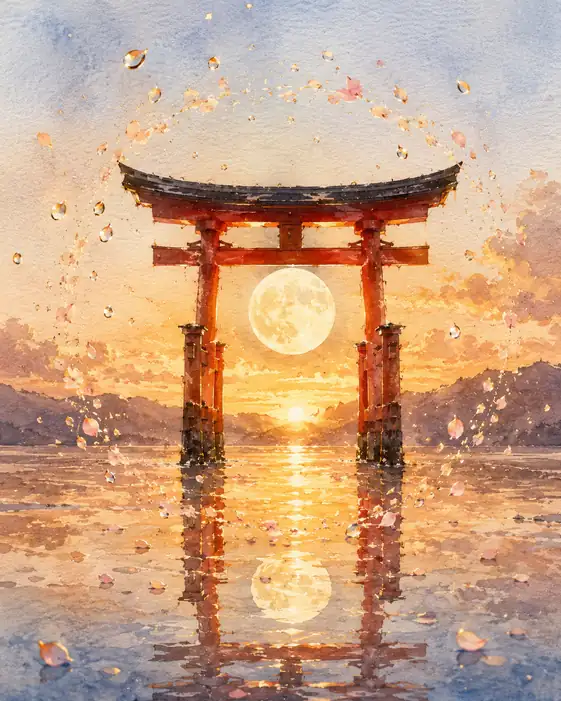 The Moon Passes through the Sacred Gate
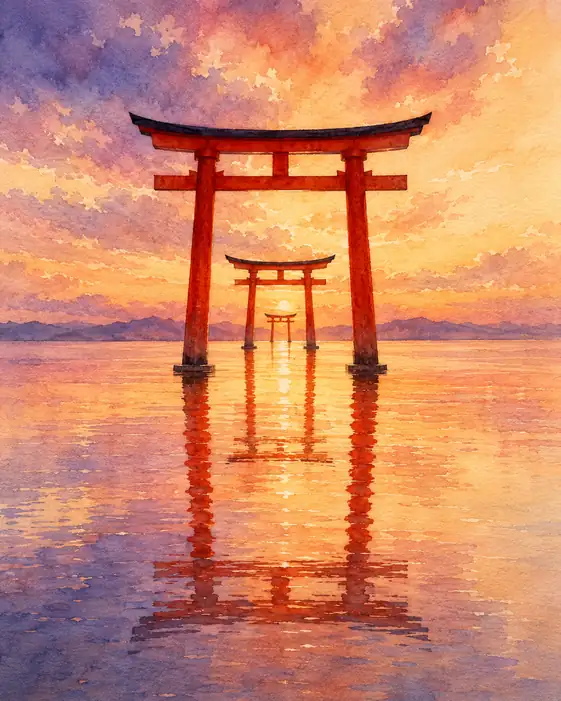 Gates to the Sunken Sun
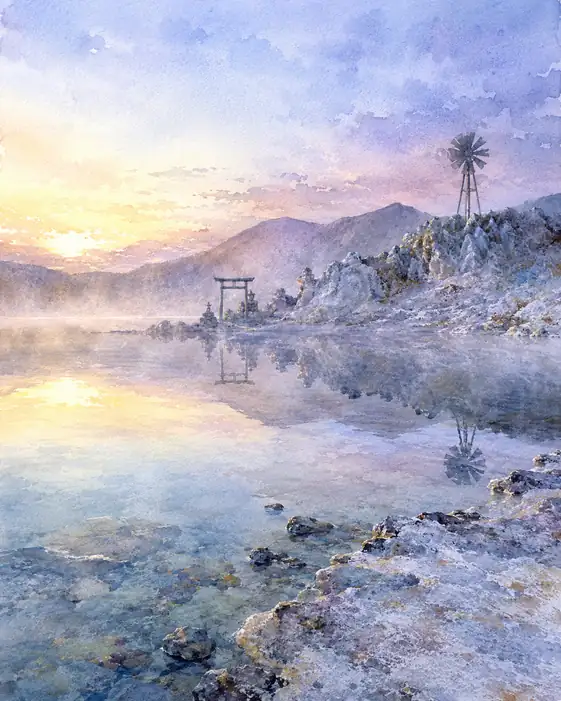 Two Prayers at the Edge of Winter
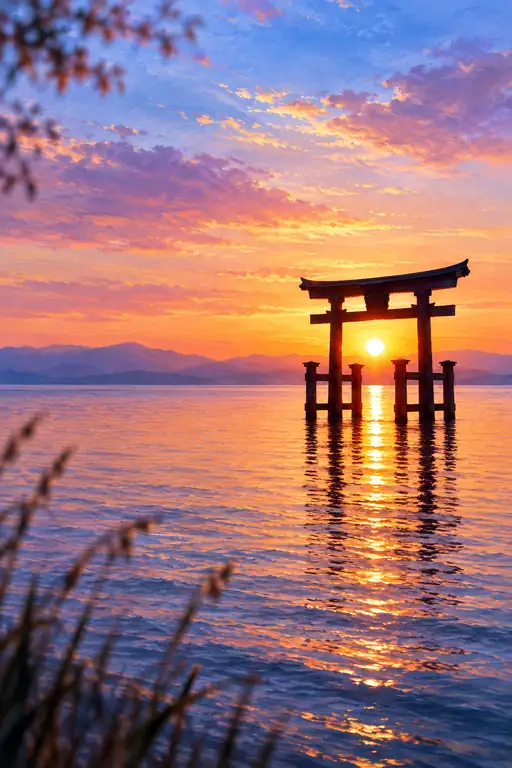 The Light Through Which I Pray
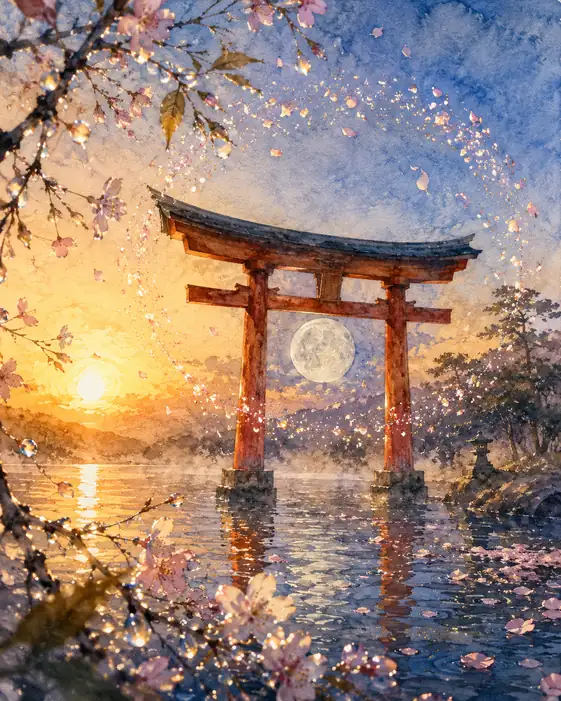 Where the Moon Waits Inside Spring
 The Threshold of Silence
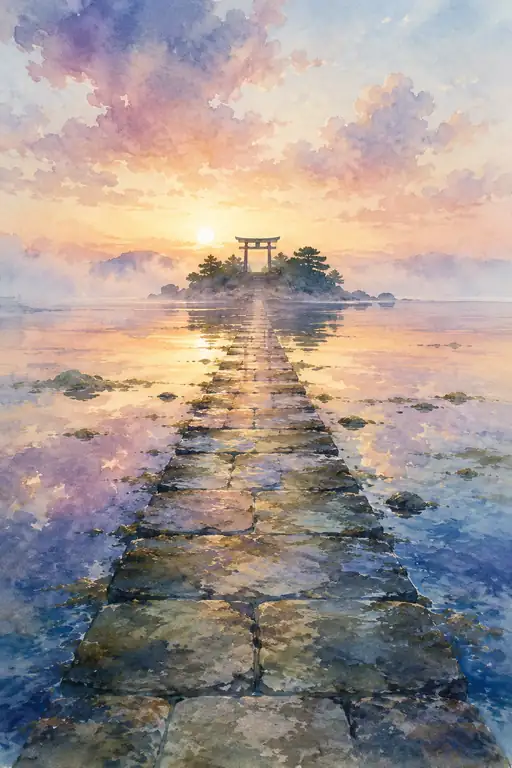 Pathway to the Dawn's Whisper
 Silent Prayer of the Sea
 Eternal Reverie: The Sacred Tide