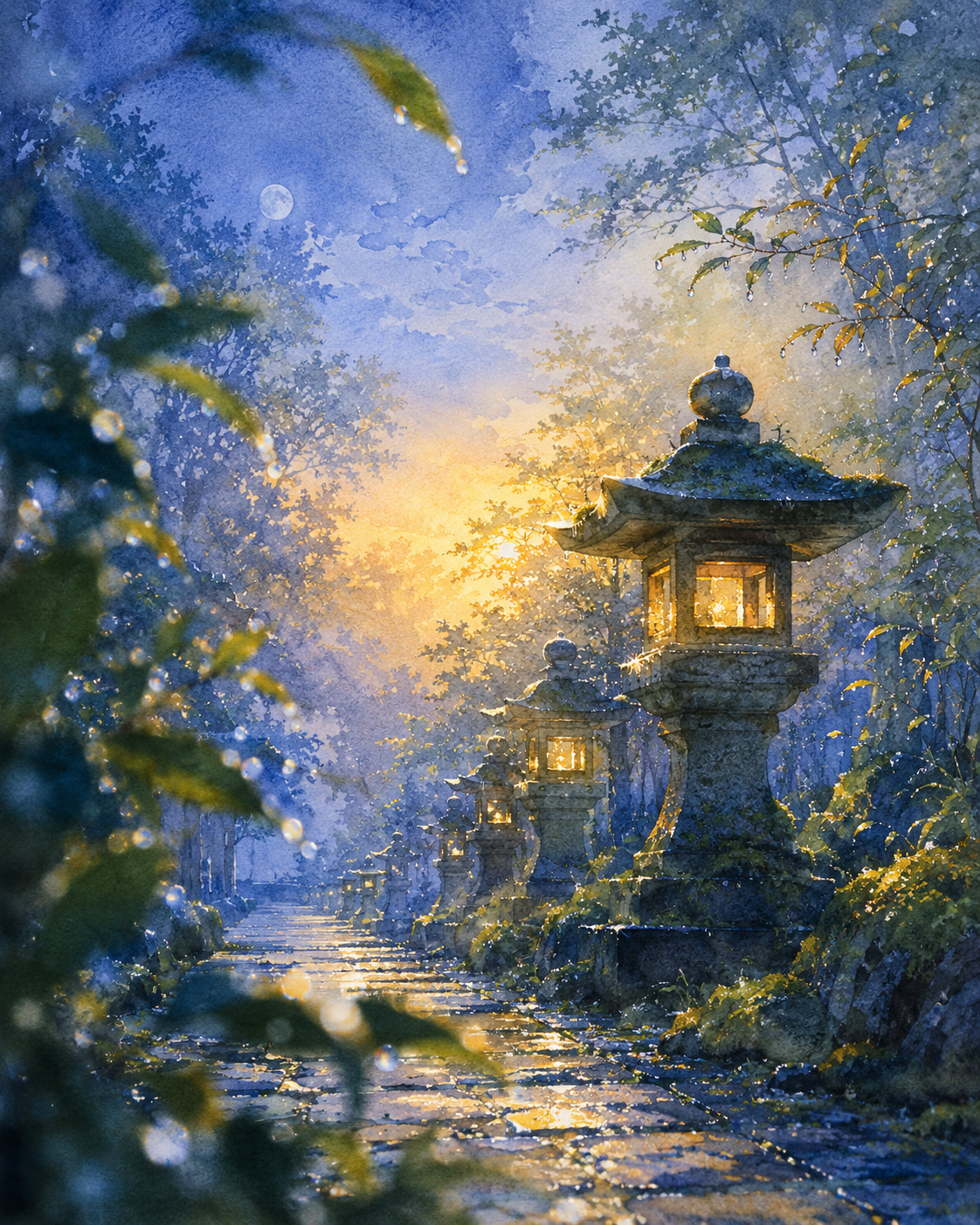
Stone Lanterns Guard the Blue Hour
Critique
Introduction This twilight path follows stone lanterns glowing after rain. A pale moon remains above while warm light gathers behind trees, suspending night and morning. Repetition turns distance into contemplative time. Description A large moss-covered lantern occupies the right foreground, its square chamber shining gold. Smaller lanterns recede along the left side of a wet stone walkway until they become points. Dense trees enclose the route in blue-green shadow. Leaves and branches enter close from both sides, carrying clear drops. The moon appears at upper left; yellow light spreads through mist near the center. Analysis The diminishing lanterns establish strong one-point recession and a steady visual beat. Their warm squares contrast with organic silhouettes and cool washes. The path’s reflective stones repeat the lights in broken strokes, guiding the eye between physical lamps. Foreground foliage is blurred and dark, creating depth through focus as well as scale. The large right lantern balances the moon diagonally, joining crafted and celestial illumination. Interpretation and Evaluation The sequence of lamps can suggest guidance, memory, or ritual continuity. Because no traveler appears, the viewer mentally occupies the path and supplies its pace. Moon, approaching daylight, and burning lamps represent different durations of light without forming a hierarchy. The golden mist is romanticized, but damp moss, uneven stones, and shadowed forest preserve a believable sense of effort and distance. Conclusion At first the nearest lantern dominates as a welcoming beacon. Longer viewing follows the smaller lights and discovers that guidance is distributed across many intervals. The painting values gradual orientation over sudden revelation: each modest lamp illuminates only part of the way, yet together they make continued movement imaginable.
Same Subcategory
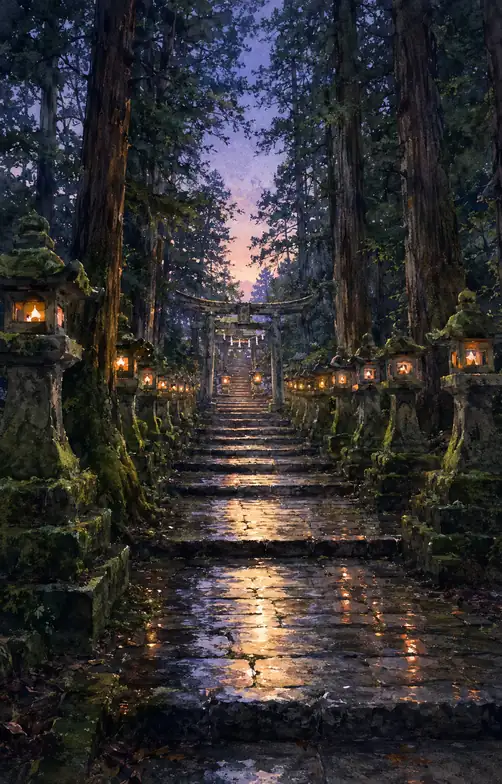 The Lanterns Remember Every Pilgrim
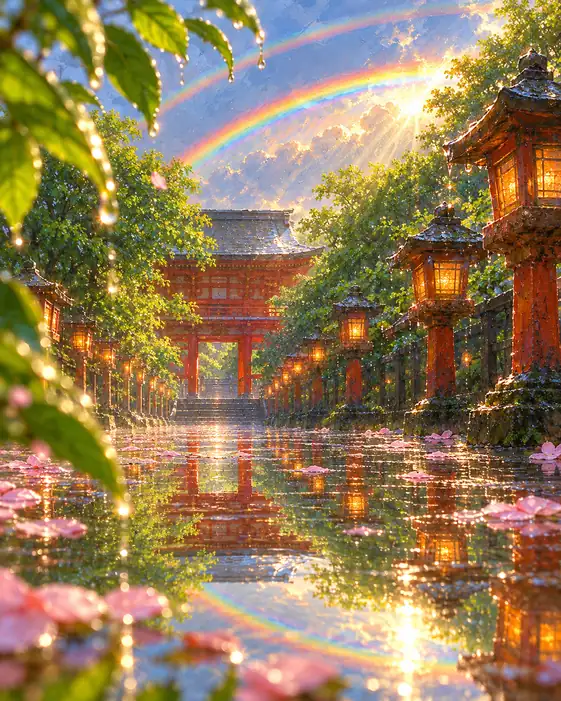 The Lantern Road After the Rain
Similar Artworks
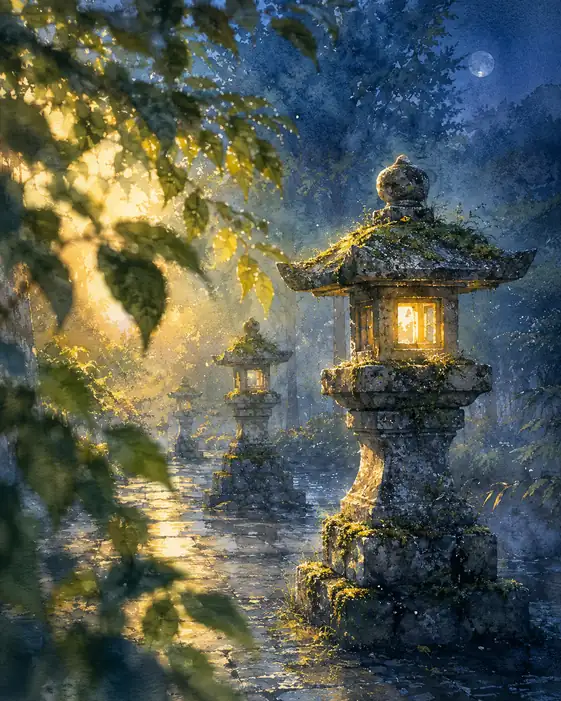 Lanterns Teach the Moon a Path
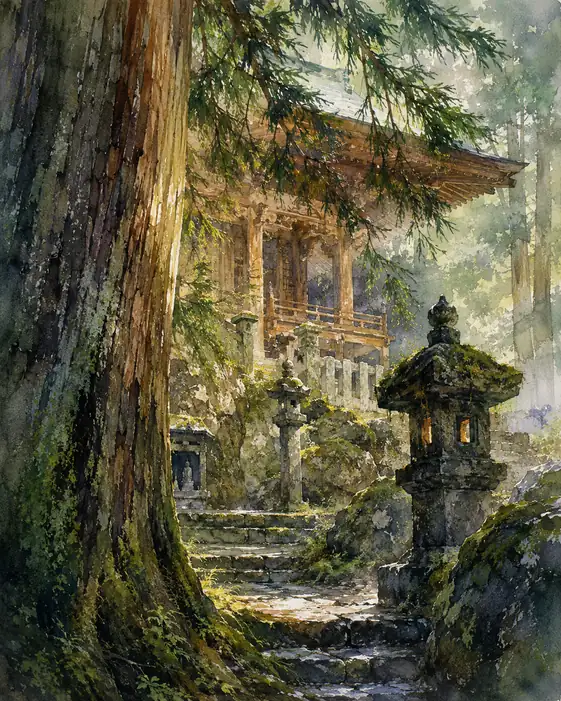 Sanctuary of the Ancient Cedars
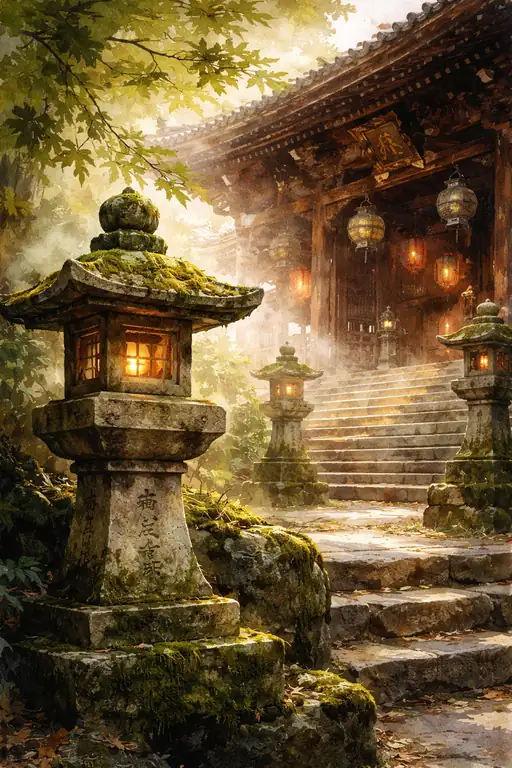 Following the Red Lantern's Glow: Footsteps in a Kyoto Dusk
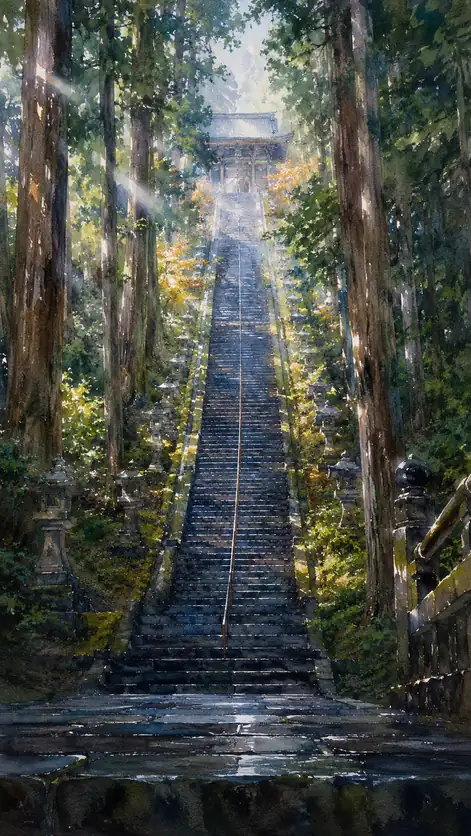 The Stairway between Two Silences
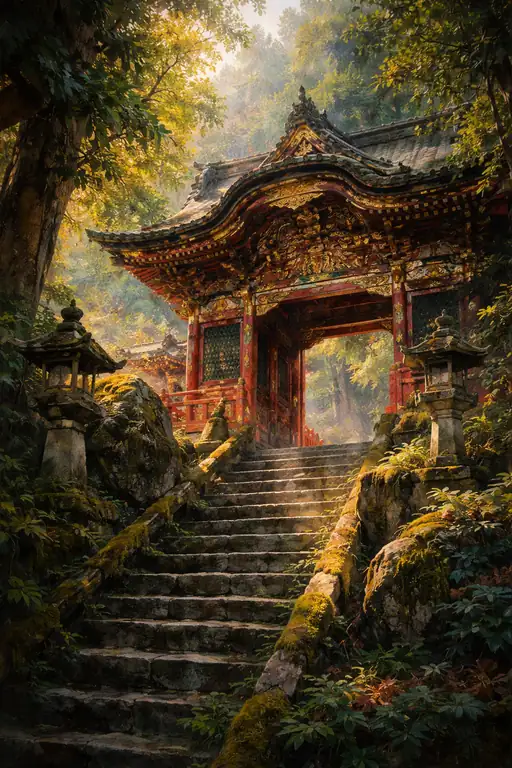 Passage to the Forgotten Sanctuary
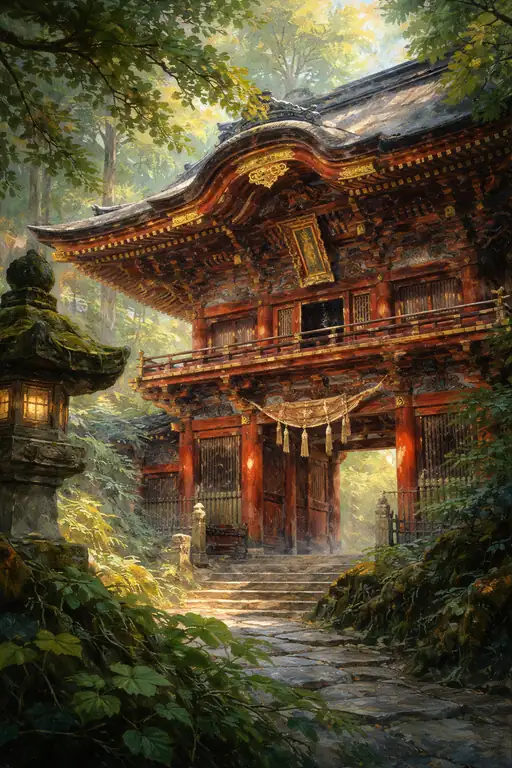 Sunlight on the Sacred Gateway
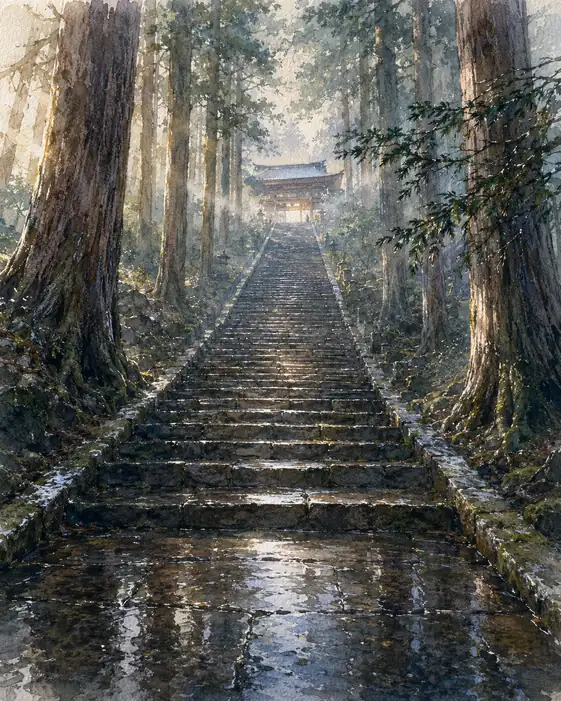 Steps Rising through Cedar Silence
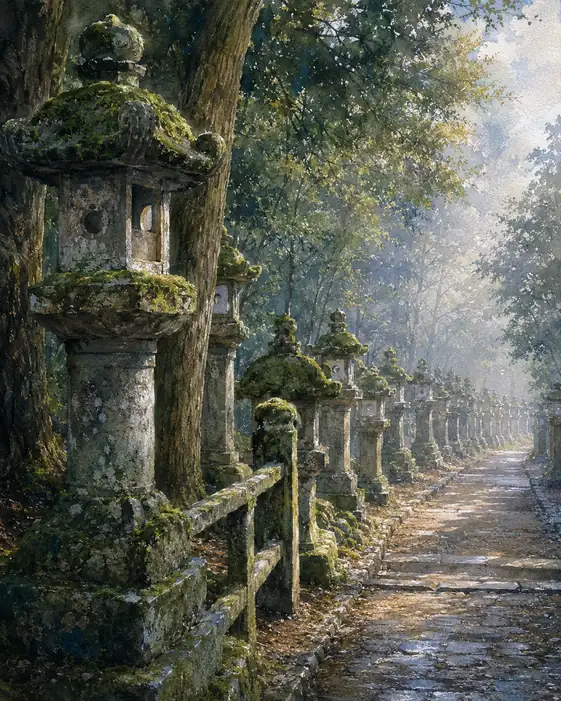 The Road Where Lanterns Become Forest
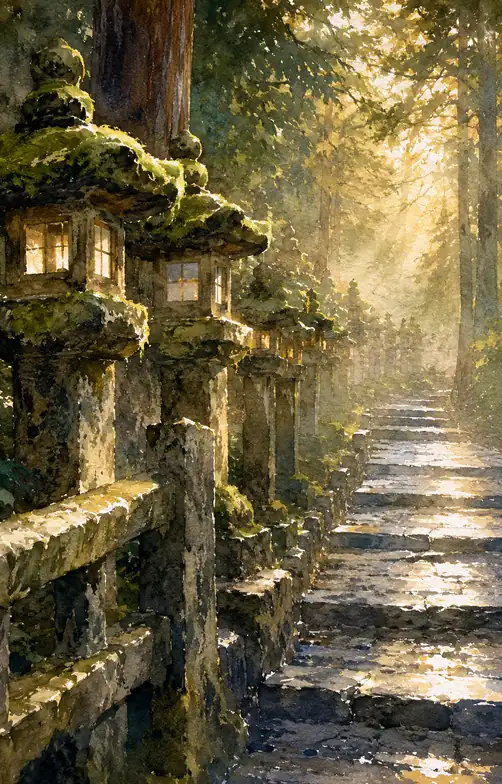 Where Stone Lanterns Learn the Forest's Time
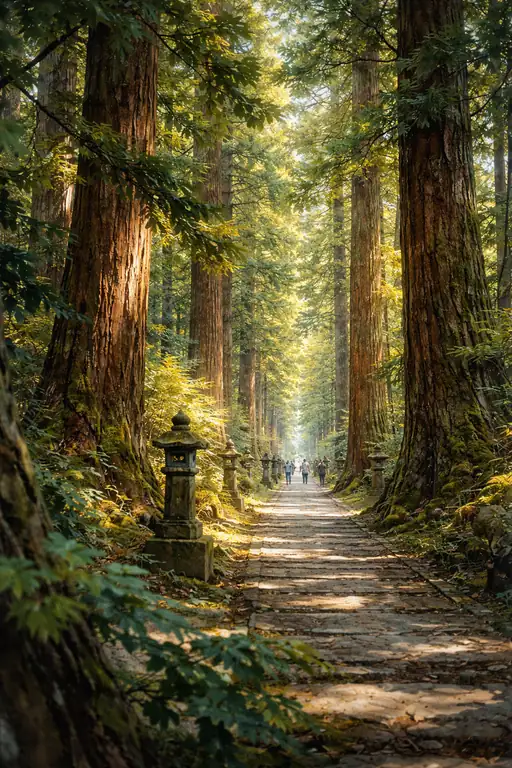 Serene Path: Ancient Stone Lanterns Illuminating a Mossy Japanese Forest