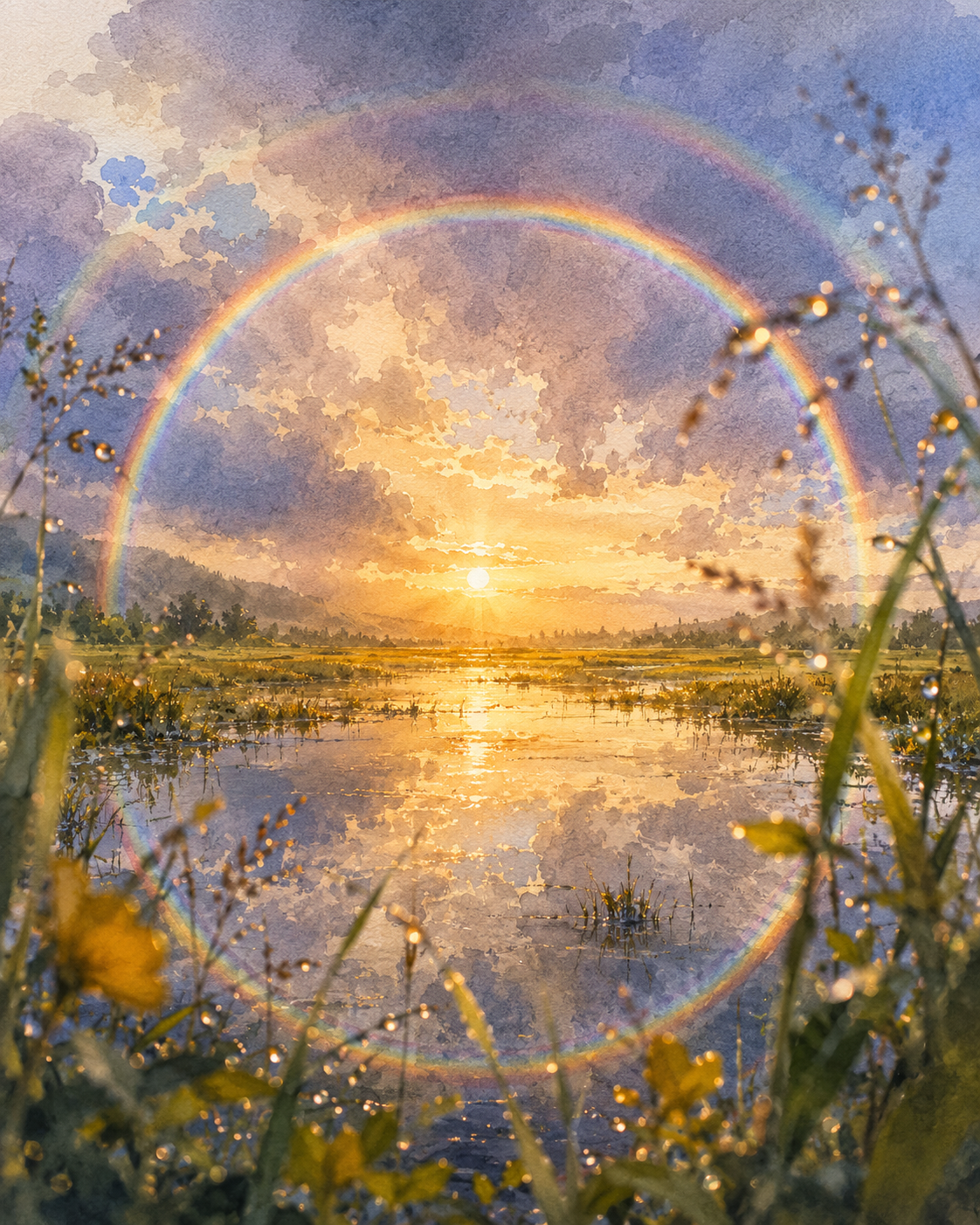
After the Storm, the World Becomes Whole
Critique
Introduction This painting presents a double rainbow over wetlands after rain. The nearly circular rainbow and setting sun at center establishes a clear focus, while blue-violet clouds and golden water conveys the time and atmosphere. The familiar motif invites both observation and reflection. Description Foreground forms are precise, while distant areas soften into atmosphere. Diffused washes and highlights suggesting moist air determines the surface character and clarifies changes of distance. Open areas prevent the detail from becoming crowded. Analysis The composition depends on the nearly circular rainbow and setting sun at center, producing stability without sacrificing movement. The palette is organized around blue-violet clouds and golden water, and light-dark contrasts emphasize the focal area. Descriptive skill appears in the distinction between illuminated and shadowed surfaces, while diffused washes and highlights suggesting moist air adds rhythm to the space. Interpretation and Evaluation The scene can be interpreted as a meditation on the restoration of order after a storm. Although the imagery remains concrete, light, scale, and distance give it an imaginative dimension. The composition supports the subject, while the chosen viewpoint gives the work an individual character. Its value lies in joining observation with personal interpretation. Conclusion The work succeeds through the coordination of drawing, composition, color, and technique. Rich detail never obscures the main structure, so distant impact and close discovery remain in balance. An initial impression of visual beauty gradually develops into an awareness of the restoration of order after a storm. The result is a poised image that offers immediate pleasure as well as sustained reflection.
Same Subcategory
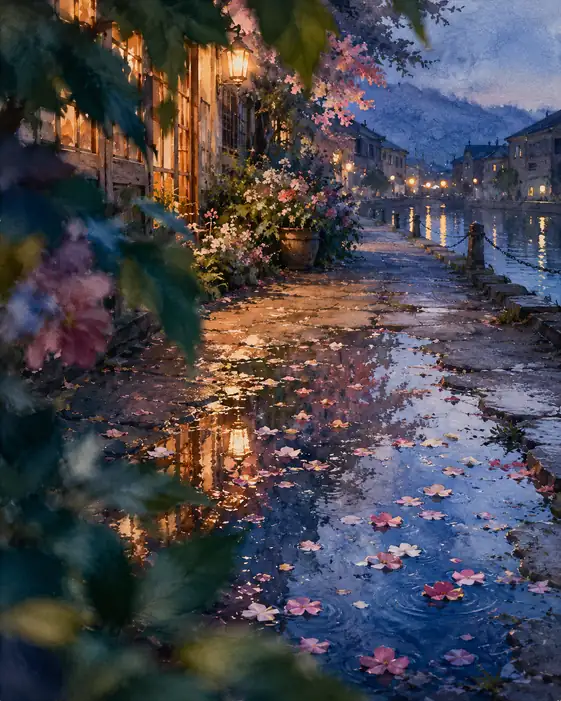 After Rain, the Petals Carry Lamplight
Similar Artworks
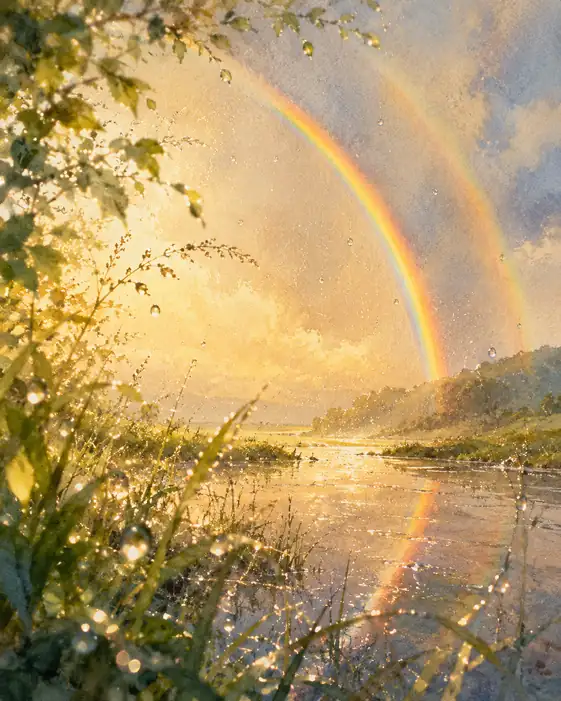 Two Rainbows Promise the Same Tomorrow
 Lavender Twilight on the Crystal Salt Lake
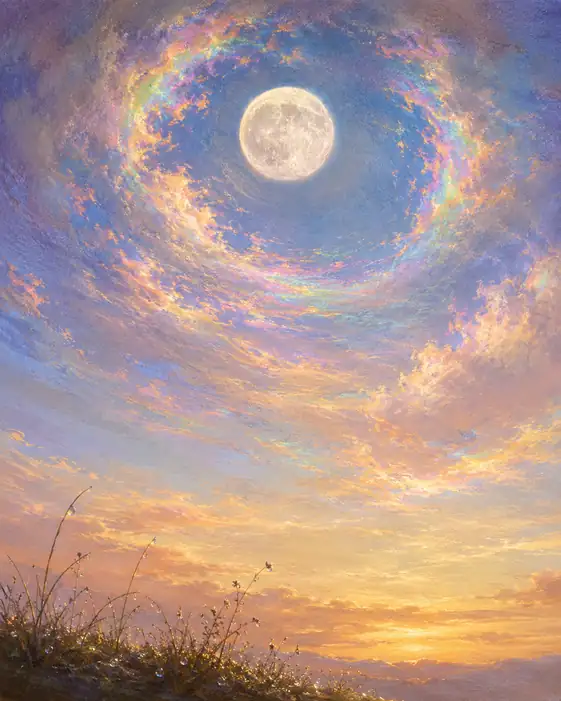 Full Moon Piercing the Iridescent Cloud Ring
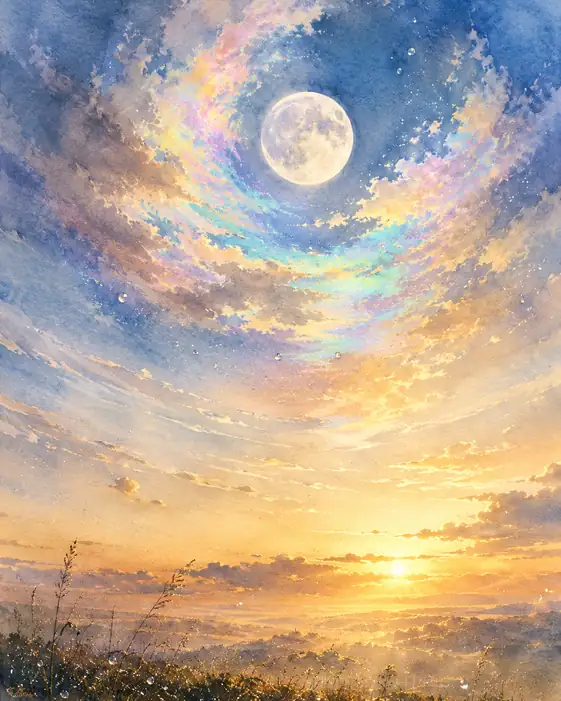 Lunar Halo Intersecting the Twilight Sky
 Auroral Canopy over the Glowing Peak
 Golden Slumber of the Crimson Reeds
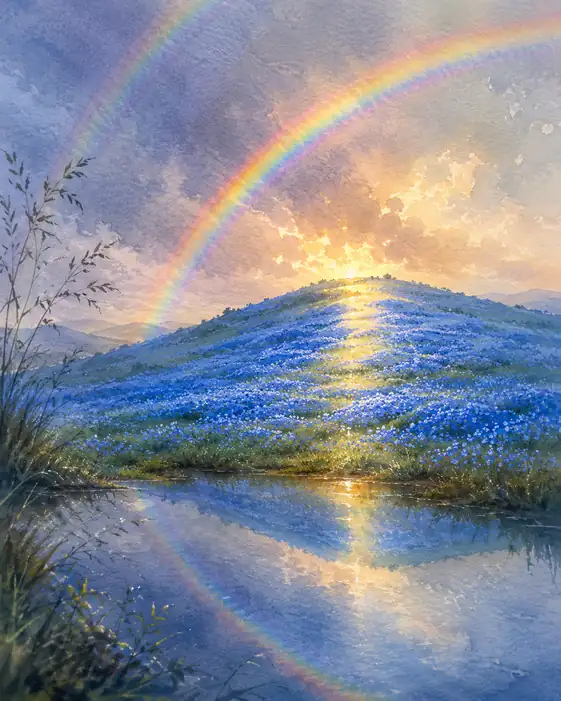 Spring Keeps a Rainbow Over the Blue Hill
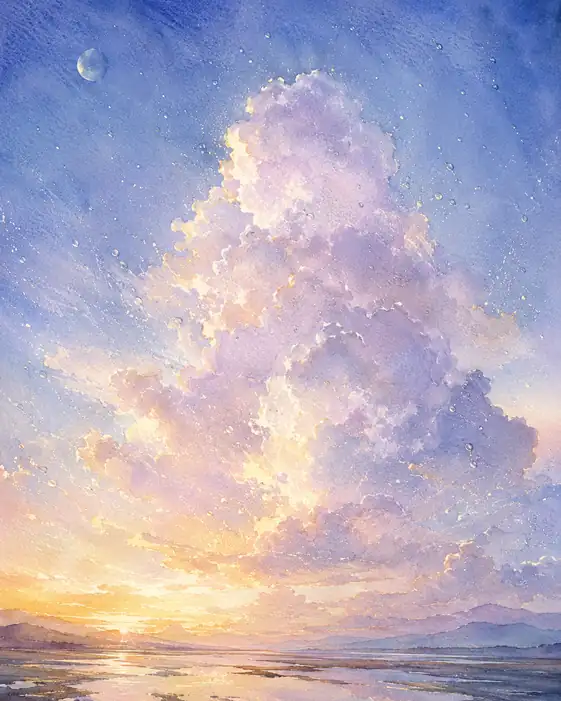 The Cloud Builds a Palace of Light
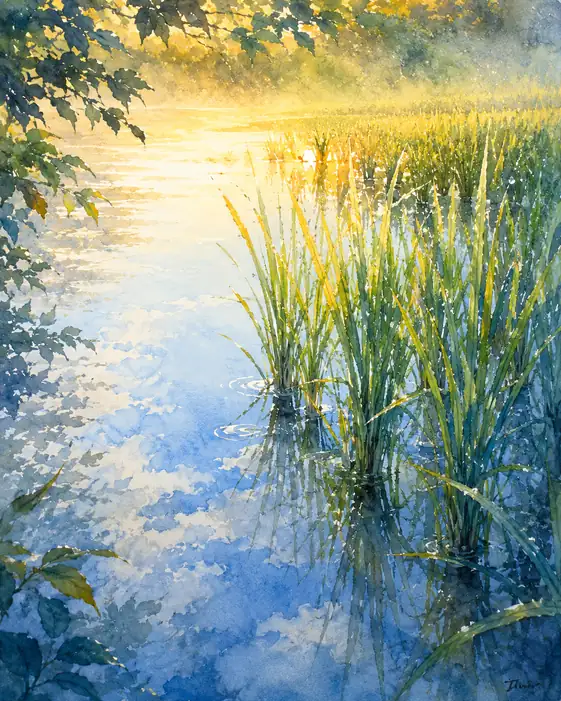 Reeds Listen to the Morning Water
 Dawn over the Misty Hills