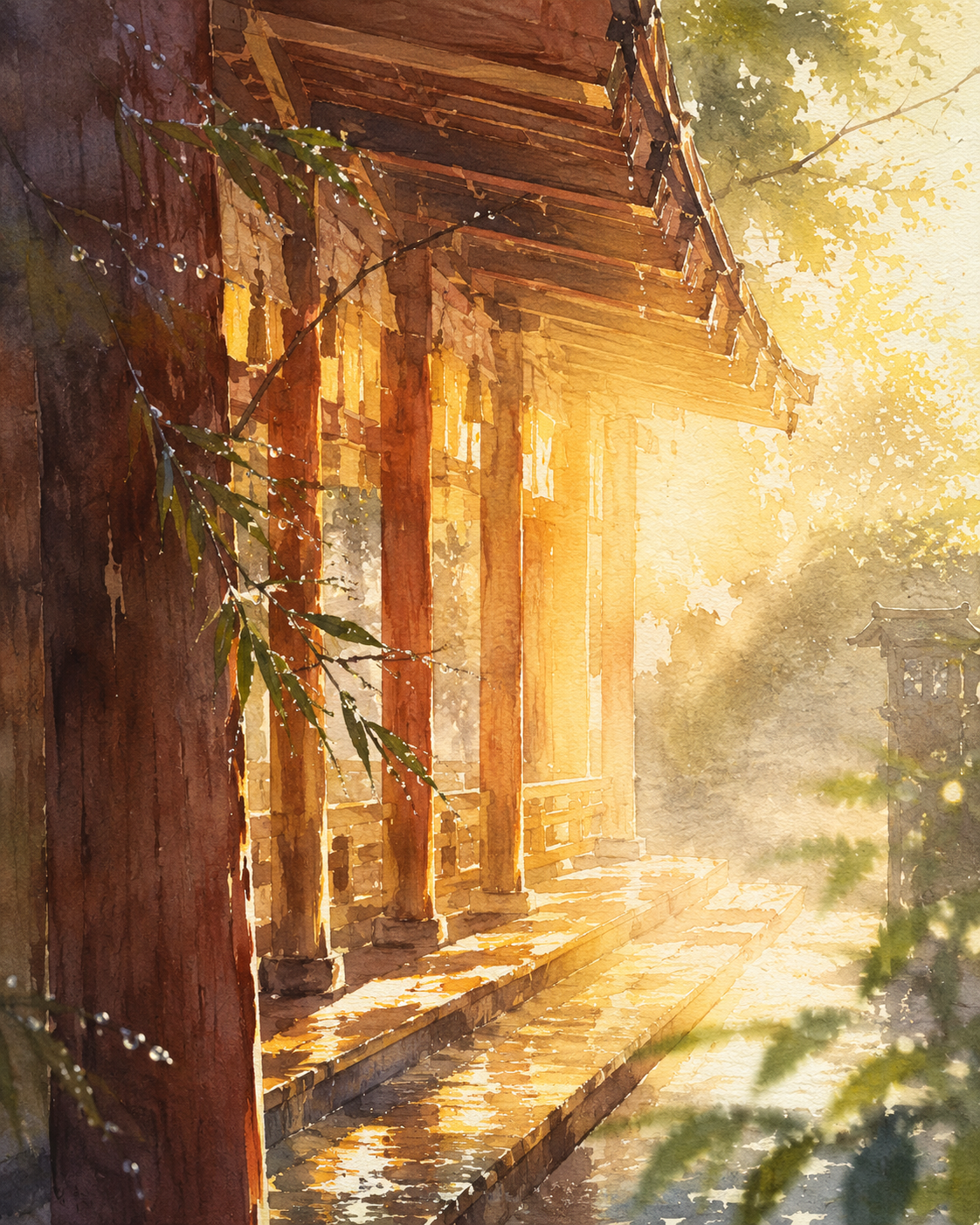
Morning Walks the Temple Corridor
Critique
Introduction This temple corridor uses repeated posts, deep eaves, and a sunlit path. Empty perspective invites walking. Moisture makes age and weather visible across every surface. Description A row of red-brown columns recedes from the left foreground toward a brilliant opening at center right. Overlapping roof brackets and dark eaves repeat above them. Wet stone steps run alongside the building and carry broken gold reflections. Bamboo leaves enter from the left, strung with drops. At right, a lantern-like structure stands in mist beneath bright foliage and a pale sun. Analysis Converging rooflines, posts, and step edges establish a powerful diagonal recession. Their regular architectural rhythm is softened by dangling rain, bamboo curves, and atmospheric foliage. The darkest wood occupies the near left, while values rise toward near-white at the vanishing area, making movement through space also movement into light. Warm ocher and red dominate the structure; green-gray shadows moderate the glow. Puddles repeat the vertical posts in fragmented form. Interpretation and Evaluation The empty passage suggests pause after rain and readiness for renewed movement. Repeated columns can evoke duration, discipline, or ritual, but their worn surfaces prevent abstract perfection. Light at the corridor’s end is an obvious metaphor for hope or clarity; the painting strengthens it by showing that illumination already touches every wet step, not only a distant destination. The journey and its goal therefore share the same light. Conclusion At first the brilliant opening seems to pull all attention forward. Longer viewing reveals pleasure in the nearby grain, droplets, shadows, and imperfect reflections. The work ultimately values passage itself: each weathered interval of the corridor becomes part of arrival, making stillness feel quietly preparatory rather than empty.
Same Subcategory
 Sunlight Pools on the Empty Veranda
 The Gate Opens into Cherry Mist
Similar Artworks
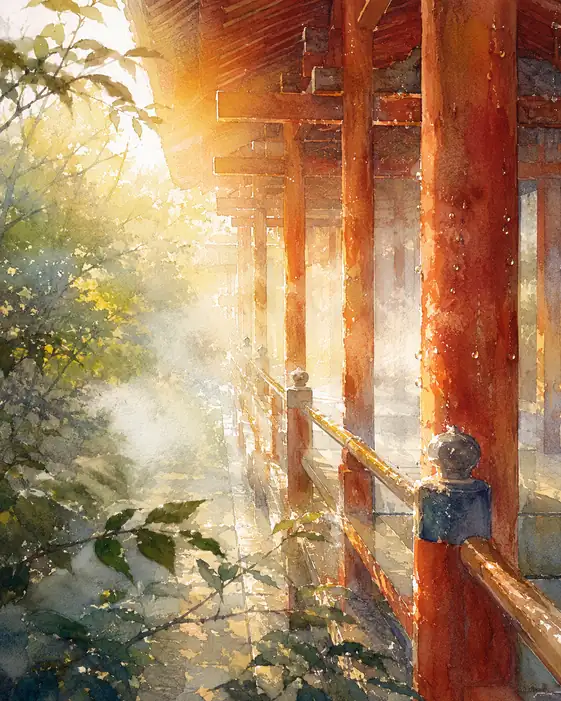 Morning Walks the Empty Corridor
 Fleeting Crimson, Eternal Prayer
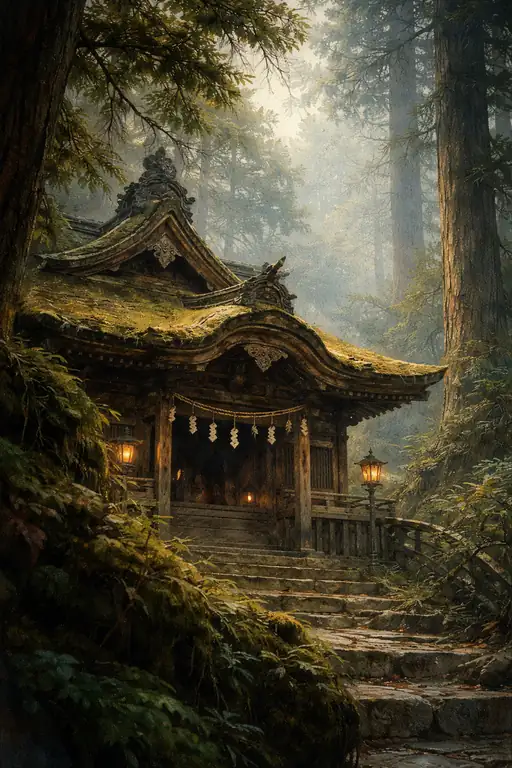 Sanctuary in the Shadows
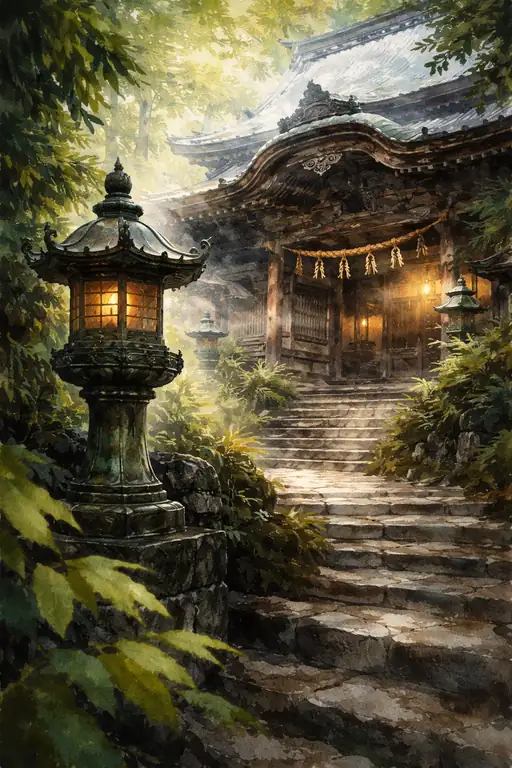 Sanctuary of the Silent Forest
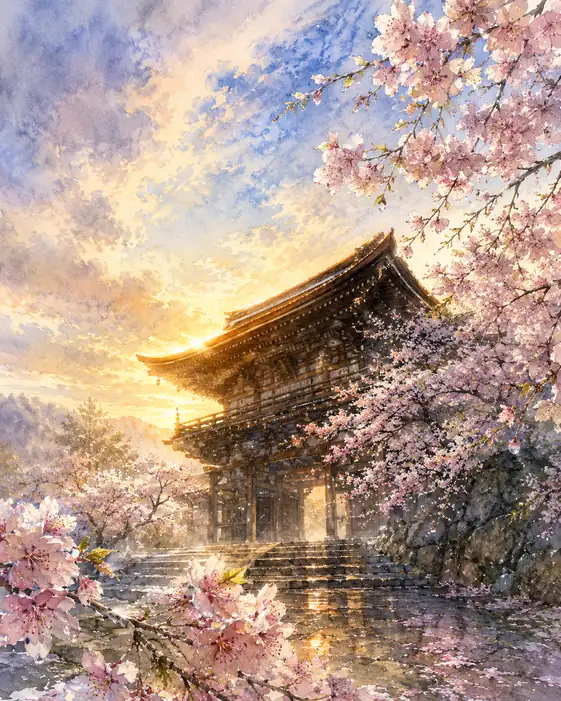 Spring Knocks on the Ancient Gate
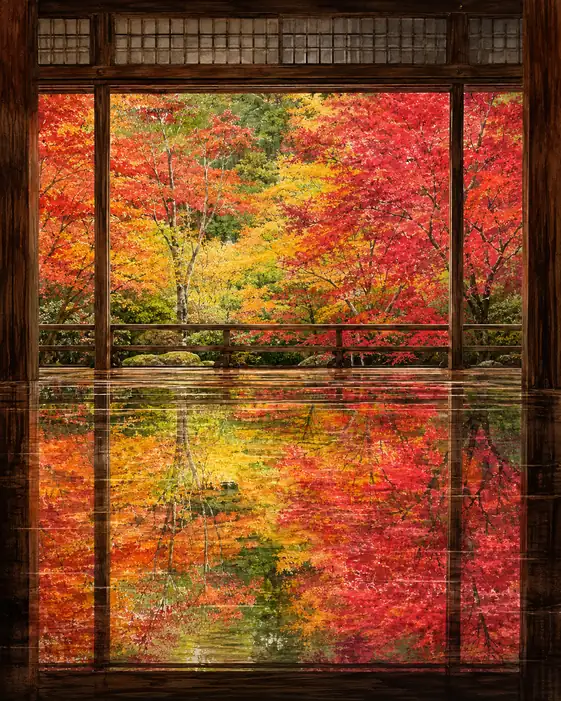 Autumn Waits behind the Quiet Frame
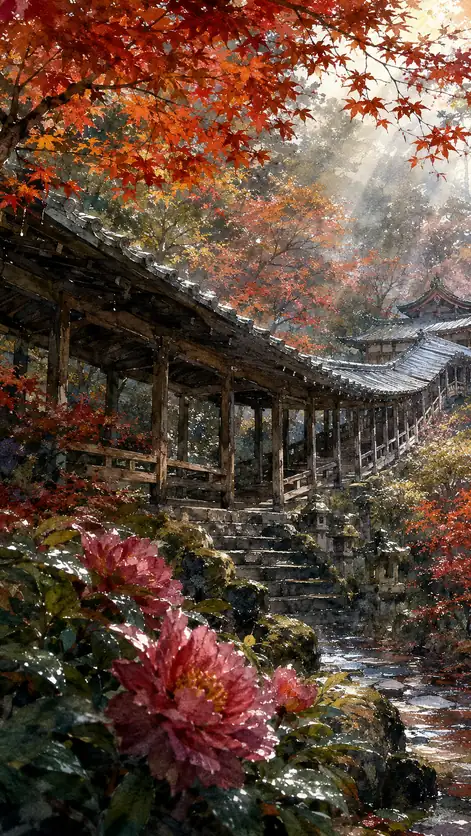 Autumn Bends Toward the Inner Hall
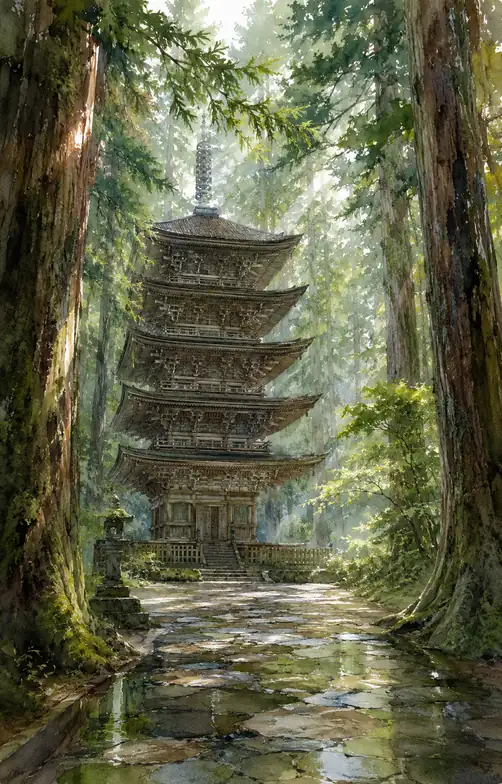 The Pagoda Sleeps in Cedar Time
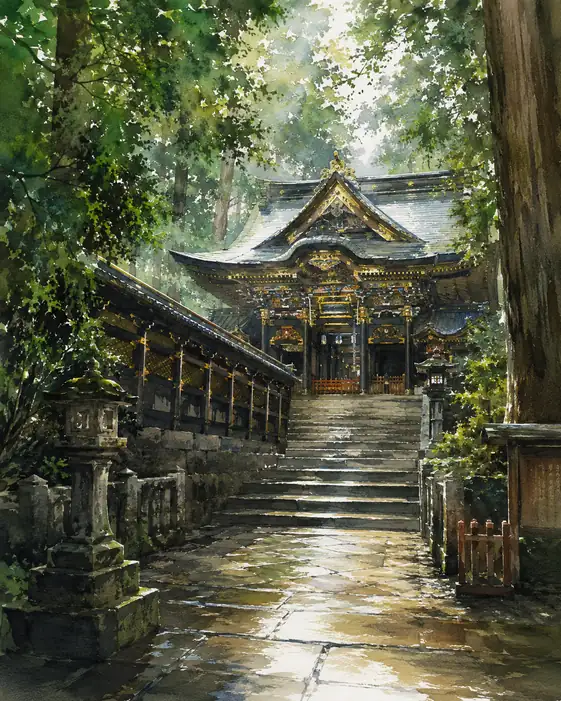 Gold Dwells in the Forest's Silence
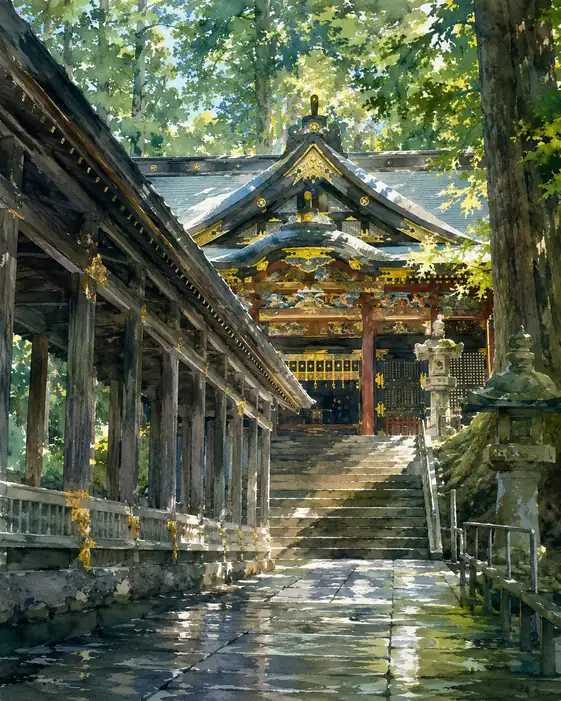 Sunbreaks Toward the Gilded Sanctuary