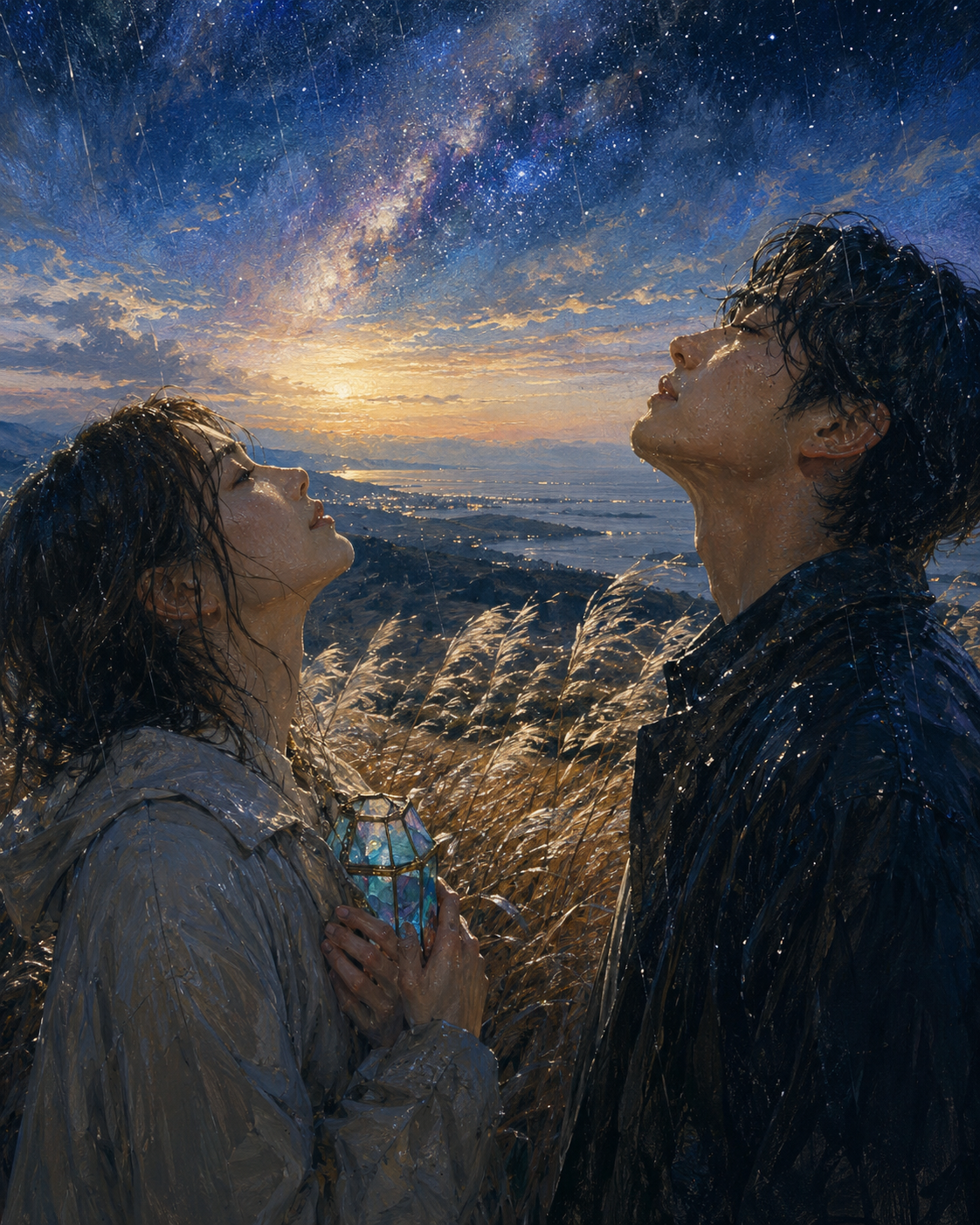
We Look Up at the Same Endless Night
Critique
Introduction This hilltop places two soaked figures beneath storm clouds, stars, and dawn-like light. Their upward gaze creates shared attention, while a stained-glass lantern brings celestial colors into human scale. Description The woman stands at left in a pale wet coat, and the man at right wears a dark jacket. Both tilt their faces toward the rain and star-filled sky. Behind them, silver grasses bend across a ridge above distant water and scattered settlement lights. A luminous cloud break glows near the horizon, while the Milky Way rises through deep blue. The lantern shines turquoise and violet. Analysis The paired profiles create opposing diagonals that open upward rather than toward each other. Their bodies frame the bright horizon and establish a dark foreground against expansive depth. Rain streaks form fine verticals, crossed by wind-bent grasses and the diagonal galaxy. Gold highlights link wet hair, grass, distant water, and clouds. The lantern concentrates cool spectral colors and provides a compact counterpoint to the vast sky. Interpretation and Evaluation The scene suggests companionship expressed through looking together rather than direct exchange. Rain and stars ordinarily belong to conflicting visibility conditions, so their coexistence makes the moment psychological as much as meteorological. The lantern may signify guarded hope or an inner source of orientation. Its symbolism is overt, yet soaked clothing, closed eyes, and wind-pressed vegetation preserve vulnerability and bodily immediacy. Conclusion At first the cosmic sky appears to dwarf the figures. Longer viewing reveals that their shared attention gives the spectacle emotional measure, and the small lantern answers the galaxy without competing with it. The work presents wonder as something received collectively in discomfort, making exposure itself a form of trust.
Same Subcategory
Similar Artworks
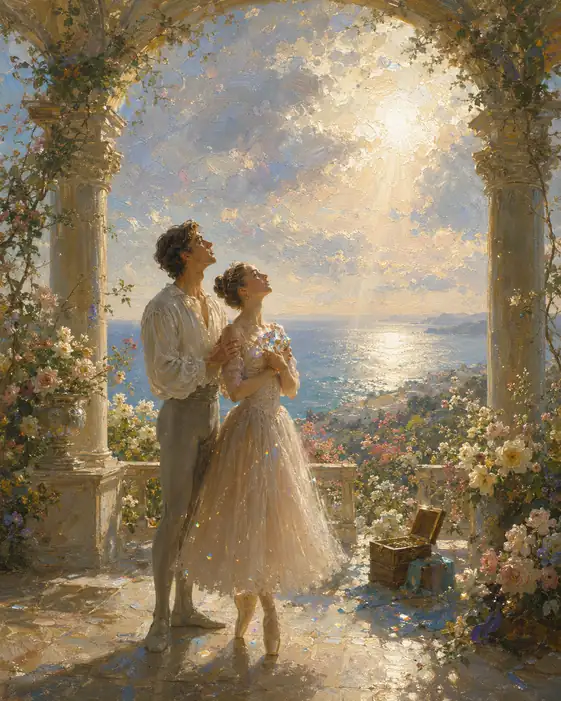 We Looked Up and Found Tomorrow
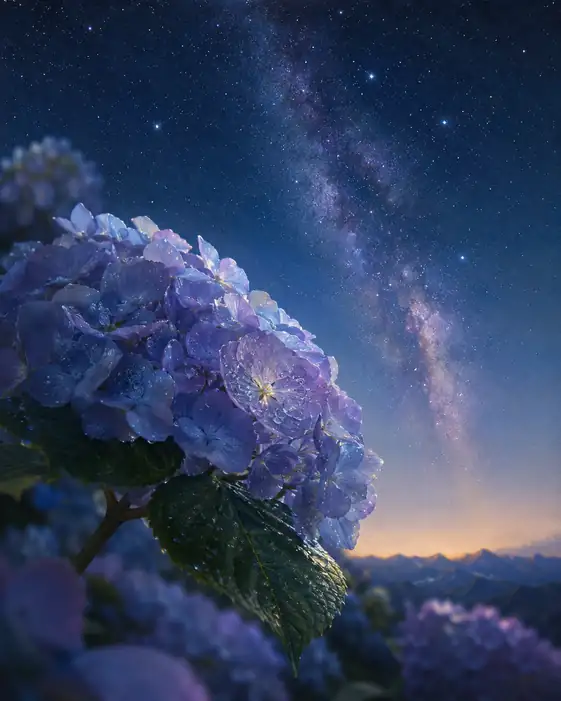 Milky Way Rising Above the Dew
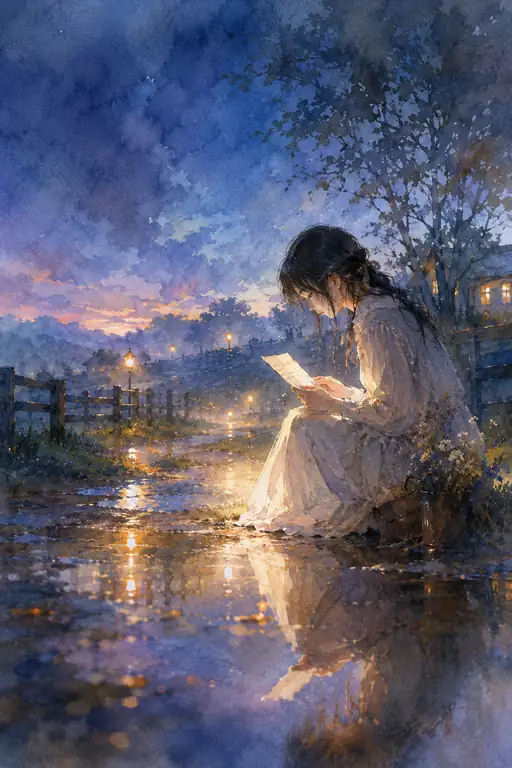 Her Letter Shines After the Rain
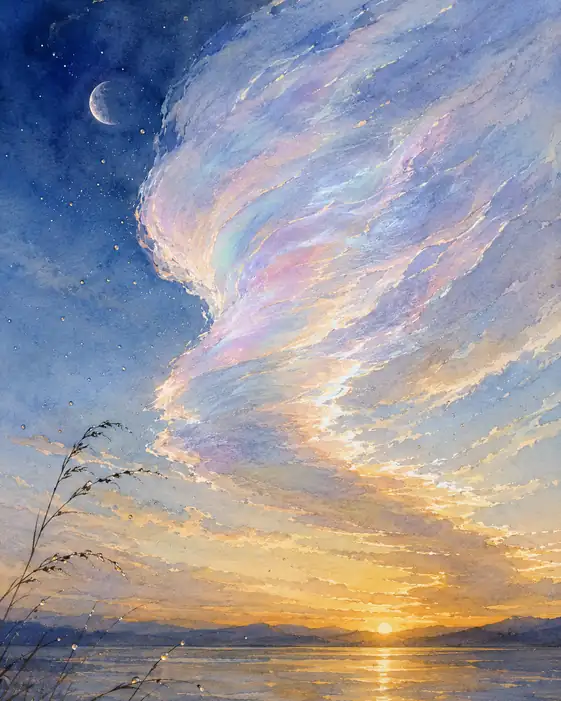 The Sky Remembers How to Fly
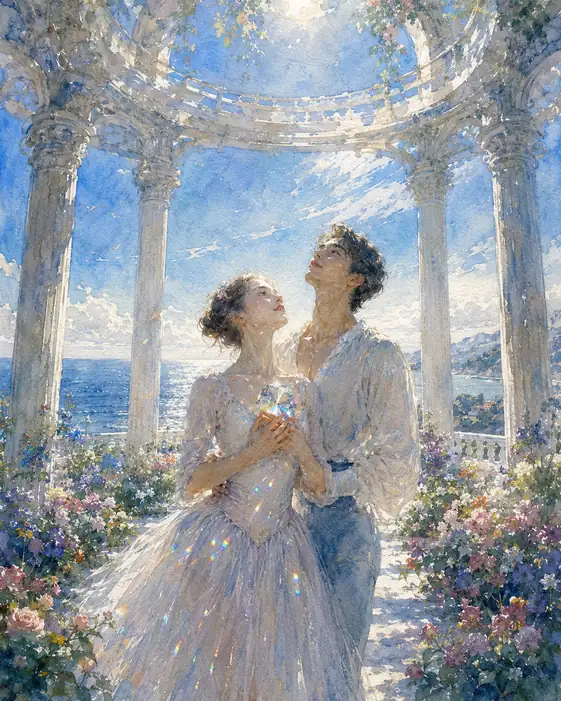 Vows beneath the Open Blue
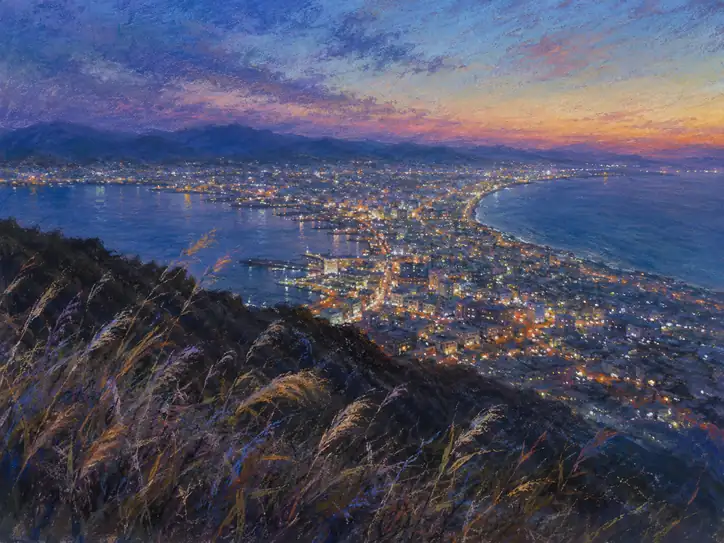 The Cradle of Shimmering Dreams
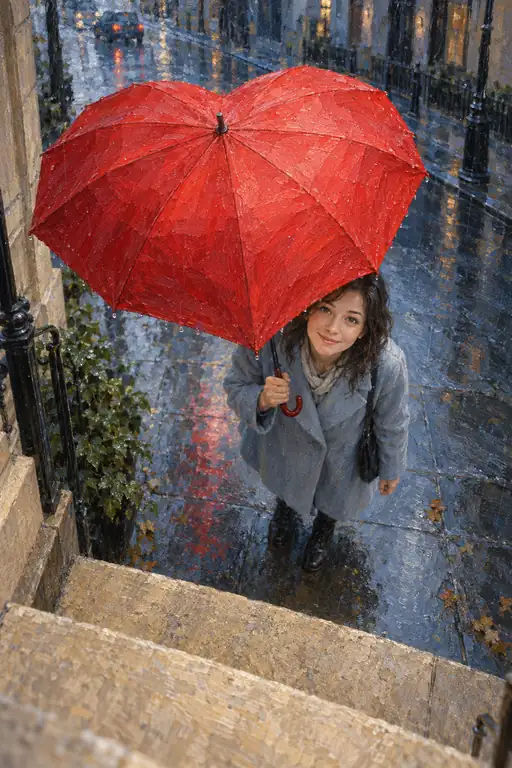 A Smile beneath the Heart Umbrella
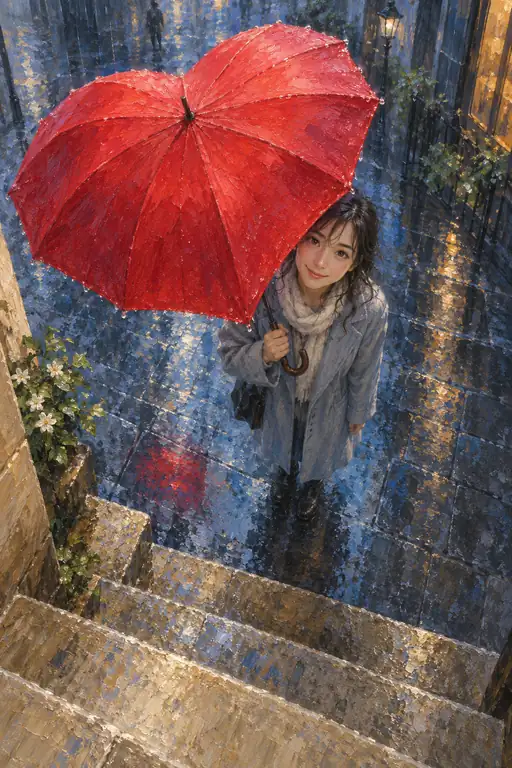 Gazing Up through the Crimson Rain
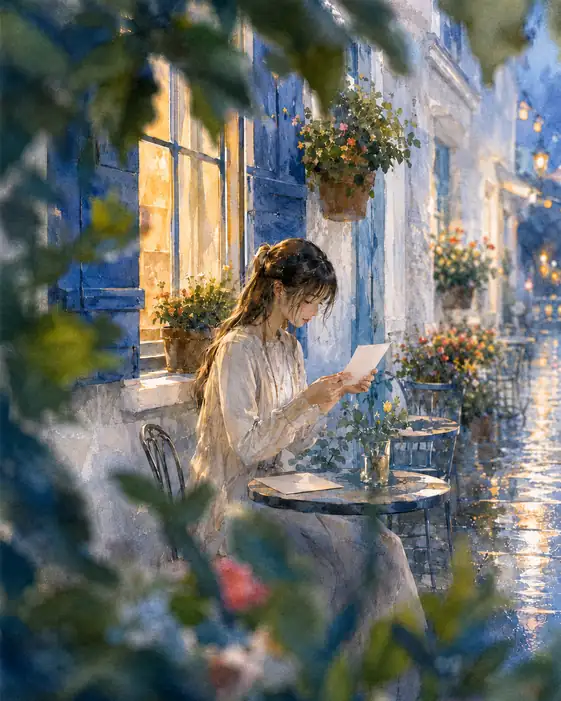 Reading Letters in the Drizzle-Kissed Cafe
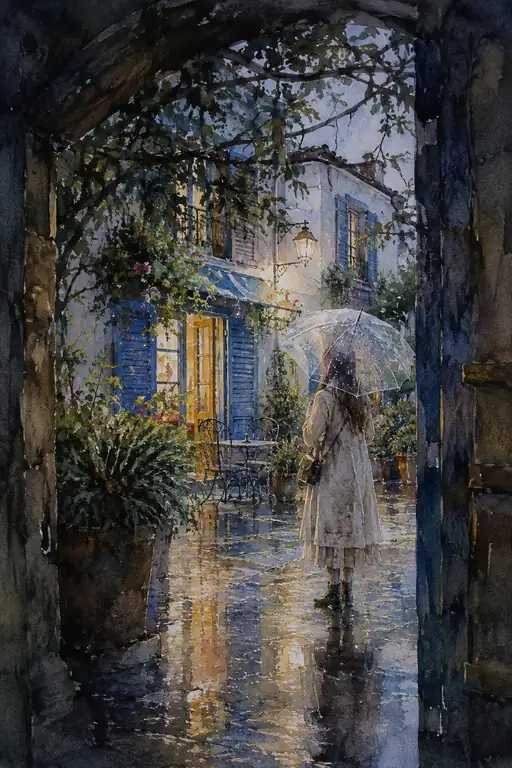 Clear Umbrella Stroll in the Evening Rain