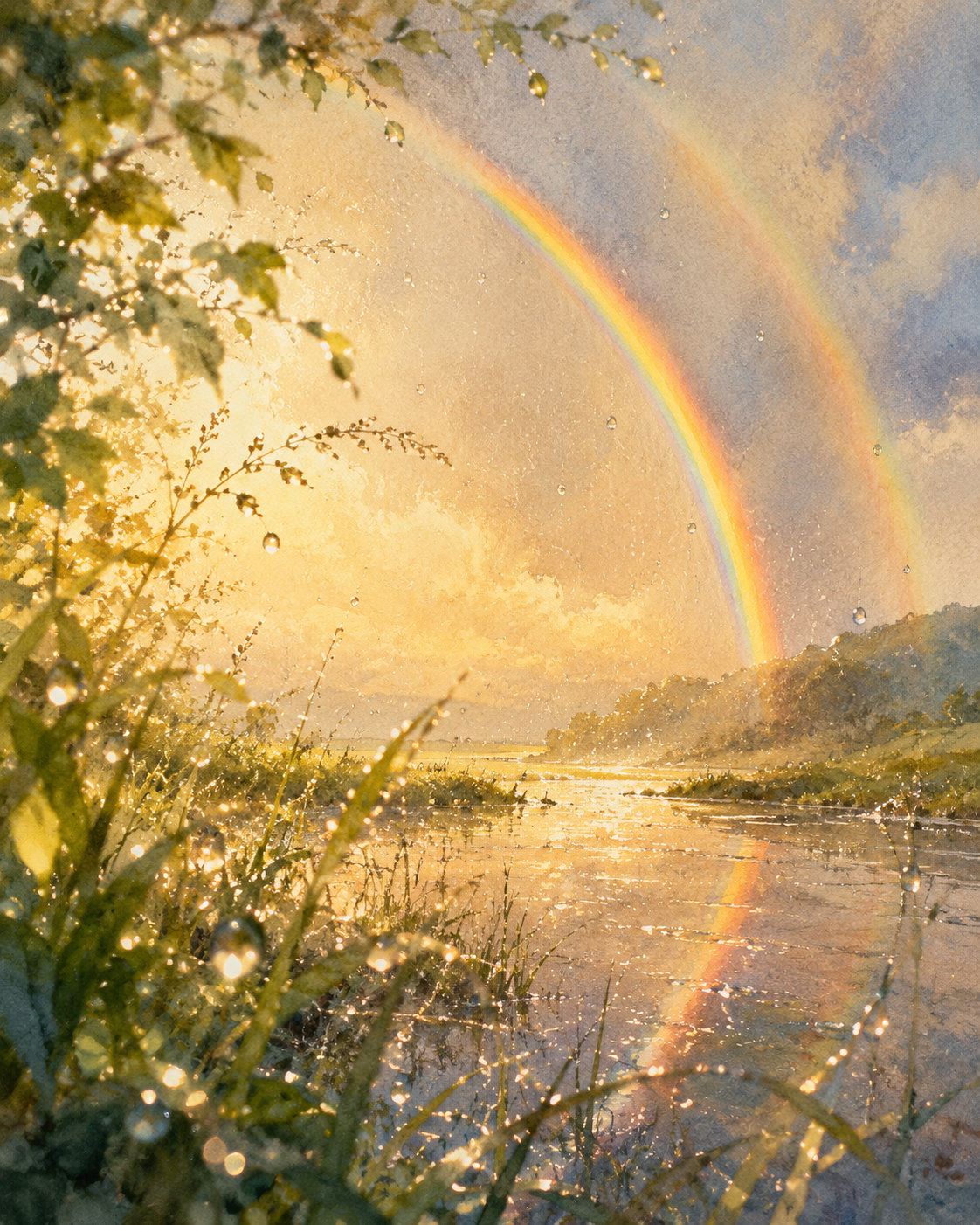
Two Rainbows Promise the Same Tomorrow
Critique
Introduction This wetland gives a double rainbow presence while keeping wet plants close. Falling droplets, flooded ground, reflective river, and atmospheric color all belong to one continuous water cycle. Description A bright primary rainbow arcs from the upper left toward a wooded hill at right, with a fainter second bow beyond it. Golden clouds fill the opening beneath blue-gray rain. A broad shallow river winds through low grasses and reflects a broken vertical band of color. Dark leafy branches frame the left foreground, where large drops sparkle on stems and leaves. Analysis The rainbow’s immense curve organizes the upper field and is answered below by the river’s winding reflection. Diagonal foreground grasses lead inward, while the right hill anchors the bow’s endpoint. Warm yellow light occupies the center and left; cooler blue-gray gathers at upper right, preserving the impression of departing rain. Sharp droplets and dark foliage establish proximity against softened distance. Repeated points of white light connect vegetation, rainfall, and water surface. Interpretation and Evaluation The paired bows can suggest renewal after difficulty, yet the scene gains depth by showing rain still falling. Hope is not presented as a condition after uncertainty has vanished; both occupy the same atmosphere. The secondary rainbow, faint reflection, and countless drops make perception dependent on angle and attention. Although the gold illumination is highly idealized, muddy greens and shadowed clouds keep the image from becoming purely emblematic. Conclusion At first the double rainbow seems to be the complete subject. Longer viewing reveals a whole wet environment making that color possible. The painting shifts wonder from an isolated sign to the relationships among rain, light, river, and attentive sight, giving its optimism ecological grounding.
Same Subcategory
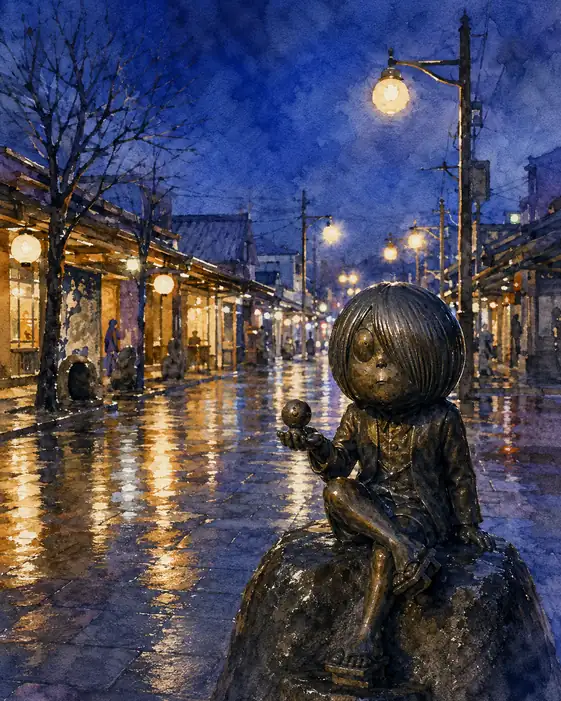 The Little Spirit Who Waited Through Rain
Similar Artworks
 Winter Finds a Rainbow on the Ground
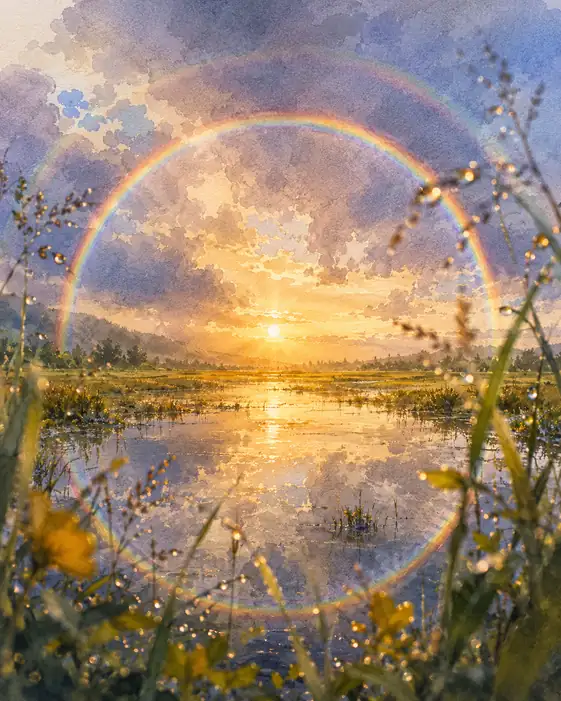 After the Storm, the World Becomes Whole
 Autumn Bows Beneath Two Rainbows
 Autumn Flowers Beneath a Double Promise
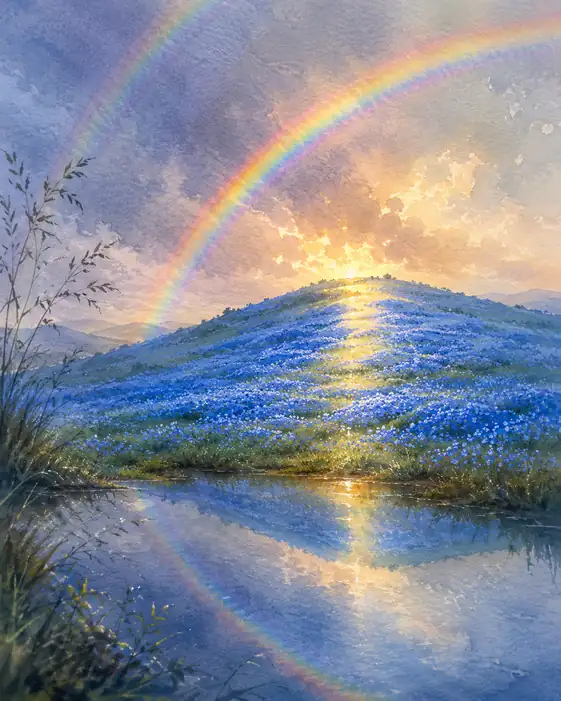 Spring Keeps a Rainbow Over the Blue Hill
 Where Two Rainbows Return to the Sky
 Golden Waterway Glistening through Dewy Grass
 Sunlight Pools on the Empty Veranda
 The Crater Lake Receives the Evening
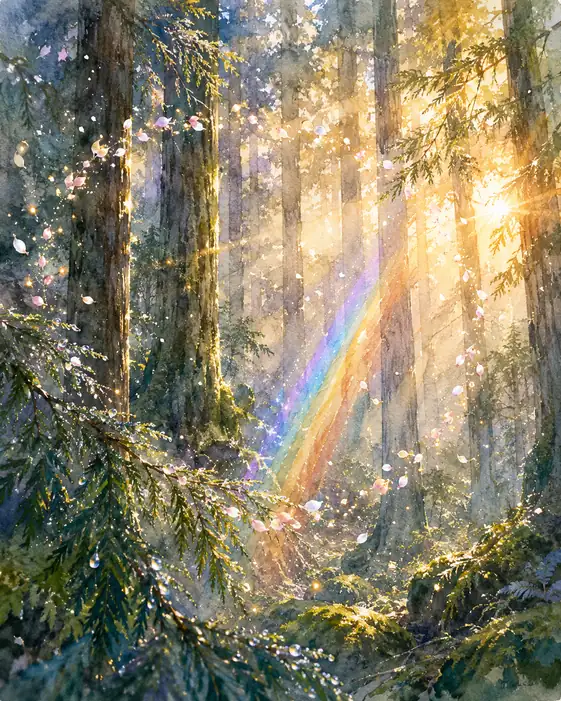 The Forest Opens a Rainbow Door