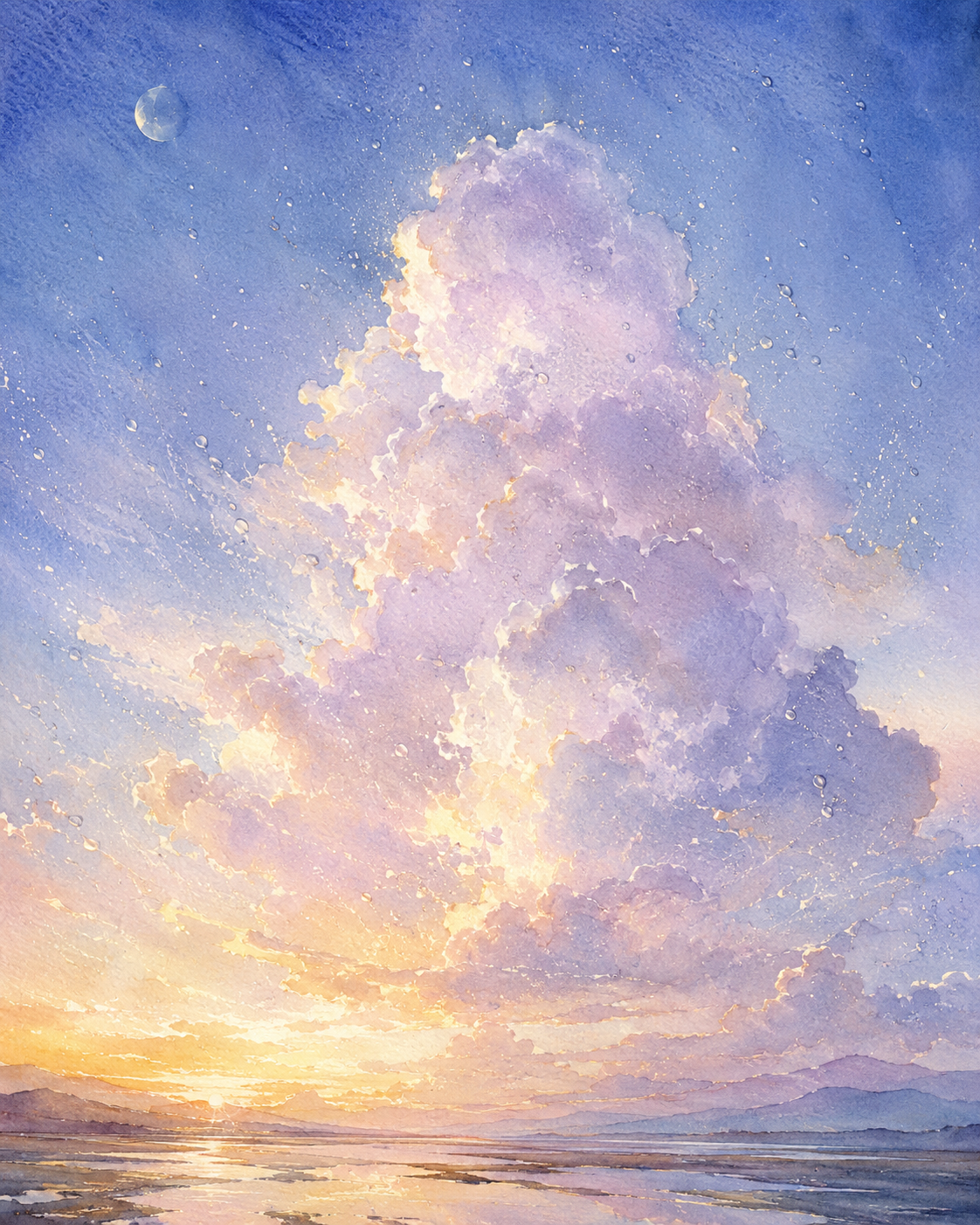
The Cloud Builds a Palace of Light
Critique
Introduction This study makes a cloud the subject of an empty landscape. Sunset illuminates it while a pale moon remains at upper left, joining changing weather and time. Immense scale retains watercolor delicacy. Description A monumental cumulus formation rises from the horizon through most of the vertical composition. Its rounded masses shift from warm cream and pink to lavender and blue-violet shadow. A low sun glows at the far left above wet reflective flats and distant mountains. The small moon hangs in clear blue sky, where scattered transparent droplets and fine white flecks appear. Analysis The cloud’s steep ascent opposes the thin horizontal bands of land and water below. Large nested lobes build upward momentum, while softened edges allow the form to expand into surrounding air. Warm backlighting traces selected contours and reveals depth between overlapping volumes. The moon provides a quiet counterweight far from the glowing base. Granular blue washes unify sky and shadow; tiny droplets introduce a second, intimate scale against the enormous cloud. Interpretation and Evaluation The cloud appears architectural, almost mountain-like, yet its soft boundaries insist on impermanence. Its rise may suggest aspiration or accumulating energy, while the moon and sunset indicate that distinct phases coexist briefly. The scattered droplets complicate ordinary spatial logic, but they effectively translate atmospheric moisture into visible detail. Because the narrow land remains understated, the composition grants weather the dignity usually reserved for a monumental figure. Conclusion At first the cloud reads as a spectacular object dominating the world below. Gradually, its illuminated edges and dissolving contours reveal a form continually becoming and unmaking itself. The painting’s grandeur rests not on permanence, but on the immense beauty of temporary atmospheric structure.
Same Subcategory
Similar Artworks
 The Last Reed Holds the Sunset
 The Sky Remembers How to Fly
 A Symphony Within the Clouds
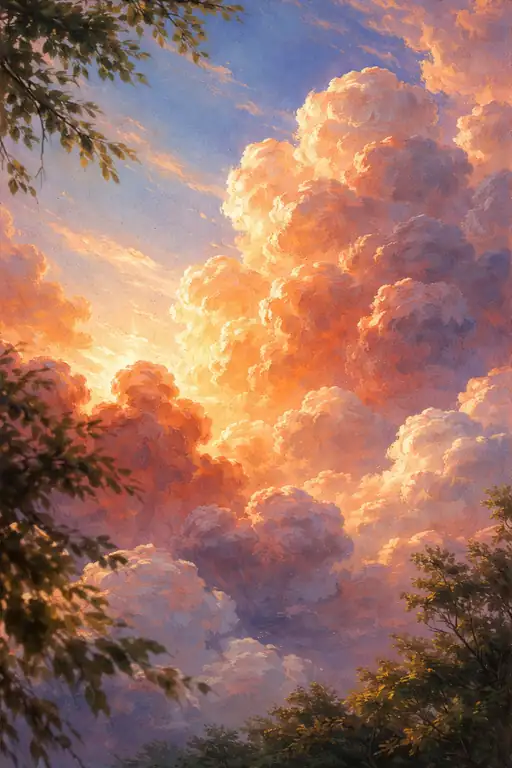 Whispers of the Golden Firmament
 Where Two Rainbows Return to the Sky
 Until the Last Island Becomes Light
 Autumn Flowers Beneath a Double Promise
 The Sea Carved a Face for Sunset
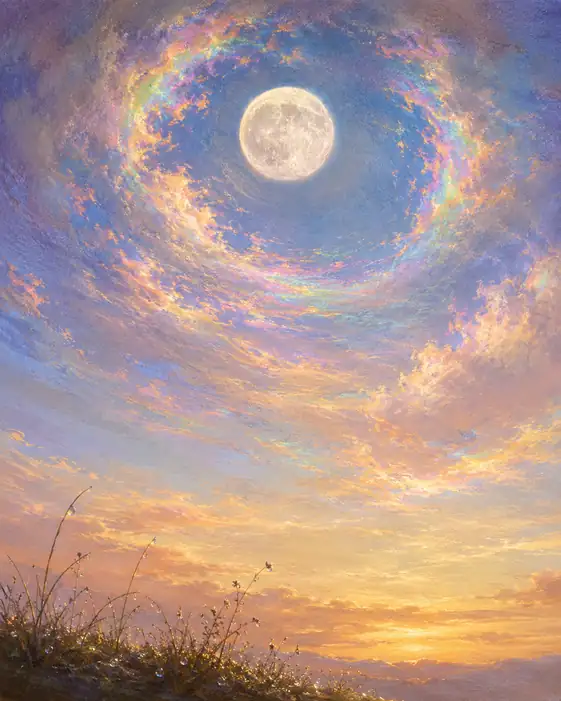 Full Moon Piercing the Iridescent Cloud Ring
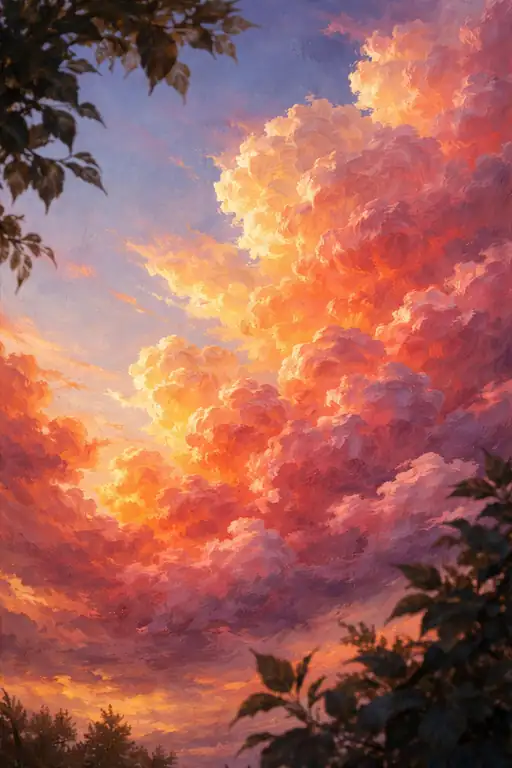 Symphony of the Burning Sky