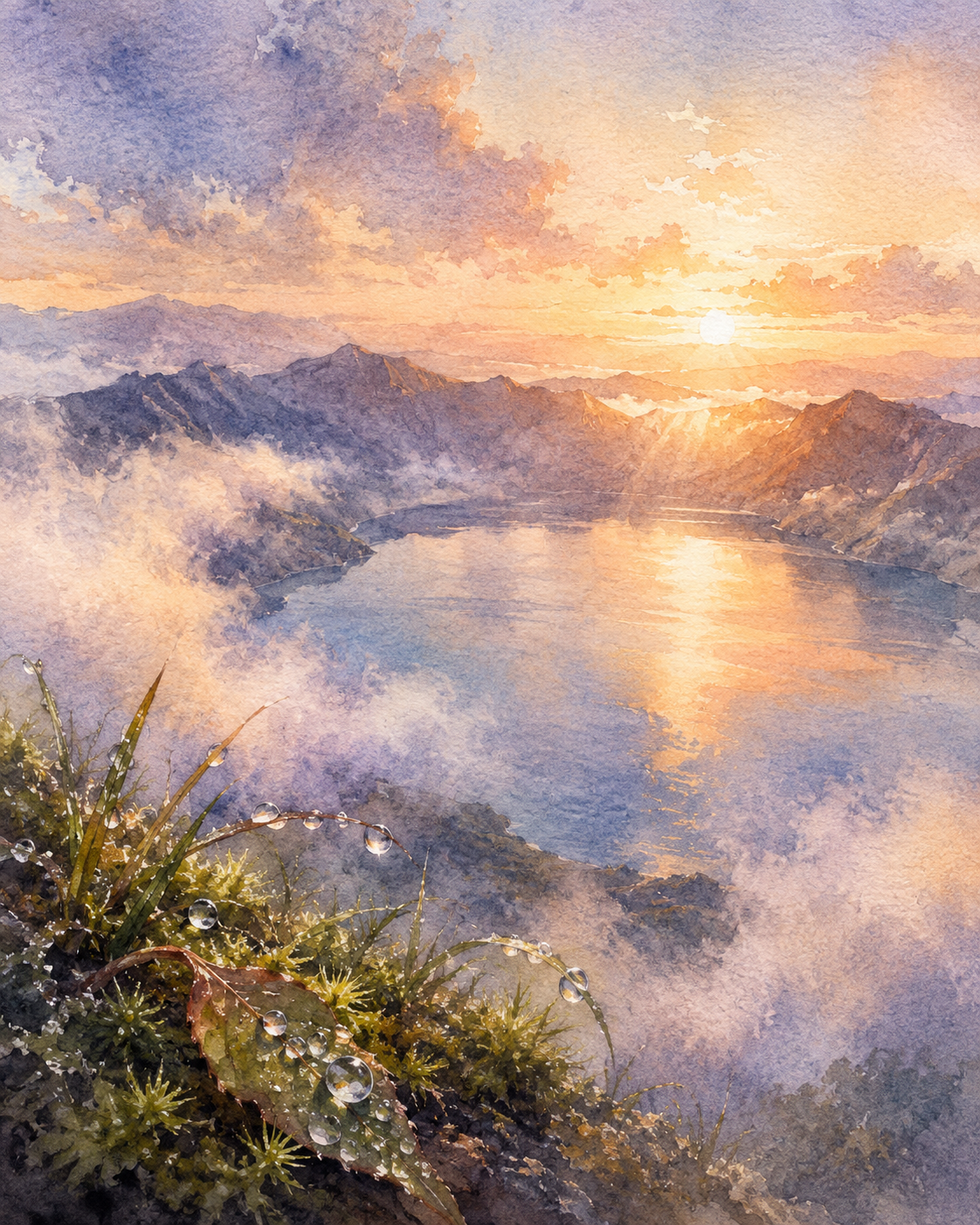
The Crater Lake Receives the Evening
Critique
Introduction This elevated view presents a mountain lake at sunrise with wet vegetation nearby. The panorama promises sublimity, yet distance is not the only source of value. Dew on a bent leaf receives the same light as lake and sky. Description A blue-gray lake occupies the center of a basin enclosed by jagged mountains. Mist pours across the left slopes and drifts over the foreground edge. The sun rises at upper right, sending peach and gold rays between ridges and laying a long reflection on the water. Moss, grasses, and a brown leaf fill the lower left, bearing several round droplets. Analysis Mountain diagonals converge toward the sunlit valley and establish a deep, amphitheater-like space. The lake’s horizontal oval provides calm against those angular ridges. Warm reflection creates a vertical route from sky to water, while foreground plants form a second, smaller network of arcs and circles. Soft violet and gray washes describe mist; sharper green and brown marks pull the ledge forward. Droplets repeat the bright solar disk and compress the distant light into miniature lenses. Interpretation and Evaluation Panorama and close detail suggest scale does not determine significance. A droplet holds light like a lake, and the damp leaf records mountain weather. The scene may suggest awakening, but its strongest insight is relational. Though idealized, the luminous valley is partly obscured by mist and uneven ridges. Conclusion At first the sunrise and mountain basin command attention. Gradually, the eye returns to the humble vegetation at the edge, discovering the large scene reflected in small forms. The painting’s grandeur becomes persuasive because it includes proximity, moisture, and vulnerability rather than erasing them.
Same Subcategory
 When Autumn Becomes a Mirror
Similar Artworks
 A World Held in Every Drop
 Sky Floating on the Silver Salt Lake
 Solitude by the Fog-Bound Pond
 The Pine That Kept the Dawn
 One Tulip against the Golden Storm
 Golden Sunrise over Lake Toya and Nakajima Island
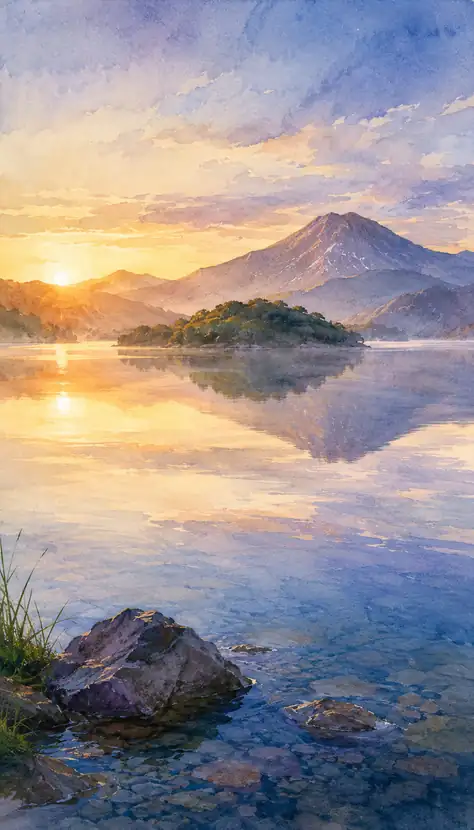 Reverse Reflection of Mount Yotei on Lake Toya
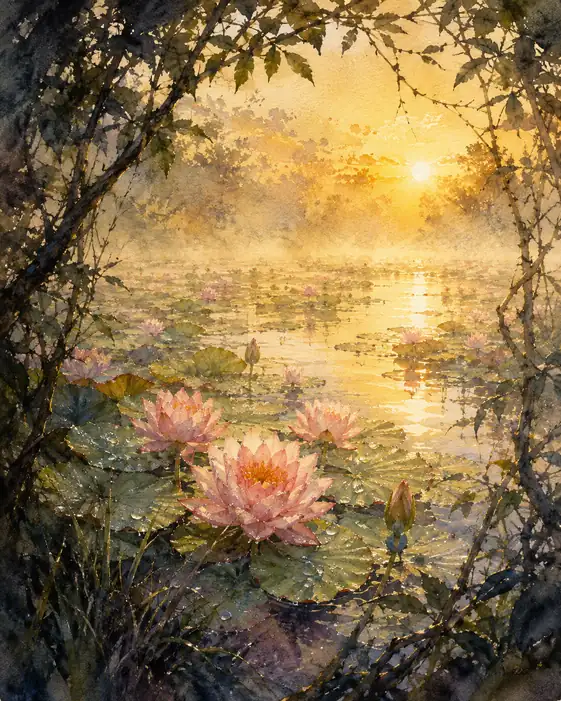 Pink Lotus Unfolding in Golden Glade
 Dawn's Embrace of the Silent Citadel
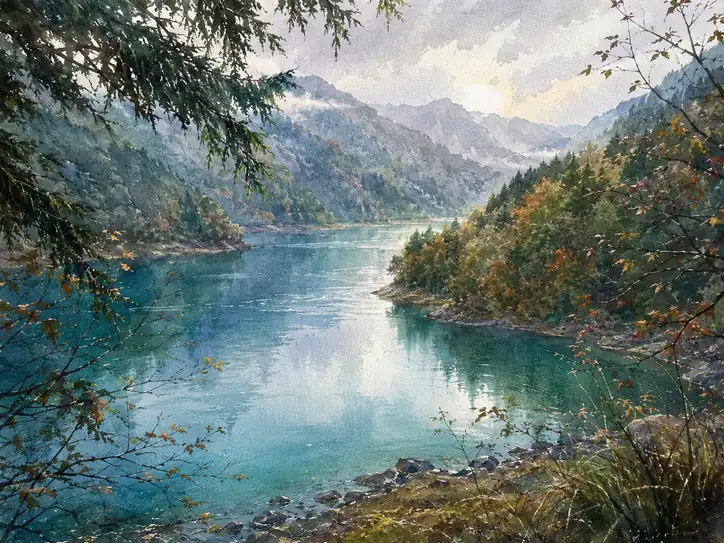 Echoes of Tranquility: The Sapphire Haven