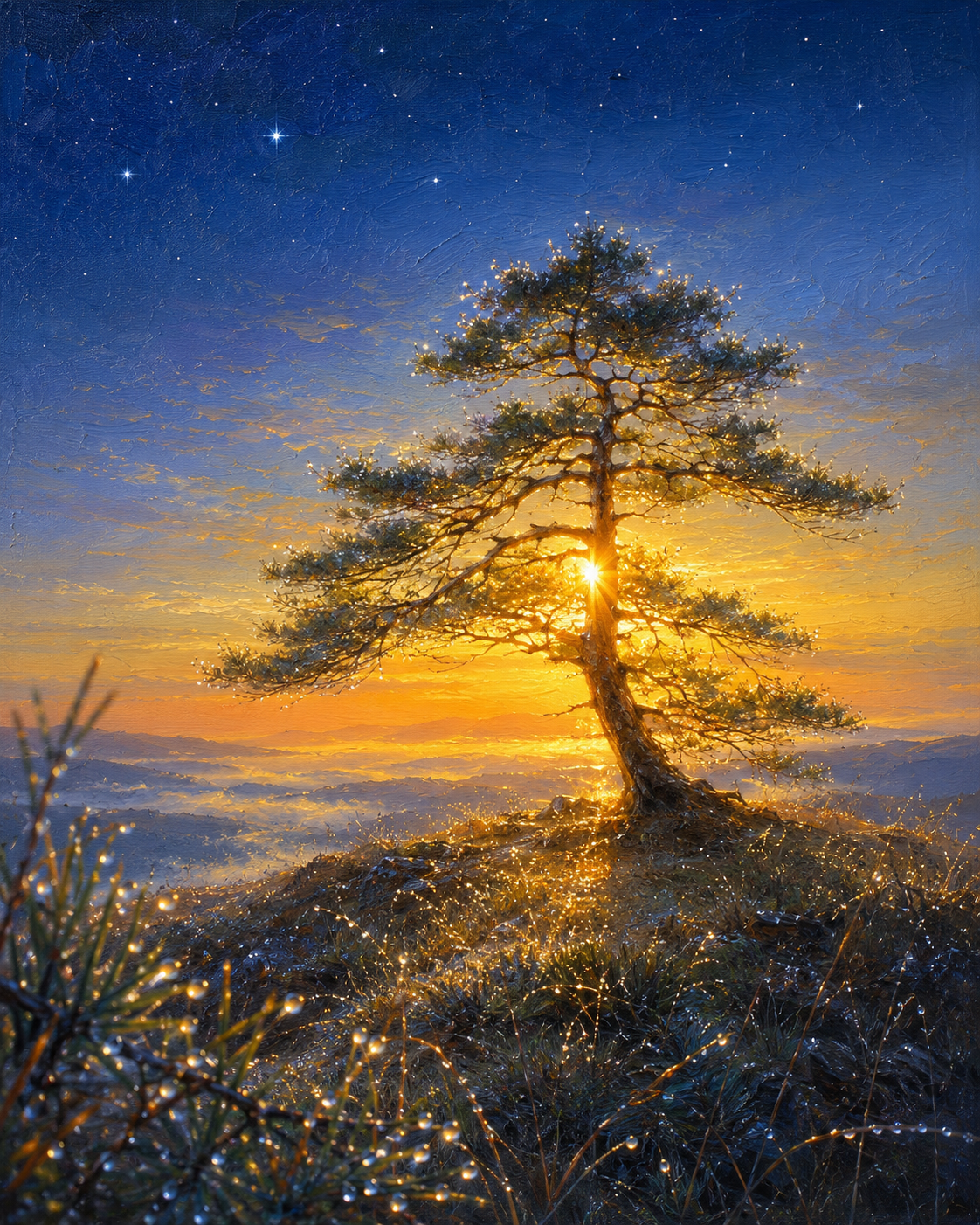
The Lone Pine Carries the Dawn
Critique
Introduction This image makes a solitary pine a monument between night and dawn. Asymmetrical branches and a bent trunk resist perfection, while the emerging sun turns endurance into radiance. Grandeur remains grounded in dew, grass, and earth. Description A mature pine stands on a low ridge, leaning slightly right while broad tiers of branches spread across the center. The sun appears through an opening beside the trunk and floods the horizon with gold. Above, the sky deepens through blue to a star-filled night. Distant hills and cloud banks line the horizon. Wet grasses and a blurred pine spray fill the foreground with points of reflected light. Analysis The trunk establishes a vertical axis but its bends prevent static symmetry. Horizontally layered boughs echo the distant ridges, joining tree and landscape. A strong value gradient rises from the brilliant horizon to the dark upper sky, making temporal transition spatial. The sun’s starburst marks the intersection of trunk and lower branches, while hundreds of smaller highlights repeat that center among needles and dew. Thick, directional texture gives the sky movement and the bark physical weight. Interpretation and Evaluation The pine suggests persistence through adaptation rather than rigid strength. It leans, branches unevenly, and occupies exposed ground, presenting endurance as responsive growth. Stars above dawn extend this idea: endings and beginnings overlap. Golden points could become ornamental, but dark foreground masses and the rough silhouette anchor their luminosity. Conclusion At first the pine reads as a heroic silhouette against a spectacular sunrise. Gradually, its irregularities and the surrounding droplets become equally important. The painting shifts admiration from grandeur alone toward the accumulated adjustments through which living forms endure and continue to receive light.
Same Subcategory
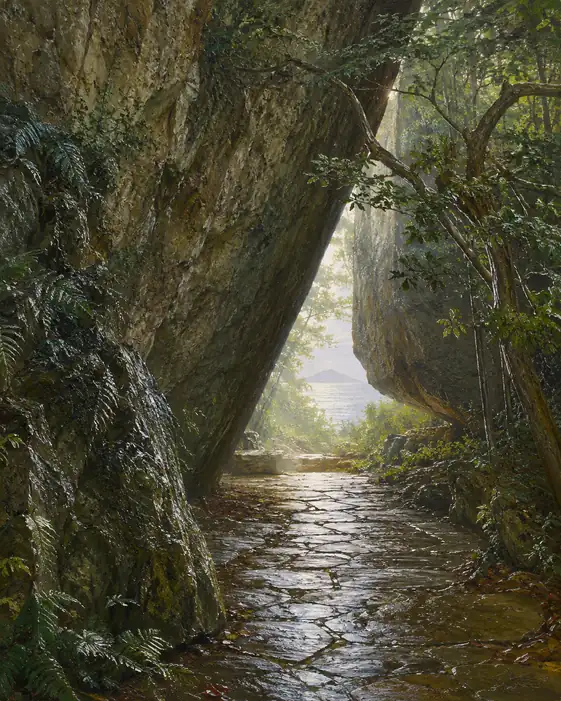 Sanctuary of Light and Stone
Similar Artworks
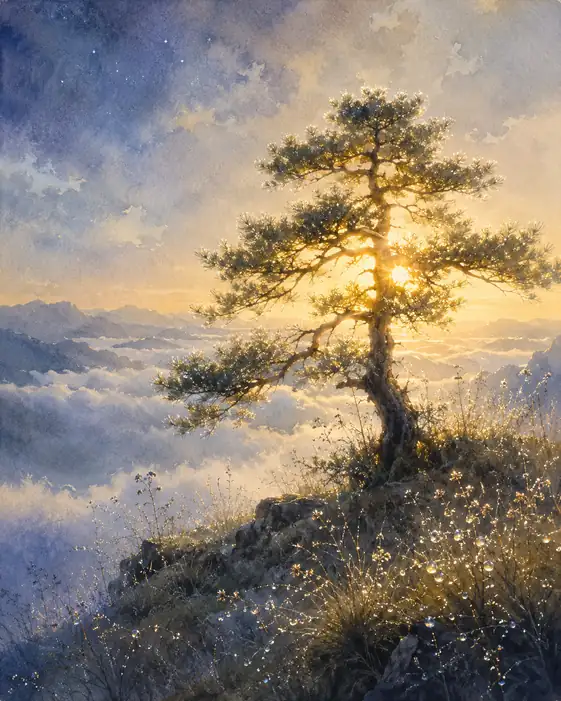 The Pine That Kept the Dawn
 The Forest Opens a Rainbow Door
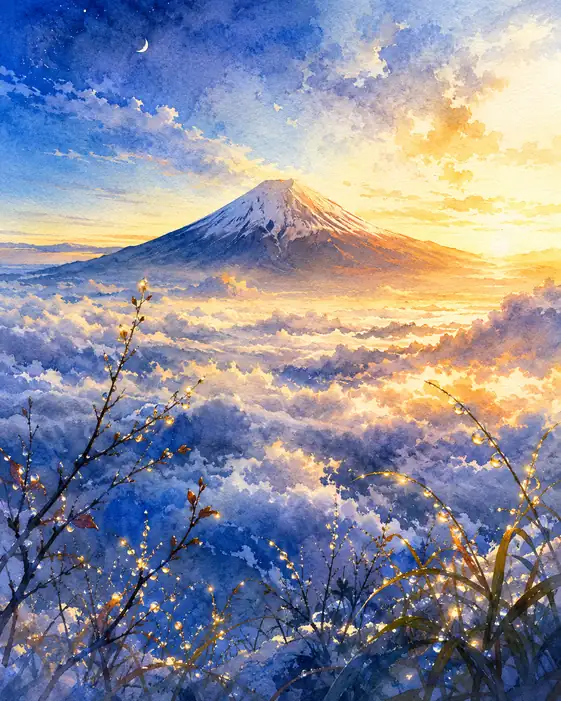 Fuji Rises from a Sea of Dreams
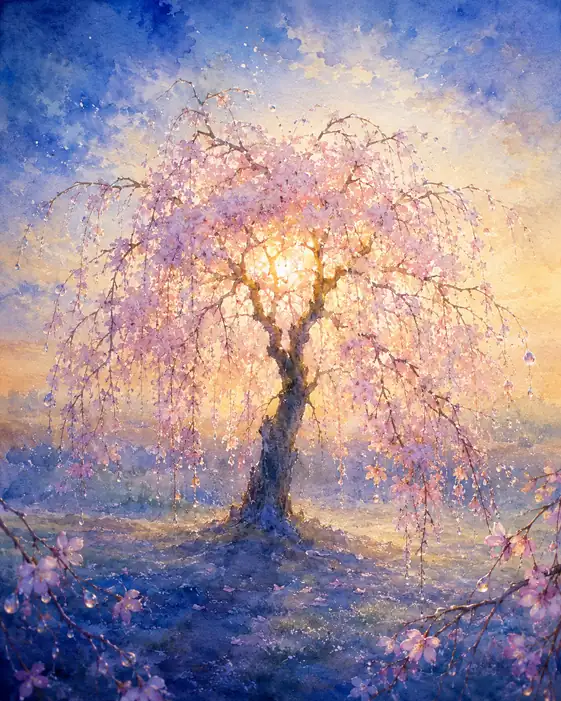 Weeping Cherry Crowned in Golden Rays
 Winter Finds a Rainbow on the Ground
 Petals Turn the Morning into a Circle
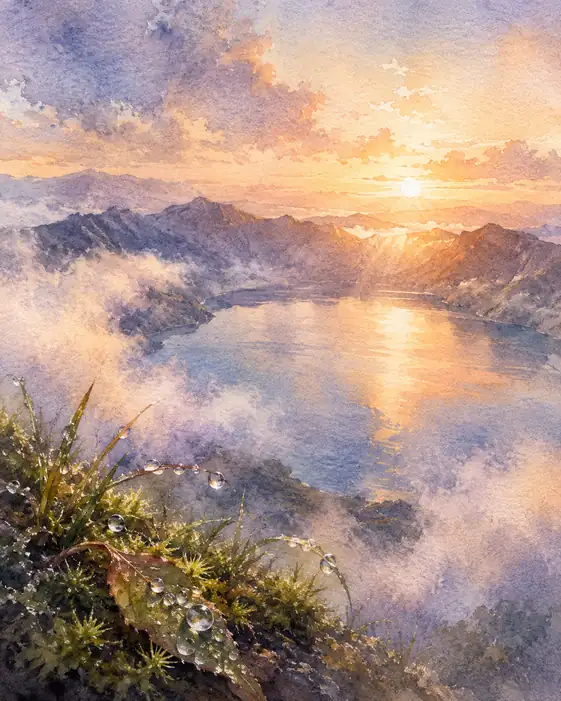 The Crater Lake Receives the Evening
 Footsteps toward the Unwritten Horizon
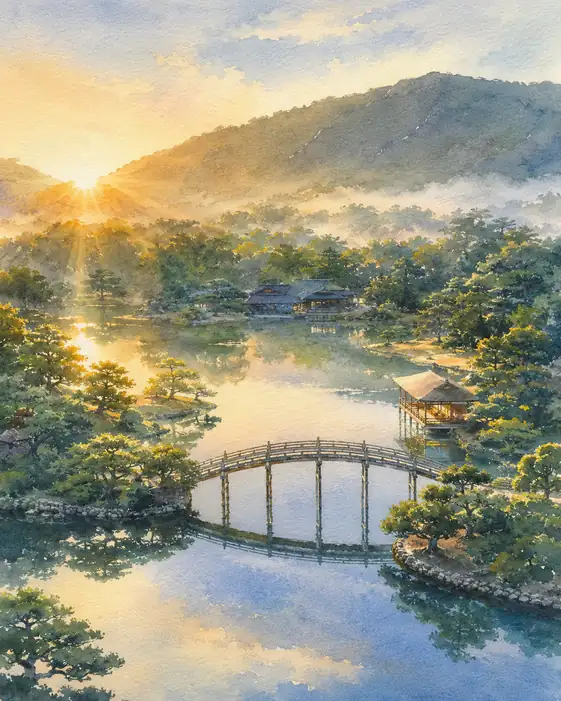 A Bridge Across the Morning's Breath
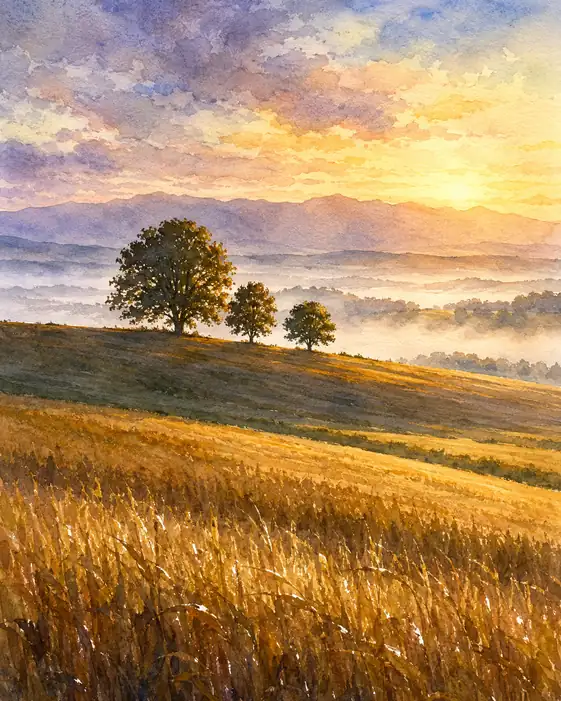 Parent and Child Trees on the Golden Hill