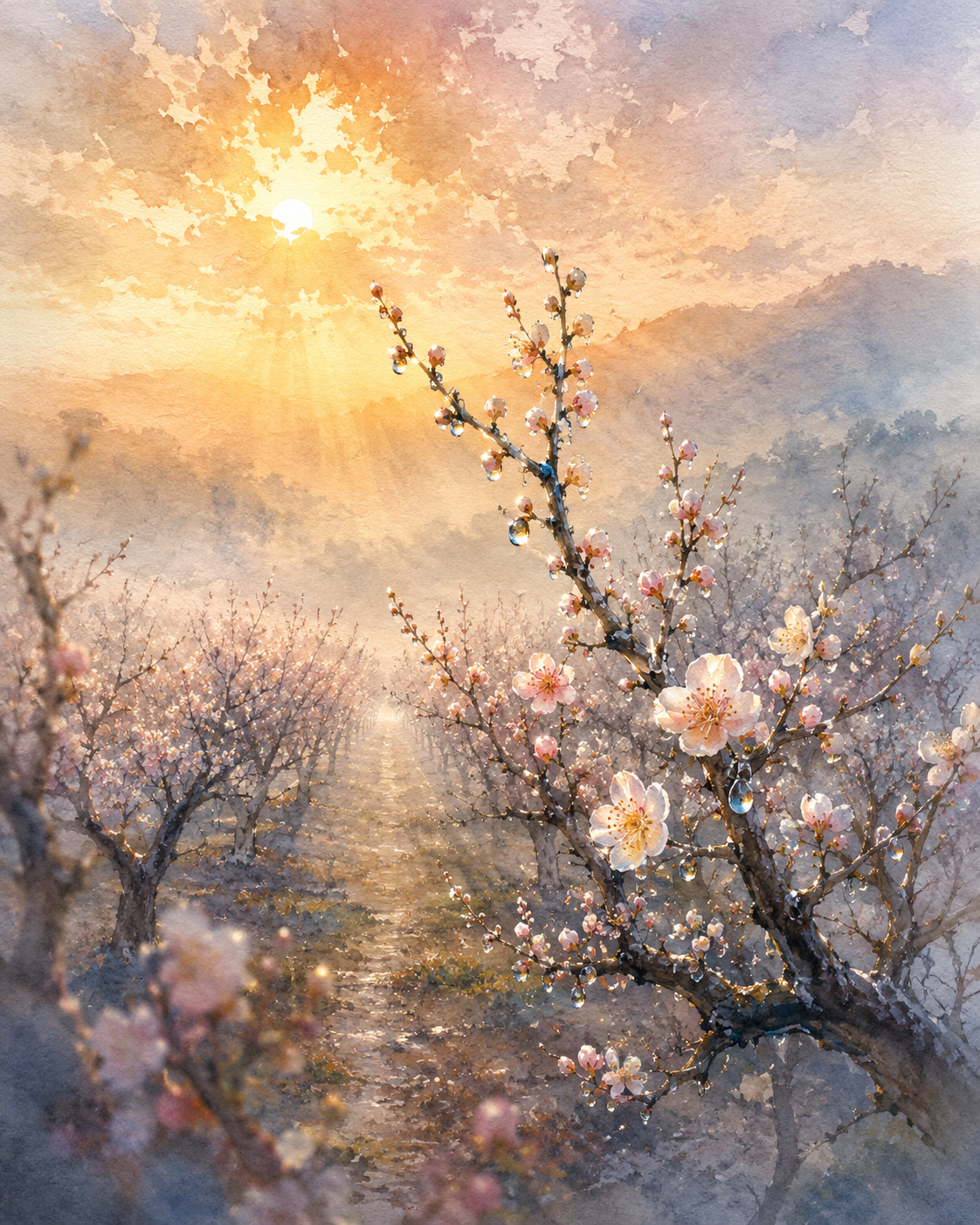
Plum Blossoms Wake the Mountain Mist
Critique
Introduction This orchard presents early blossoms as intimate objects and signs of seasonal change. A flowering branch fills the foreground, while a path, distant trees, mountains, and sunrise expand the view beyond botanical study. Description A dark, twisting branch enters from the lower right and climbs through the center, bearing pale pink buds and white flowers with warm orange stamens. Large droplets hang from twigs and petals. Rows of blossoming trees flank a narrow path that recedes into mist. Layered mountains rise at right, and a bright sun breaks through peach, gold, and lavender clouds at upper left. Analysis The main branch creates a vigorous diagonal countered by the path’s quiet central recession. Its sharp flowers overlap softer orchard rows, establishing depth through edge and scale rather than strict linear perspective alone. Warm sunlight travels diagonally from upper left across the blossoms, while cooler gray-violet shadows collect among trunks and hills. Repeated buds form a dotted rhythm that leads from foreground to distance. Transparent washes soften atmosphere; dark, angular wood supplies necessary structural weight. Interpretation and Evaluation Blossoming after rain suggests renewal, enriched here through stages of opening. Tight buds, half-open petals, and full flowers make spring a process rather than an instant. The path invites movement without specifying a traveler. Sparkling droplets and abundant blossoms risk sweetness, yet mist, rugged bark, and muted mountains provide a convincing counterbalance. Conclusion At first the foreground flowers seem to be the entire subject. Longer viewing reveals that they are a threshold into the orchard and its unfolding season. By joining close observation to spacious recession, the painting makes renewal feel at once personal, communal, and continuous.
Same Subcategory
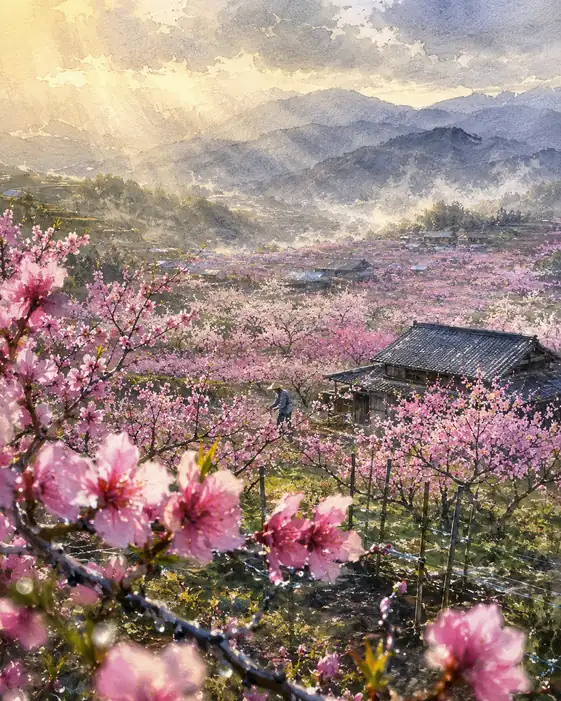 Spring Pours Down the Valley
 The Summer Camellia Releases a Blizzard of Tender Light
Similar Artworks
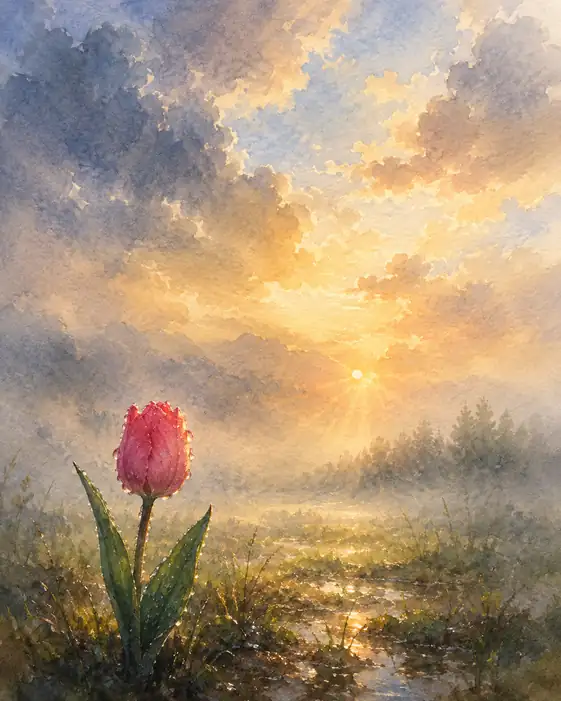 One Tulip against the Golden Storm
 Crape Myrtle along the Sunlit Coastline
 A Dewdrop Carries Spring Across the Orchard
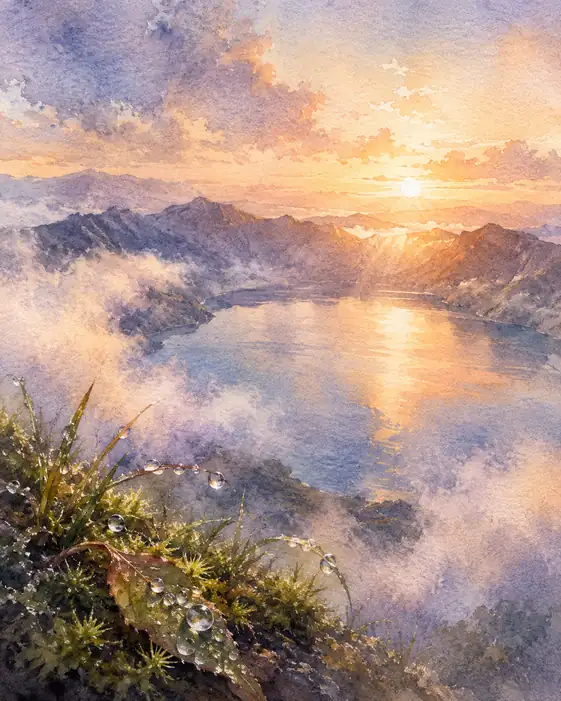 The Crater Lake Receives the Evening
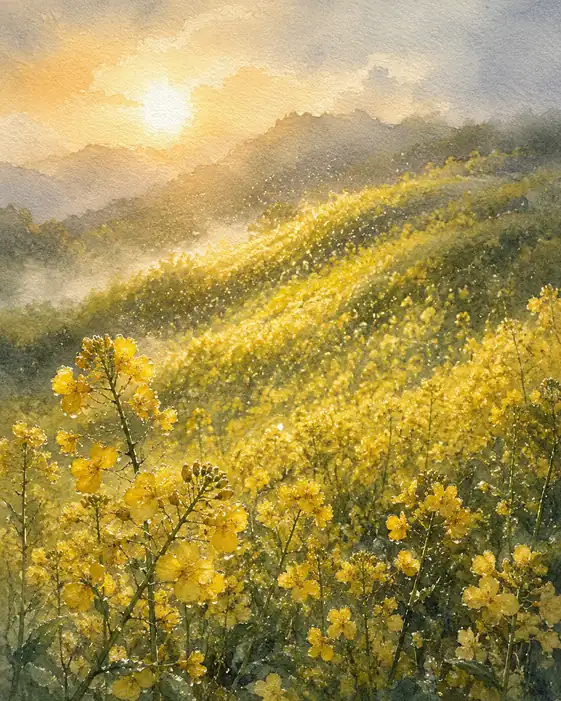 The First Breath of Golden Spring
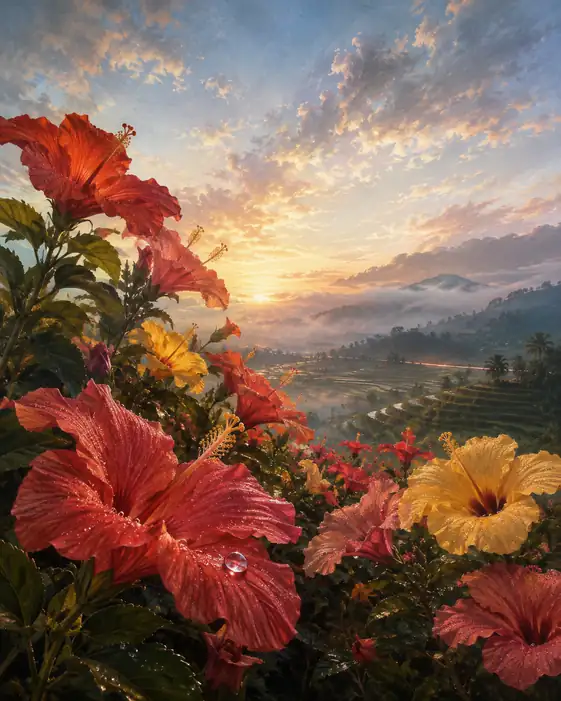 Morning Dew on Hibiscus above the Terraced Valleys
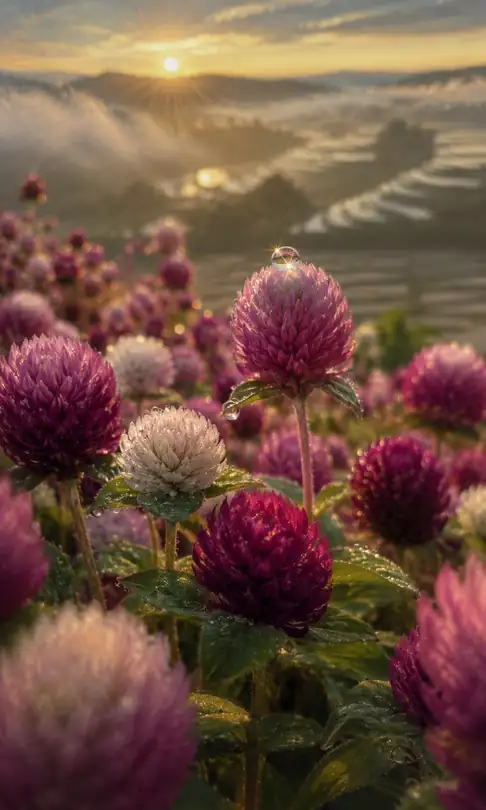 Morning Dew upon Globe Amaranth and Terraced Hills
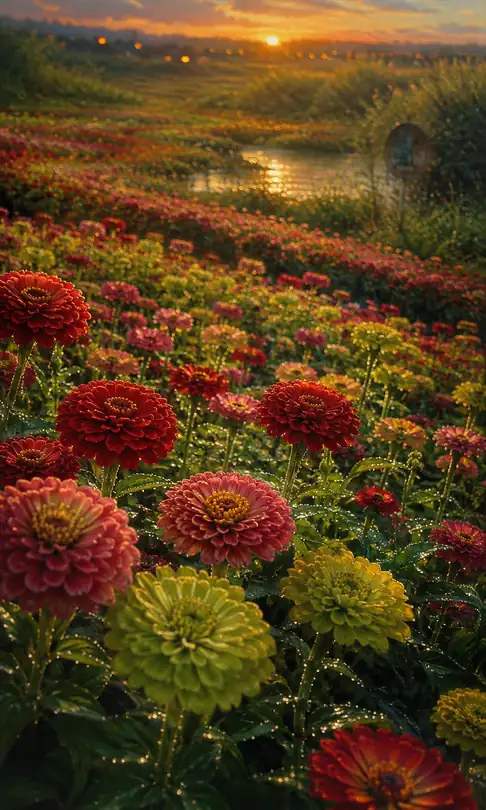 Sunset Glow across the Zinnia Meadow
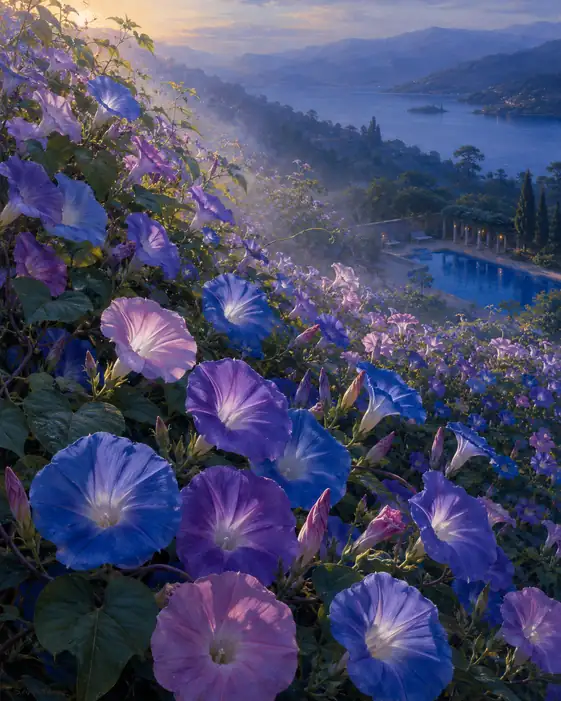 Morning Glories above the Sunlit Coast
 Morning Dew across the Terraced Valley