
The Dune Keeps the Wind's Signature
Critique
Introduction This coastal scene finds drama in a temporary sculpture made by wind. A curling sand ridge catches the low sun like a wave arrested before breaking. Its quiet power comes from ambiguity: a familiar landscape briefly seems strange but remains believable. Description Near the center, a thin crest of wind-shaped sand curves upward and casts a broad blue-gray shadow toward the viewer. Parallel ripples spread across the foreground, dotted with small stones. Slender dune grasses enter along the left edge, carrying bright drops. The sea runs horizontally at right beneath a low white sun, while distant vegetation recedes along the left horizon. Analysis The central ridge operates as both focal object and directional device. Its bright right edge points toward the sun, while its dark shadow widens downward and anchors the airy upper half. Horizontal shoreline bands stabilize the composition, and the grasses introduce long diagonals that cross the open sky. A restricted palette of cream, ocher, and cool gray-blue permits subtle value changes to describe form. Granular washes suggest sand, whereas narrow reserved whites make wet grains and droplets sparkle. Interpretation and Evaluation The ridge resembles a fin, wing, or frozen wave without resolving into a symbol. Formed from sand, its monumentality is temporary. Wonder therefore joins impermanence: ordinary forces shaped something remarkable that the next wind may erase. The near-monochrome brightness might flatten depth, but the long shadow and sand ripples restore recession. Conclusion At first the image records a curious dune formation at sunrise. Gradually, it becomes a meditation on how perception transforms the ordinary. The painting honors a fleeting configuration without pretending it will last, allowing transience itself to become the source of beauty.
Same Subcategory
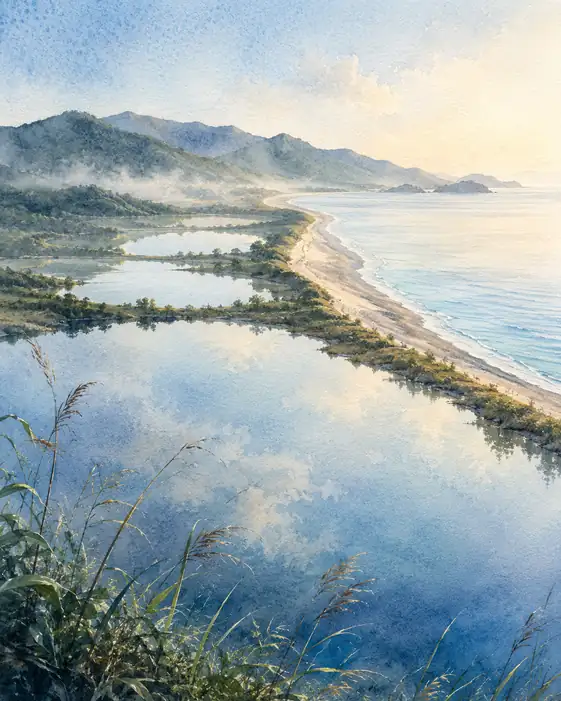 Where Sea and Sky Exchange Silence
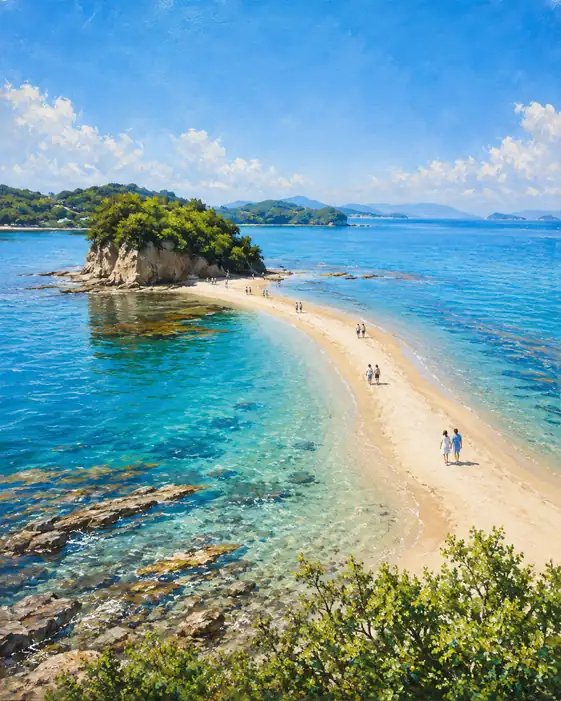 Before the Tide's Promise Unravels
Similar Artworks
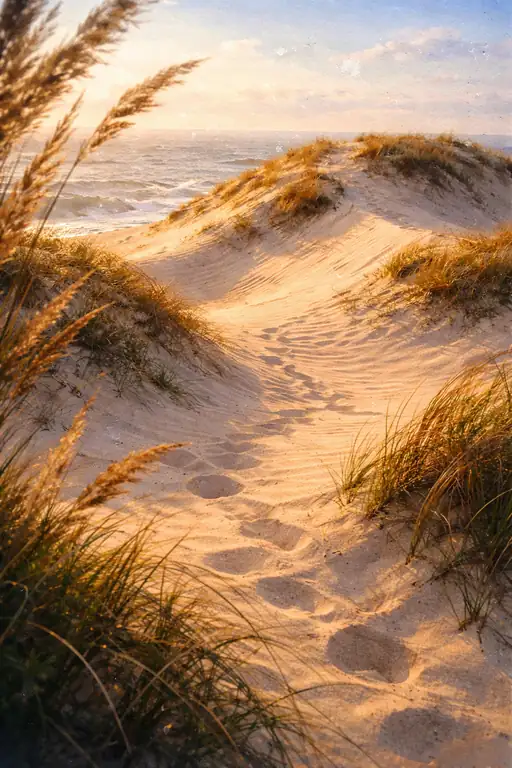 Golden Path Through the Coastal Dunes
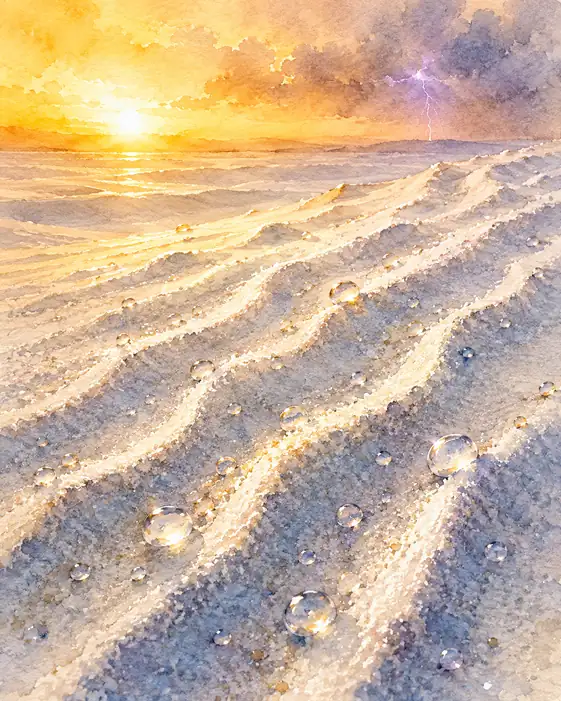 A Whispered Pulse Before the Tempest
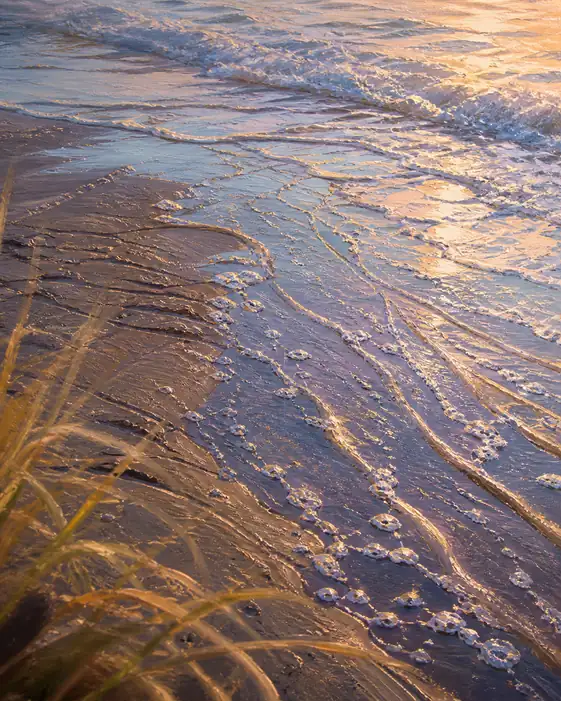 Golden Trace of the Receding Tide
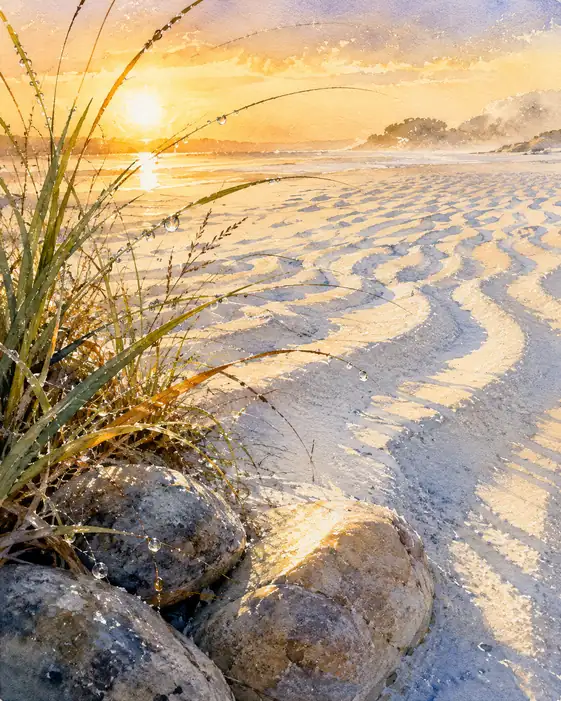 Golden Ripples on the Ebbing Strand
 Golden Ridge across the Dunes
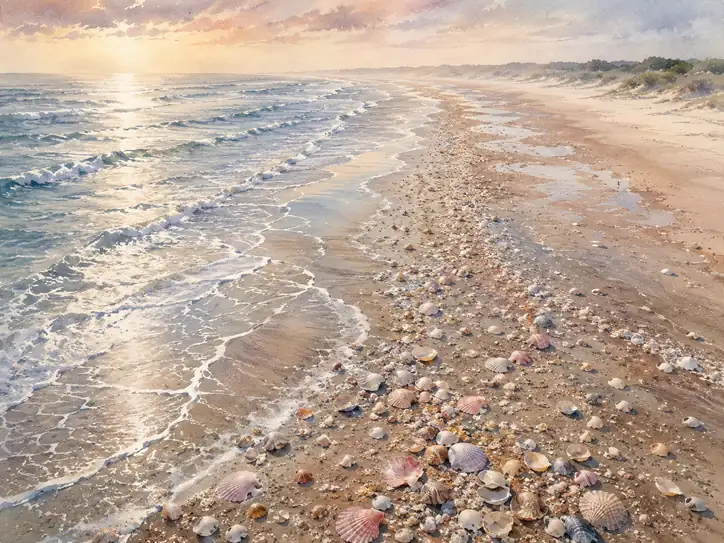 Whispers Left by the Tide
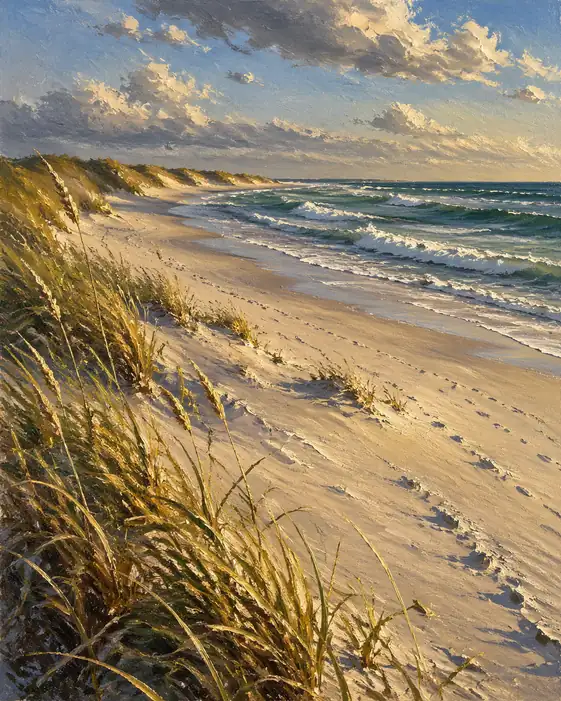 Whispers of the Golden Dunes
 Wandering Shadows at Dusk
 The Echo of Golden Sands
 Where the Wind Traces Silence