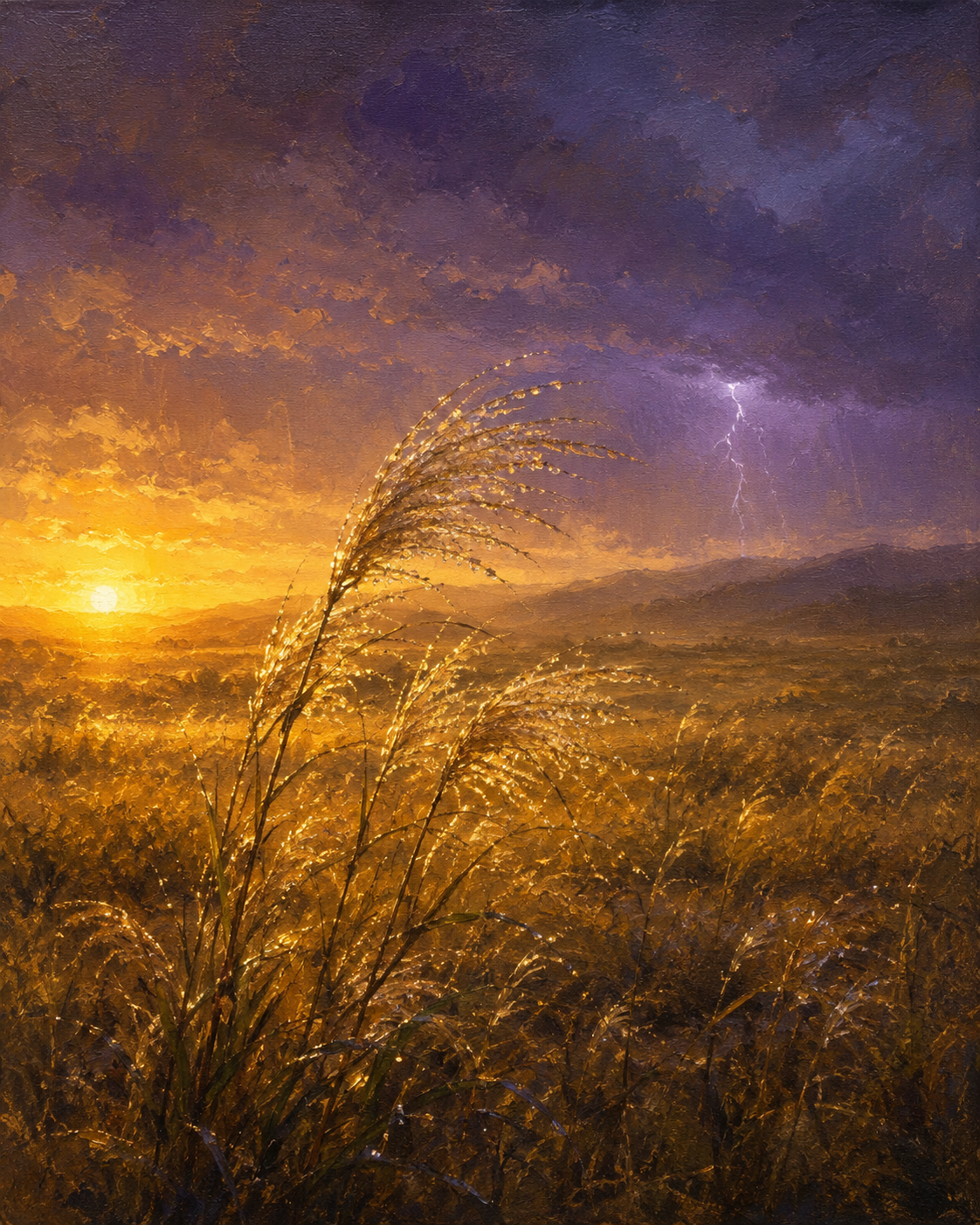
The Last Reed Holds the Sunset
Critique
Introduction This landscape builds its drama from a striking contradiction: sunset warmth spreads across a field while a storm remains active overhead. The first impression is spectacular, yet the painting earns sustained attention through the quieter presence of grasses bending in the foreground, where weather becomes intimate and tangible. Description A low sun burns near the left horizon, illuminating layered hills and a broad expanse of vegetation. Tall, arching seed heads dominate the lower center, their wet edges catching points of gold. Above them, violet and charcoal clouds gather across most of the sky. At right, a thin fork of lightning descends through a lavender opening. Analysis The foreground stalks act as a sweeping diagonal, leading the eye upward and rightward toward the lightning before the horizon returns it to the sun. This circular movement unifies two distant sources of energy. Thick, broken textures make cloud, field, and rain feel physically continuous, while the complementary tension between amber and purple intensifies the atmosphere. Small highlights along the grasses provide a delicate counter-rhythm to the broad, turbulent brushwork. Interpretation and Evaluation The simultaneous sun and storm suggest transition rather than simple conflict. Light does not defeat darkness; each condition makes the other more legible. The bowed grasses become persuasive emblems of resilience because they respond to pressure without appearing broken. Although the color contrast is deliberately theatrical, the restrained silhouette of the land and the finely observed moisture keep the scene emotionally credible. Conclusion What begins as a dramatic weather spectacle gradually becomes a meditation on endurance. Its strongest achievement is the way immense atmospheric forces are measured against fragile stems, allowing a familiar field to carry both danger and hope.
Same Subcategory
Similar Artworks
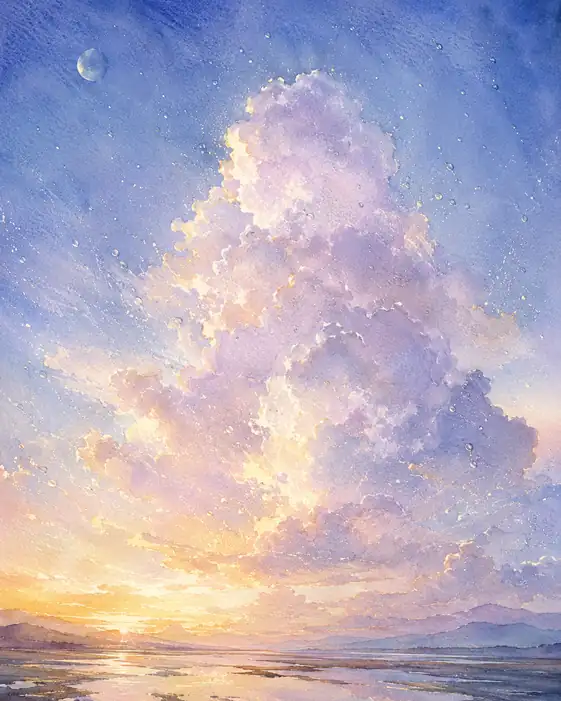 The Cloud Builds a Palace of Light
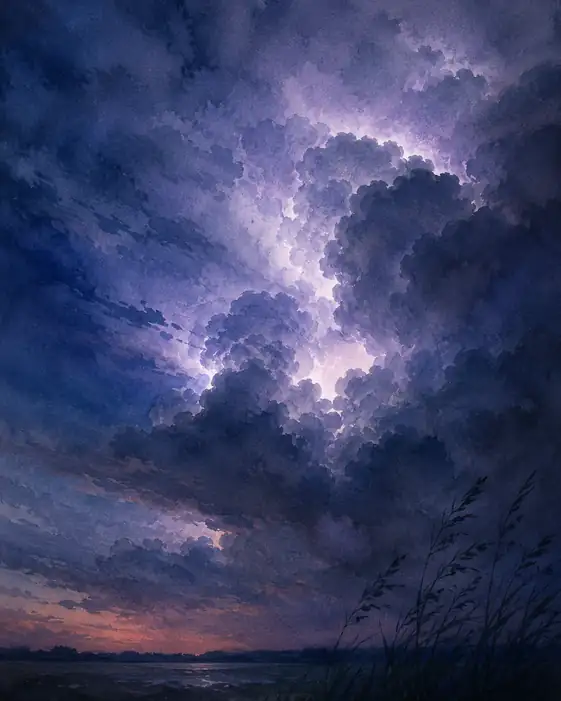 A Symphony Within the Clouds
 Autumn Bows Beneath Two Rainbows
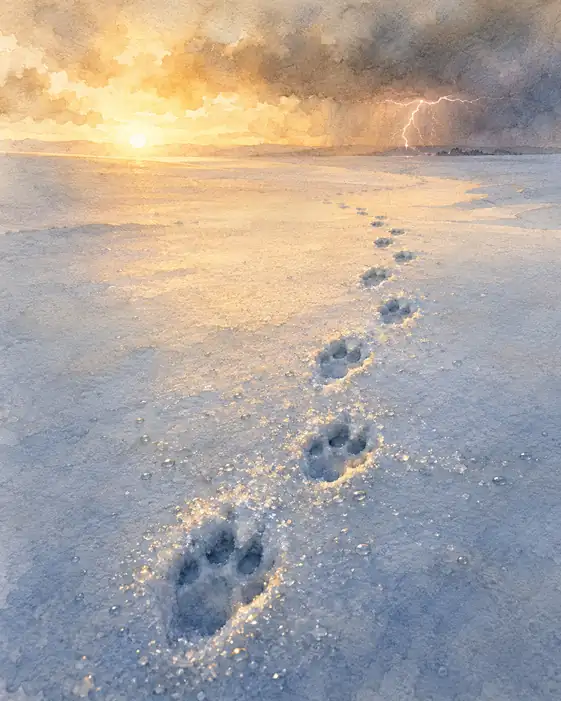 Footsteps toward the Unwritten Horizon
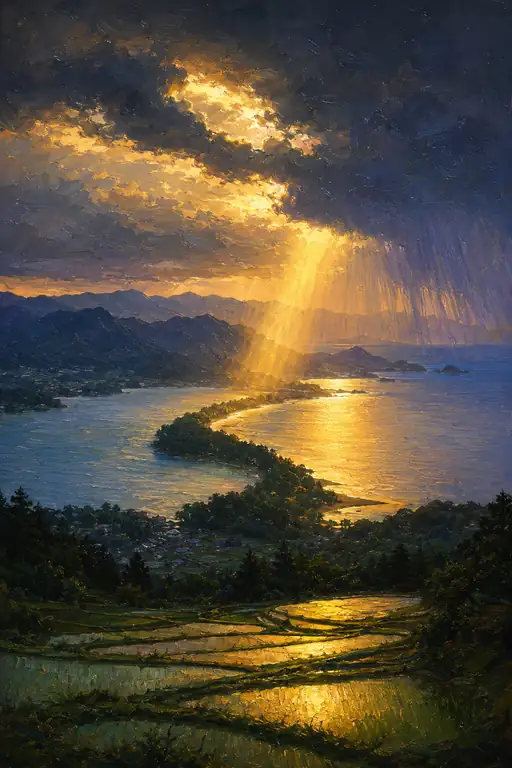 The Last Sanctuary of Light
 Autumn Flowers Beneath a Double Promise
 Someone Crossed Before the Storm
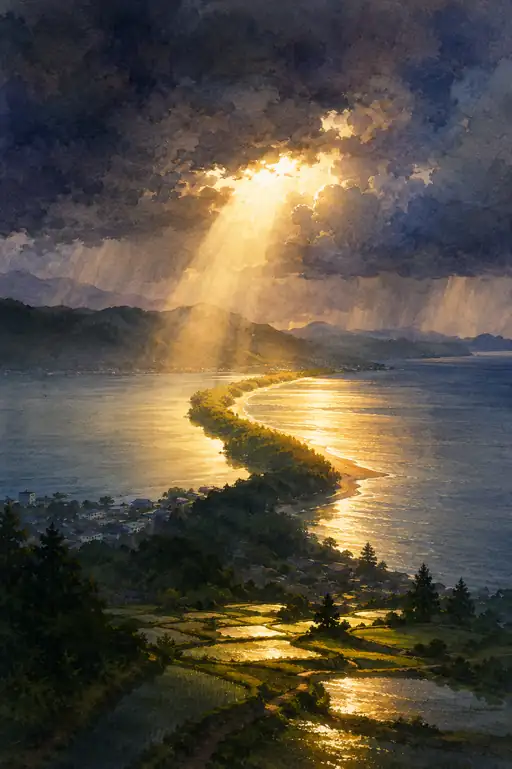 Golden Rays Before the Thunderstorm
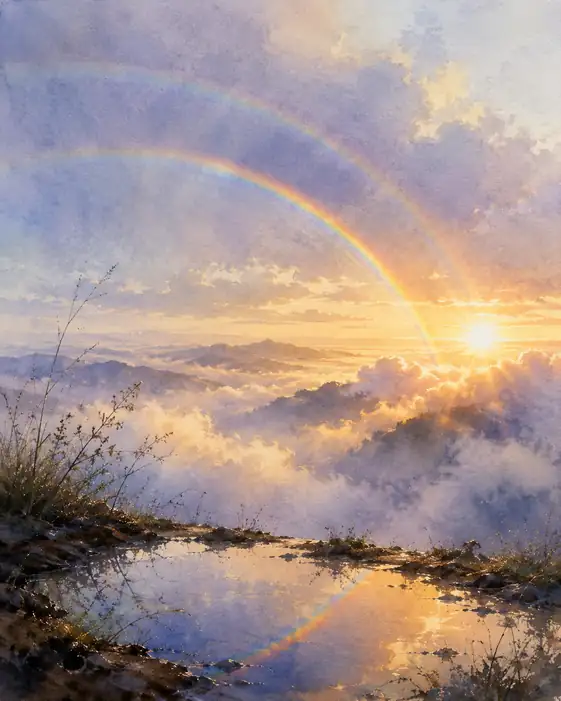 Where Two Rainbows Return to the Sky
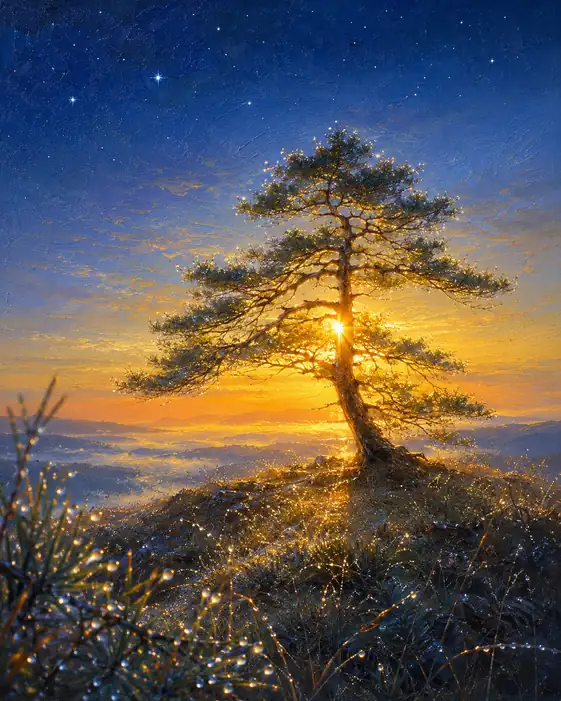 The Lone Pine Carries the Dawn