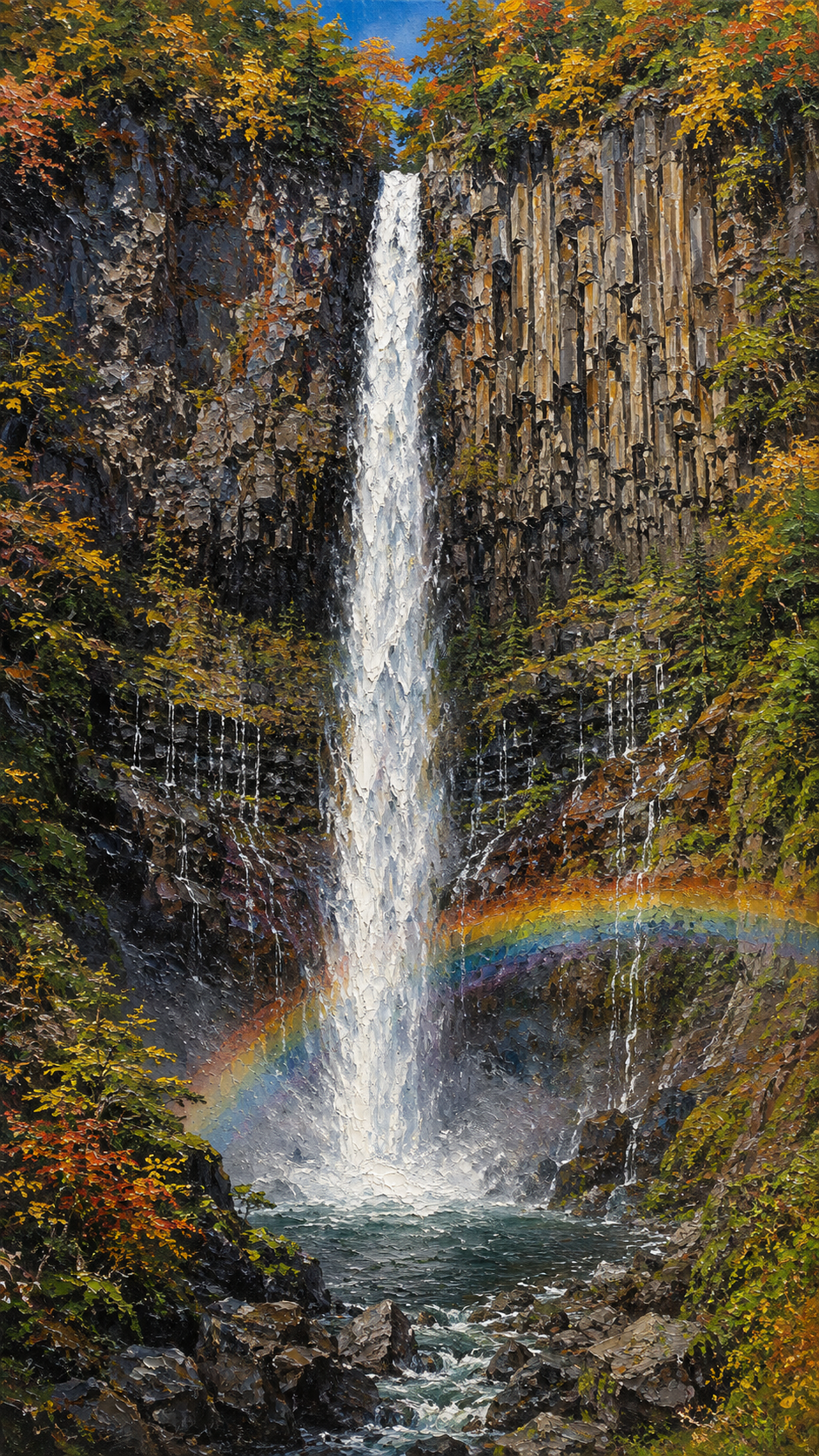
The Rainbow Born from Falling Water
Critique
Introduction This painting presents a high waterfall descending through a columnar cliff. Dark rocks, a narrow stream, and a low rainbow establish the immediate field, while autumn foliage along the ravine expands beyond them. Description In the foreground, dark rocks, a narrow stream, and a low rainbow provide an entry for the eye and guide it toward the principal motif. Behind it, autumn foliage along the ravine defines depth and atmosphere. The palette of white, charcoal, amber, and muted blue separates light from shadow. Analysis The composition depends on a strict vertical axis enclosed by tall rock walls. Repeated edges and overlapping planes regulate movement from near space to distance. Because clear daylight catching spray near the basin, surfaces acquire volume and changing atmosphere. Interpretation and Evaluation The image develops the idea of the tension between geological permanence and moving water. Its descriptive skill suggests moisture, scale, and distance. The composition gives the main subject authority without detaching it from its environment, while color balances intensity with coherence. Selective reflection and perspective demonstrate technical control. Conclusion The work succeeds by treating an impressive view as an interaction of time, weather, and space rather than as a simple record of a place. At first, the strongest color or largest form commands attention; sustained viewing reveals how small foreground accents and restrained distant tones support that impact. Description, composition, color, and technique therefore operate as one visual order, deepening the initial spectacle into a measured understanding of the scene.
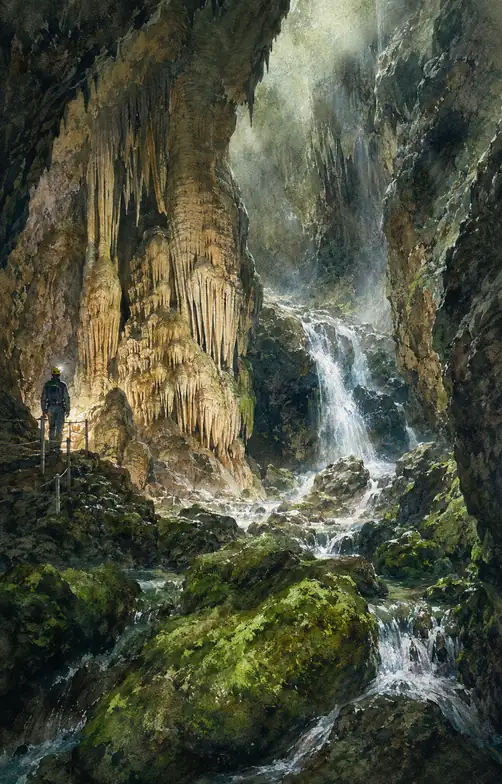 The Earth Builds a Cathedral of Water
 Cascading Waterfall of White and Violet
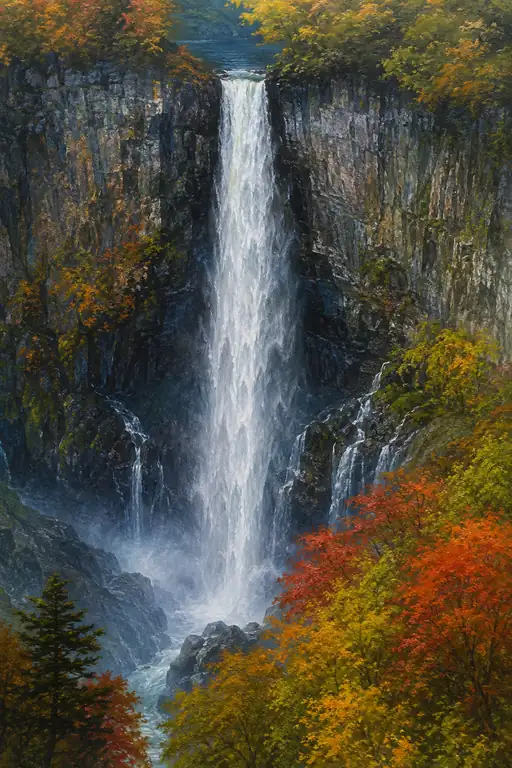 Symphony of Stone and Torrent
 The Transient Arc of Eternity
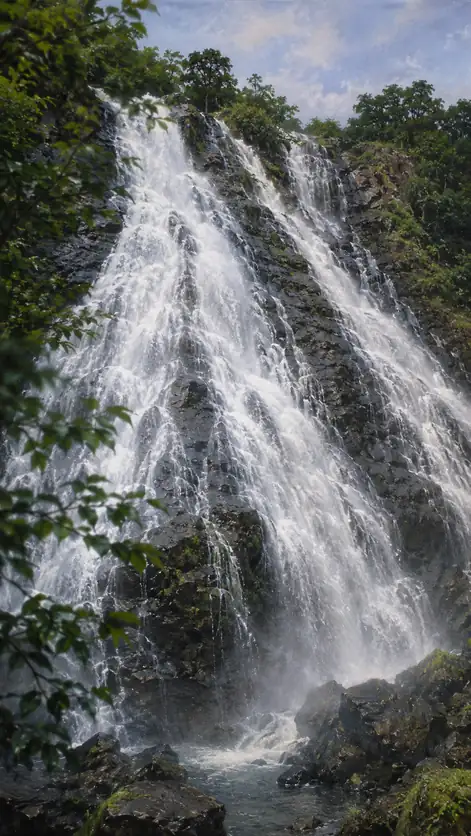 Where Water Carves the Stone's Soul
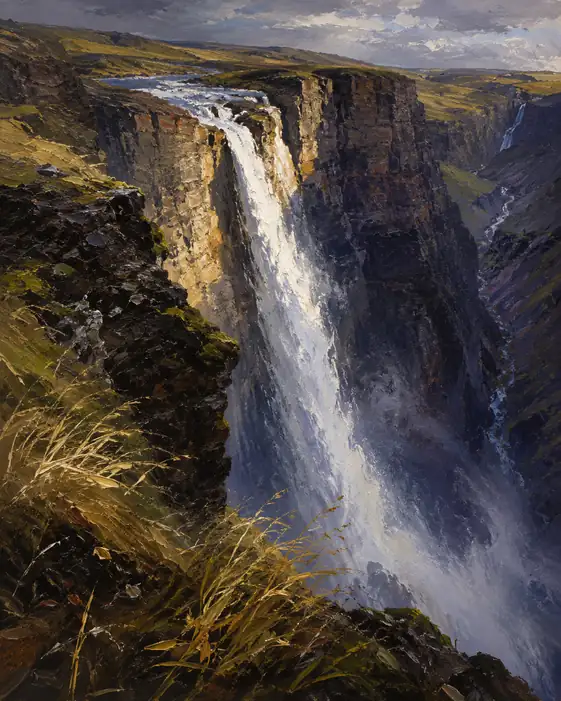 Thunder of the Ancient Gorge
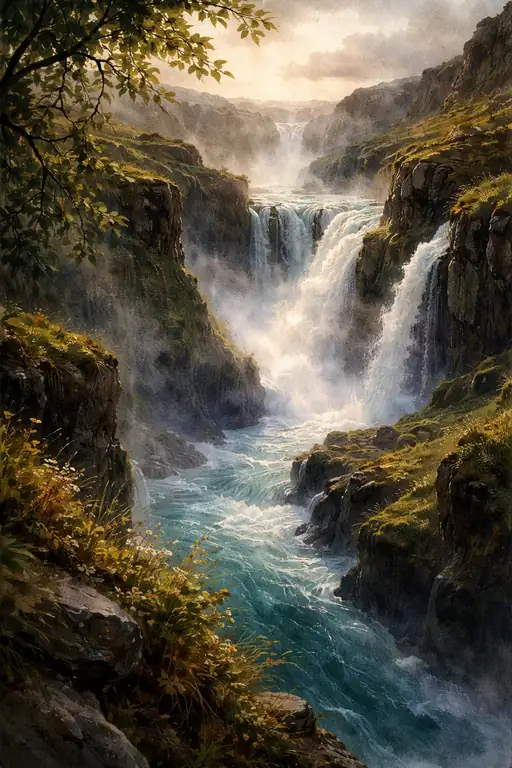 Whispers of the Sacred Abyss
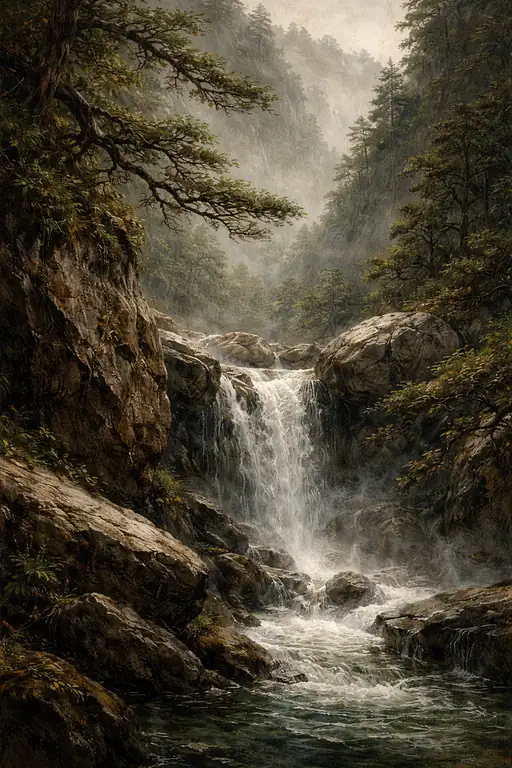 The Roar of Eternity Amidst Timeless Stones
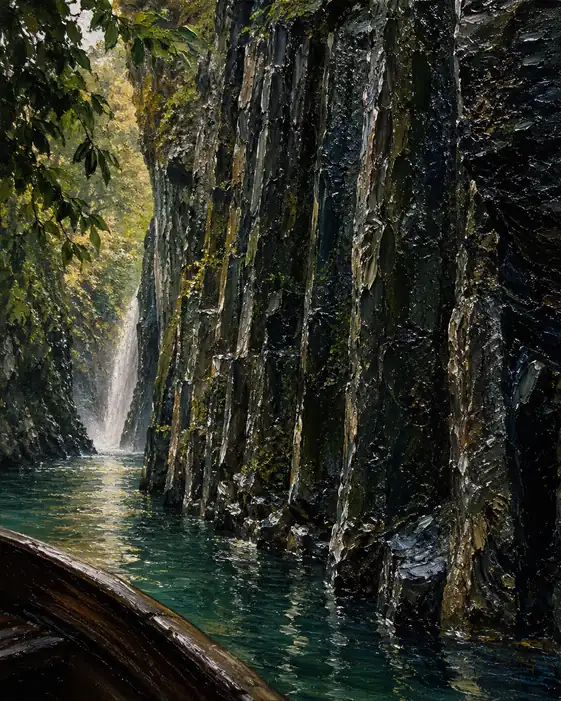 Into the Emerald Quiet
 Echoes of the Torrent
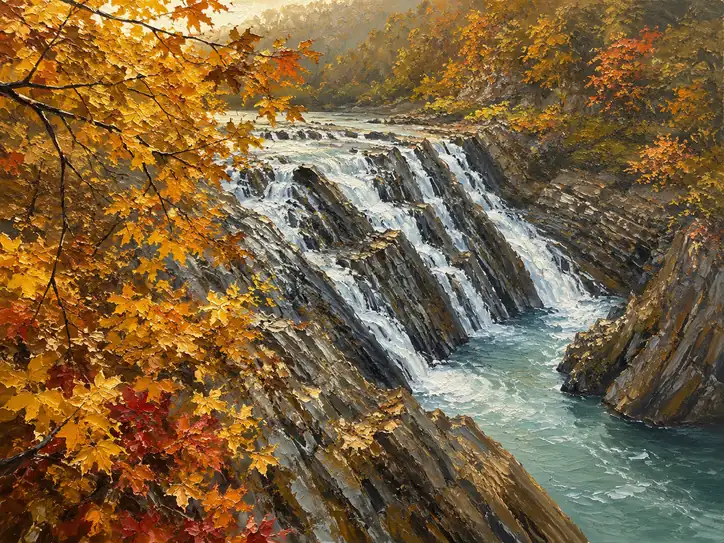 Gold and Water
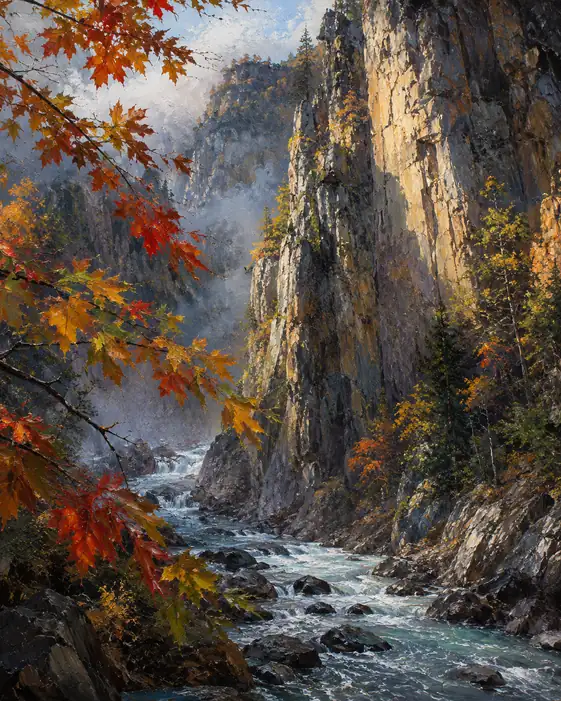 Autumn Whispers in the Sunlit Gorge