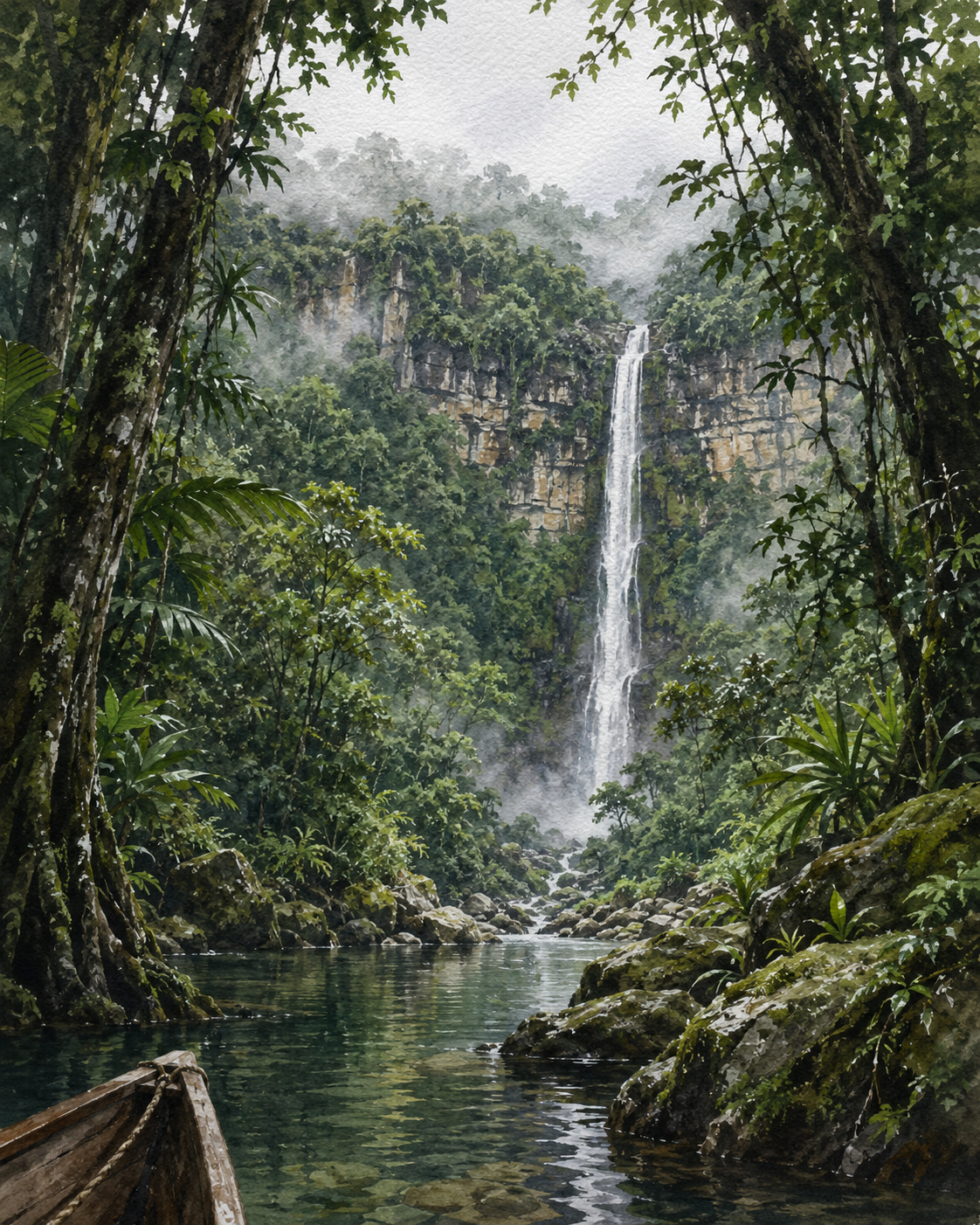
The Forest Reveals Its Silver Thread
Critique
Introduction This painting presents a slender waterfall descending into a jungle pool. It organizes a recognizable scene through controlled color, clear spatial direction, and selective illumination. The first impression is atmospheric, yet the arrangement of forms supports prolonged observation. Description The composition is structured so that dark foliage frames the vertical fall and circular pool. The dominant palette combines green, white, blue, and charcoal. Changes in brightness distinguish the principal motif from its surroundings, while smaller accents connect foreground, middle distance, and background. Surface details remain visible without overwhelming the larger setting. Analysis Large shapes establish a stable framework, and repeated lines or patches create rhythm within it. Scale changes and softened distant edges produce convincing recession. Brushwork alternates between descriptive marks and blended transitions, allowing solid forms, water, foliage, or air to retain distinct textures. Warm and cool passages guide attention while preserving overall harmony. Interpretation and Evaluation The scene can be understood as a study of place transformed by a temporary condition of light, weather, or human activity. Its descriptive skill makes the subject immediately legible, and the composition directs the gaze without becoming rigid. Color provides both unity and emotional emphasis. The layered handling gives the image a gently idealized character, while the choice of viewpoint adds individuality beyond straightforward illustration. Conclusion Taken as a whole, the work balances accessibility with measured construction. What initially appears to be a direct depiction gradually reveals an exchange among light, color, texture, and depth. Its strongest achievement is the conversion of observed forms into a calm and resonant pictorial experience.
Same Subcategory
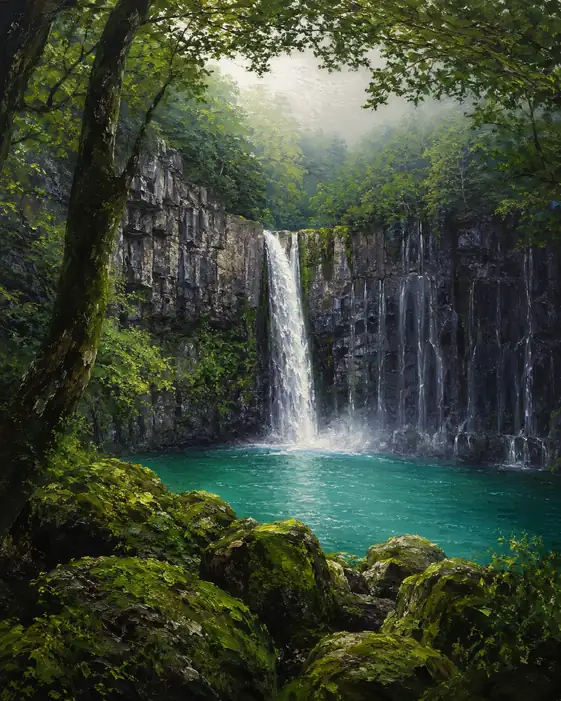 Emerald Silence Beneath the Falls
Similar Artworks
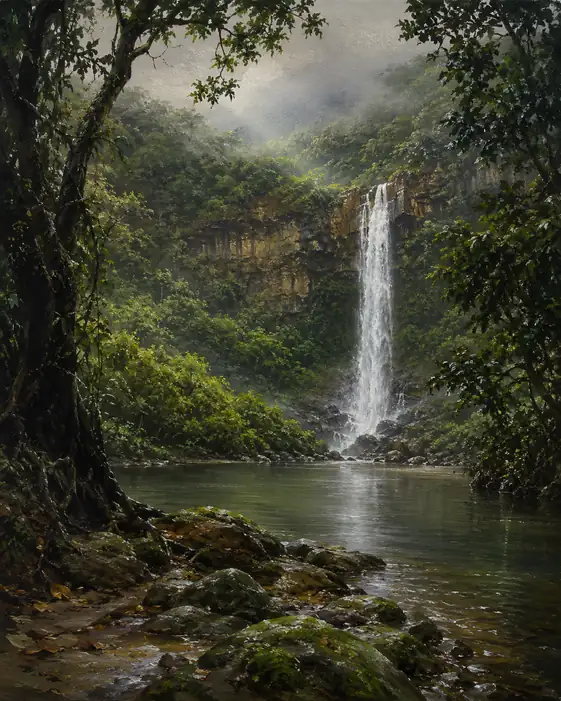 The Waterfall Hidden in Green Silence
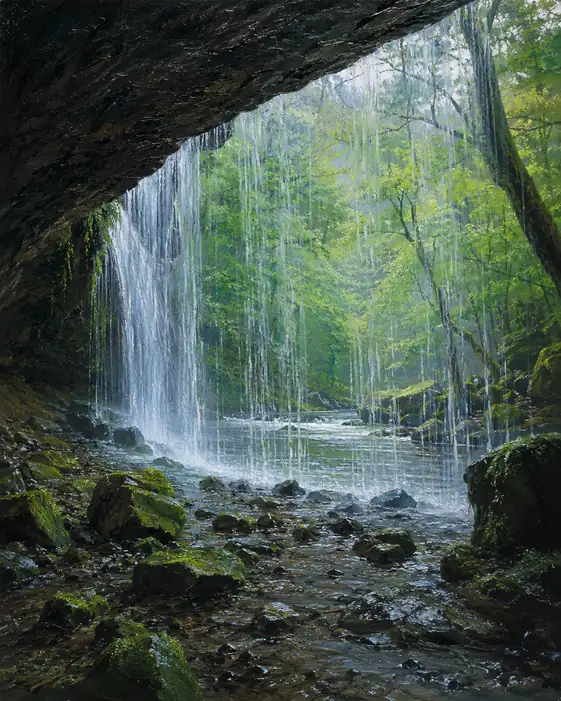 Behind the Water, Summer Is Waiting
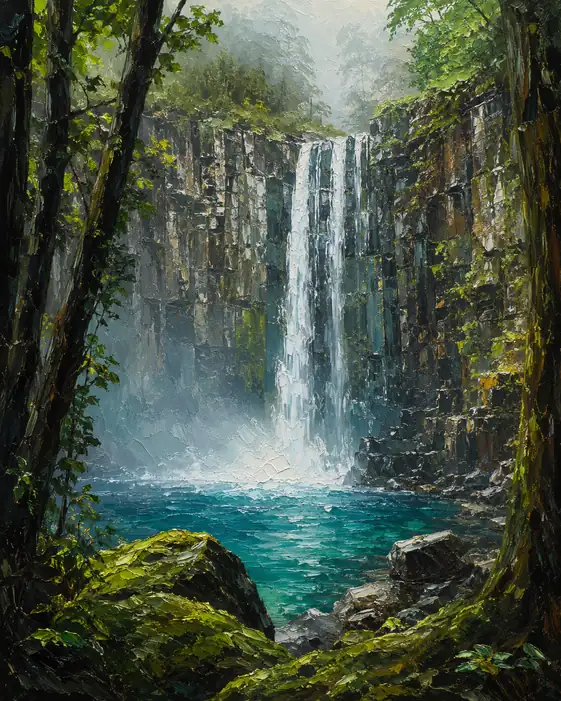 The Forest Keeps a Turquoise Secret
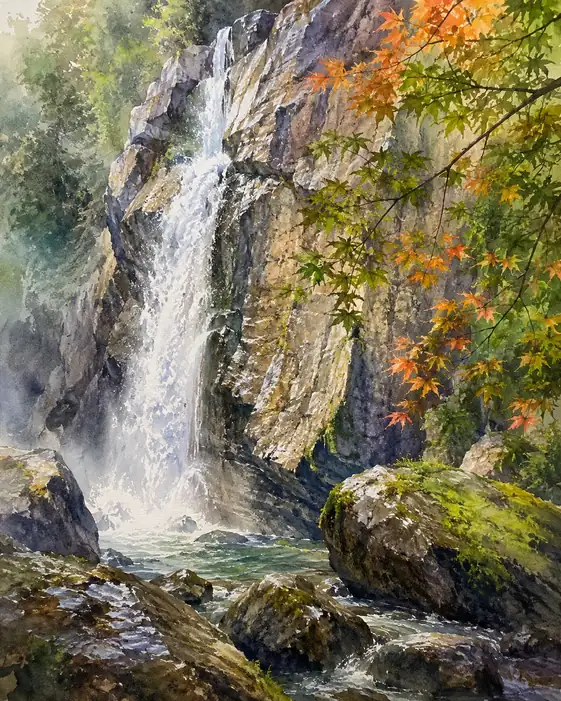 Autumn Whispers Through the Mist
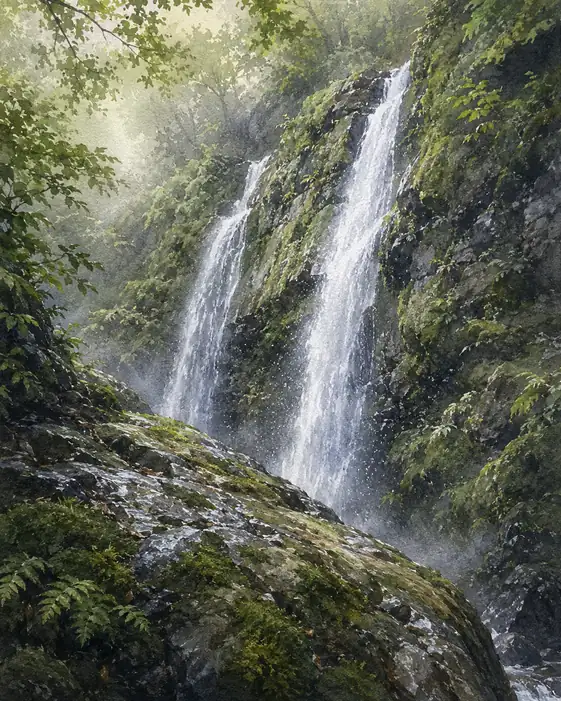 Twin Voices in the Green Silence
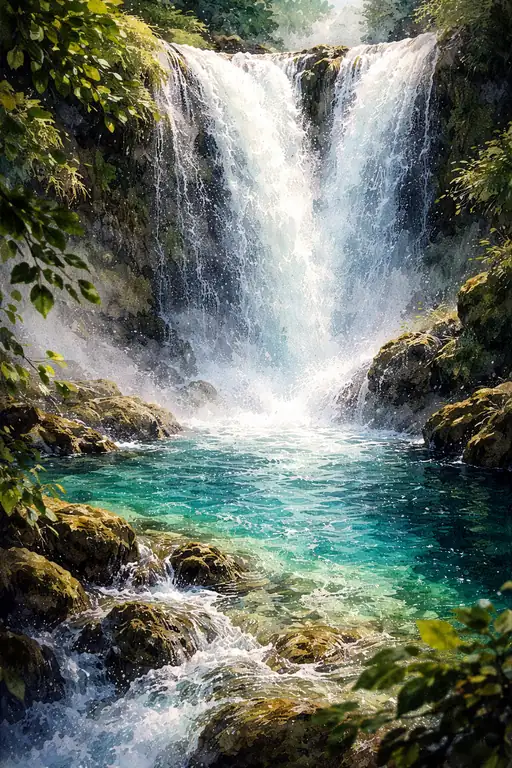 Symphony of the Crystal Veil
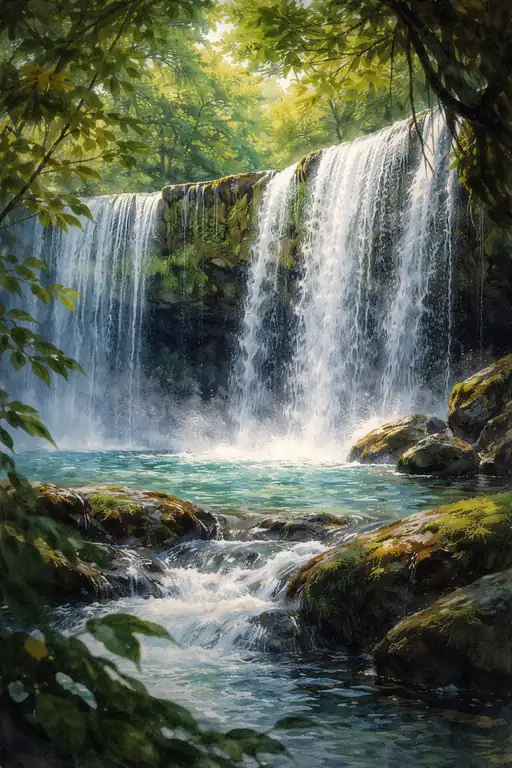 The Forest’s Crystal Veil
 One Oar Through the Mangrove Dawn
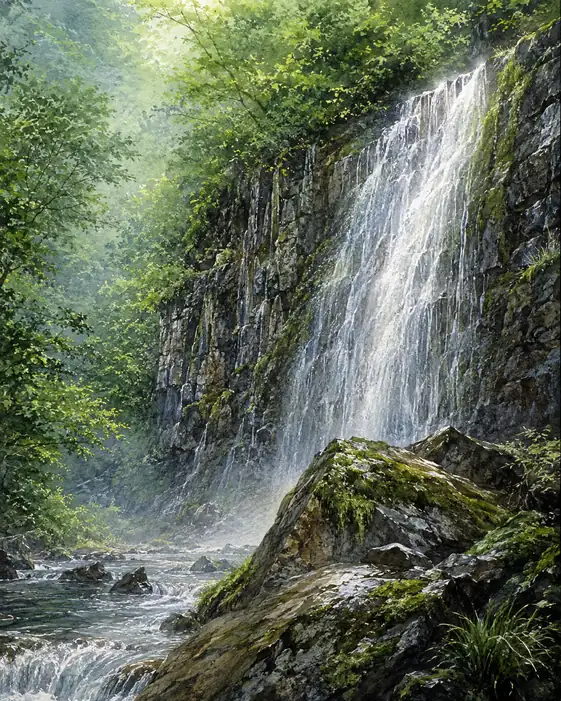 Where Light Unravels on Stone
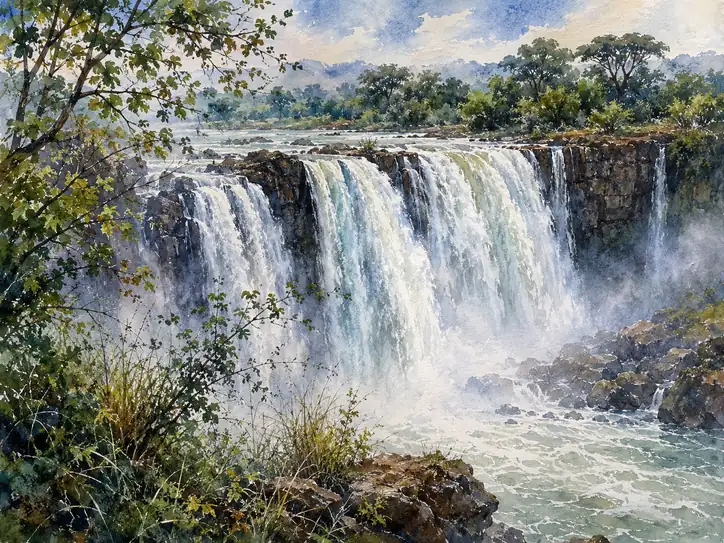 Echoes of the Living Torrent