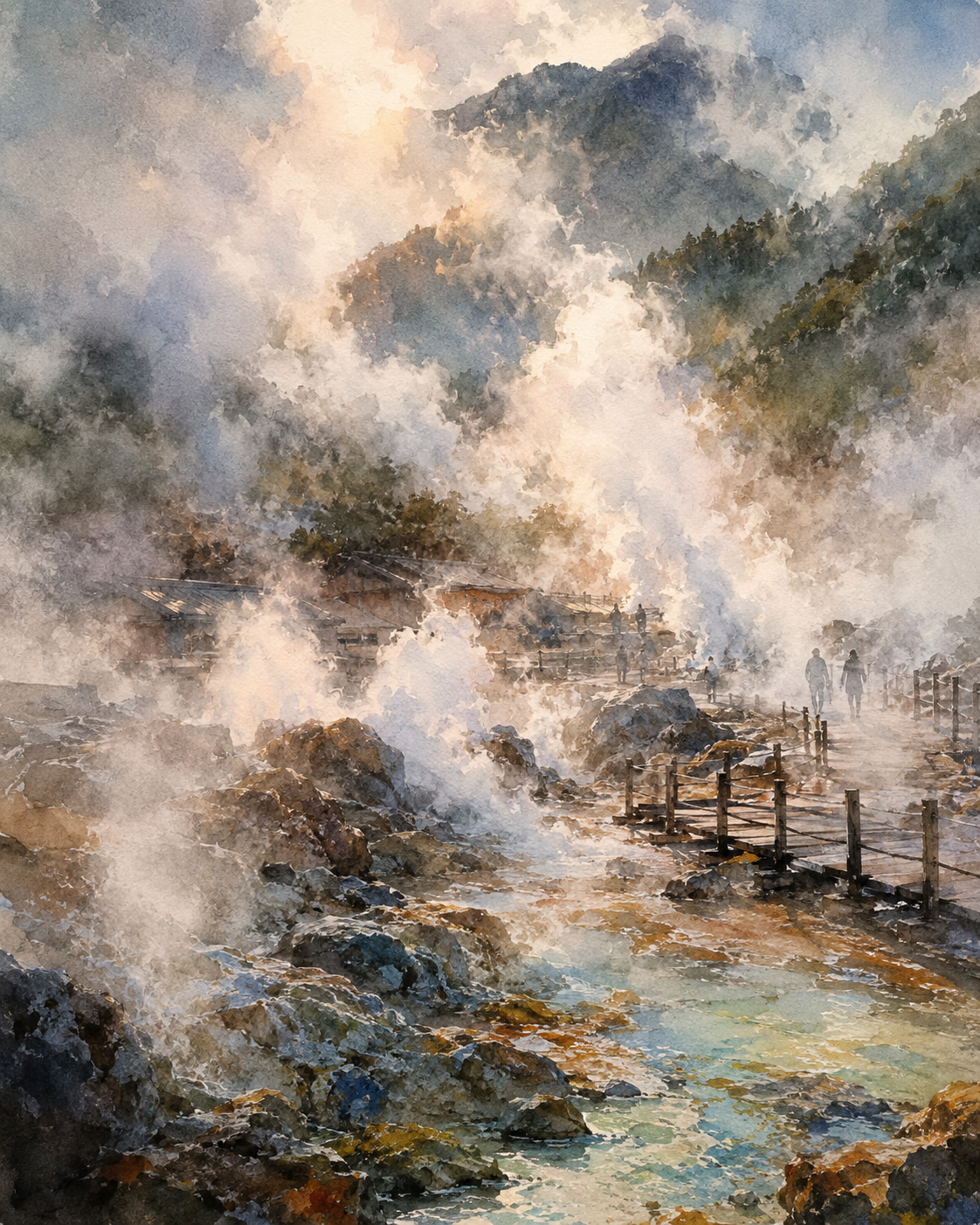
Where the Mountain Breathes
Critique
Introduction This painting presents a steaming mineral valley crossed by a narrow wooden path. The visible subject, lighting, and color relationships establish a clear identity without requiring external information. Its first impression is immediate, yet the arrangement rewards slower attention to scale, surface, and atmosphere. Description The scene is organized so that layered slopes and paths lead from detailed foregrounds into misty distance. Supporting details clarify the environment while leaving the main motif dominant. Light distinguishes reflective passages, firm edges, and softer zones of air. Foreground detail gradually gives way to broader forms and quieter tonal intervals. Analysis The composition gains coherence from repeated lines, balanced spaces, and a controlled distribution of light and dark. The technique relies on fine vegetation, atmospheric recession, and changing light. Color contrast directs attention, while changes in scale create convincing depth. Descriptive skill is strongest where different materials remain legible without breaking the unity of the whole. Interpretation and Evaluation The image can be interpreted as a study of cultivated and wild land held in productive tension. Its composition is persuasive because the main direction is supported by secondary rhythms. Vivid accents are balanced by quieter tones, giving the color design clarity and restraint. Originality emerges through the transformation of a familiar subject into a concentrated pattern of light, movement, and spatial tension. Conclusion Overall, the work joins careful observation with a deliberately heightened atmosphere. What first appears to be a straightforward view gradually reveals a sustained examination of reflection, rhythm, and visual passage. The painting succeeds because technique, color, and structure consistently support the same measured mood.
Same Subcategory
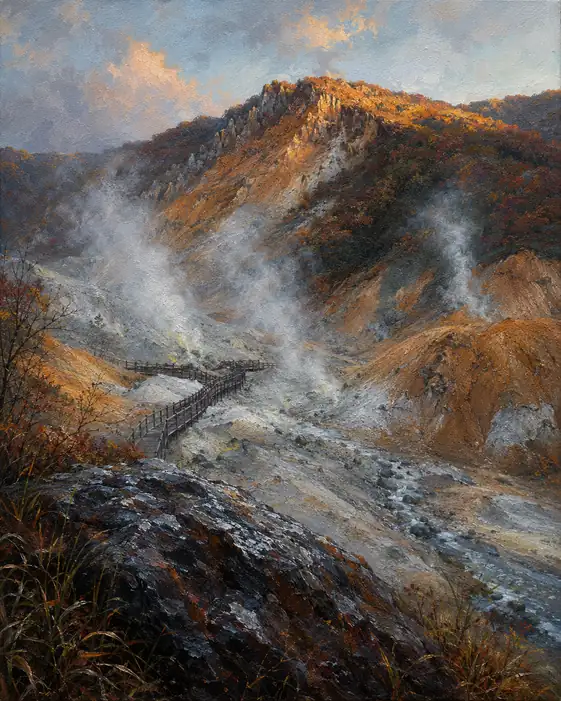 The Earth Exhales Beneath Autumn
Similar Artworks
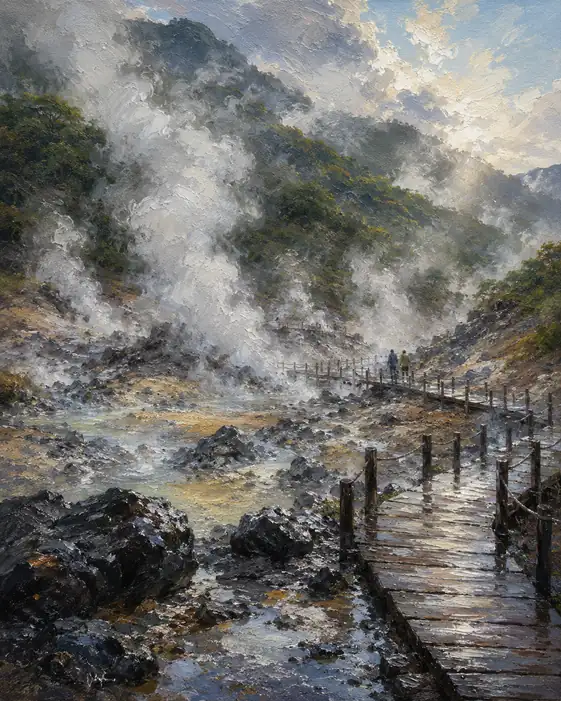 The Earth Breathes Along the Wooden Path
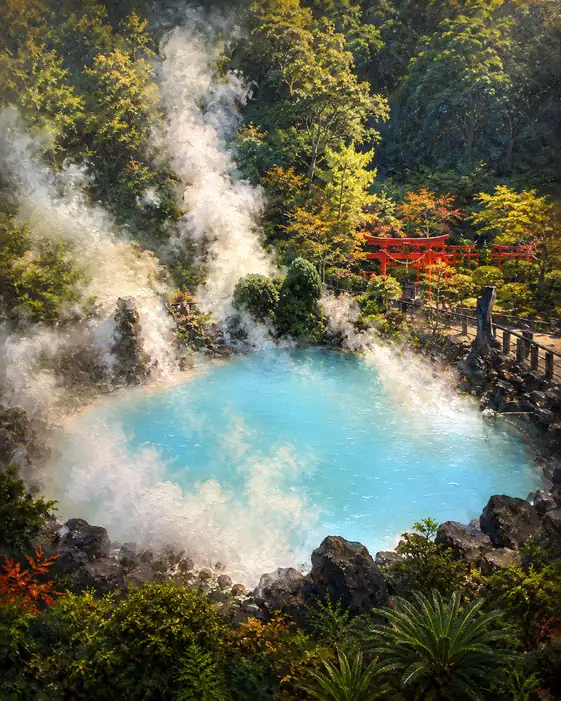 Sunlit Basin of the Azure Sea Hell
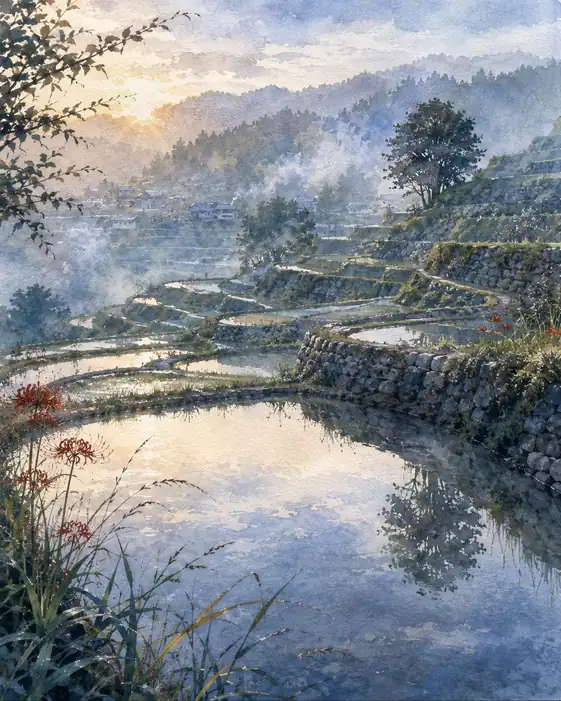 Morning Poured into a Thousand Mirrors
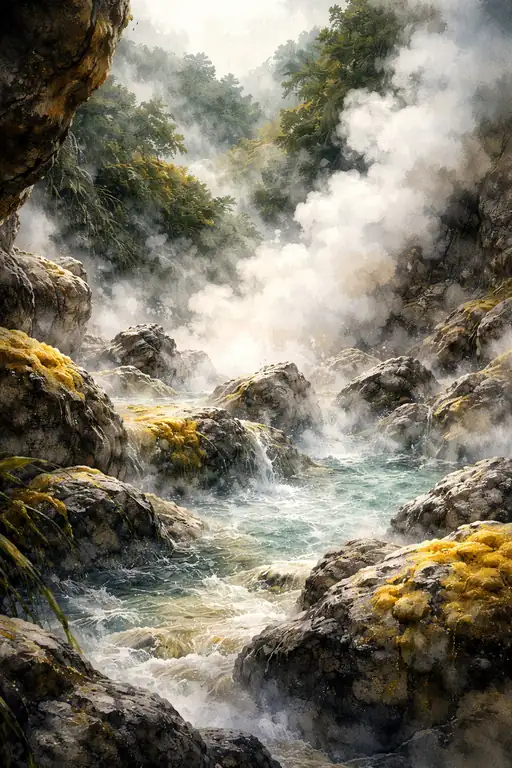 The Ethereal Breath of the Hidden Springs
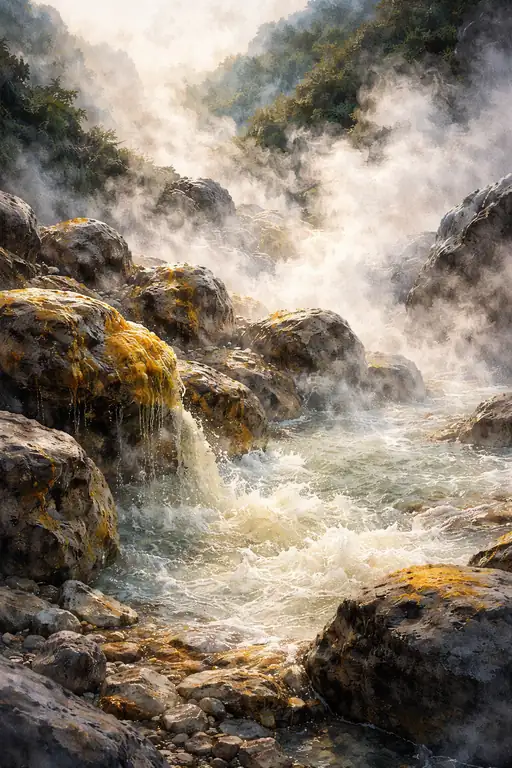 Earth's Breath: The Steaming Heart of the Geothermal Valley
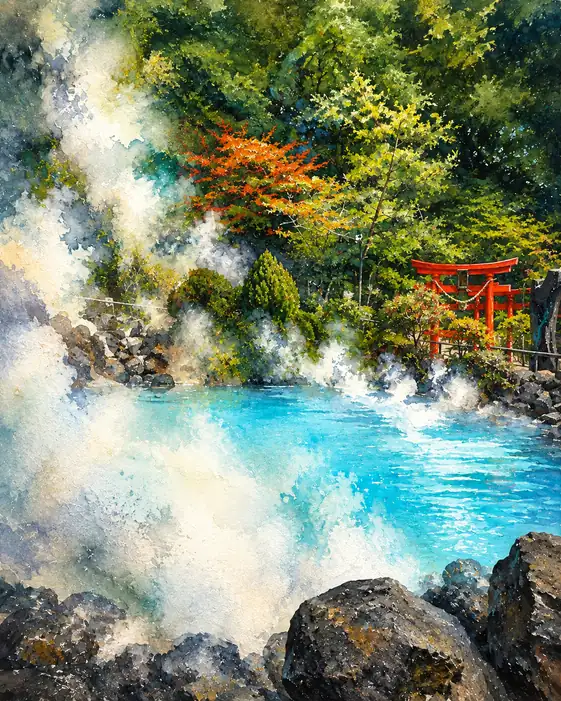 Azure Steam, Vermilion Prayer
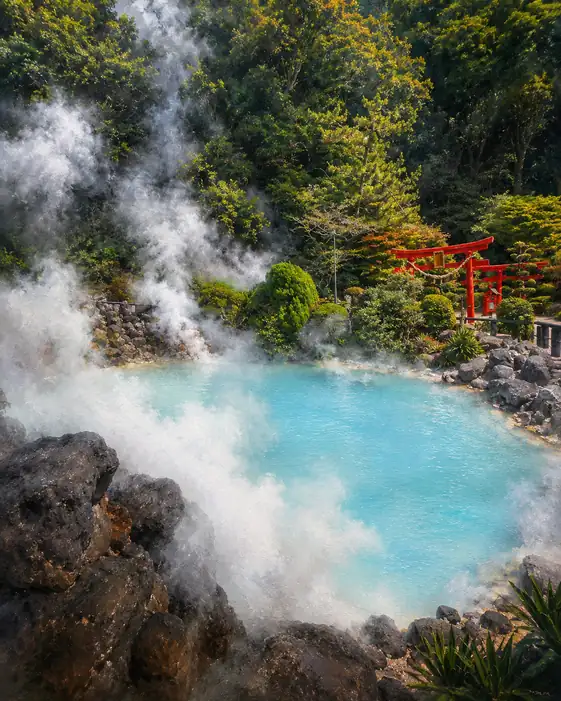 Rising Steam Over the Turquoise Hot Spring
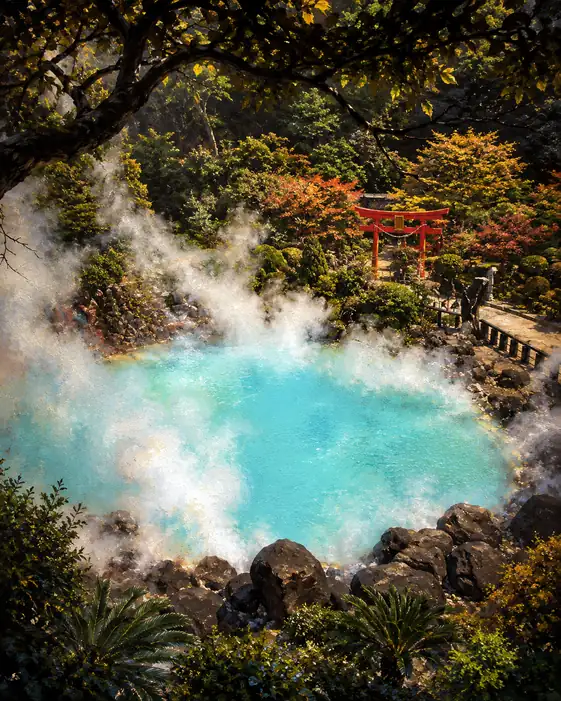 Azure Thermal Waters Framed by the Forest Canopy
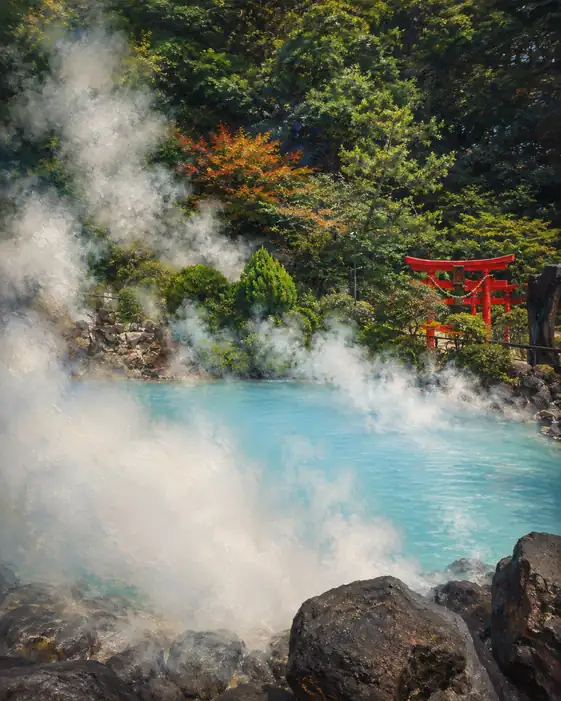 Thermal Mist Rising by the Crimson Torii
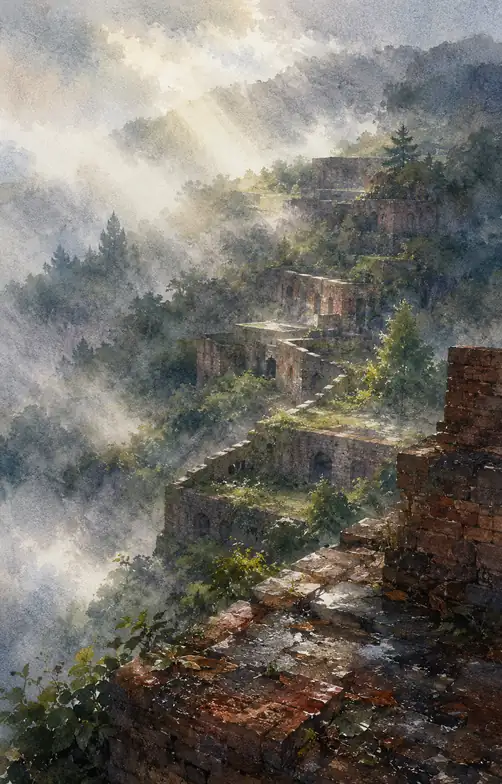 Morning Finds the Abandoned City