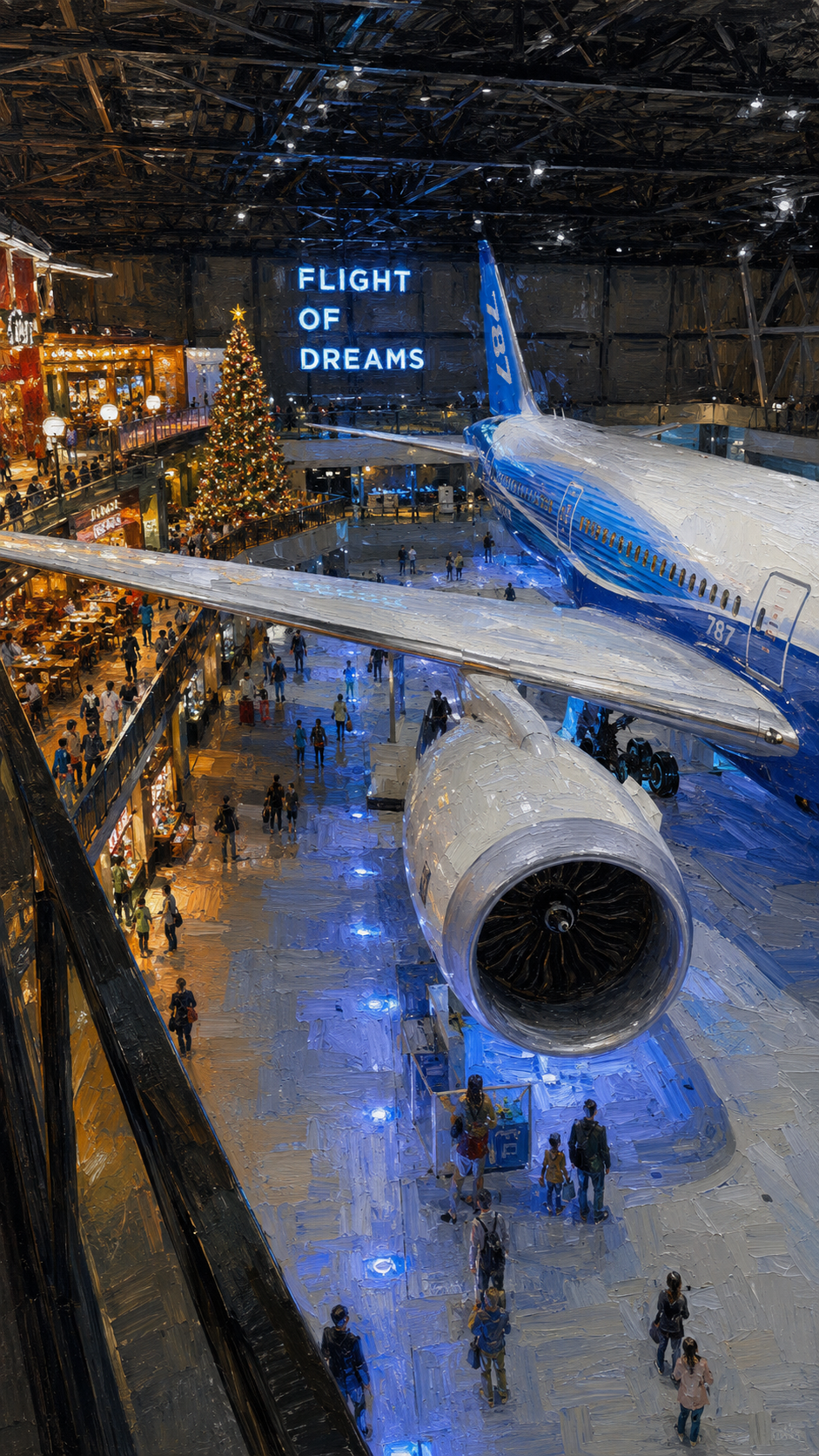
The Day We Walked Beneath a Dream
Critique
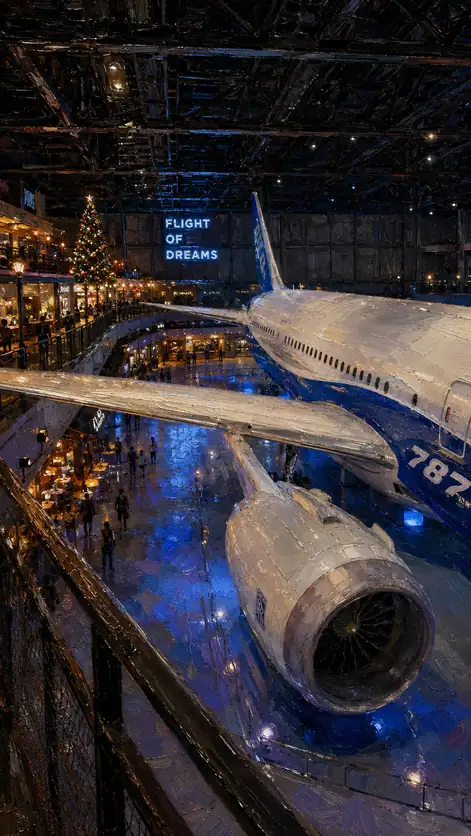
Introduction This painting depicts a passenger aircraft installed within a spacious, dark-roofed interior filled with visitors and warm commercial light. Its elevated viewpoint immediately emphasizes the striking mismatch of scale between the immense machine and the people gathered around it. Description The fuselage extends from the right edge toward a tall blue tail, and a broad wing crosses almost the entire picture. One engine dominates the lower center. At left, several levels of shops and railings surround a decorated tree, while a blue wall inscription and scattered ceiling lights punctuate the shadowed background. Analysis Long diagonals formed by the railing, wing, and fuselage pull vision deep into the hall. The engine acts as a dark circular anchor amid pale aircraft surfaces and blue floor reflections. Dense strokes articulate the roof and crowds, while broader passages describe the wing and open floor. Warm orange light on the left balances the cool illumination surrounding the aircraft. Interpretation and Evaluation By placing spectators beneath and beside the aircraft, the work measures technological ambition against ordinary human scale. The drawing communicates structure clearly despite energetic handling, and the composition distributes visual weight with care. Blue and amber contrasts produce atmosphere as well as depth. The display setting is treated with originality, transforming a public attraction into an image of aspiration, consumption, and shared curiosity. Conclusion The initial spectacle of the aircraft gives way to a more layered understanding of how people gather around symbols of movement and progress. Controlled color, persuasive spatial organization, and vigorous surface technique sustain both the monumentality of the machine and the liveliness of the surrounding interior.
Same Subcategory
 Winged Airliner Soaring on Flowered Paths
Similar Artworks
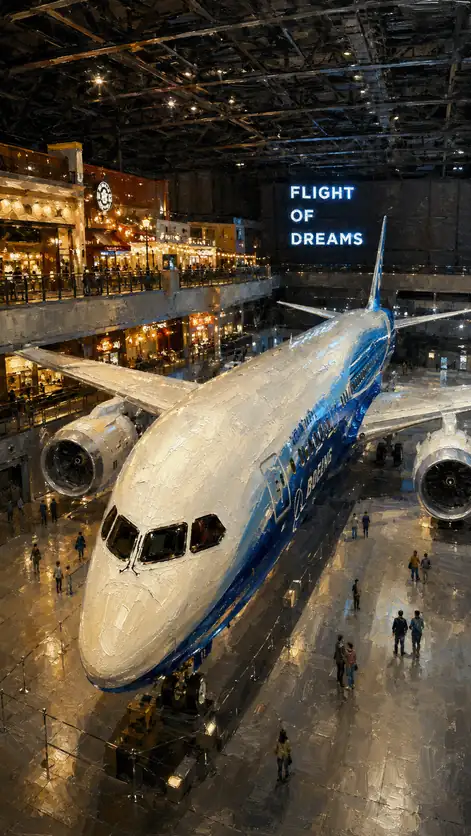 The Dreamliner Waiting for Tomorrow
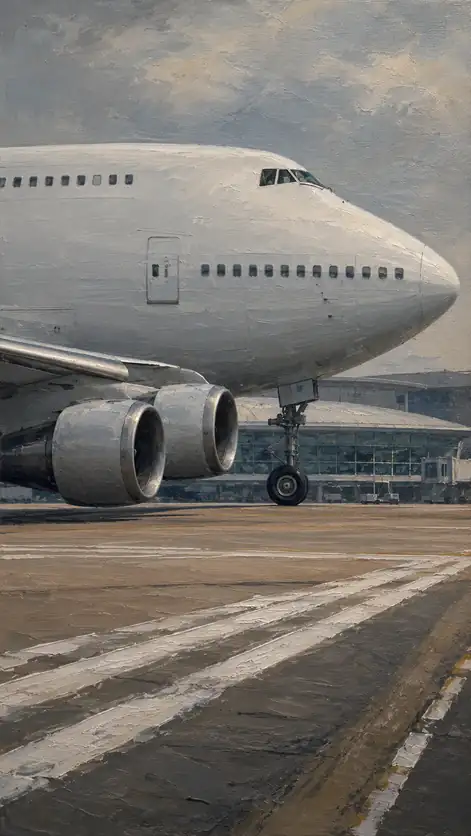 The Quiet Face Before Flight
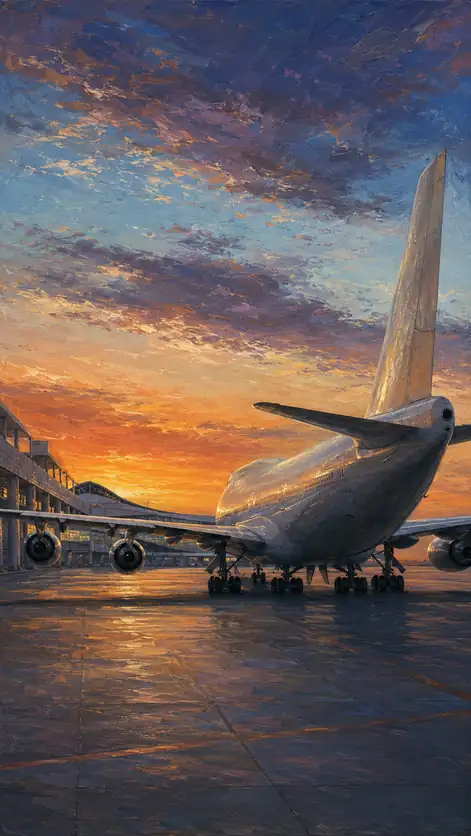 Sunset Waiting Behind the Tail
 Dreams Park Beneath the Winter Stars
 A Silent Voyage Through Indoor Night
 The Dream Seen Straight from Above
 Night Walkers Under an Unflown Sky
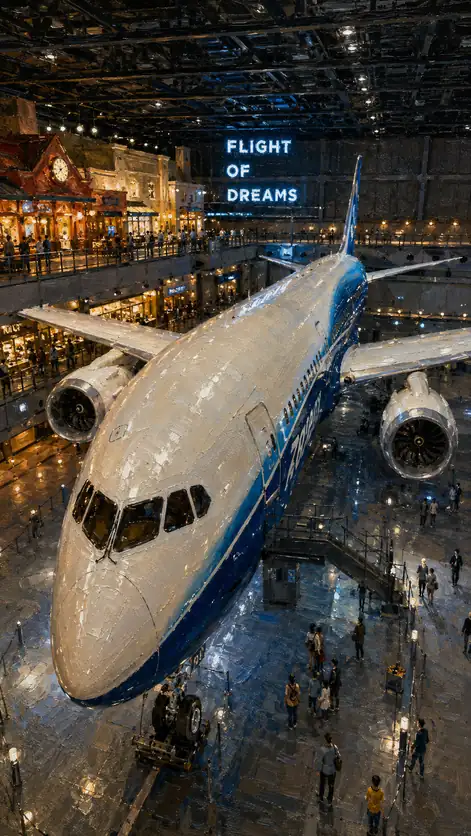 A City of Dreams Beneath the Fuselage
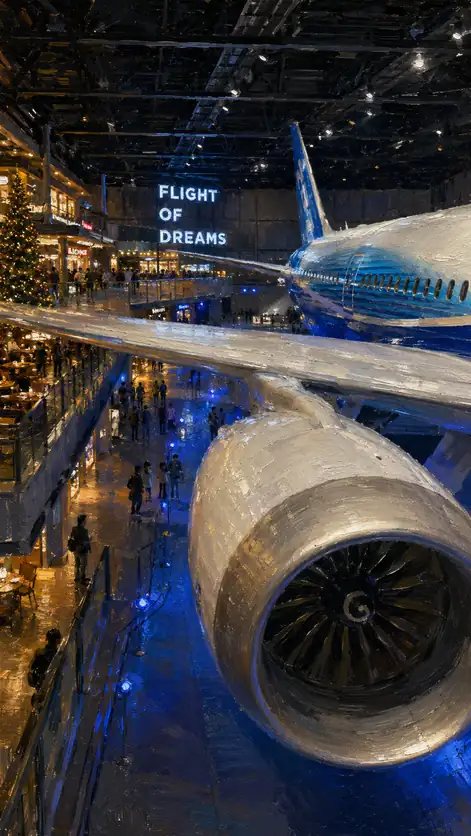 Blue Stars Along the Giant Wing
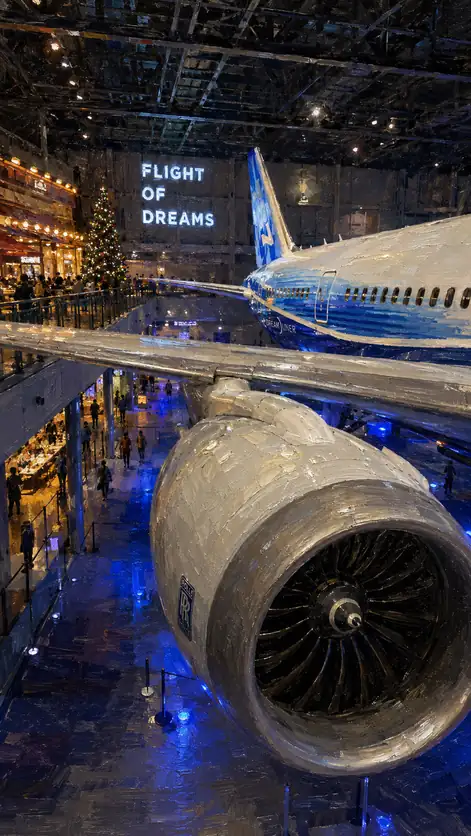 The Engine at the Heart of Wonder