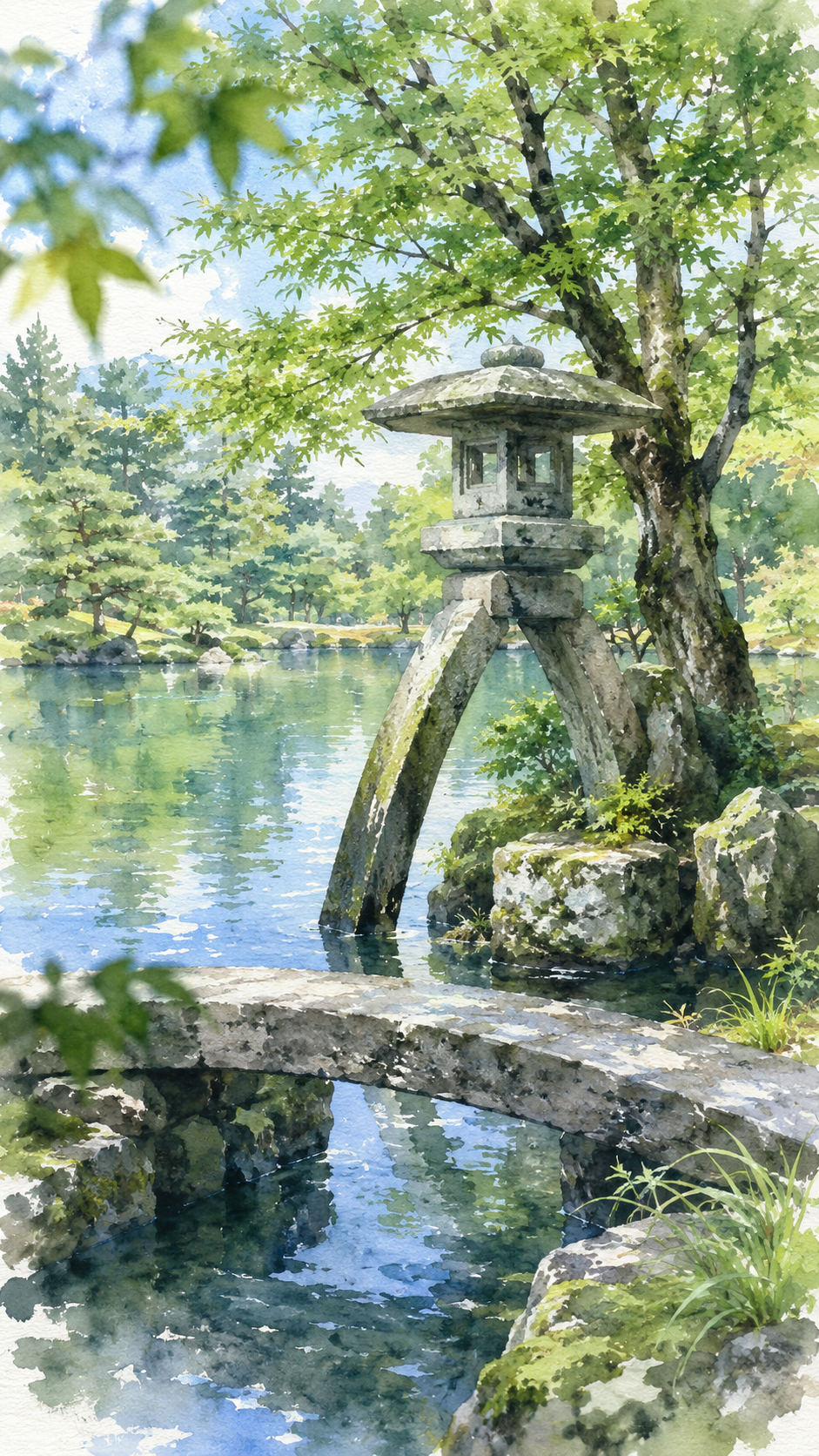
A Summer Whisper Through Three Stones
Critique
Introduction This painting presents a green garden with a raised stone lantern as a carefully organized study of place, light, and atmosphere. The recognizable subject is transformed through painterly texture rather than treated as a strictly documentary record. Its first effect is immediate, yet the measured arrangement rewards slower looking. Description The scene brings together a small bridge, still pond, and spreading tree. Seen from a diagonal viewpoint, these elements occupy clear foreground, middle-ground, and distant zones. Soft light filtered through foliage establishes the prevailing mood, while smaller reflections and surface marks animate otherwise stable forms. Analysis The composition is built from firm verticals and broad diagonals that guide the eye toward the main structure. Warm highlights are balanced against cooler blues, greens, or grays, giving the image both depth and chromatic unity. Layered, granular brushwork softens hard contours without sacrificing legibility, and repeated shapes create a steady visual rhythm. Interpretation and Evaluation The work interprets a familiar public setting as a place suspended between observation and memory. Its descriptive skill is strongest in the separation of textures and in the controlled transitions of light. The composition remains coherent despite abundant detail, while the selective color heightens atmosphere. The technique is persuasive, and its modest stylization gives the scene an individual character. Conclusion What initially appears to be a direct view of a green garden with a raised stone lantern gradually becomes an examination of how architecture or landscape is remembered through changing illumination. The balanced design, restrained palette, and tactile handling sustain attention across the surface. The painting succeeds by joining recognizable detail with a calm, reflective sense of place.
Same Subcategory
Similar Artworks
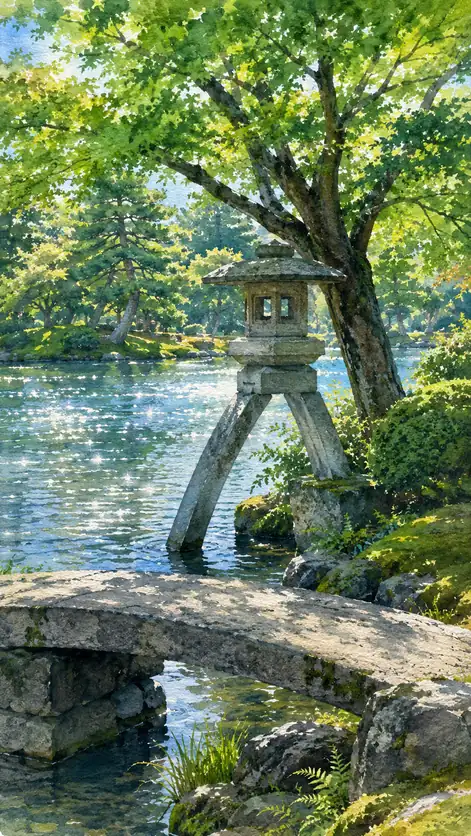 Starlight Born Before Evening
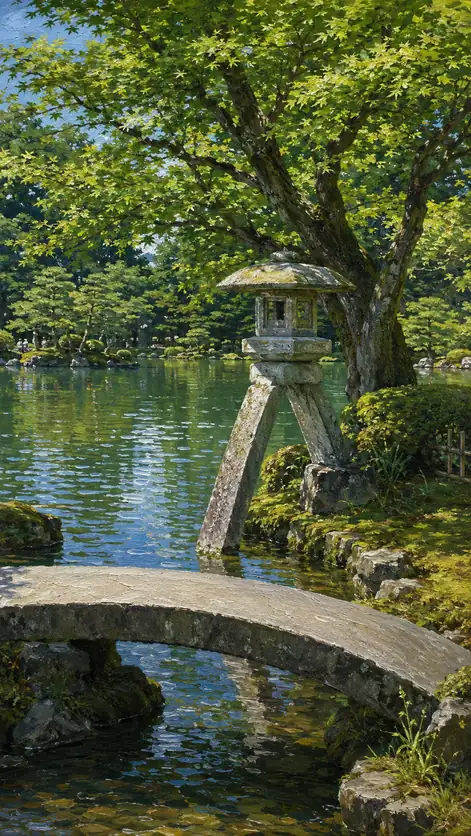 Noon Rings Across the Quiet Pond
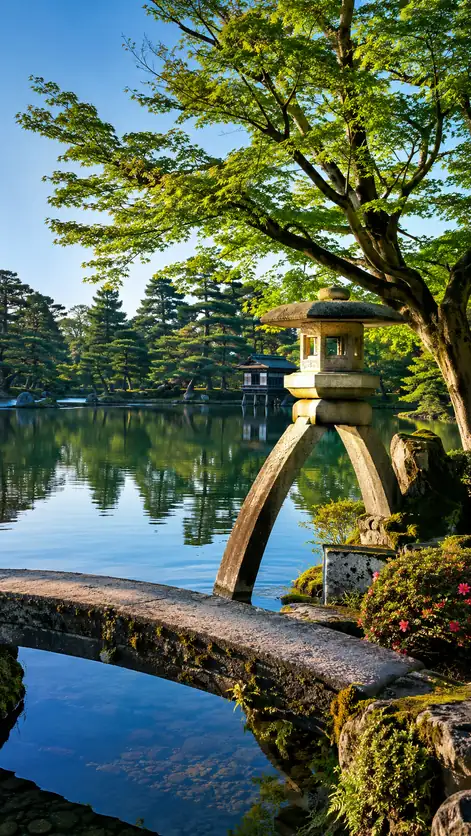 The Garden Keeps a Window of Blue
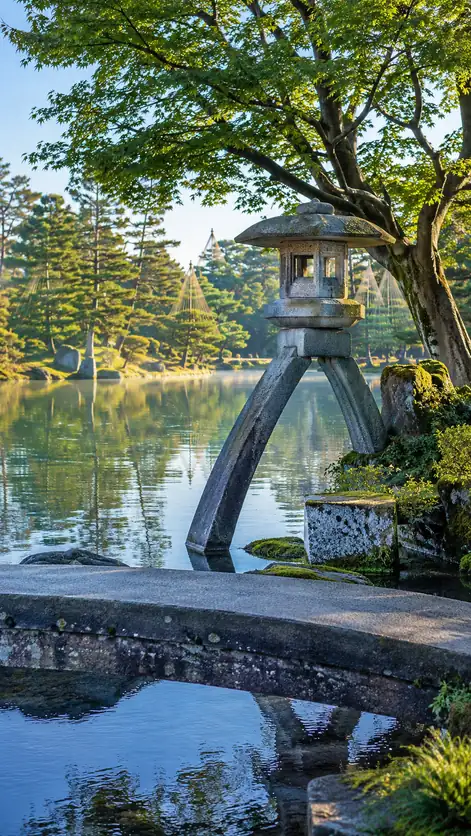 Morning Opens the Stone Lantern
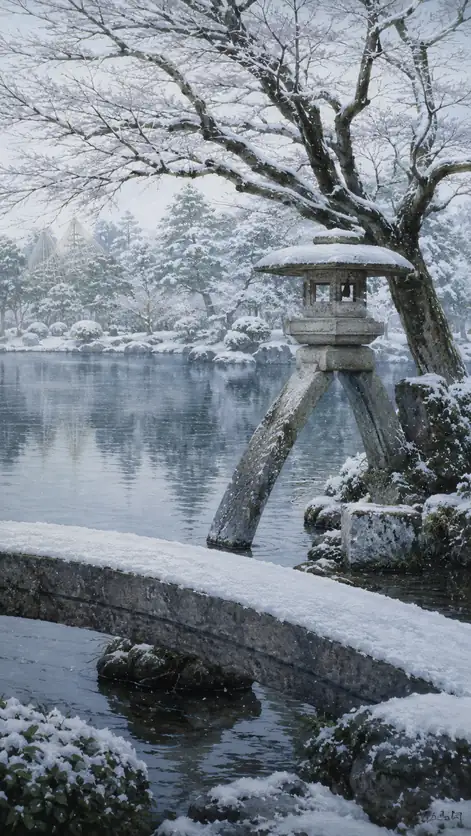 When Snow Learns the Shape of Stillness
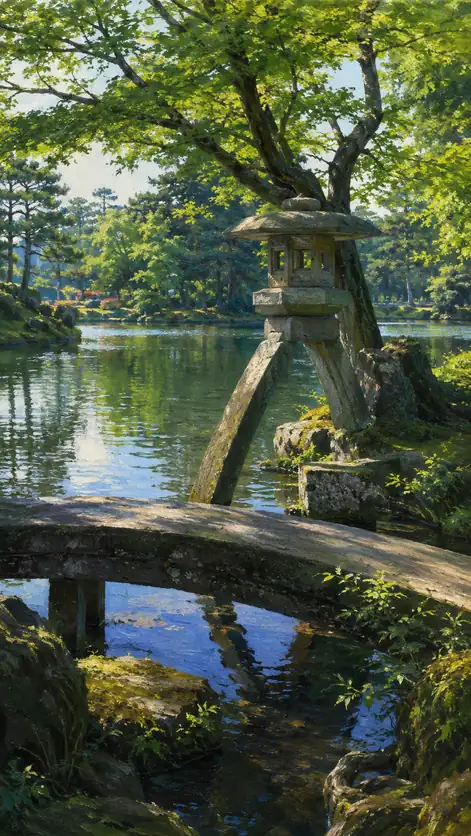 Green Light Crossing the Old Stone
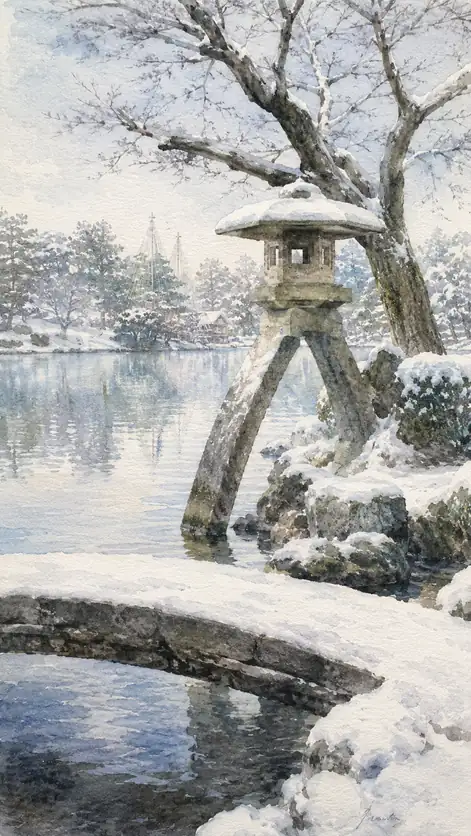 In the Snowlight, the Lantern Listens to the Water’s Koto
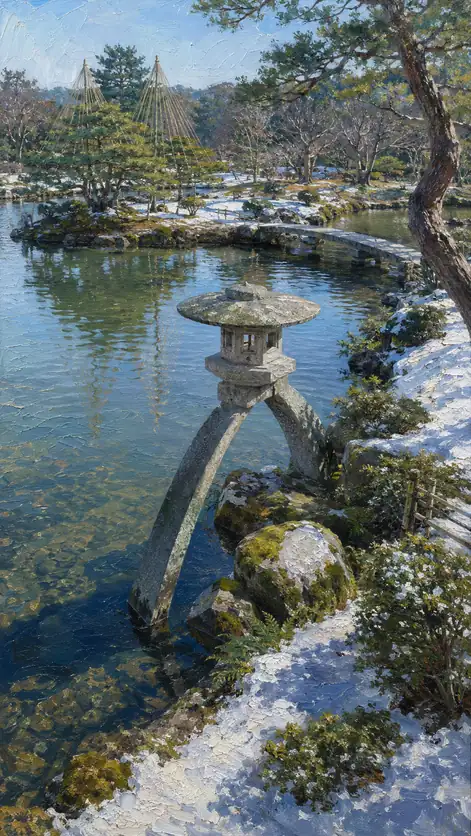 Three Legs in the Thawing Blue
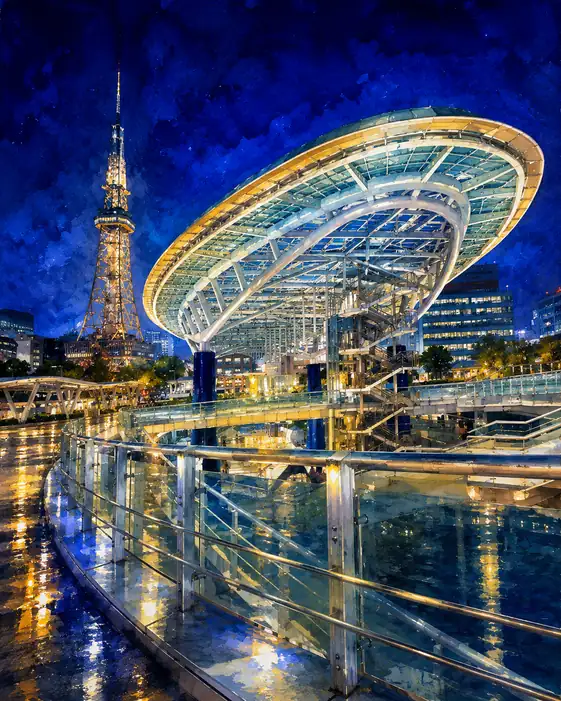 Yesterday's Future, Tonight's Cosmos
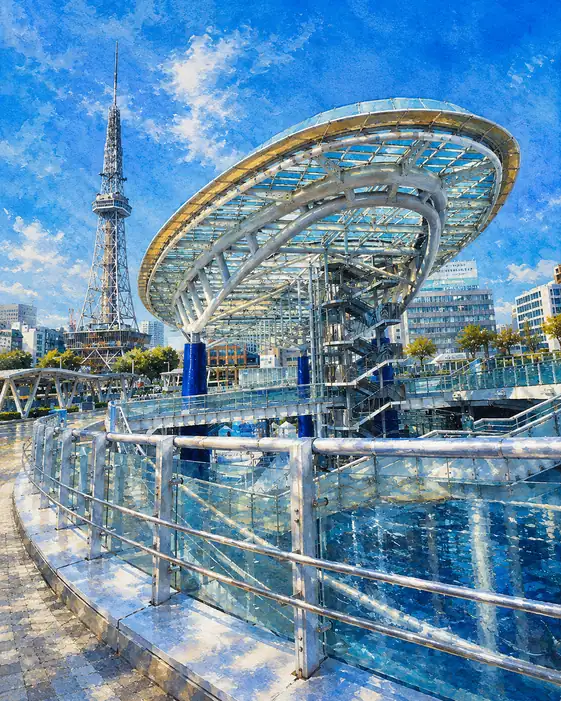 The Sky Descends the Spiral Stair