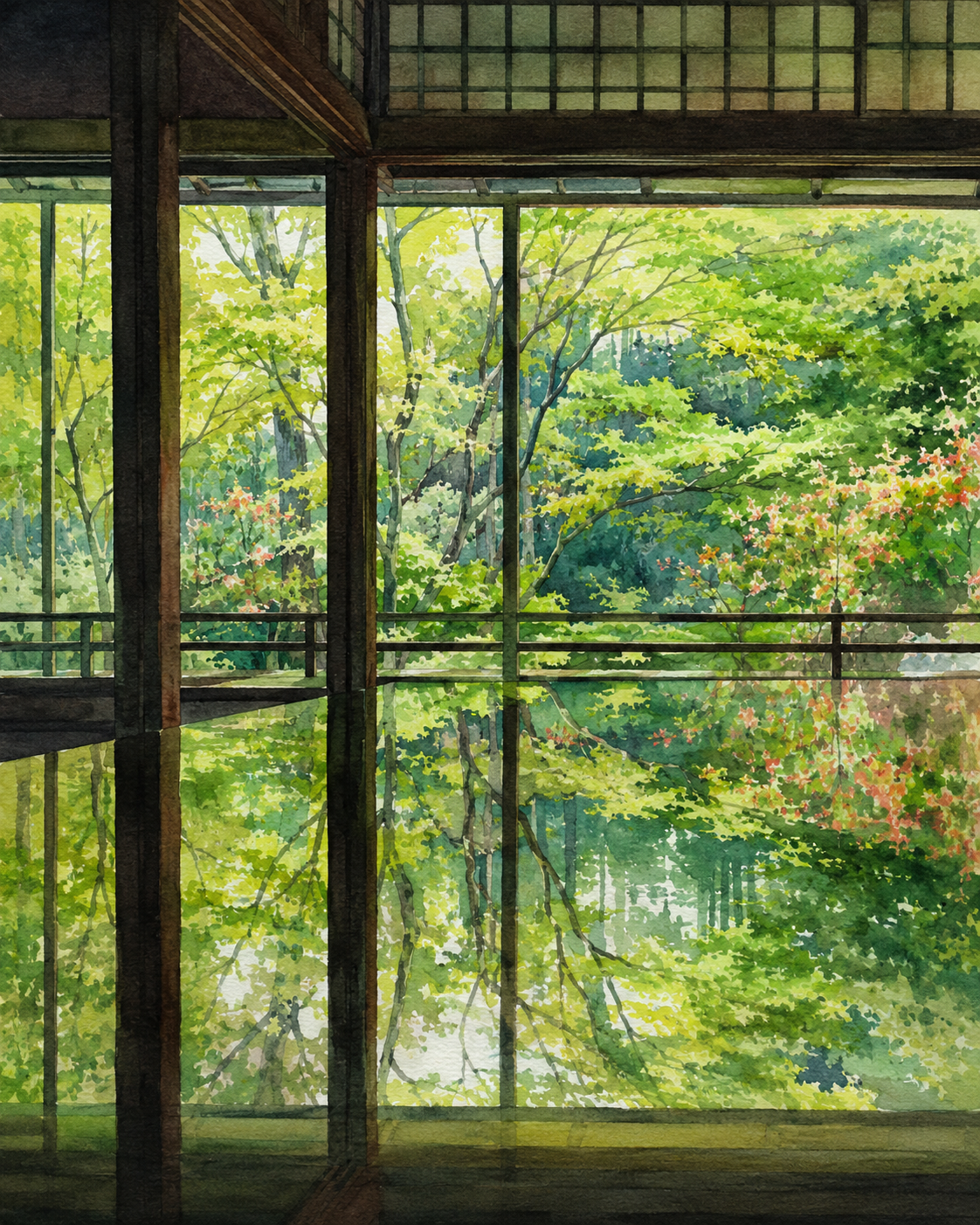
The Garden Enters the Room as Light
Critique
Introduction This painting presents 窓越しの新緑の庭, rendered as a carefully observed encounter with place, atmosphere, and material. The visible subject is 暗い木造室内から見える池、樹木、鮮やかな新緑. Its restrained narrative invites attention to the way ordinary appearances can become sustained visual experience. Description The scene is organized around 柱と敷居が外景を分割し、庭を連続する画面にする構成. The palette combines 黒褐色と黄緑、水面の淡色による対比. Surface changes are described through layered strokes and softened edges, while firmer contours preserve the identity of the principal forms. Small accents provide scale without distracting from the dominant motif. Analysis The composition establishes depth by moving from a tangible foreground through a clearly articulated middle distance toward a quieter background. In particular, 外の柔らかな光が室内との明暗差を強調する. Repeated lines and tonal transitions regulate the viewer's pace, and the balance of detailed and indistinct passages keeps the image legible while retaining atmospheric breadth. Interpretation and Evaluation The work can be read as an exploration of 内と外、静止と成長の境界を見つめる感覚. Its descriptive skill is evident in the varied textures, and its color design supports rather than overwhelms the subject. The arrangement is coherent, the technique is controlled, and the chosen viewpoint gives a familiar motif a distinct identity without relying on theatrical exaggeration. Conclusion The painting succeeds by joining precise observation with a measured emotional tone. What first appears to be a direct depiction gradually reveals a considered structure of light, color, distance, and rhythm. This change in understanding is the work's lasting strength, allowing the viewer to recognize both the specific scene and the broader human attention invested in it.
Same Subcategory
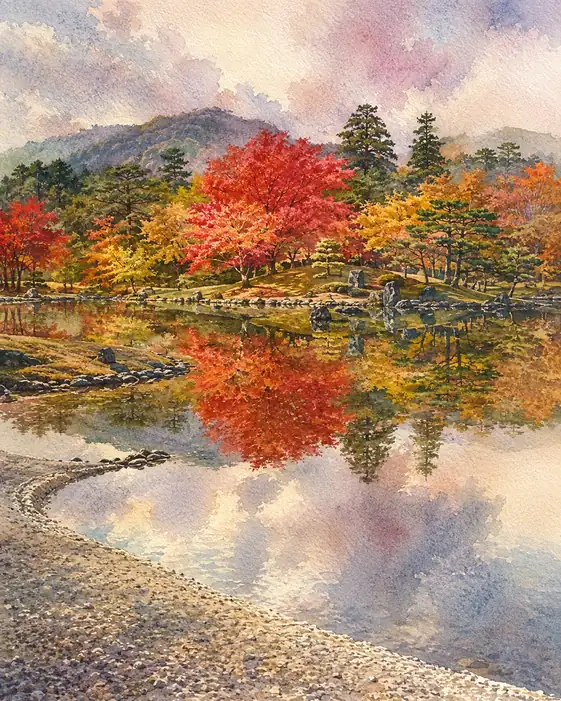 The Season Dreams Twice
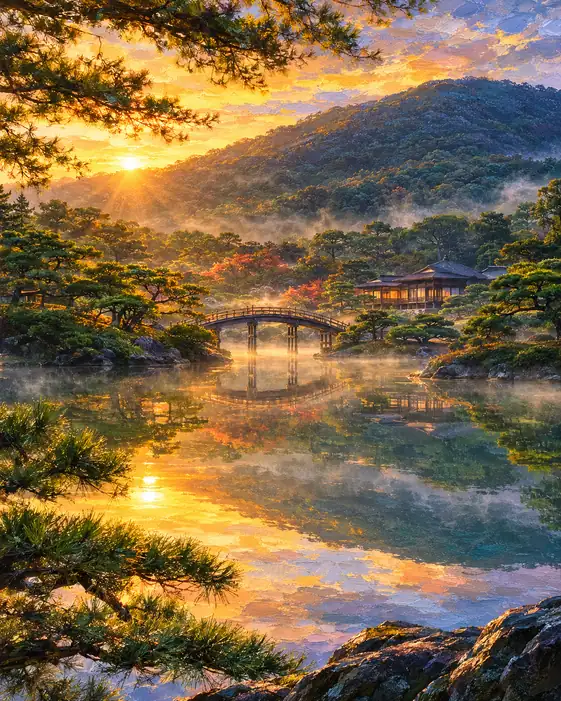 The Bridge Where Morning Meets Its Reflection
Similar Artworks
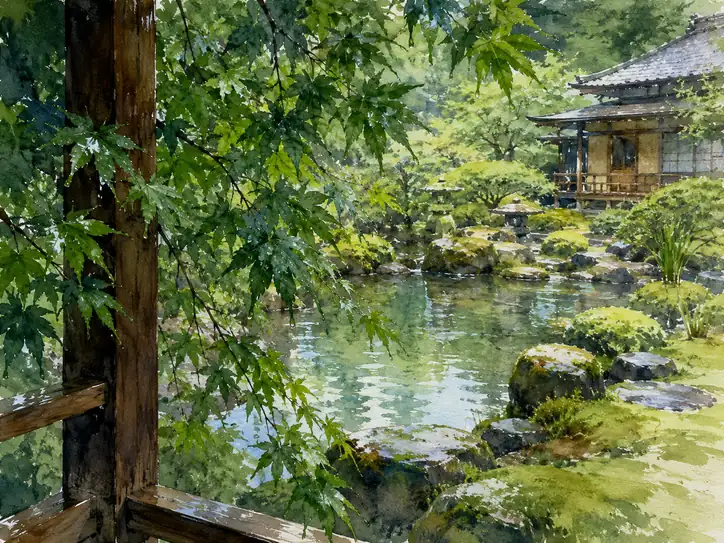 Whispers of the Summer Rain
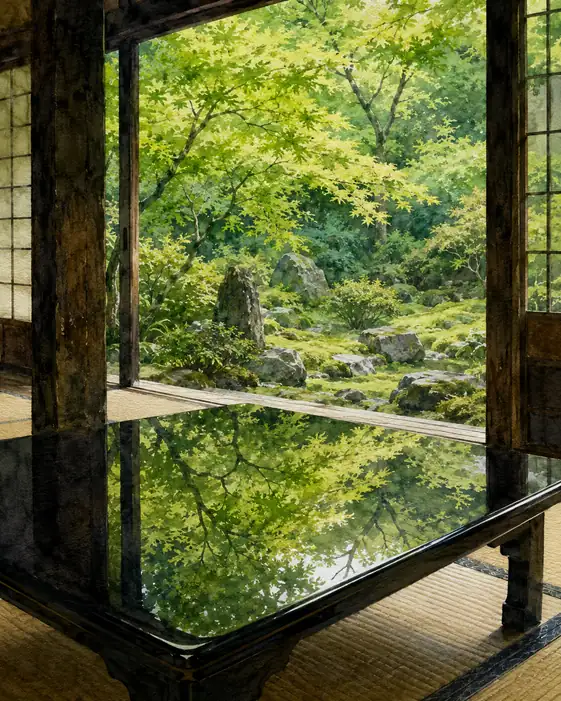 The Garden Borrowed by a Black Mirror
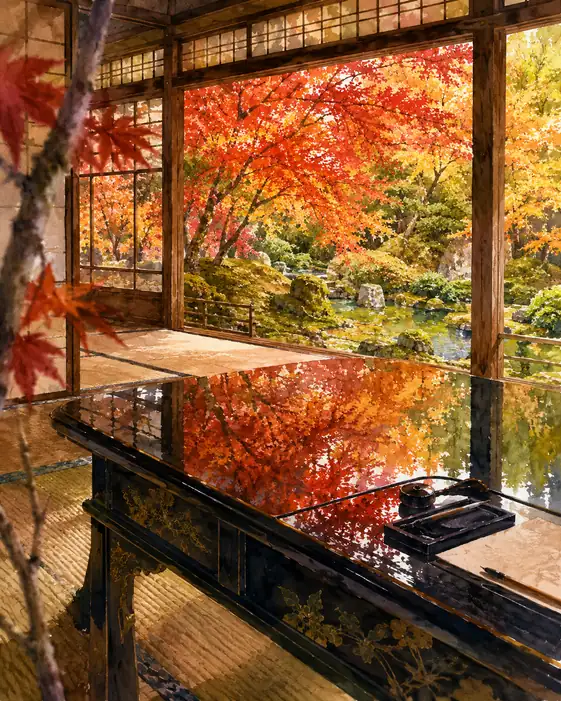 Mirror of the Silent Garden
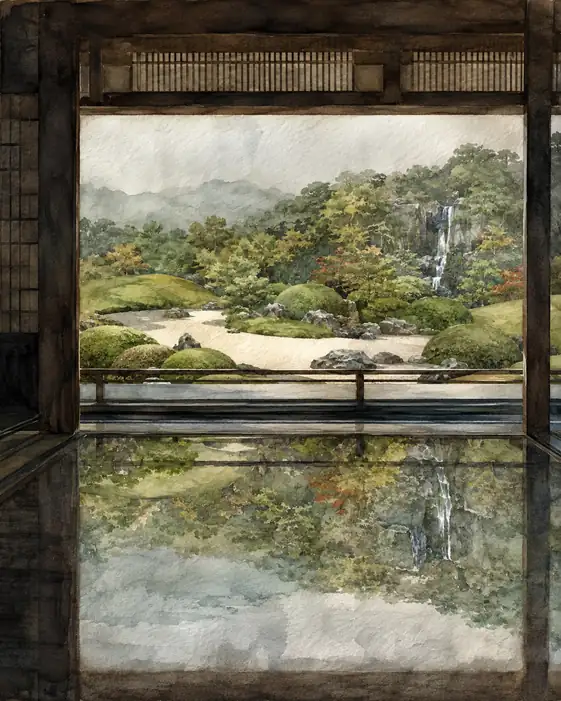 Silence Has a Second Garden
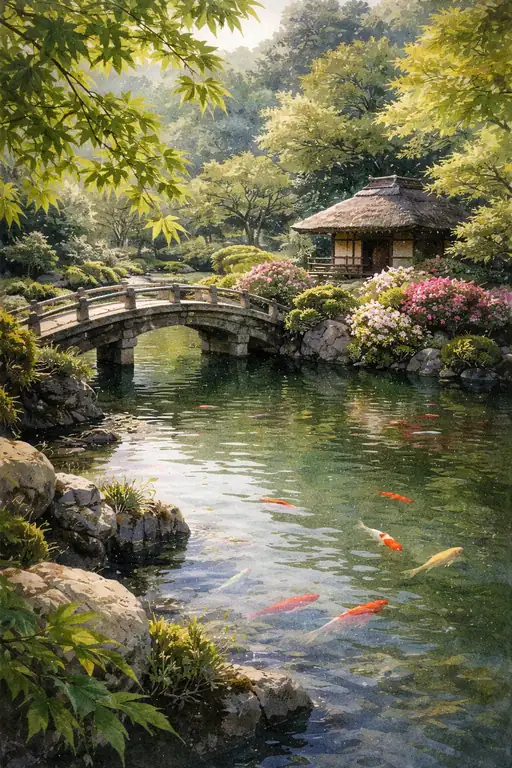 Harmony in the Sunlit Ripples
 Serenity Under the Castle's Watch
 Where Stillness Learns the Light
 A Single Ripple in Twilight
 Whispers of the Flowing Spring
 Autumn Whispers in the Water's Mirror