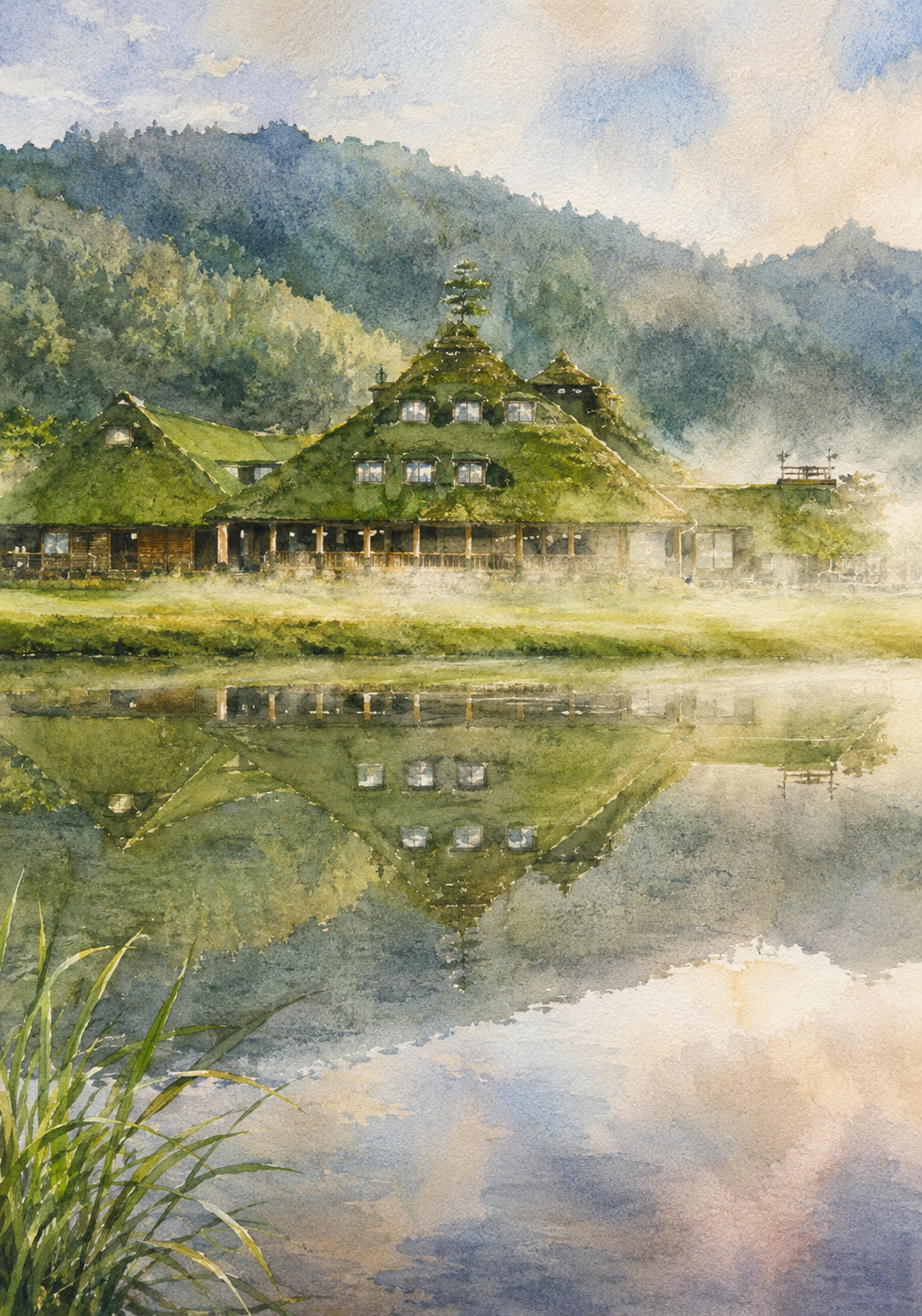
A House Dreams Twice in the Mist
Critique
Introduction This painting presents 霧の水辺の茅葺き集落, rendered as a carefully observed encounter with place, atmosphere, and material. The visible subject is 水面に映る茅葺き家屋と、背後を囲む霞んだ山林. Its restrained narrative invites attention to the way ordinary appearances can become sustained visual experience. Description The scene is organized around 水平な水面を境に実景と反映を重ねる構成. The palette combines 苔色、土色、淡い灰青色の穏やかな色彩. Surface changes are described through layered strokes and softened edges, while firmer contours preserve the identity of the principal forms. Small accents provide scale without distracting from the dominant motif. Analysis The composition establishes depth by moving from a tangible foreground through a clearly articulated middle distance toward a quieter background. In particular, 拡散光が霧と建物を柔らかな階調で包む. Repeated lines and tonal transitions regulate the viewer's pace, and the balance of detailed and indistinct passages keeps the image legible while retaining atmospheric breadth. Interpretation and Evaluation The work can be read as an exploration of 素朴な暮らしと湿潤な自然が共存する静けさ. Its descriptive skill is evident in the varied textures, and its color design supports rather than overwhelms the subject. The arrangement is coherent, the technique is controlled, and the chosen viewpoint gives a familiar motif a distinct identity without relying on theatrical exaggeration. Conclusion The painting succeeds by joining precise observation with a measured emotional tone. What first appears to be a direct depiction gradually reveals a considered structure of light, color, distance, and rhythm. This change in understanding is the work's lasting strength, allowing the viewer to recognize both the specific scene and the broader human attention invested in it.
Same Subcategory
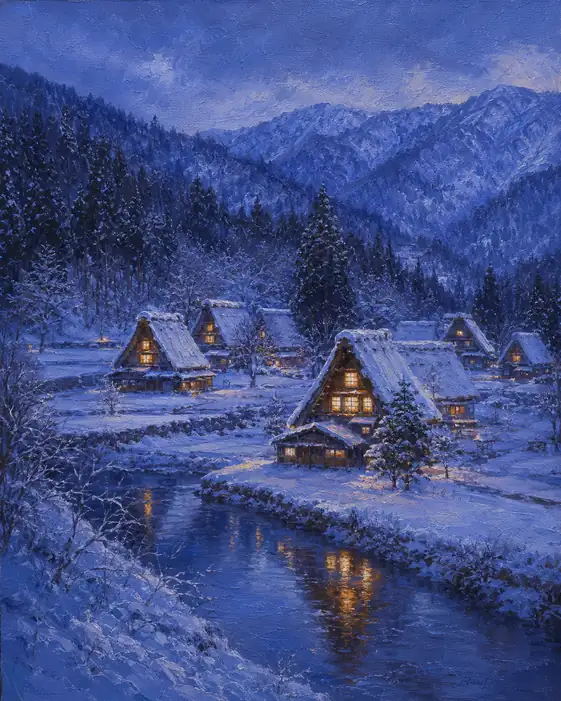 Winter Keeps the Hearths Afloat
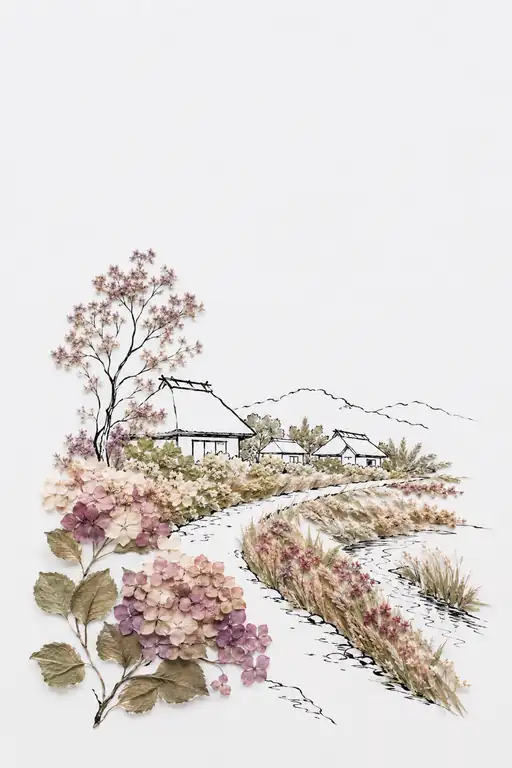 Hydrangeas in Bloom Beside the Thatched Farmstead
Similar Artworks
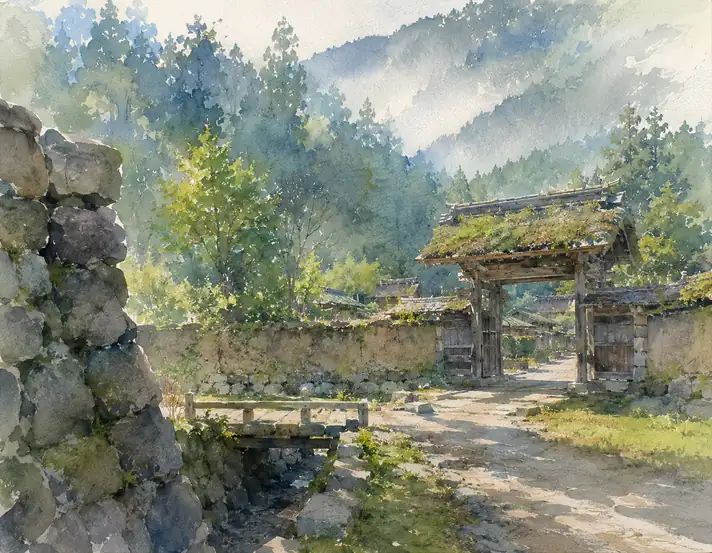 The Silent Gate Where Time Lingers
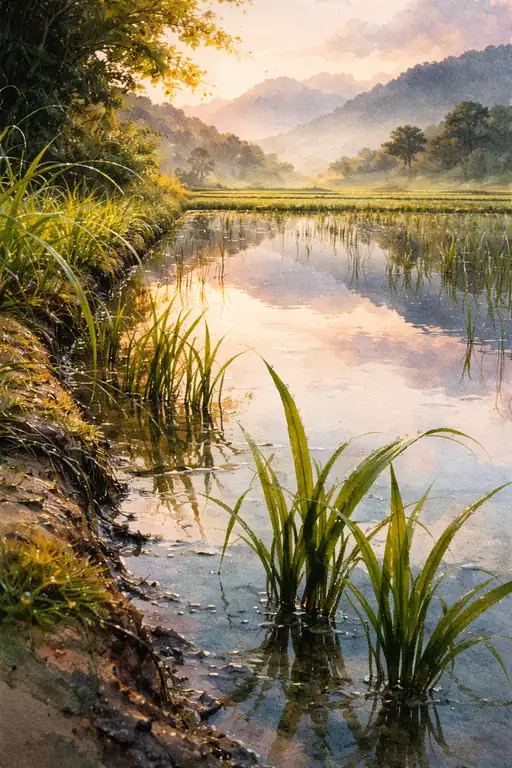 Golden Dawn's Reflection
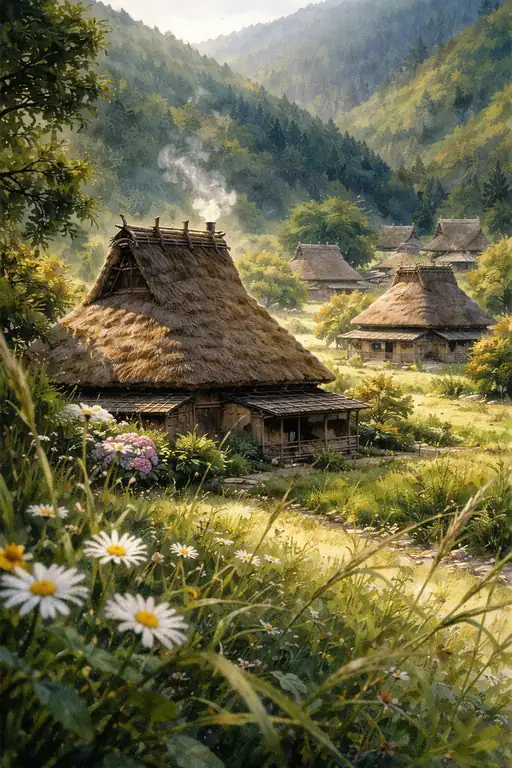 Whispers of the Golden Valley
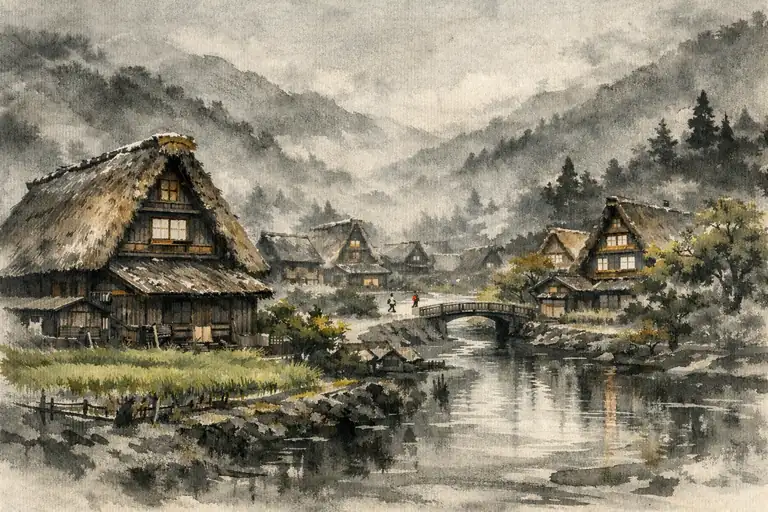 Quiet Breath of the Sacred Valley
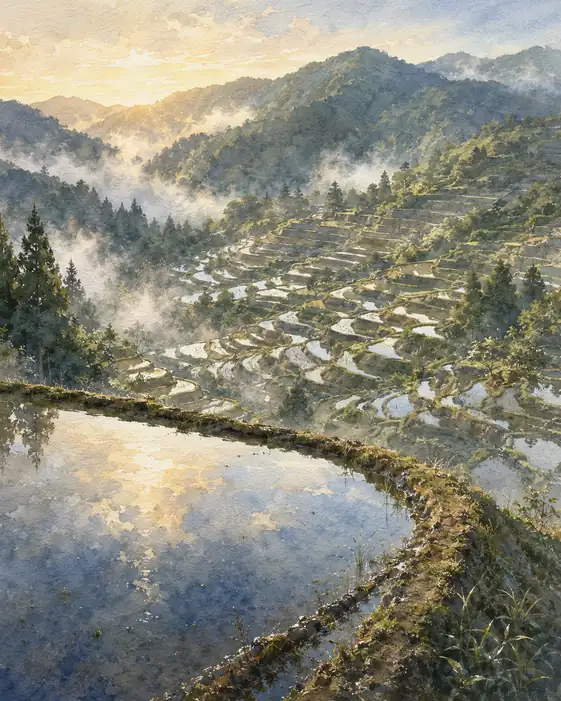 A Thousand Skies Sown on the Mountain
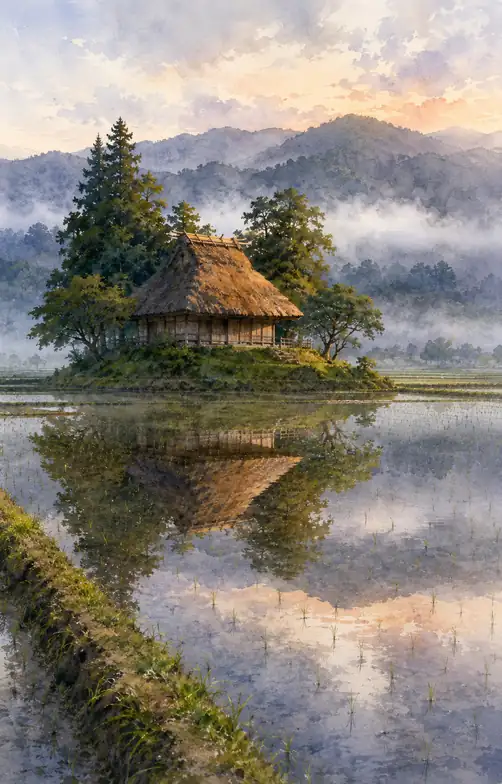 Where the Fields Become Mist
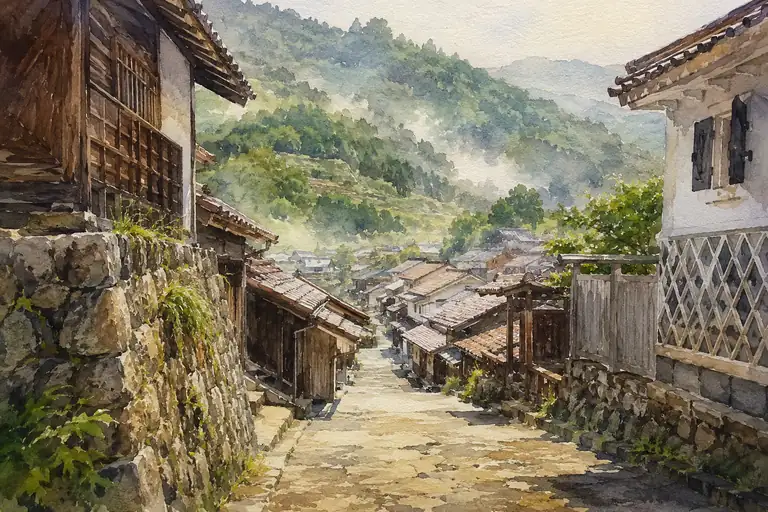 Echoes of the Ancient Path
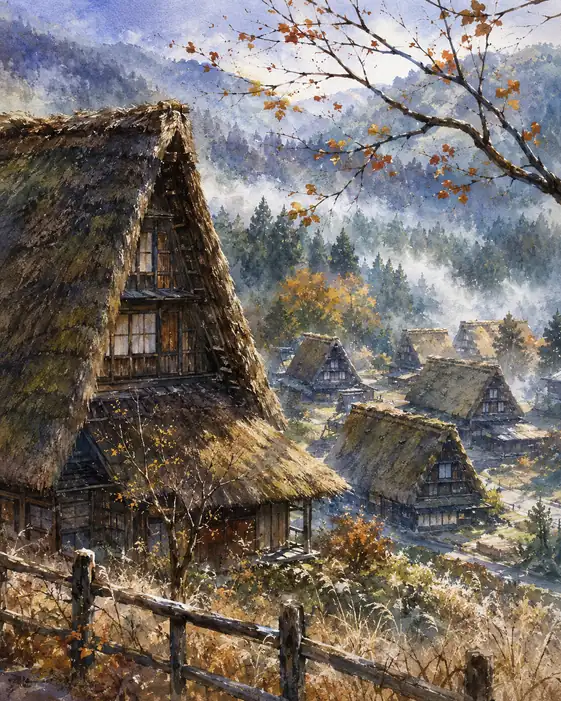 Echoes of the Thatch: A Misty Autumn Memory
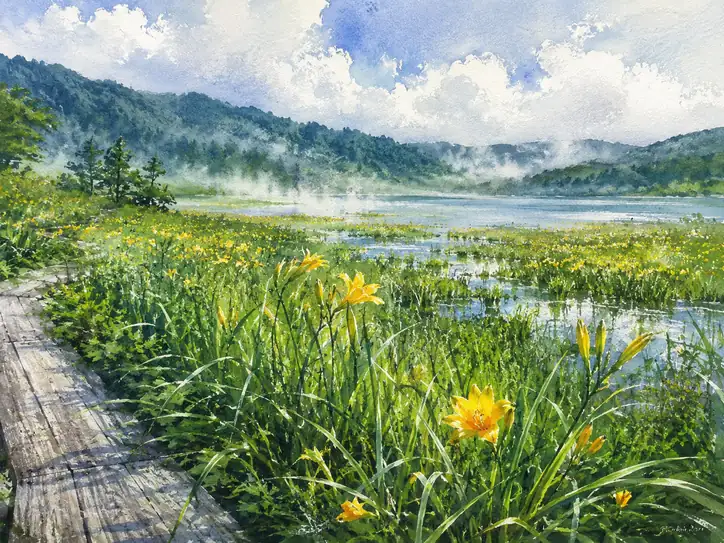 Yellow Symphony on the Summer Marsh
 The Silence of Sapphire Depths