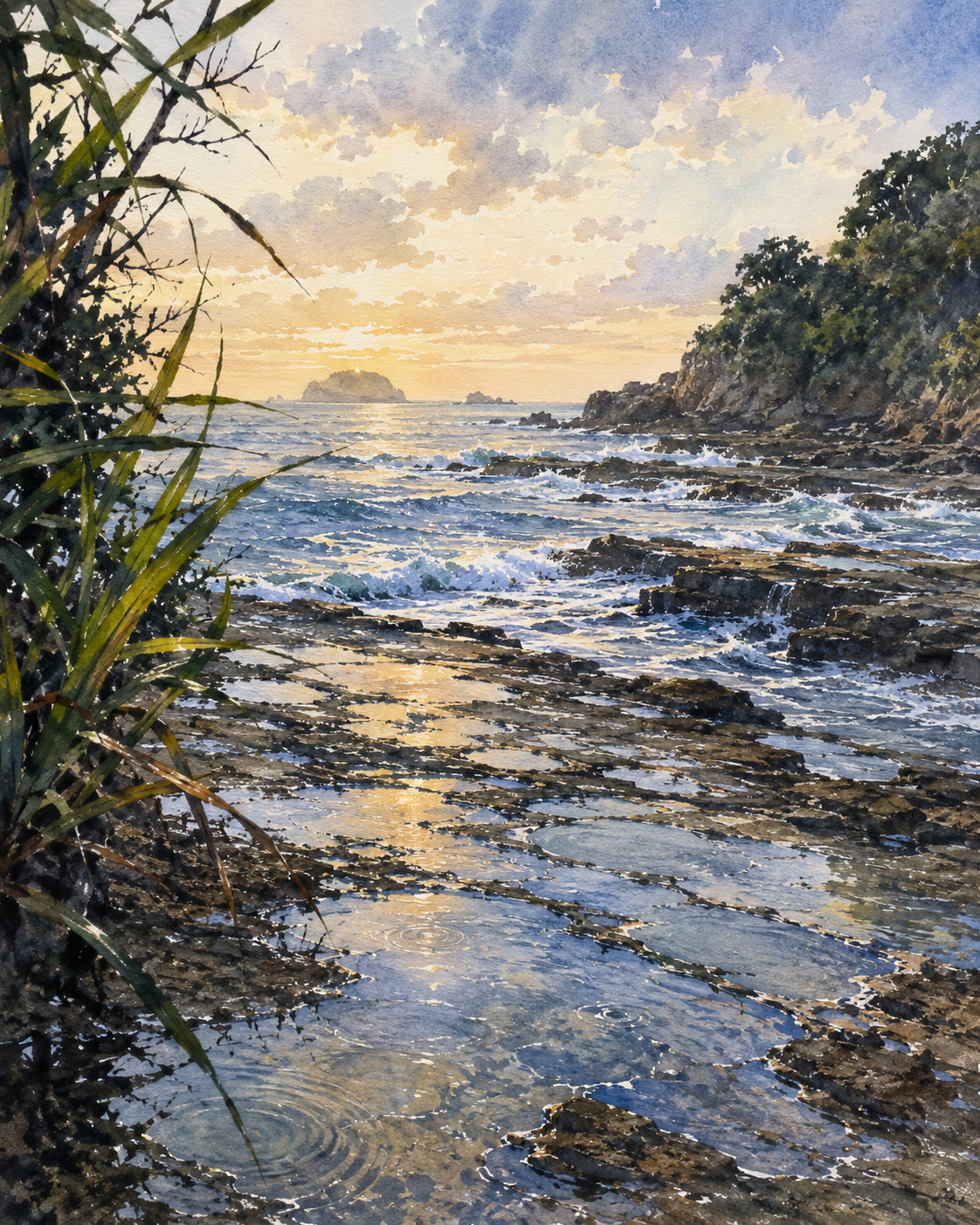
The Tide Leaves Mirrors for the Sky
Critique
Introduction This painting depicts a rocky shoreline where shallow pools, surf, and a distant island are joined by warm reflection. Its organization turns changing water and weather into the principal subject. Description Fractured rocks and tide pools fill the lower half, with coastal plants entering from the shaded left edge. White waves cross the middle distance , while a wooded headland closes the right side and islands mark the horizon. Blue, slate gray, olive green, cream, and soft gold form a restrained but luminous palette. Analysis The foreground pools create a sequence of irregular mirrors that carries the eye toward the glowing horizon. Dark vegetation on the left and the headland on the right act as unequal framing masses, leaving the center open to sea and sky. Repeated wave crests establish rhythm, while shifts in edge clarity distinguish solid rock, moving water, and humid distance. Transparent washes and reserved paper highlights give the surface freshness without sacrificing structural precision. Interpretation and Evaluation The work studies transitions between land and water, stillness and motion, shelter and openness. Its drawing clarifies the complex rock shelf, and the composition guides attention without forcing a single dominant object. The color relationships sustain a calm, expectant mood, while the circular ripples in the pools add an individual observation. Technique and tonal control make the familiar coast feel closely examined rather than merely picturesque. Conclusion At first glance the painting seems centered on a glowing seascape, but prolonged viewing shifts attention toward the modest tide pools and their delicate changes. Its achievement lies in balancing broad atmospheric light with precise near detail, allowing an ordinary coastal interval to become a measured reflection on time and movement.
Same Subcategory
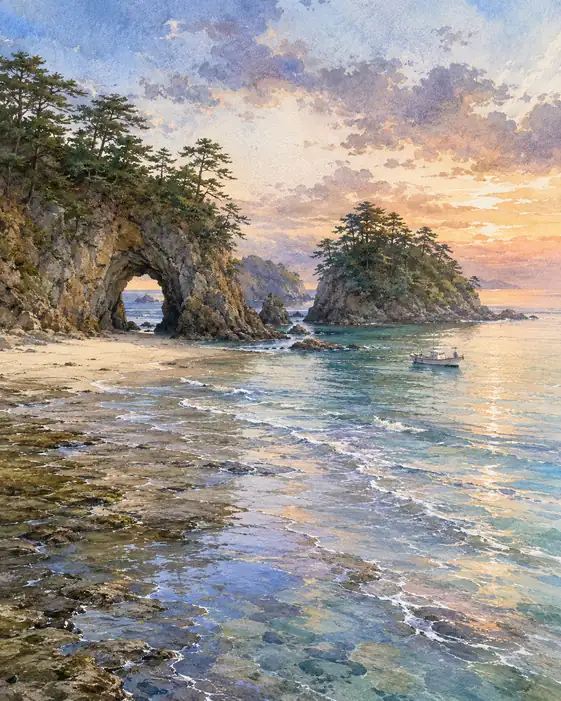 The Sea Opens a Door for the Little Boat
Similar Artworks
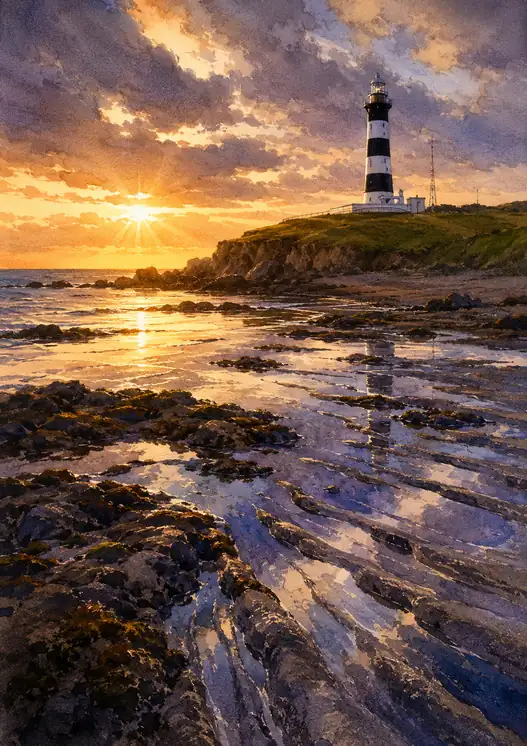 What Remains at Day's End
 I Remain Where the Sea Changes
 I Learned to Bend from the Sea
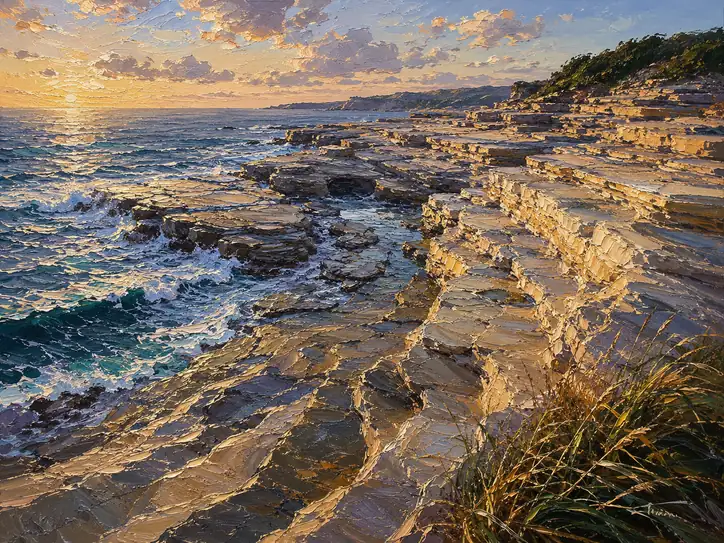 Golden Pulse of the Ancient Shore
 Lighthouse Watching Ocean Spray Under a Dawn Sky
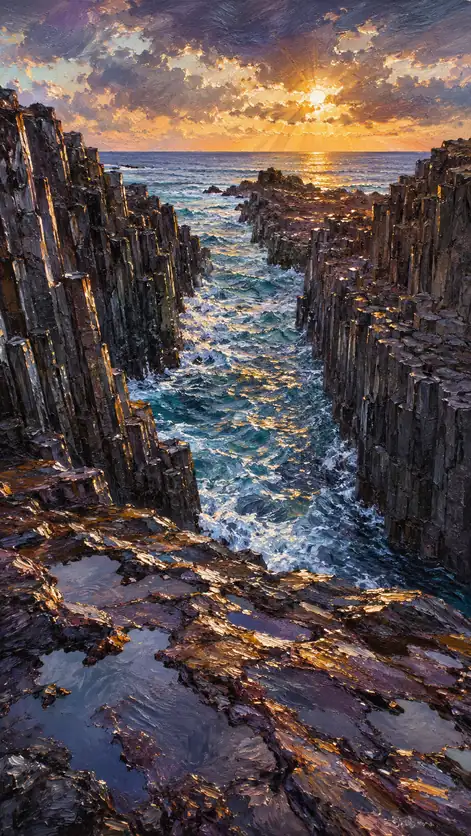 The Sea Between Stone Organ Pipes
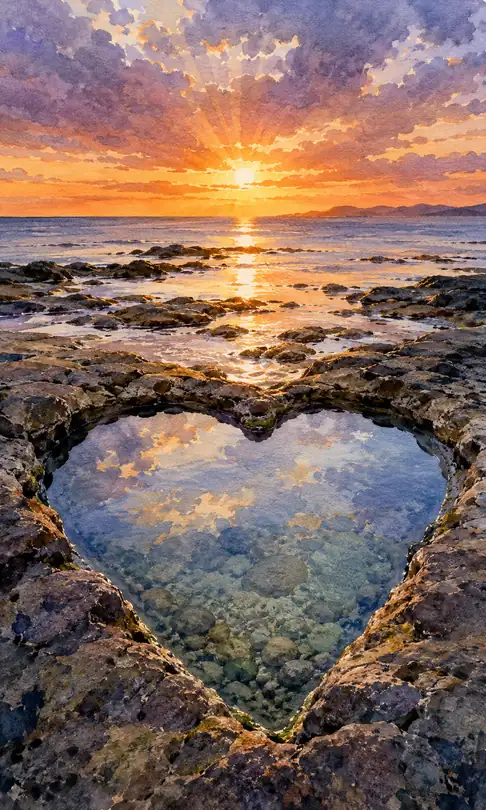 What the Tide Left Us
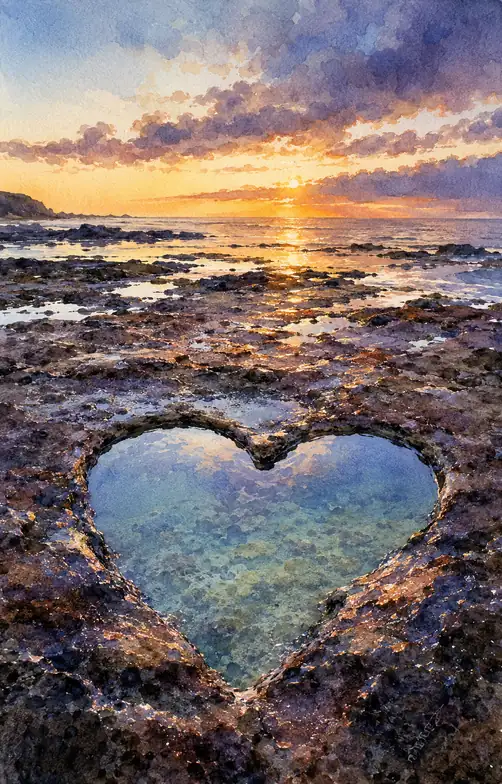 The Tide Left Its Heart Behind
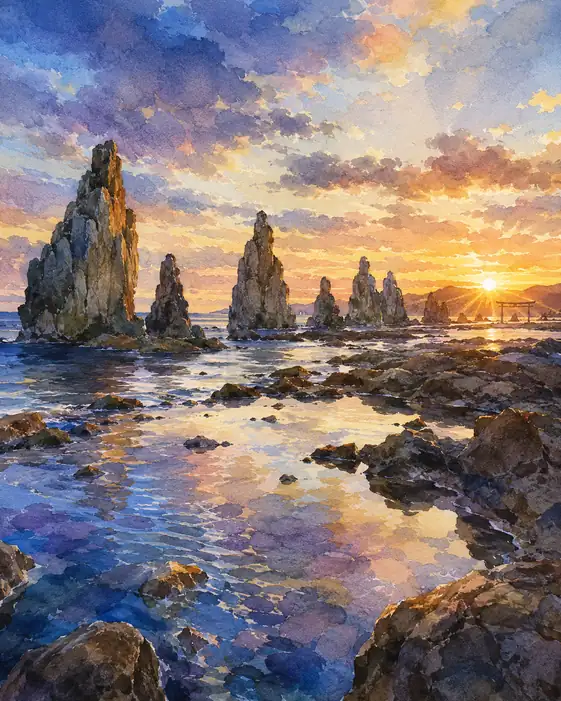 Dawn Threads the Pillars of the Sea
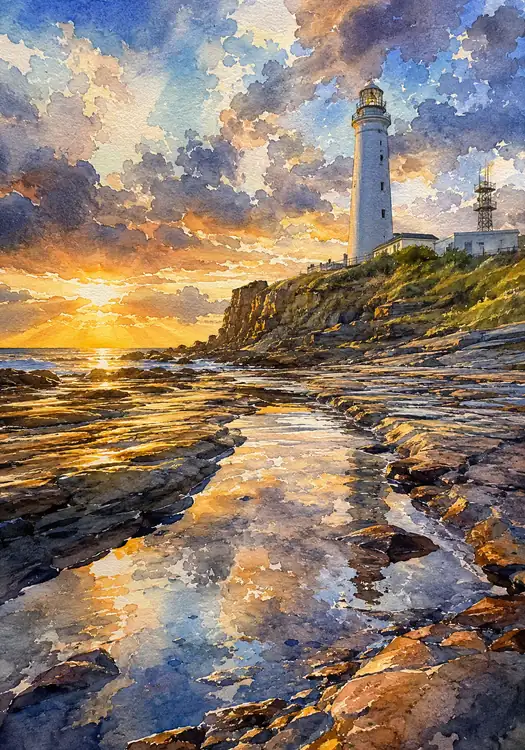 The Tidal Path to the White Tower