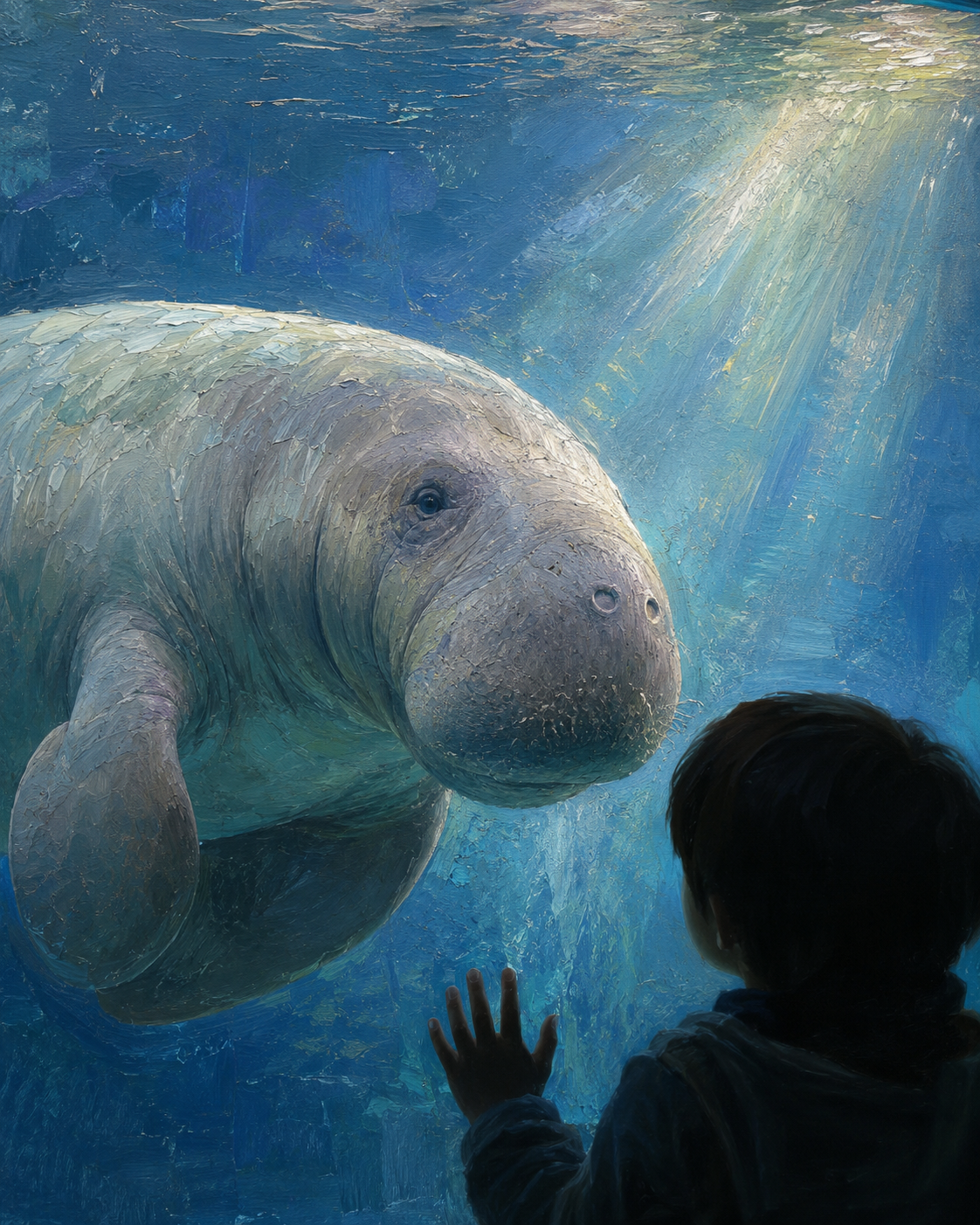
Two Worlds Touch at the Glass
Critique
Introduction This painting presents 水中で人と向き合うジュゴン, rendered as a carefully observed encounter with place, atmosphere, and material. The visible subject is 青緑の水槽を泳ぐ大きなジュゴンと、ガラス越しに手を伸ばす人物. Its restrained narrative invites attention to the way ordinary appearances can become sustained visual experience. Description The scene is organized around ジュゴンの丸い頭部と人物の暗いシルエットを対置する構成. The palette combines 青、水色、灰白色を中心とする透明感のある色彩. Surface changes are described through layered strokes and softened edges, while firmer contours preserve the identity of the principal forms. Small accents provide scale without distracting from the dominant motif. Analysis The composition establishes depth by moving from a tangible foreground through a clearly articulated middle distance toward a quieter background. In particular, 水面から差し込む光が動物の背を柔らかく照らす. Repeated lines and tonal transitions regulate the viewer's pace, and the balance of detailed and indistinct passages keeps the image legible while retaining atmospheric breadth. Interpretation and Evaluation The work can be read as an exploration of 異なる生き物の間に生じる静かな好奇心と親密さ. Its descriptive skill is evident in the varied textures, and its color design supports rather than overwhelms the subject. The arrangement is coherent, the technique is controlled, and the chosen viewpoint gives a familiar motif a distinct identity without relying on theatrical exaggeration. Conclusion The painting succeeds by joining precise observation with a measured emotional tone. What first appears to be a direct depiction gradually reveals a considered structure of light, color, distance, and rhythm. This change in understanding is the work's lasting strength, allowing the viewer to recognize both the specific scene and the broader human attention invested in it.
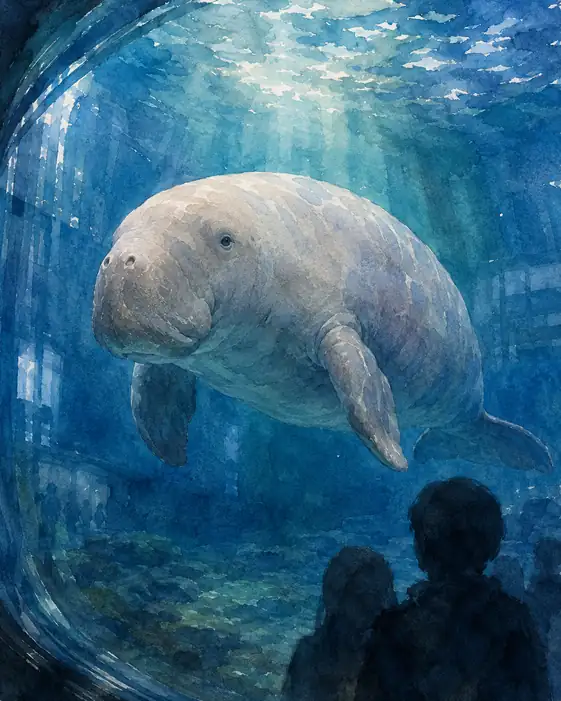 The Blue Distance Between Us
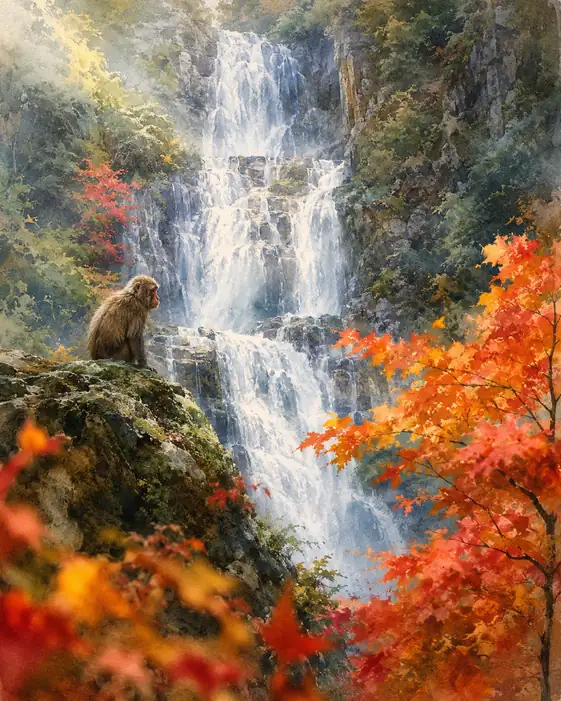 The Old Monkey Watches White Thunder
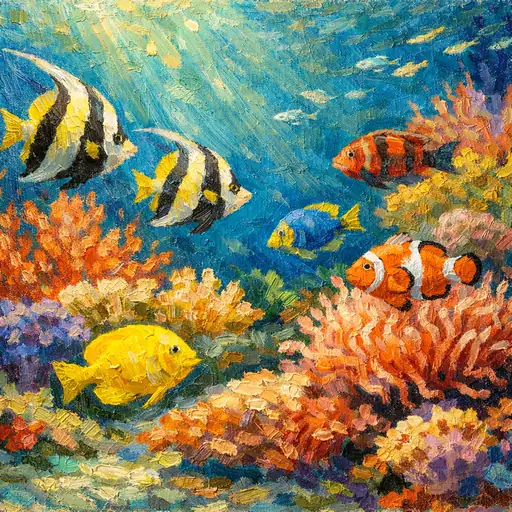 Dance of the Sapphire Depths
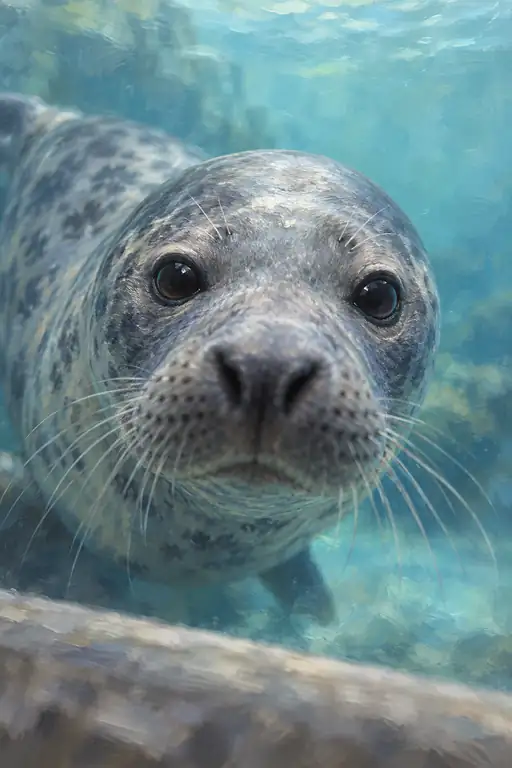 You Found Me in the Blue
 Bound by Drift and Light
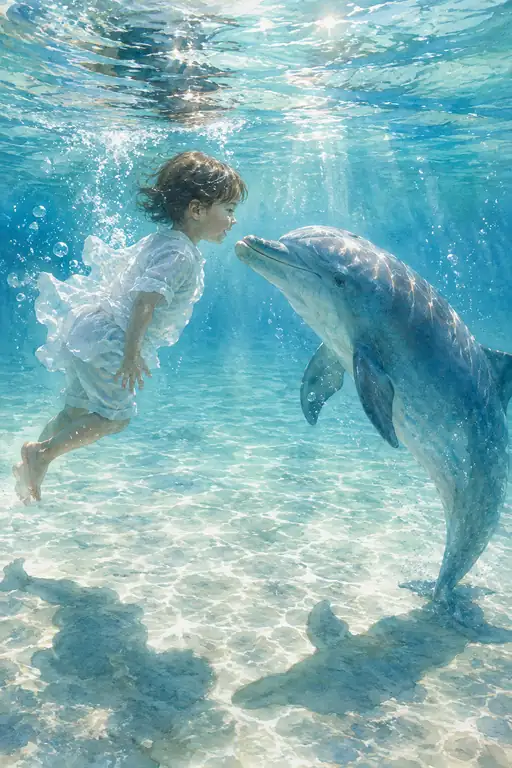 Beyond Words, Beneath the Waves
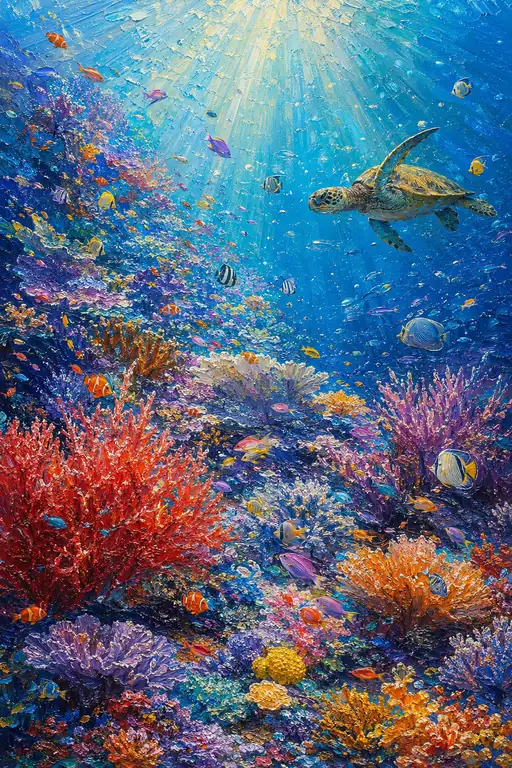 Drifting in Luminous Silence
 Our Magical Blue Sanctuary
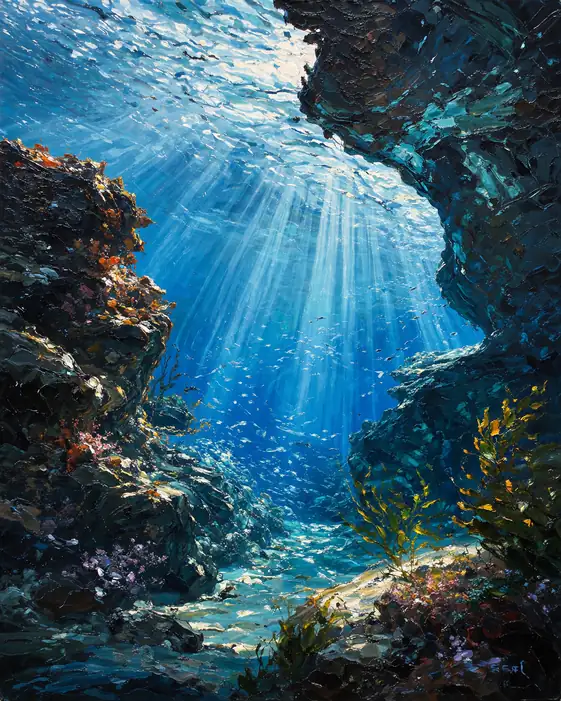 The Deep's Silent Crescendo
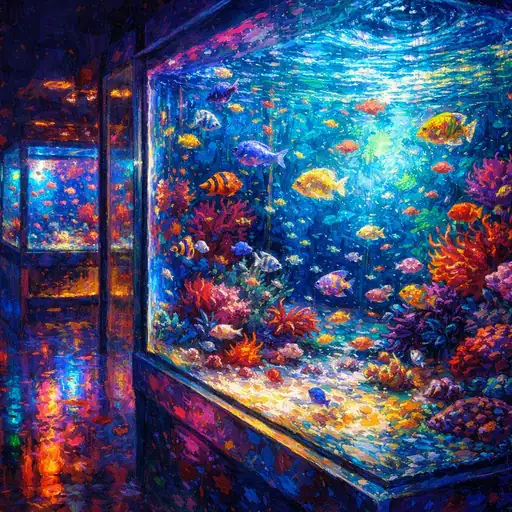 Neon Abyss
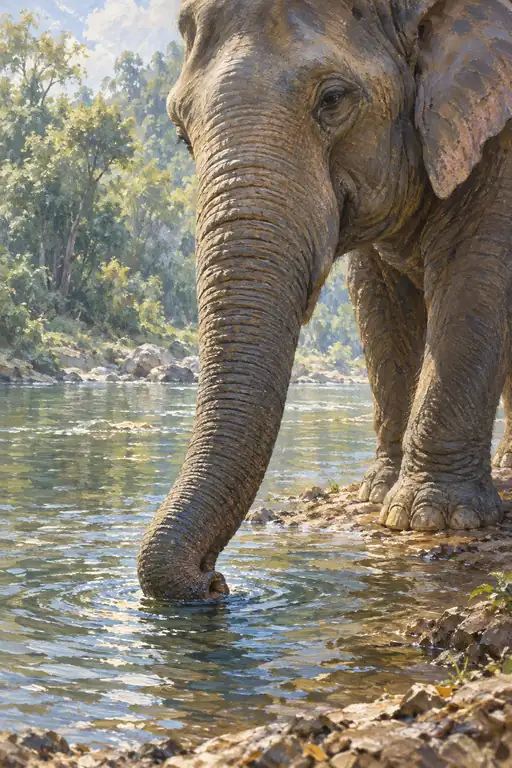 The River Feels a Gentle Weight