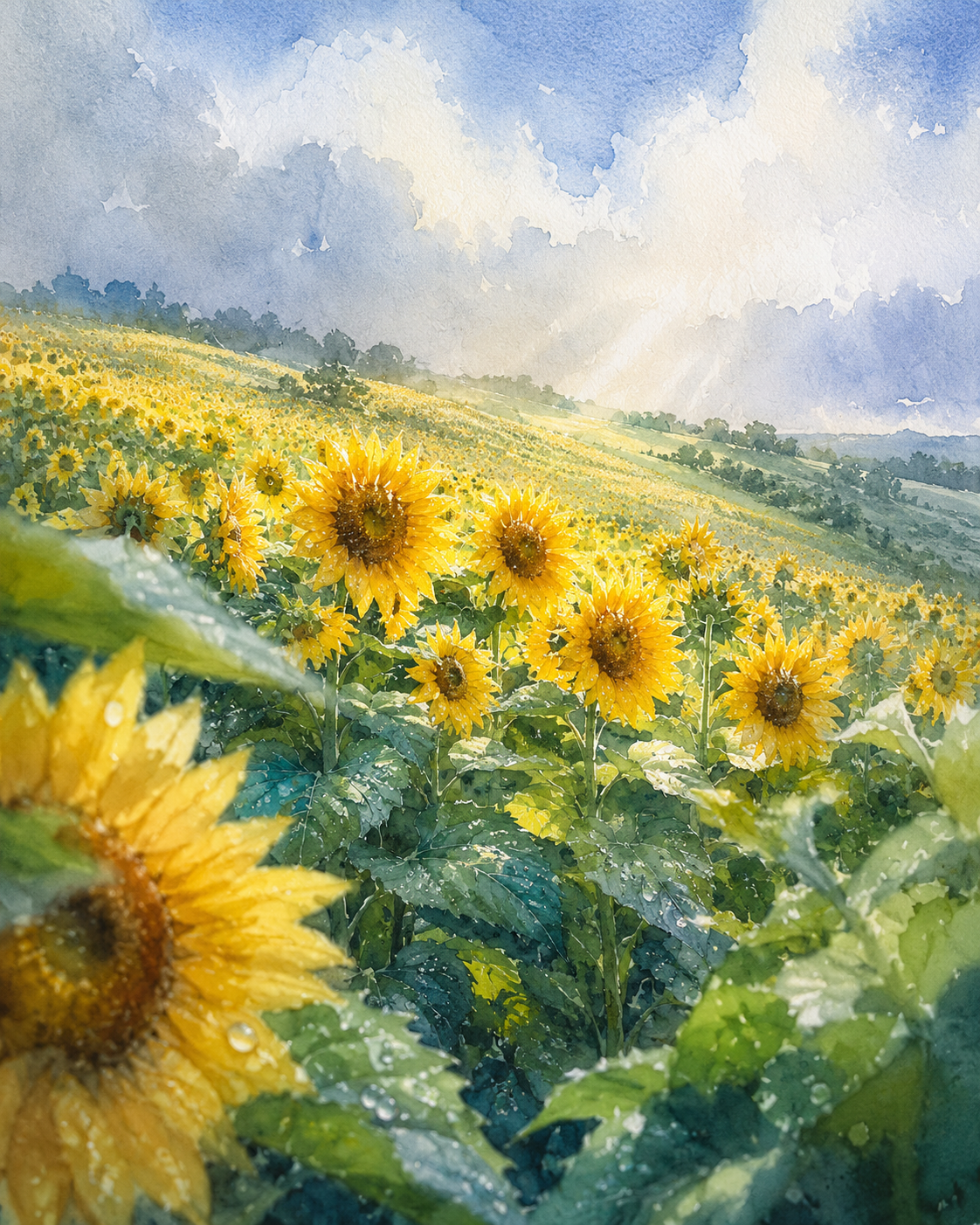
After the Rain, Every Sunflower Remembers the Sun
Critique
Introduction This painting presents a vast field of sunflowers as a carefully ordered encounter between place, weather, and light. Its immediate appeal lies in the repeated yellow flower heads, yet the image rewards slower attention to the way every surrounding element supports that emphasis. Description The composition places the repeated yellow flower heads against rolling green hills under broken clouds. In the lower area, large rain-wet sunflowers establishes a tactile entry into the scene, while smaller transitions of light and texture connect near space to the distance. The dominant palette of yellow, green, blue, and white remains varied without losing overall unity. Analysis Formally, diagonal rows expand toward the bright horizon. Changes in scale, edge sharpness, and atmospheric density clarify the recession, while controlled highlights establish visual priorities. The handling combines descriptive precision with visible, softened strokes, so surfaces remain legible without becoming mechanically detailed. Color contrast and repeated shapes further bind the separate zones into a coherent whole. Interpretation and Evaluation The scene can be read as an exploration of permanence and passing conditions: enduring forms are transformed by a brief state of weather or illumination. The drawing is convincing, the composition is purposeful, and the color relationships sustain a mood that is buoyant and abundant. Although the subject is recognizable, the selective emphasis and painterly surface give the treatment an individual character. Conclusion At first glance the work appears primarily scenic, but sustained viewing reveals a disciplined arrangement of direction, interval, and tonal weight. Its strongest achievement is the balance between accessible description and reflective atmosphere, allowing observation to develop into a measured sense of place.
Same Subcategory
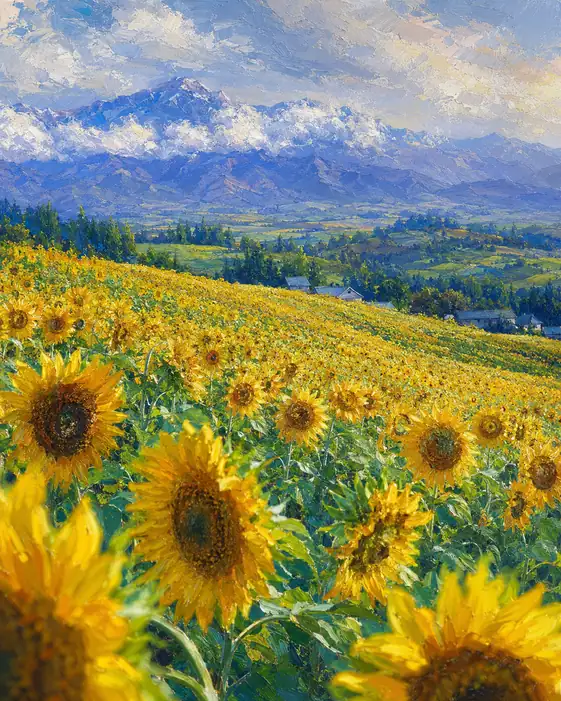 The Hill Where the Sun Smiles Longest
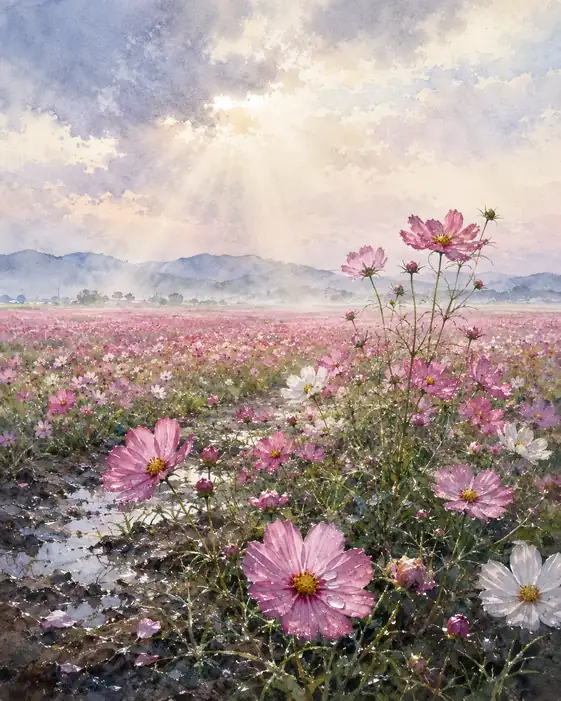 Every Cosmos Raises a Cup of Light
Similar Artworks
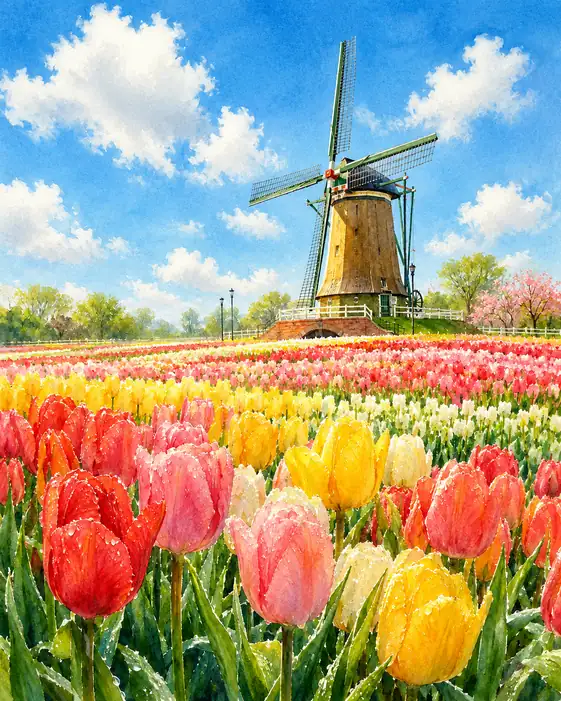 The Windmill Counts the Colors of Spring
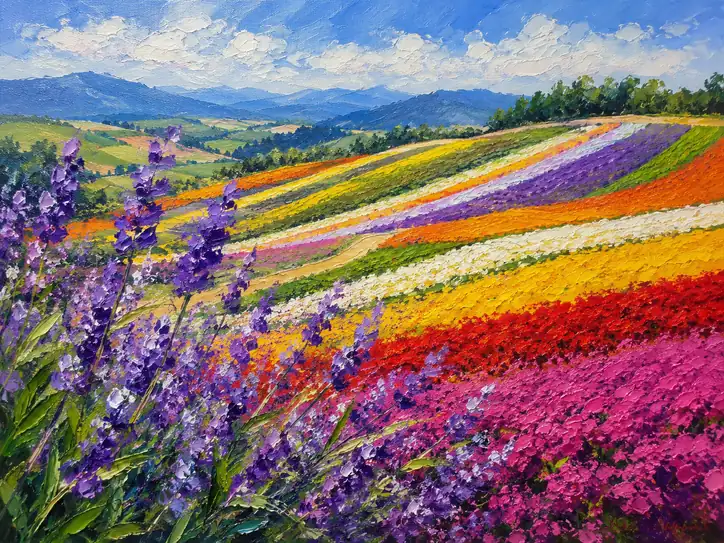 A Rainbow Journey to the Horizon
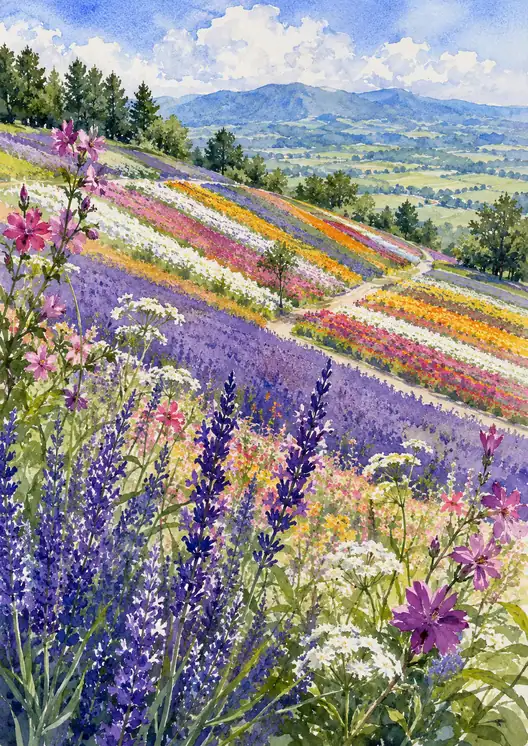 A Gentle Path Through Summer Dreams
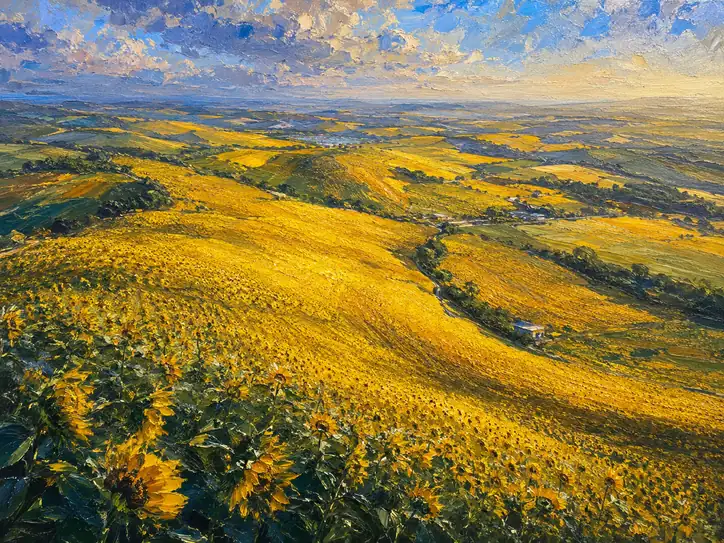 Golden Waves Running Across the Hills
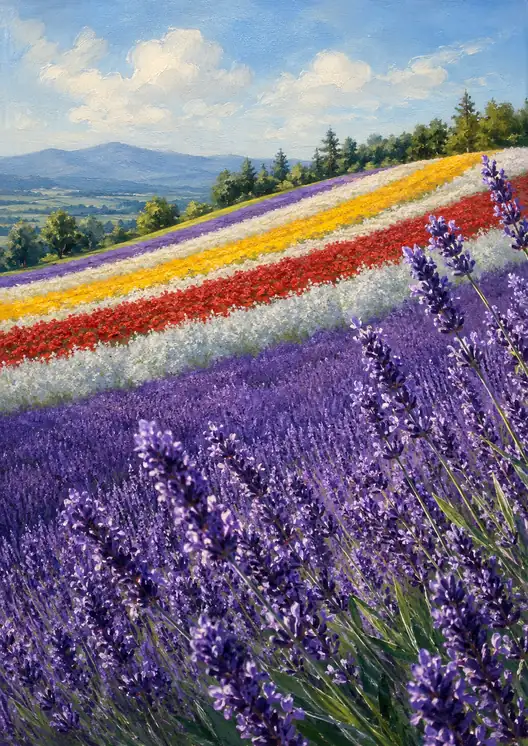 Where the Earth Sings in Rainbows
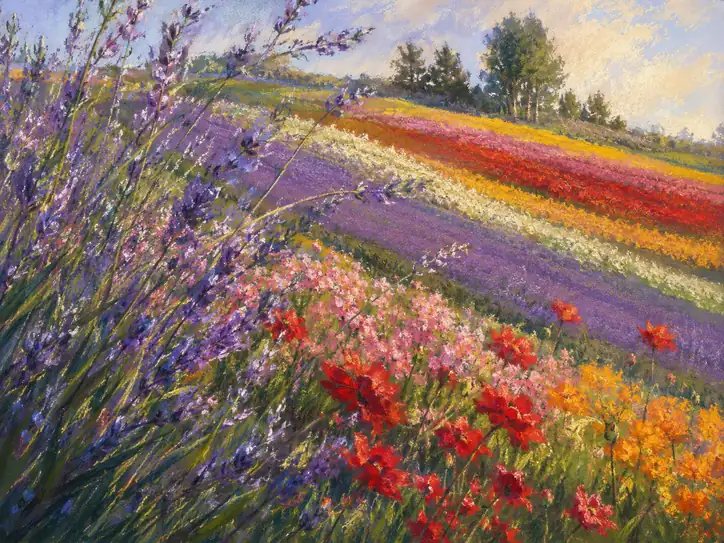 A Gradient of Summer Dreams
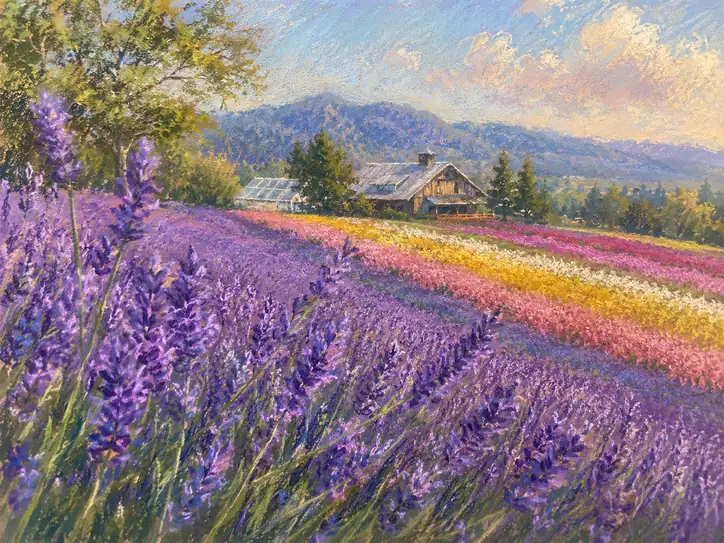 The Earth's Melodic Bloom
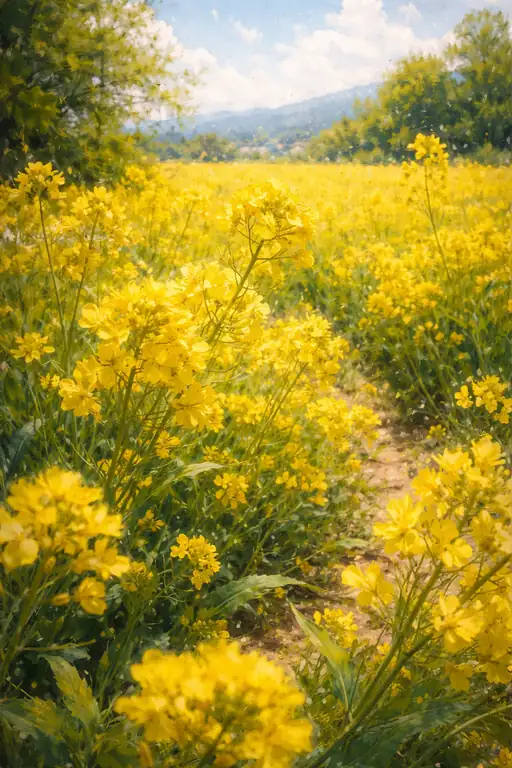 The Canola Flowers Remember the Way
 Pampas Field under Blue Sky and Golden Maiden Flowers
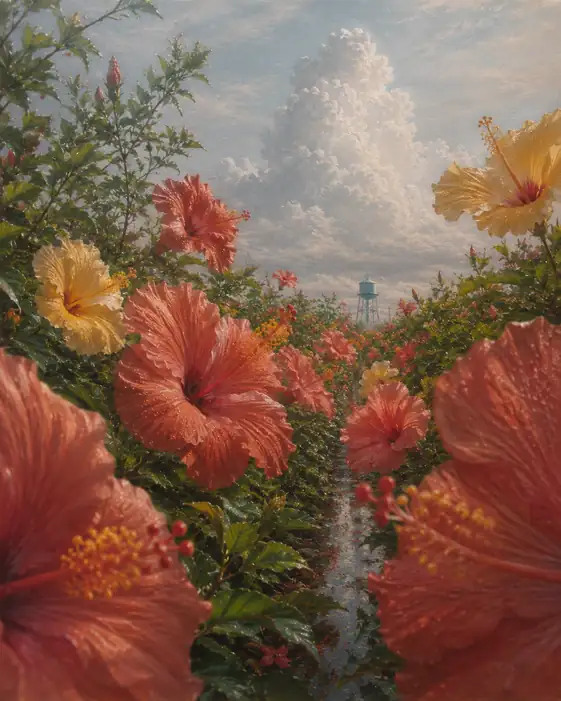 Hibiscus Field under the Cumulus Tower