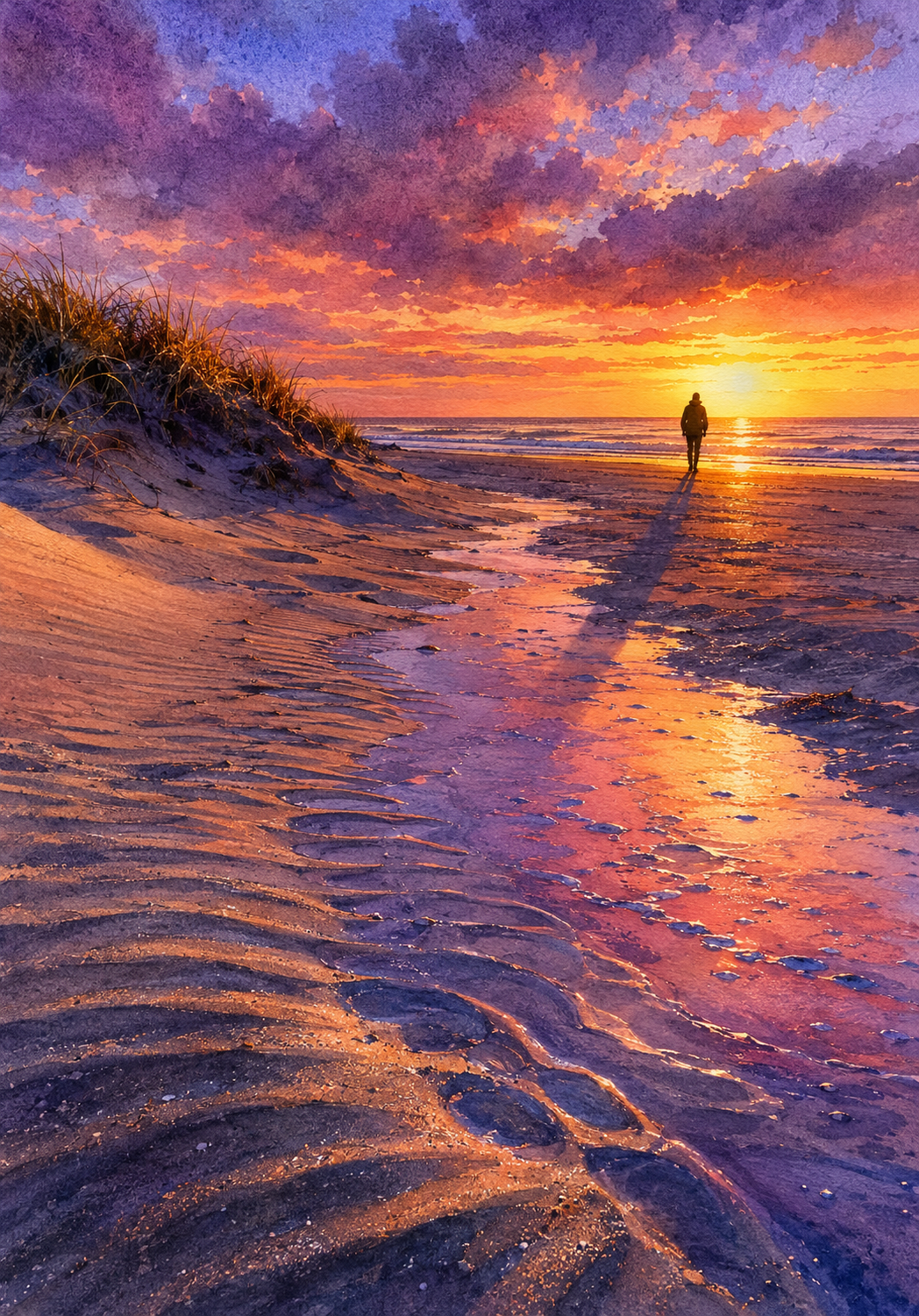
The Last Footprints of Sunset
Critique
Introduction This painting presents a solitary figure on a sunset beach as a carefully ordered encounter between place, weather, and light. Its immediate appeal lies in the small silhouette against the sun, yet the image rewards slower attention to the way every surrounding element supports that emphasis. Description The composition places the small silhouette against the sun against a fiery ocean horizon. In the lower area, ripples and a reflective tidal channel establishes a tactile entry into the scene, while smaller transitions of light and texture connect near space to the distance. The dominant palette of orange, magenta, violet, and brown remains varied without losing overall unity. Analysis Formally, shoreline diagonals converge on the walker. Changes in scale, edge sharpness, and atmospheric density clarify the recession, while controlled highlights establish visual priorities. The handling combines descriptive precision with visible, softened strokes, so surfaces remain legible without becoming mechanically detailed. Color contrast and repeated shapes further bind the separate zones into a coherent whole. Interpretation and Evaluation The scene can be read as an exploration of permanence and passing conditions: enduring forms are transformed by a brief state of weather or illumination. The drawing is convincing, the composition is purposeful, and the color relationships sustain a mood that is solitary and reflective. Although the subject is recognizable, the selective emphasis and painterly surface give the treatment an individual character. Conclusion At first glance the work appears primarily scenic, but sustained viewing reveals a disciplined arrangement of direction, interval, and tonal weight. Its strongest achievement is the balance between accessible description and reflective atmosphere, allowing observation to develop into a measured sense of place.
Same Subcategory
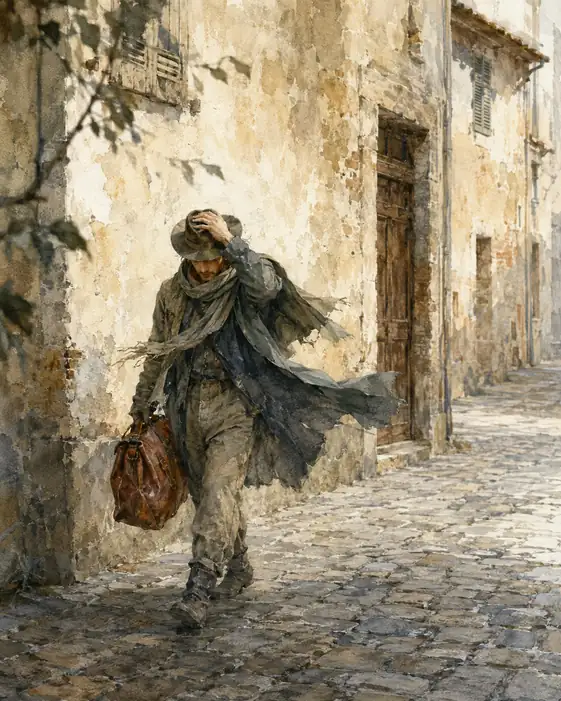 The Road Knows the Weight of His Bag
Similar Artworks
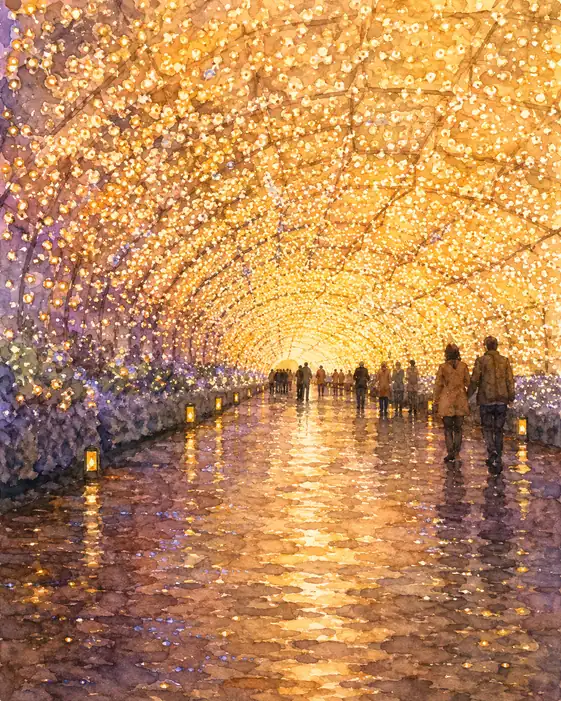 Walking Through a Night Where Light Blossoms
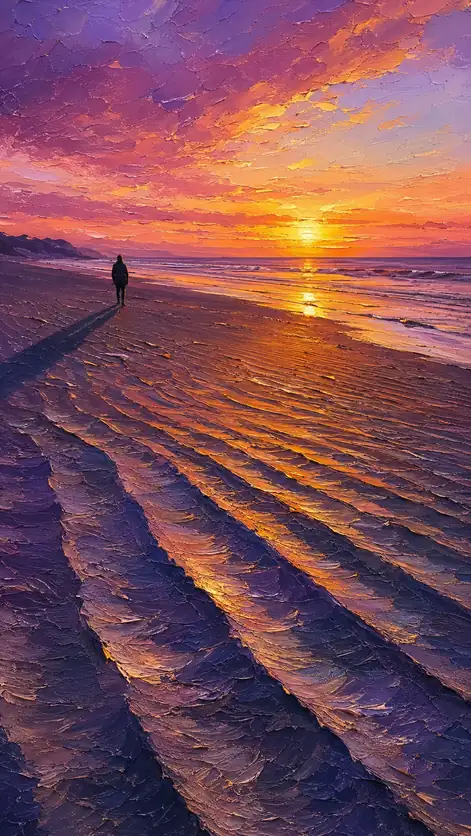 I Walked Home Through the Last Light
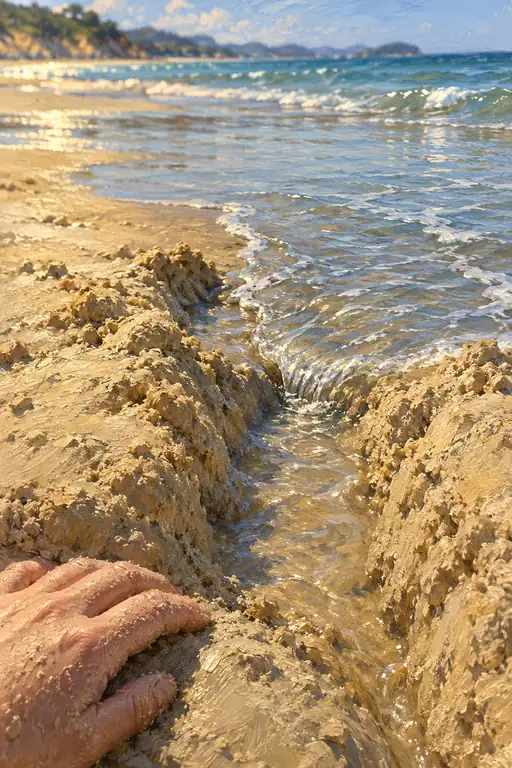 I Made a Path for the Sea
 The Pilgrim at the Edge of Light
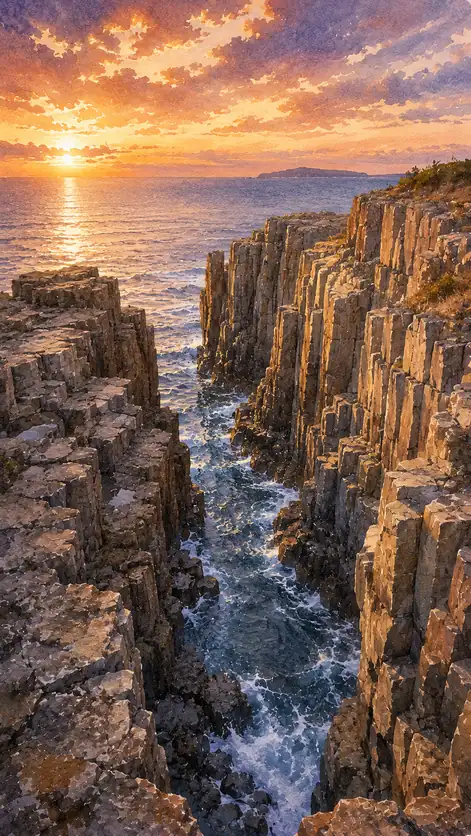 Tojinbo: The Sea Enters the Stone Cathedral
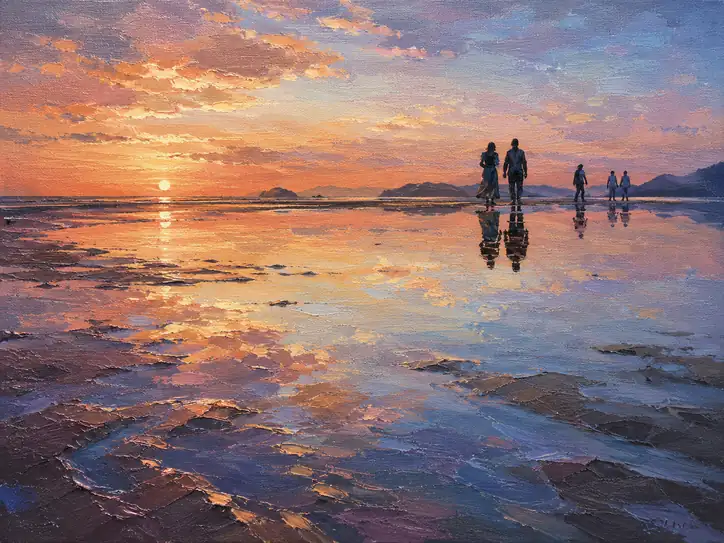 Eternal Refrains of the Golden Shore
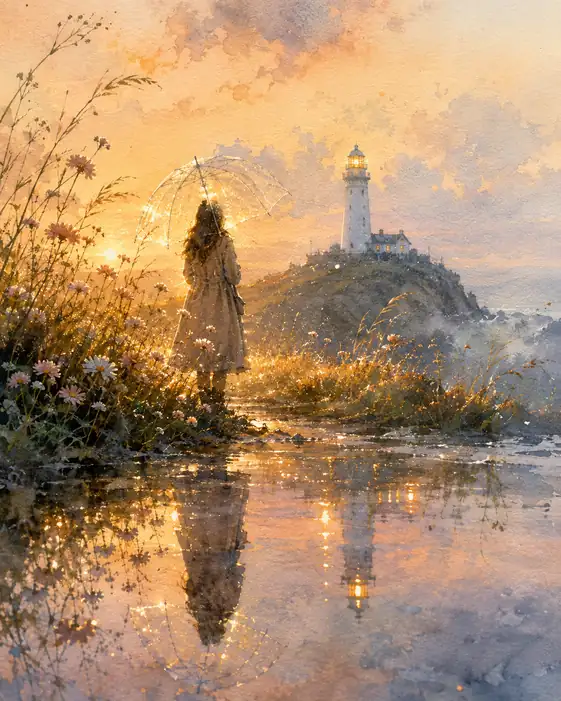 Golden Reflection toward the Lighthouse
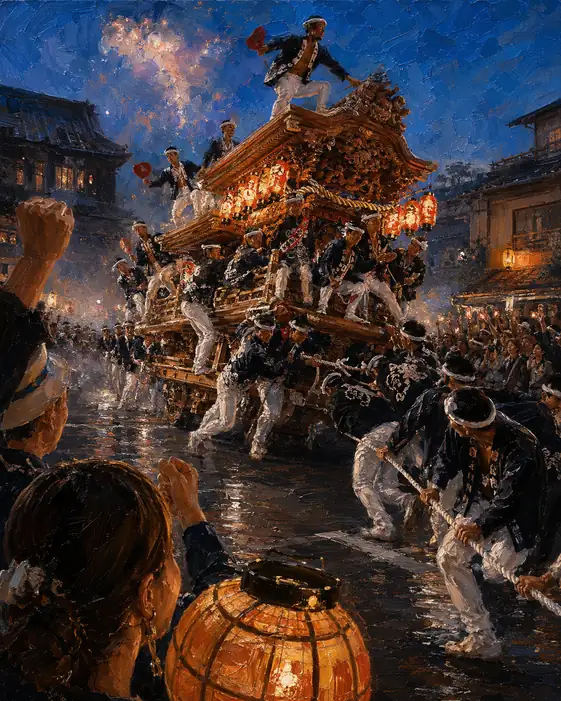 Pulling the Night into Festival Fire
 The Stairway Winter Cannot Silence
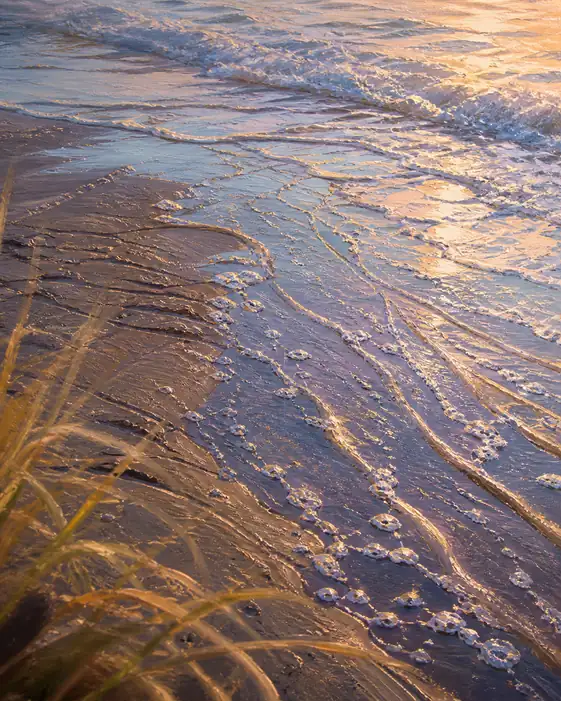 Golden Trace of the Receding Tide