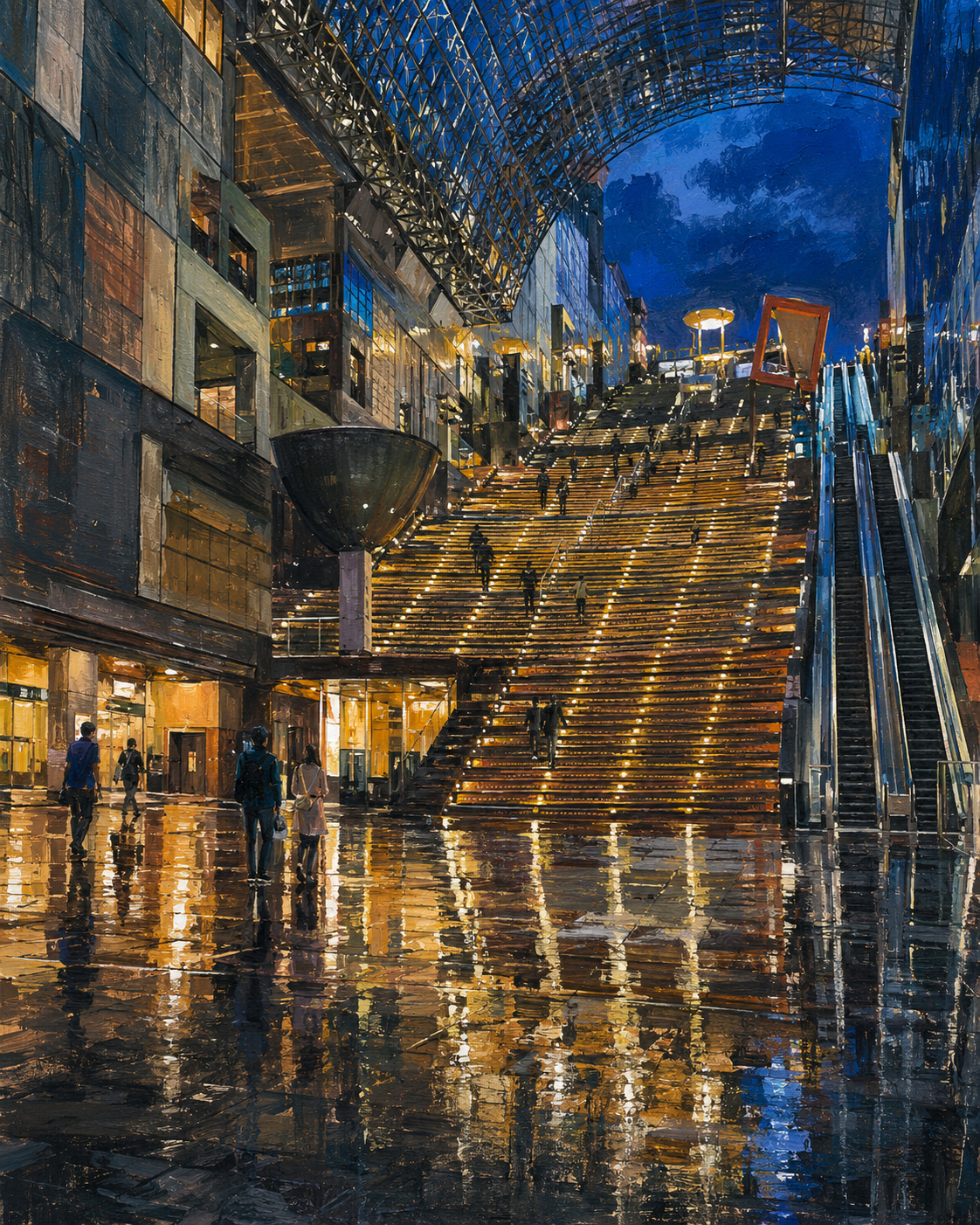
Rain Turns the City into Stars
Critique
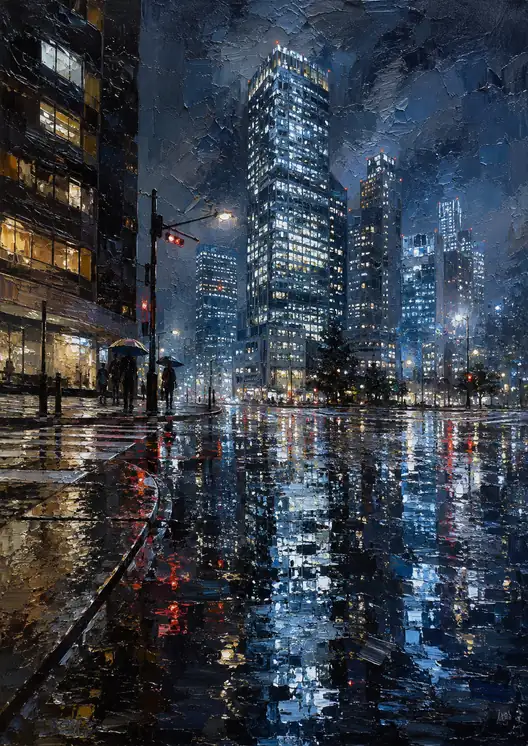
Introduction This painting presents a monumental station stairway after rain as a carefully ordered encounter between place, weather, and light. Its immediate appeal lies in the illuminated central steps, yet the image rewards slower attention to the way every surrounding element supports that emphasis. Description The composition places the illuminated central steps against a steel-and-glass urban atrium. In the lower area, mirrorlike wet pavement establishes a tactile entry into the scene, while smaller transitions of light and texture connect near space to the distance. The dominant palette of deep blue, amber, and steel gray remains varied without losing overall unity. Analysis Formally, stairs and escalators drive upward symmetrically. Changes in scale, edge sharpness, and atmospheric density clarify the recession, while controlled highlights establish visual priorities. The handling combines descriptive precision with visible, softened strokes, so surfaces remain legible without becoming mechanically detailed. Color contrast and repeated shapes further bind the separate zones into a coherent whole. Interpretation and Evaluation The scene can be read as an exploration of permanence and passing conditions: enduring forms are transformed by a brief state of weather or illumination. The drawing is convincing, the composition is purposeful, and the color relationships sustain a mood that is energetic and theatrical. Although the subject is recognizable, the selective emphasis and painterly surface give the treatment an individual character. Conclusion At first glance the work appears primarily scenic, but sustained viewing reveals a disciplined arrangement of direction, interval, and tonal weight. Its strongest achievement is the balance between accessible description and reflective atmosphere, allowing observation to develop into a measured sense of place.
Same Subcategory
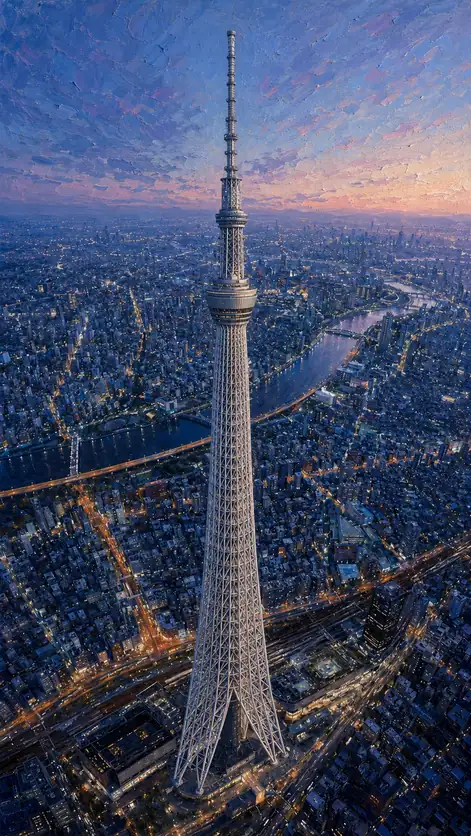 One White Coordinate at Dusk
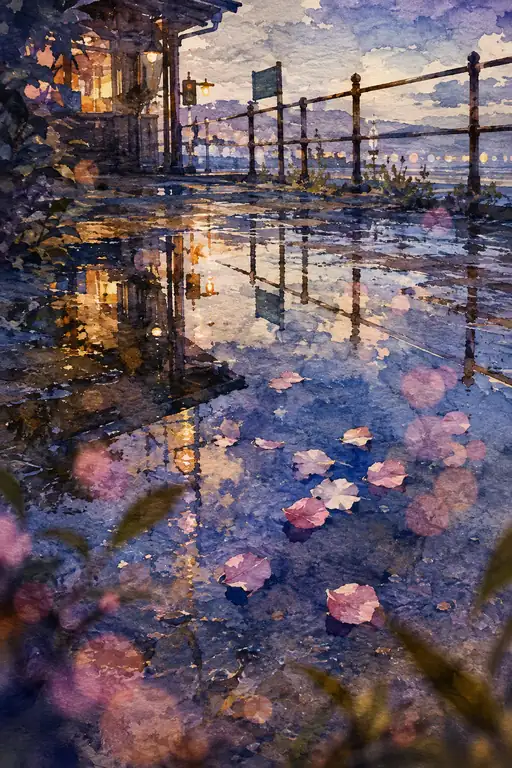 Petals Drift across the Station's Evening Mirror
Similar Artworks
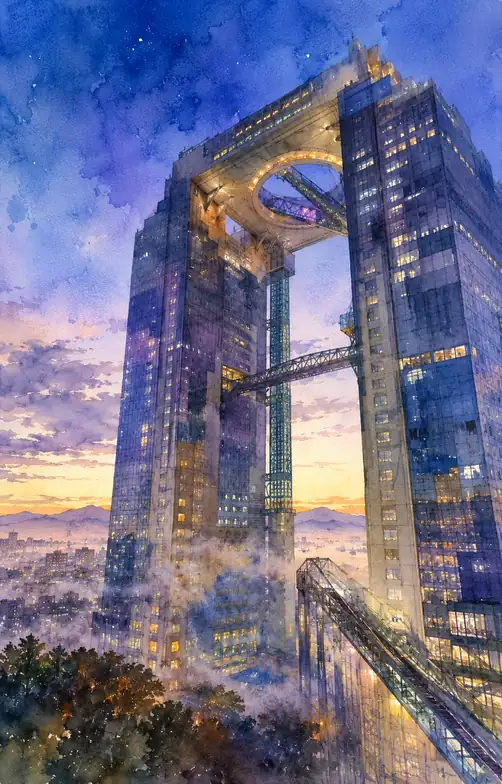 A Gate Raised for the Sky
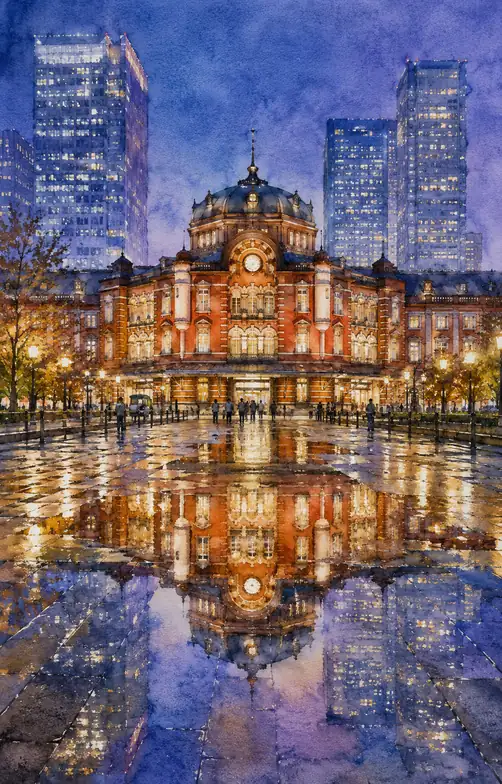 A Century of Light Beneath the Towers
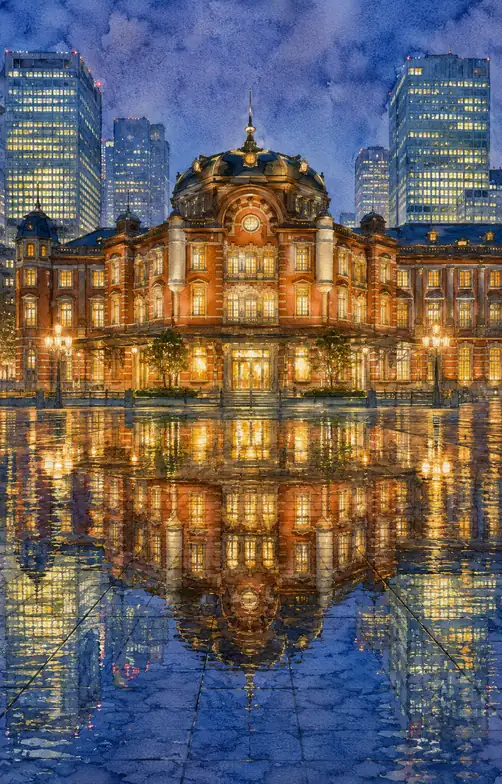 The Station Returns in the Water Mirror
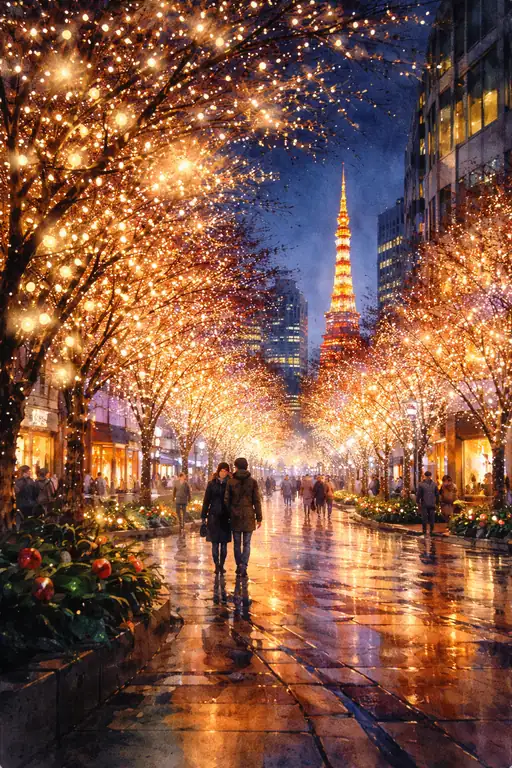 Golden Dreams Under the Crimson Tower
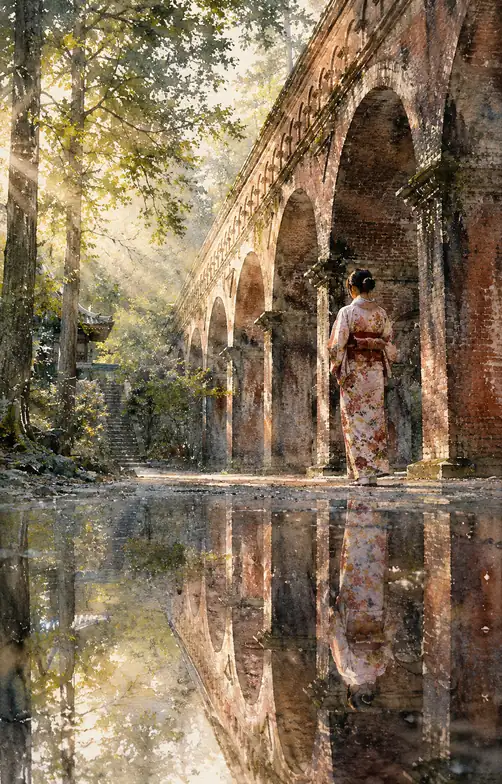 Her Reflection Walks Beside the Aqueduct
 When the City Dreamed in Gold
 Warmth Scattered on Cold Asphalt
 The Cathedral of Departures
 Echoes of Rain and Time
 Reflections of the Twilight Pulse