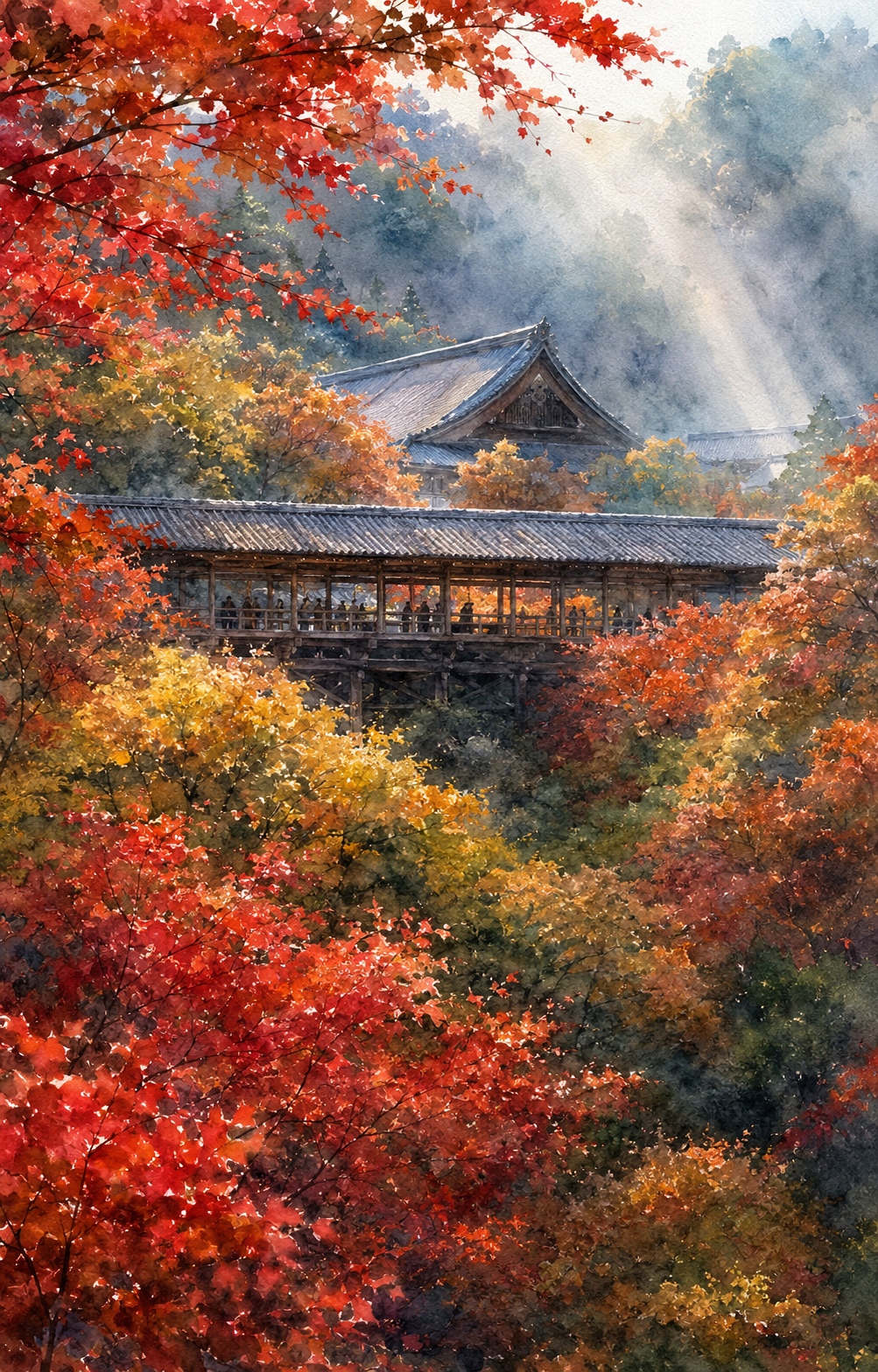
Autumn Builds a Bridge of Light
Critique
Introduction This painting presents a temple amid brilliant autumn maples as a carefully ordered encounter between place, weather, and light. Its immediate appeal lies in the dark roof within red foliage, yet the image rewards slower attention to the way every surrounding element supports that emphasis. Description The composition places the dark roof within red foliage against misty forested slopes. In the lower area, layered red and orange leaves establishes a tactile entry into the scene, while smaller transitions of light and texture connect near space to the distance. The dominant palette of scarlet, orange, charcoal, and pale blue remains varied without losing overall unity. Analysis Formally, foliage frames and partially conceals the building. Changes in scale, edge sharpness, and atmospheric density clarify the recession, while controlled highlights establish visual priorities. The handling combines descriptive precision with visible, softened strokes, so surfaces remain legible without becoming mechanically detailed. Color contrast and repeated shapes further bind the separate zones into a coherent whole. Interpretation and Evaluation The scene can be read as an exploration of permanence and passing conditions: enduring forms are transformed by a brief state of weather or illumination. The drawing is convincing, the composition is purposeful, and the color relationships sustain a mood that is rich and secluded. Although the subject is recognizable, the selective emphasis and painterly surface give the treatment an individual character. Conclusion At first glance the work appears primarily scenic, but sustained viewing reveals a disciplined arrangement of direction, interval, and tonal weight. Its strongest achievement is the balance between accessible description and reflective atmosphere, allowing observation to develop into a measured sense of place.
Same Subcategory
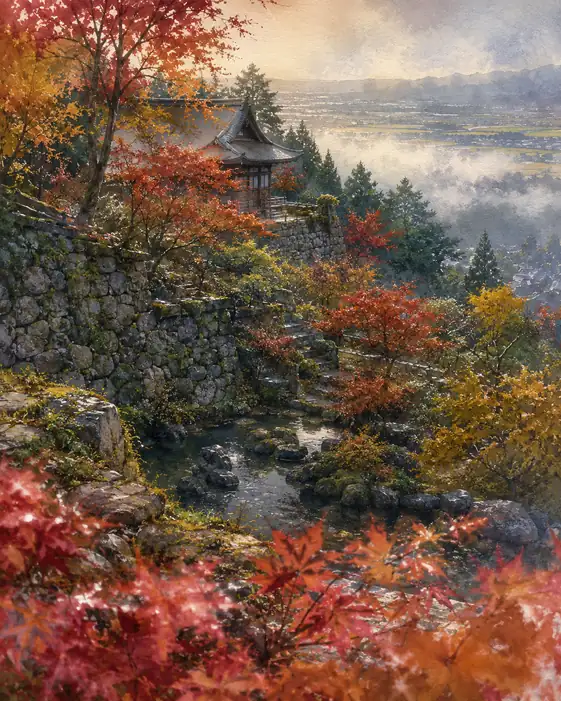 Autumn Keeps the Island's Prayer
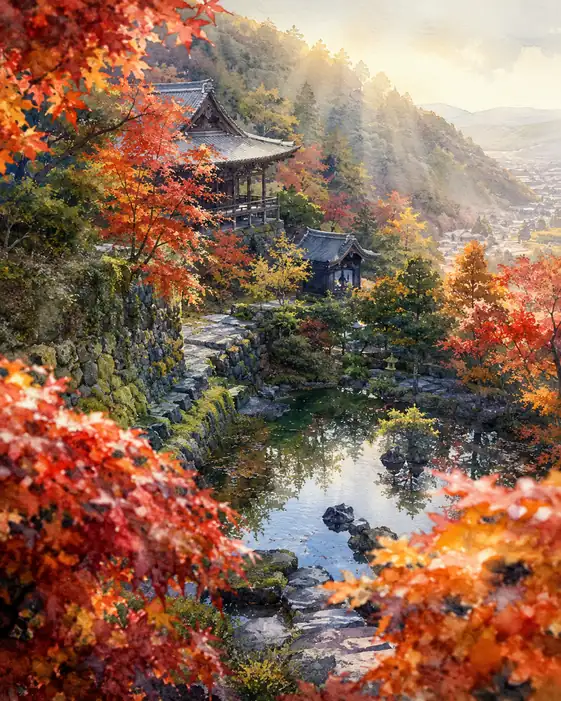 Autumn Encircles the House of Silence
Similar Artworks
 Stone Spire Wearing Autumn Fire
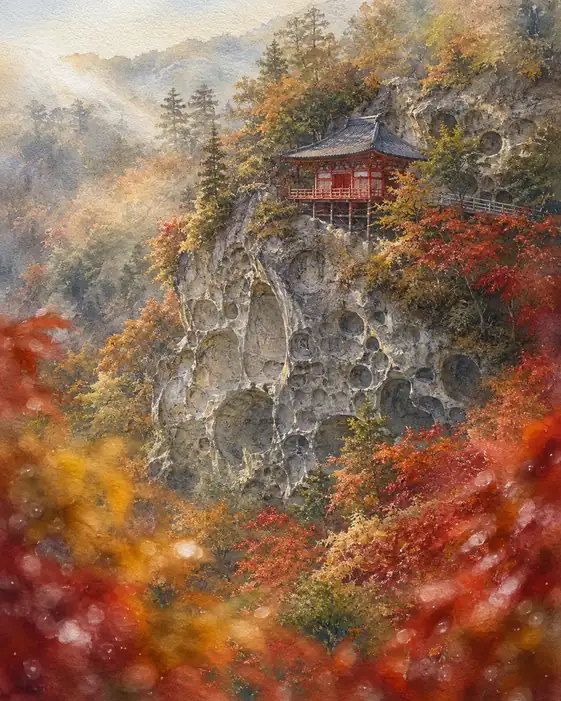 The Shrine Where Mountains Exhale
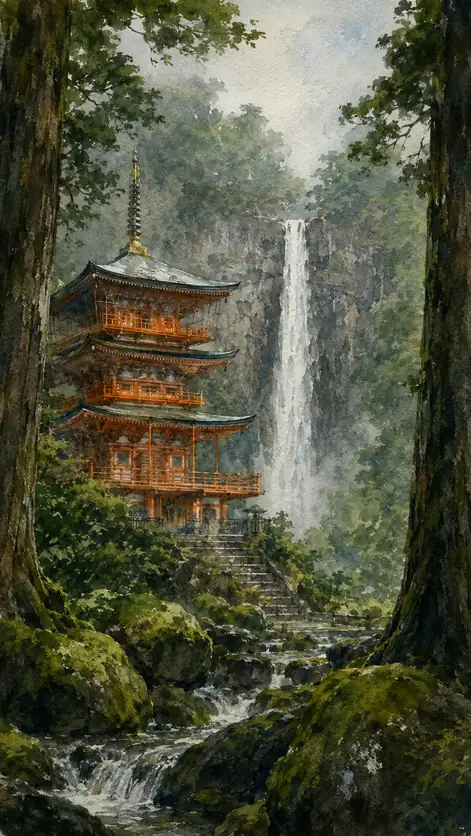 The Red Pagoda Measures the Waterfall
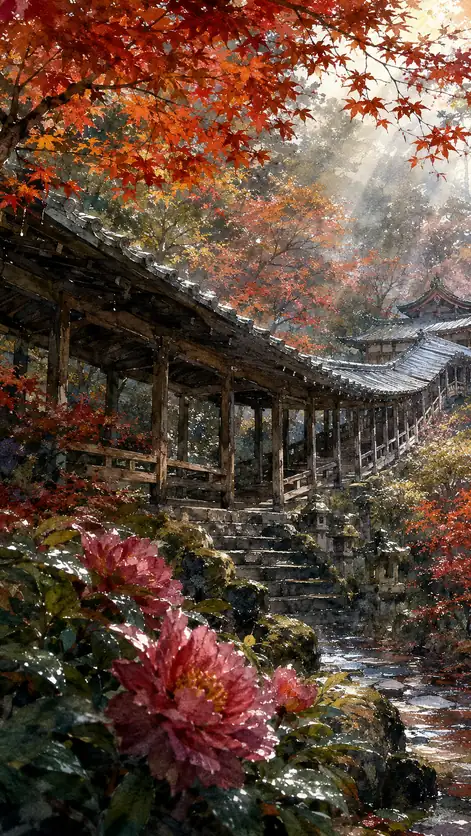 Autumn Bends Toward the Inner Hall
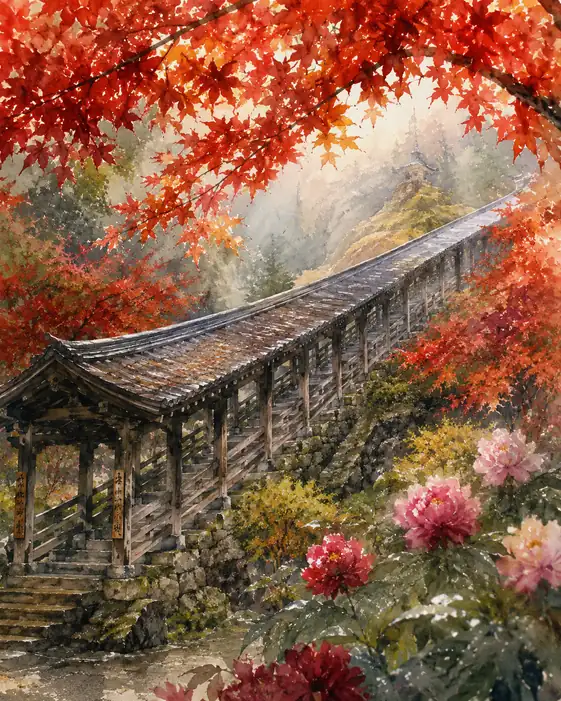 The Long Roof Carries Autumn Uphill
 She Climbs Between Autumn and Bloom
 The Warmth of Prayer in the Misty Gorge
 Sanctuary Above the Roaring Void
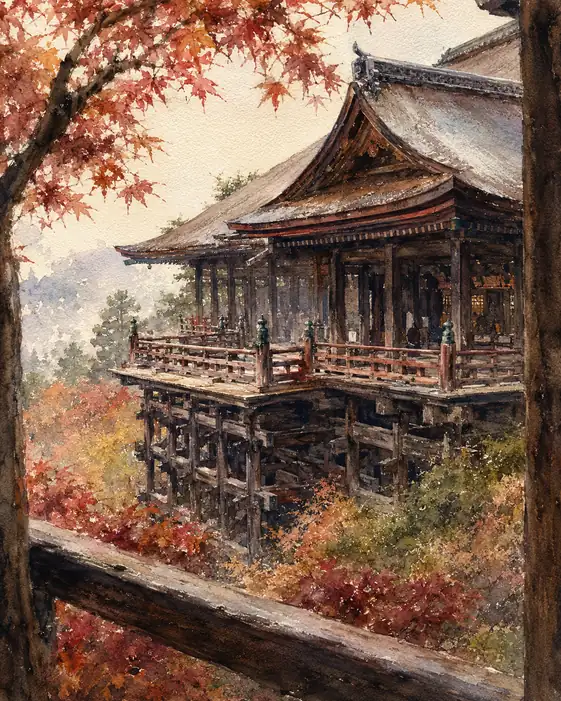 Where the Autumn Wind Rests
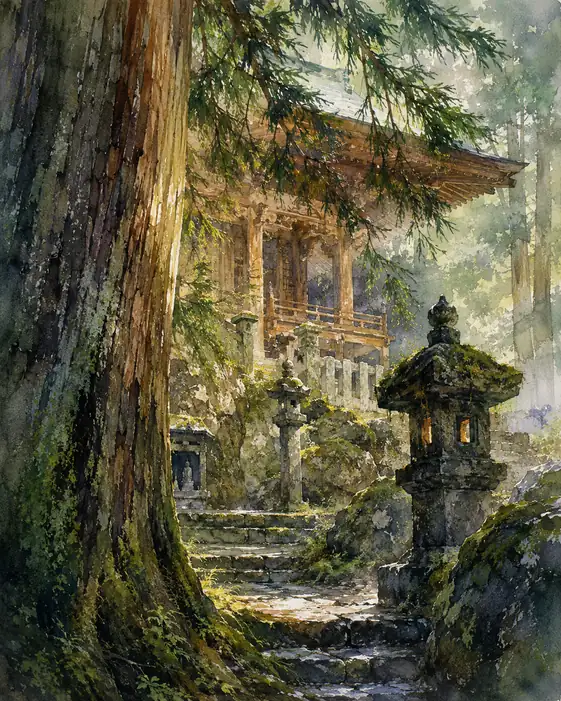 Sanctuary of the Ancient Cedars