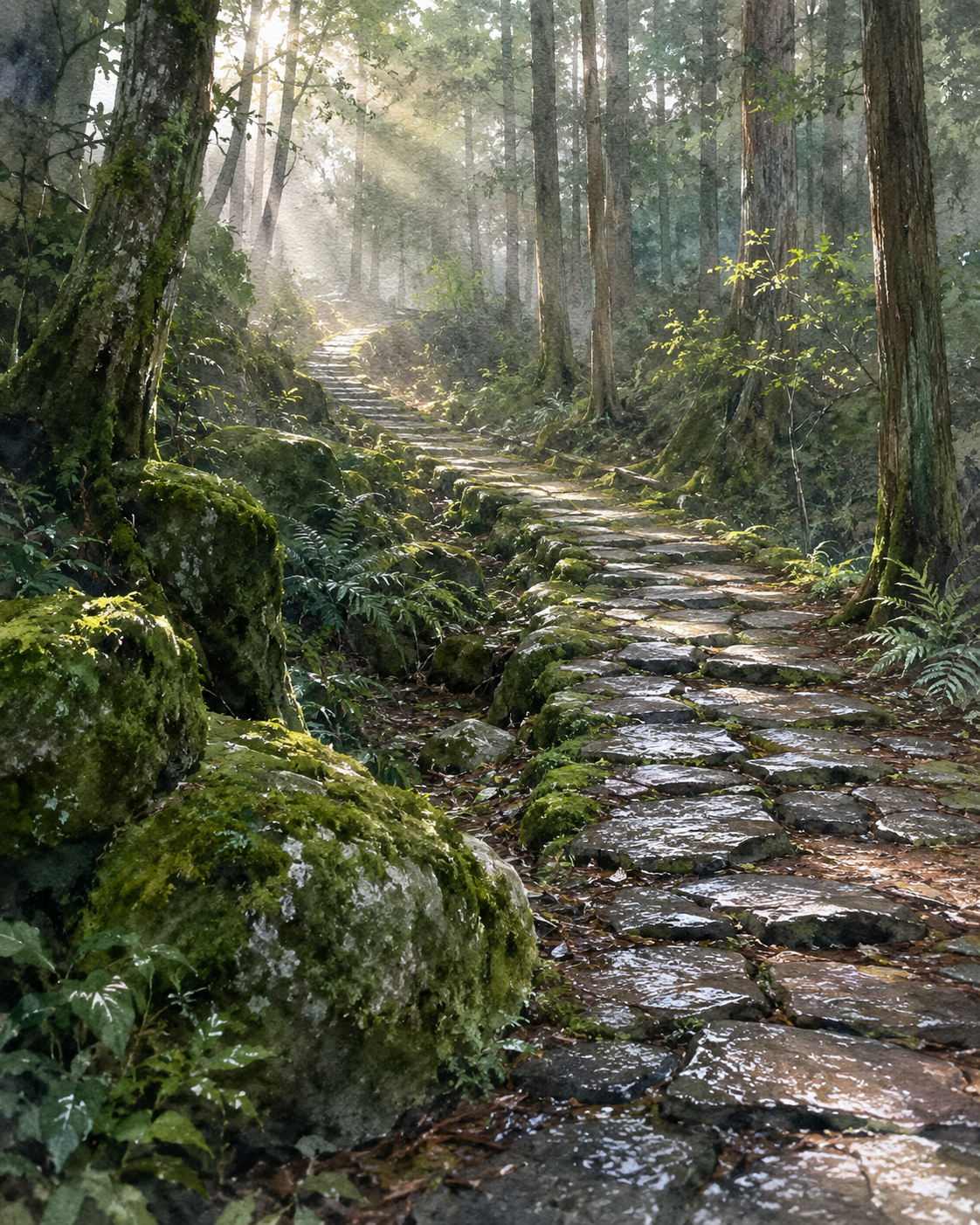
Footsteps Toward the Sacred Light
Critique
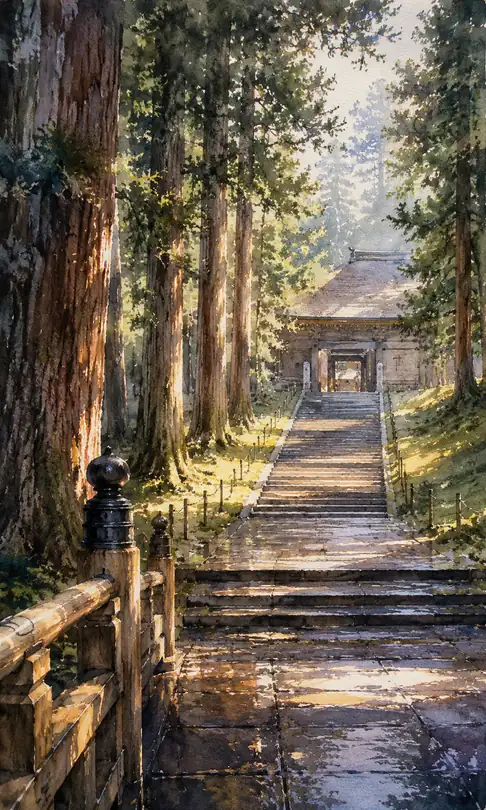
Introduction This painting presents 杉林を上る苔むした石段 as a carefully ordered encounter between place, atmosphere, and human perception. The principal focus is 奥へ曲がりながら続く参道, while the scene avoids anecdotal detail and establishes its subject through visible form. Description The image includes 巨木、濡れた石、苔、霧、差し込む光. Its arrangement uses 石段の曲線を中央奥へ導き、垂直な杉を左右に反復する構成. These elements move from foreground to distance with enough separation to keep the main motif legible. Analysis The palette of 深緑、苔の黄緑、石の灰色、淡い金 gives the scene a coherent visual temperature. 樹間の光束が霧を可視化し、濡れた石を部分的に輝かせる光 models surfaces, clarifies depth, and creates measured accents without dissolving structural detail. Repeated edges and directional lines guide the eye, while changes in scale make the depicted space convincing. The controlled balance of sharp passages and softer atmosphere demonstrates assured technique. Interpretation and Evaluation The work may be read as 長い時間を刻む森林と参詣者の歩みを重ね合わせる情景. Its descriptive power rests on recognizable textures, but the composition does more than record a location: it selects and organizes the view into a sustained rhythm. Color is expressive yet disciplined, and the handling of light gives familiar scenery an individual character. The image's originality lies in joining observational clarity with a heightened, painterly atmosphere. Conclusion What first appears to be an attractive scenic view gradually reveals a deliberate study of distance, light, and spatial transition. Through balanced composition, controlled color, and attentive technique, the painting turns a specific motif into a calm and memorable visual experience.
Same Subcategory
 Each Light Knows the Way
 Lanterns Climb Through Winter
Similar Artworks
 The Stairway between Two Silences
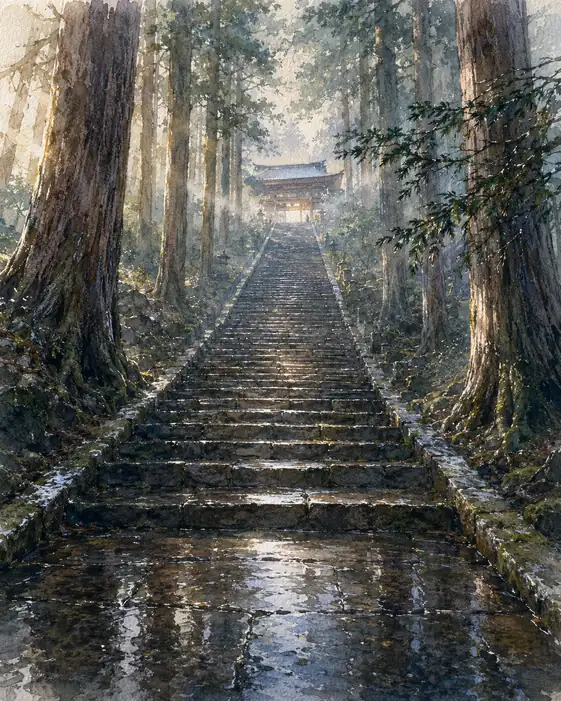 Steps Rising through Cedar Silence
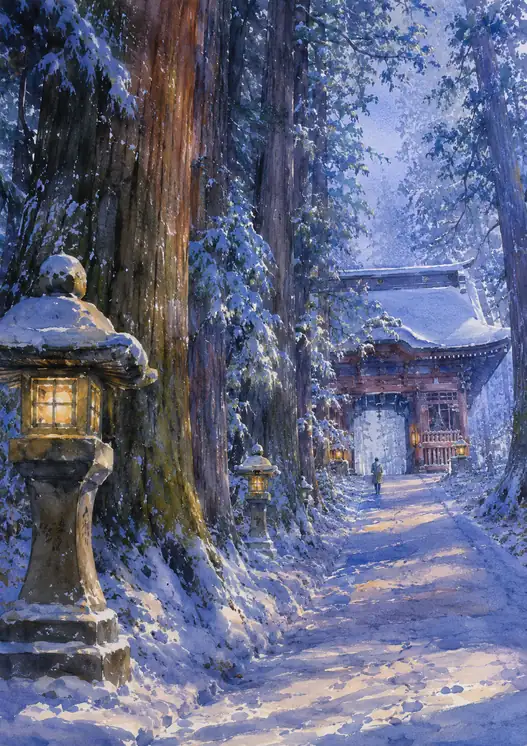 One Footstep Through the Blue Silence
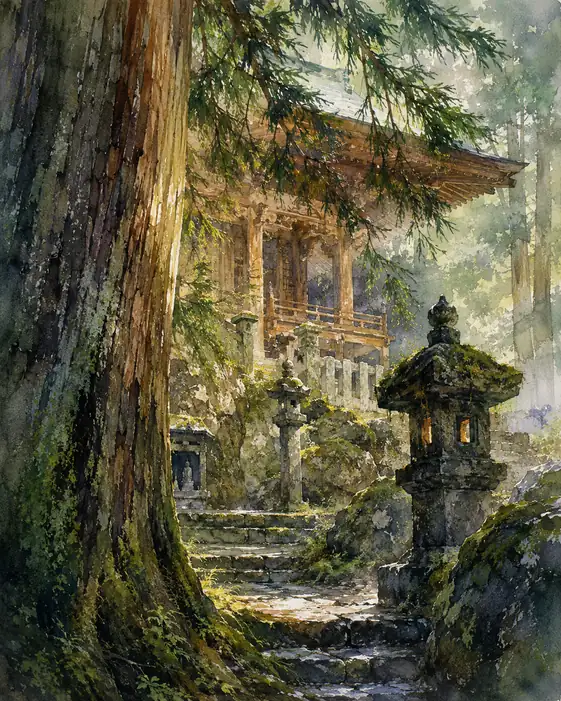 Sanctuary of the Ancient Cedars
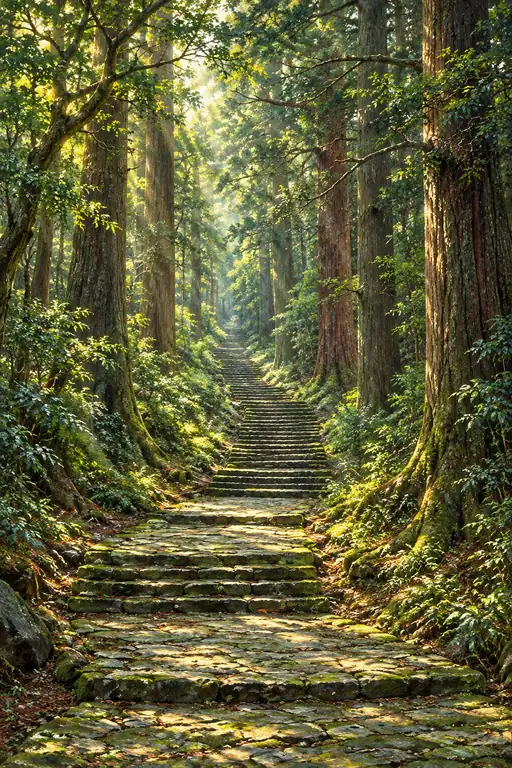 I Climb into the Listening Light
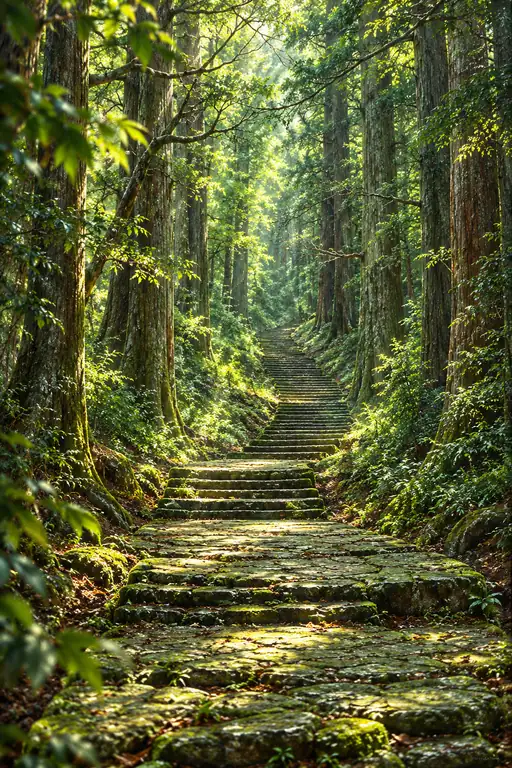 The Years Beneath My Feet
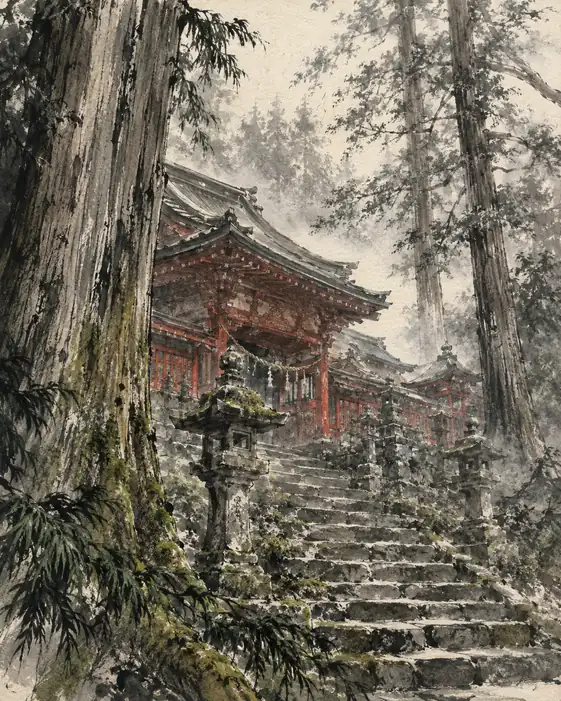 Threshold of the Ancient Silence
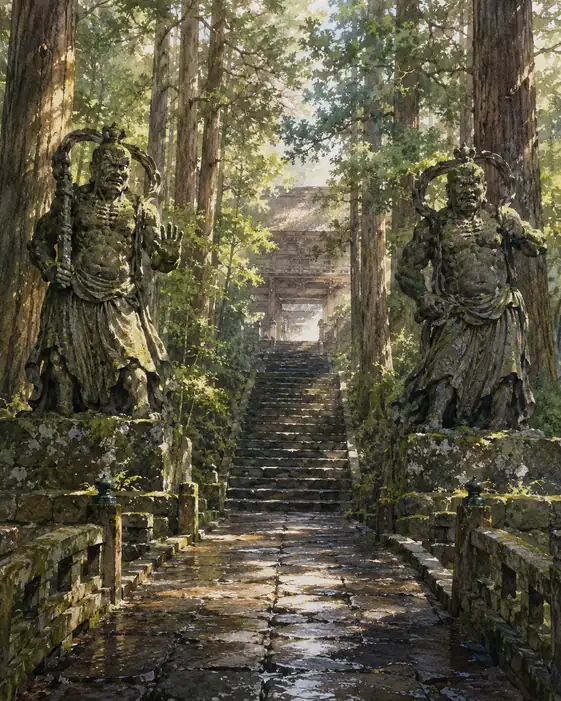 Two Guardians Hold Back Time
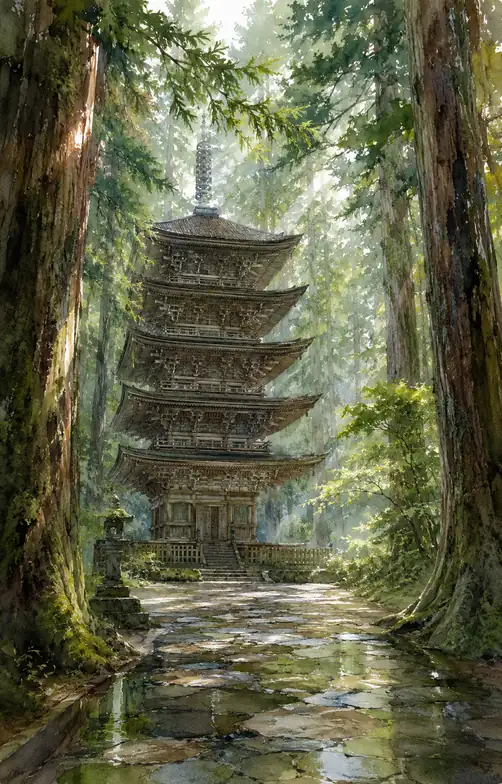 The Pagoda Sleeps in Cedar Time
 Pathway of Sacred Sunbeams