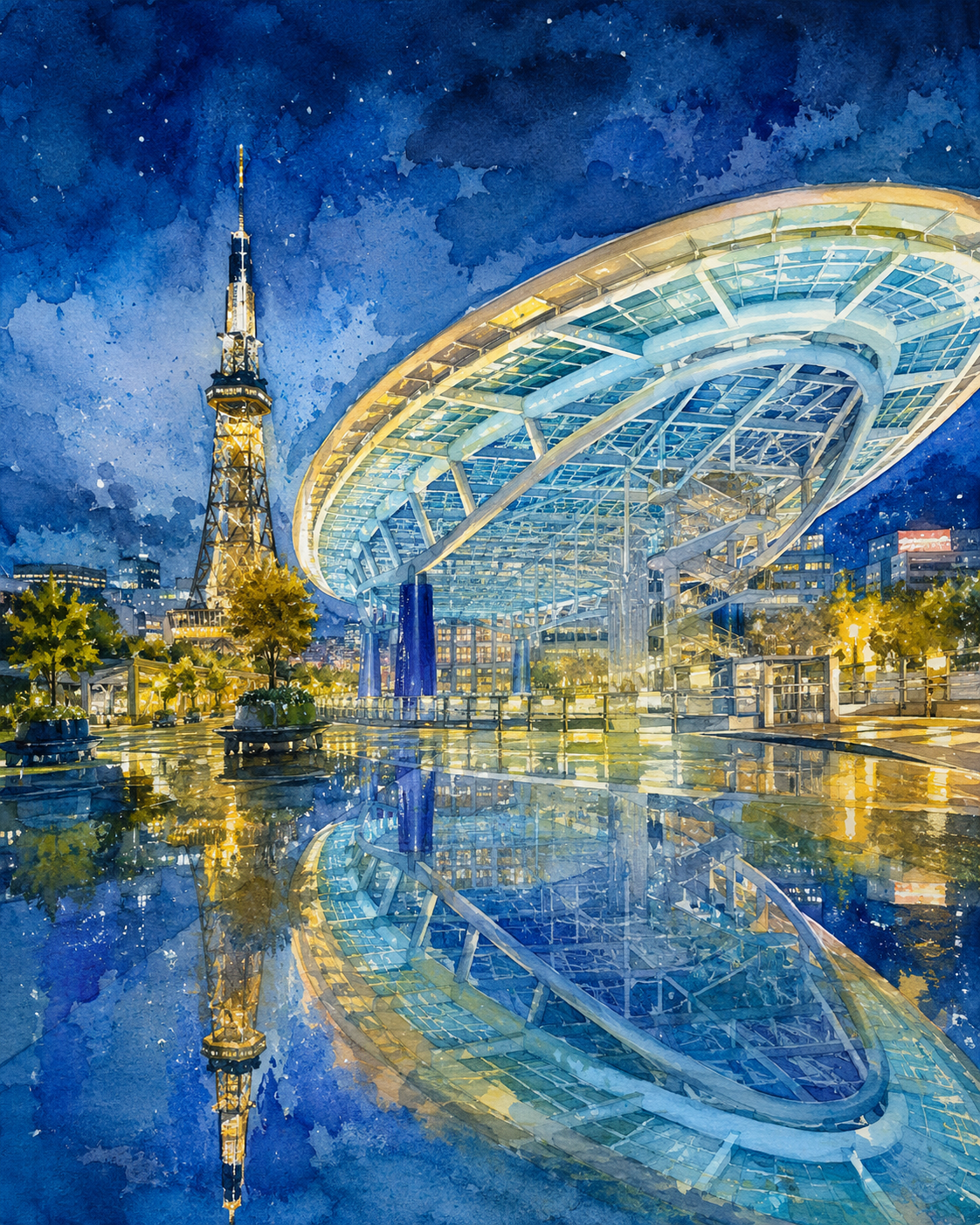
The City Dreams in Double
Critique
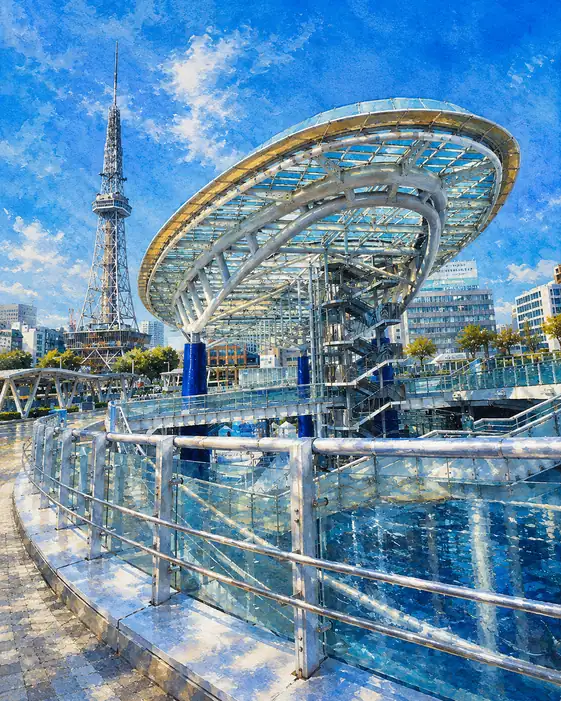
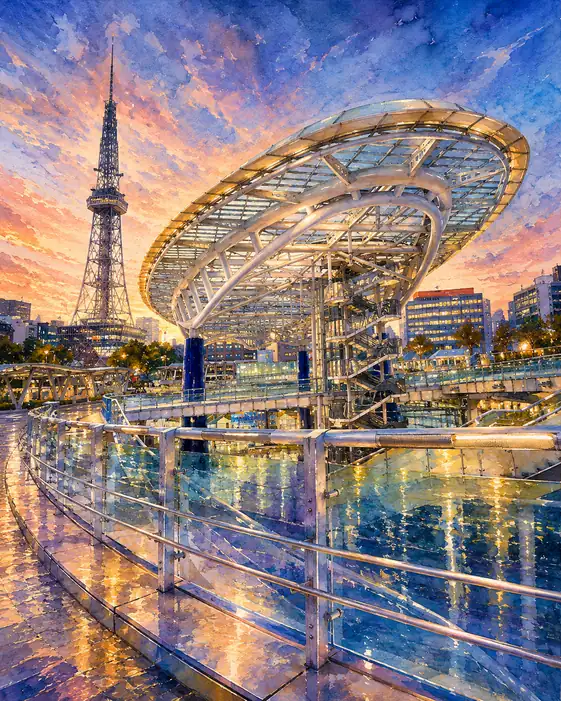
Introduction This painting presents 夜のガラス建築 as a carefully ordered encounter between place, atmosphere, and human perception. The principal focus is 湾曲する大屋根と塔, while the scene avoids anecdotal detail and establishes its subject through visible form. Description The image includes 濡れた広場、鉄骨、都市灯. Its arrangement uses 屋根の弧と鏡面反射を大きく上下に重ねる構成. These elements move from foreground to distance with enough separation to keep the main motif legible. Analysis The palette of 群青、黄、白 gives the scene a coherent visual temperature. 人工照明が濡れた床に鮮明な像を作る光 models surfaces, clarifies depth, and creates measured accents without dissolving structural detail. Repeated edges and directional lines guide the eye, while changes in scale make the depicted space convincing. The controlled balance of sharp passages and softer atmosphere demonstrates assured technique. Interpretation and Evaluation The work may be read as 現代都市の構造美を透明感とともに示す情景. Its descriptive power rests on recognizable textures, but the composition does more than record a location: it selects and organizes the view into a sustained rhythm. Color is expressive yet disciplined, and the handling of light gives familiar scenery an individual character. The image's originality lies in joining observational clarity with a heightened, painterly atmosphere. Conclusion What first appears to be an attractive scenic view gradually reveals a deliberate study of distance, light, and spatial transition. Through balanced composition, controlled color, and attentive technique, the painting turns a specific motif into a calm and memorable visual experience.
Same Subcategory
 Tomorrow Blooms in the Rain Mirror
Similar Artworks
 Two Clocks Holding the Sunset
 Two Towers Hold the Sunset
 Climbing Through Broken Rainbows
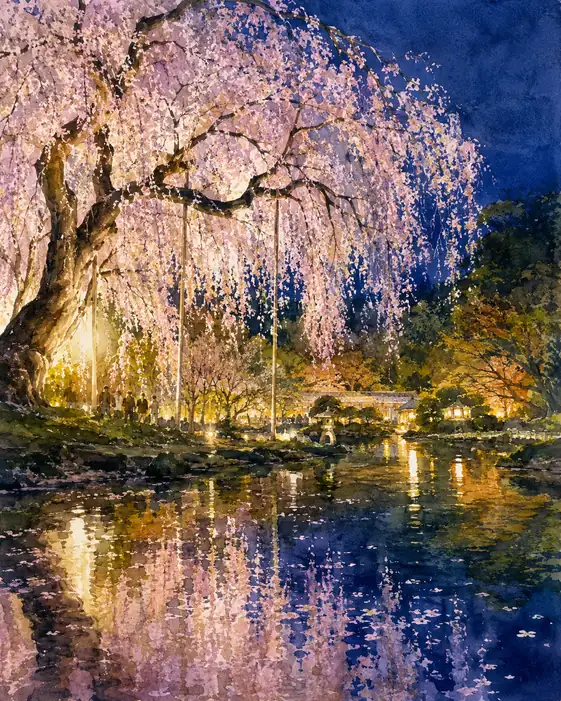 The Cherry Tree Remembers the Night
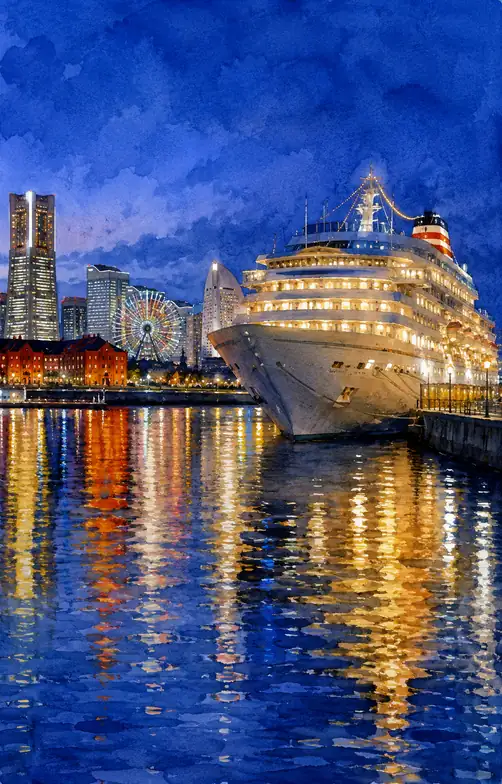 A Ship's Whistle Across a Century of Blue
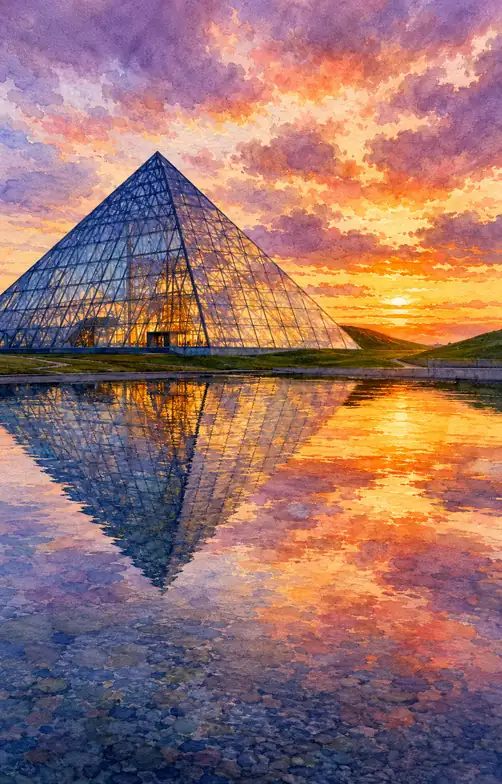 The Sky Enters the Glass and Doubles
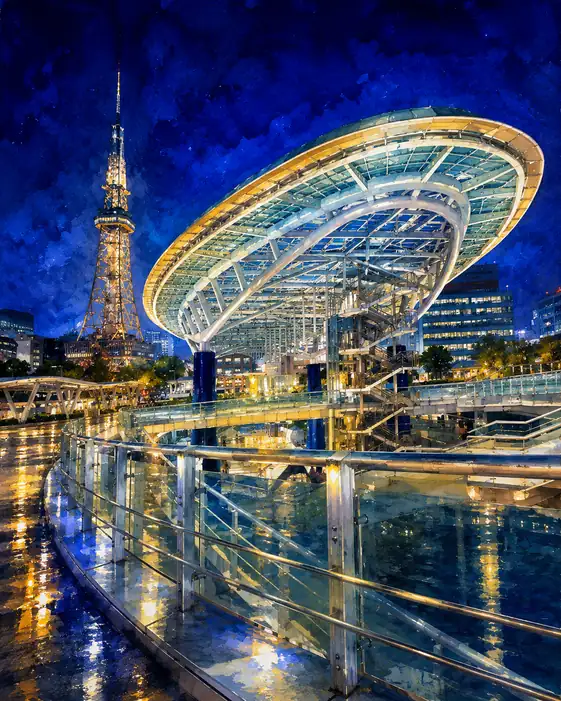 Yesterday's Future, Tonight's Cosmos
 The Sky Descends the Spiral Stair
 Twilight Sailing Beneath the Tower
 The Night's Mechanical Constellation