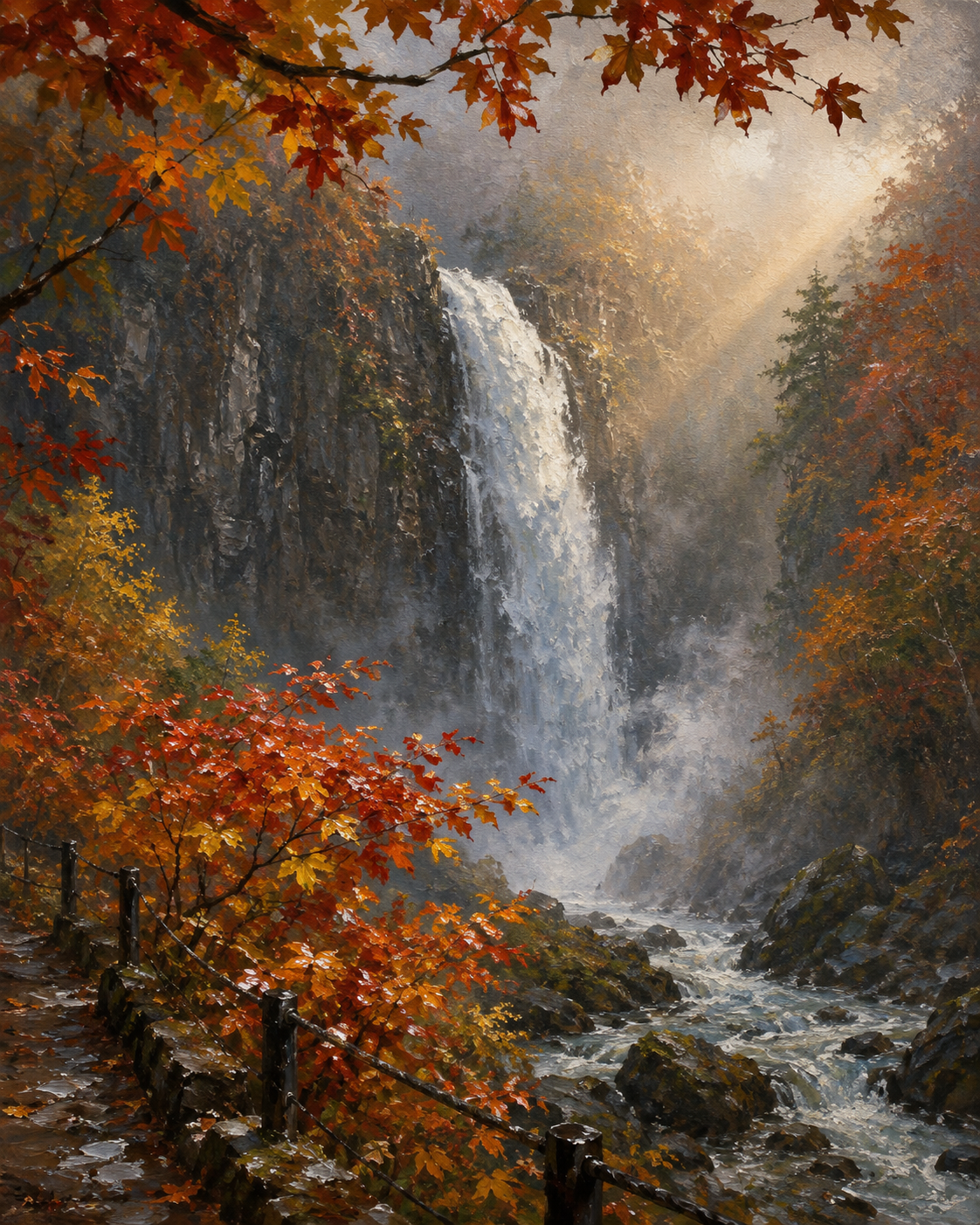
Autumn Listens to the Falling Thunder
Critique
Introduction This painting presents 紅葉の大瀑布 as a carefully ordered encounter between place, atmosphere, and human perception. The principal focus is 中央を落ちる幅広い滝, while the scene avoids anecdotal detail and establishes its subject through visible form. Description The image includes 赤い枝、岩、渓流、霧. Its arrangement uses 左右の紅葉で滝を囲み、流れを下端へ続ける構成. These elements move from foreground to distance with enough separation to keep the main motif legible. Analysis The palette of 朱、橙、白、深緑 gives the scene a coherent visual temperature. 斜光が水煙を明るく透かす光 models surfaces, clarifies depth, and creates measured accents without dissolving structural detail. Repeated edges and directional lines guide the eye, while changes in scale make the depicted space convincing. The controlled balance of sharp passages and softer atmosphere demonstrates assured technique. Interpretation and Evaluation The work may be read as 激しい水の運動と秋の静かな色を対照させる情景. Its descriptive power rests on recognizable textures, but the composition does more than record a location: it selects and organizes the view into a sustained rhythm. Color is expressive yet disciplined, and the handling of light gives familiar scenery an individual character. The image's originality lies in joining observational clarity with a heightened, painterly atmosphere. Conclusion What first appears to be an attractive scenic view gradually reveals a deliberate study of distance, light, and spatial transition. Through balanced composition, controlled color, and attentive technique, the painting turns a specific motif into a calm and memorable visual experience.
Same Subcategory
 A Thousand Threads, One River
Similar Artworks
 A White Voice Through Crimson
 A Bridge Before the Roaring White
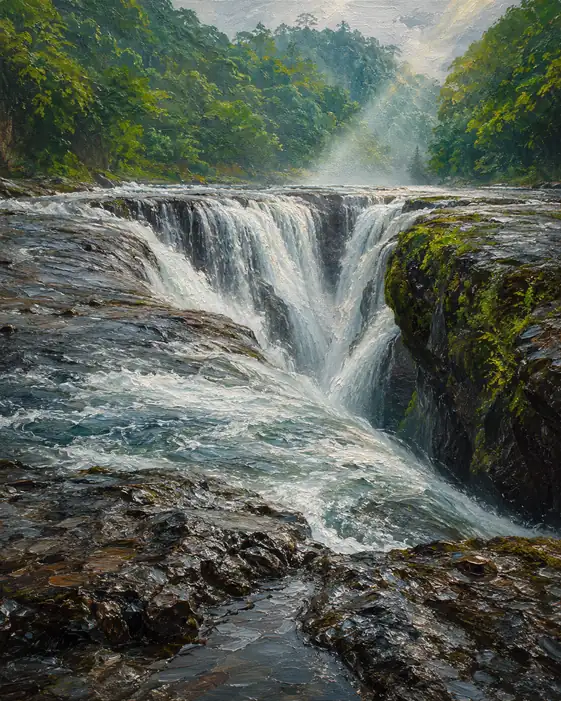 Water Vanishes into Stone
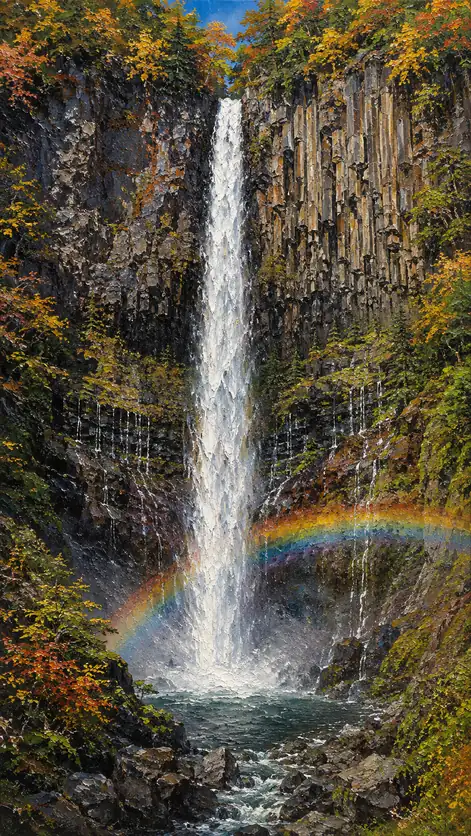 The Rainbow Born from Falling Water
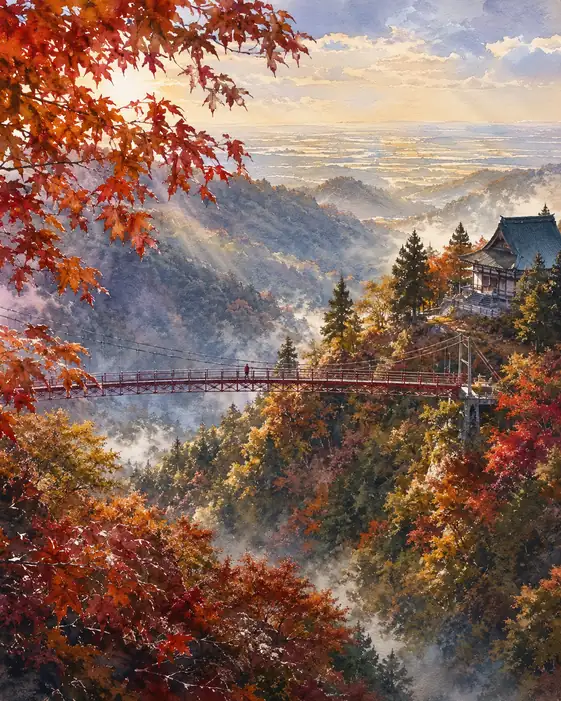 A Red Thread Across the Valley
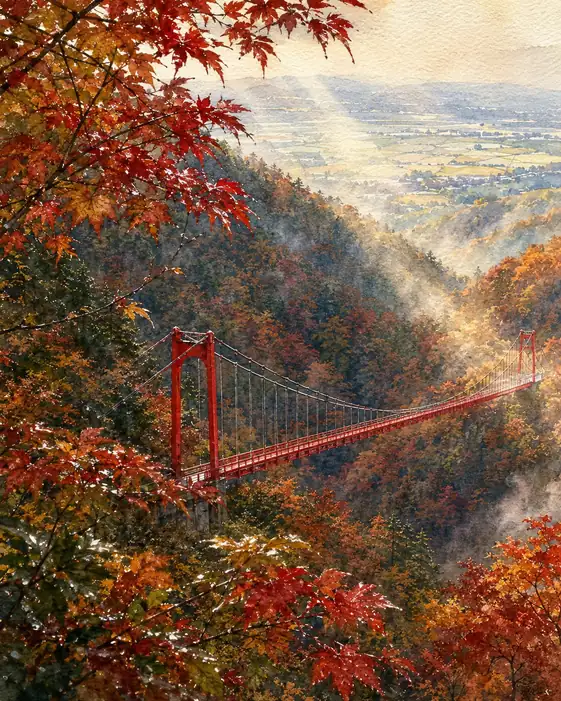 The Red Span Beyond the Mist
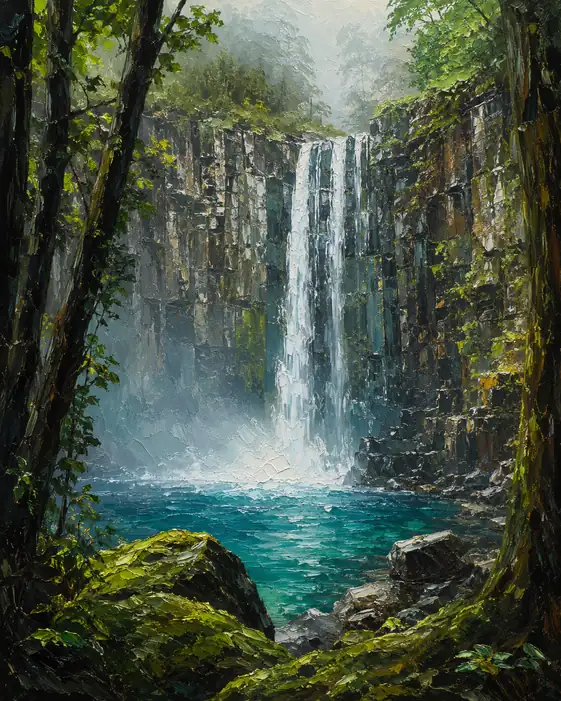 The Forest Keeps a Turquoise Secret
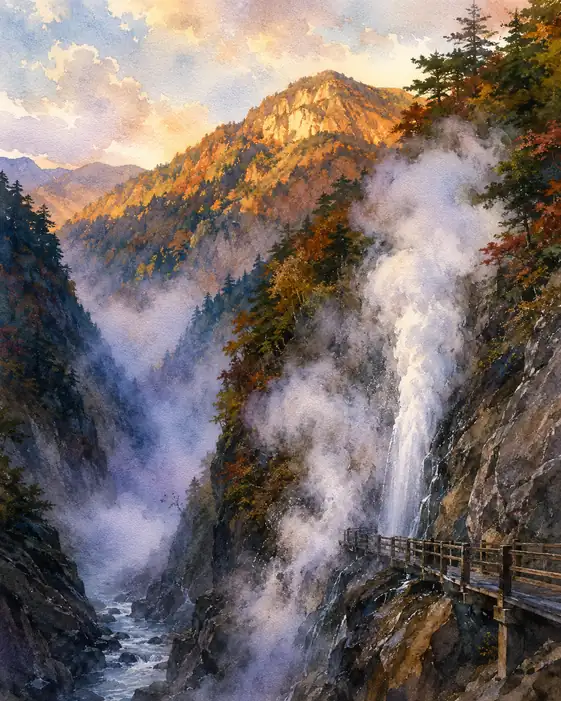 What Falls Returns as Sky
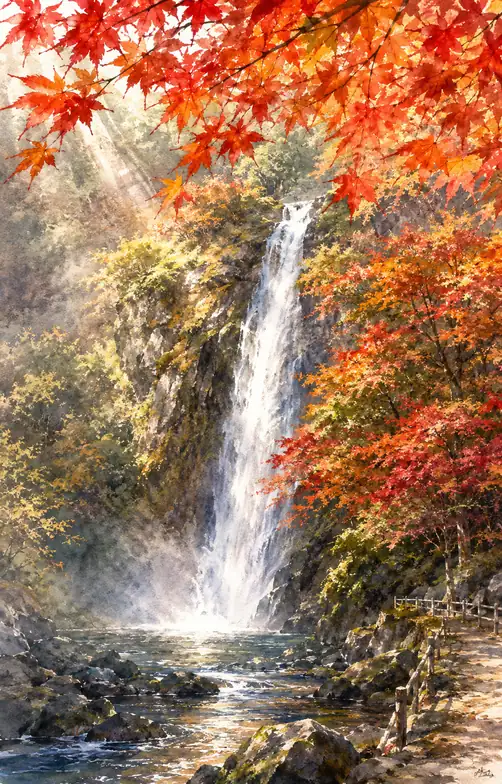 White Thunder Through Autumn
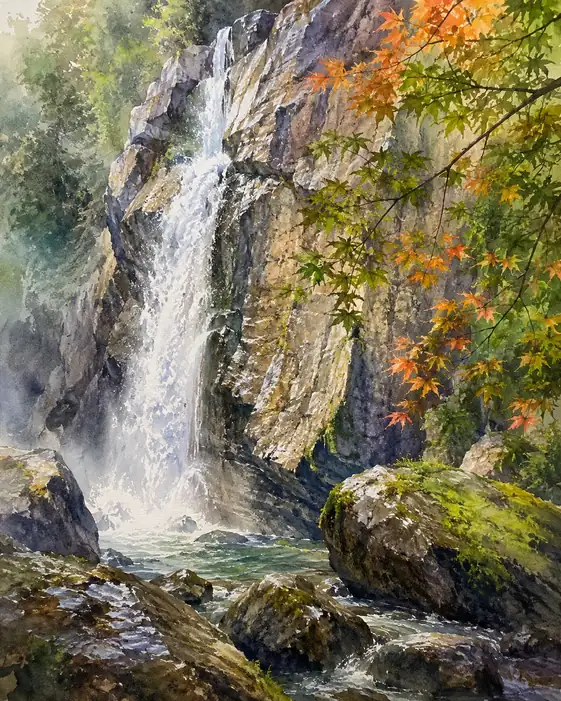 Autumn Whispers Through the Mist