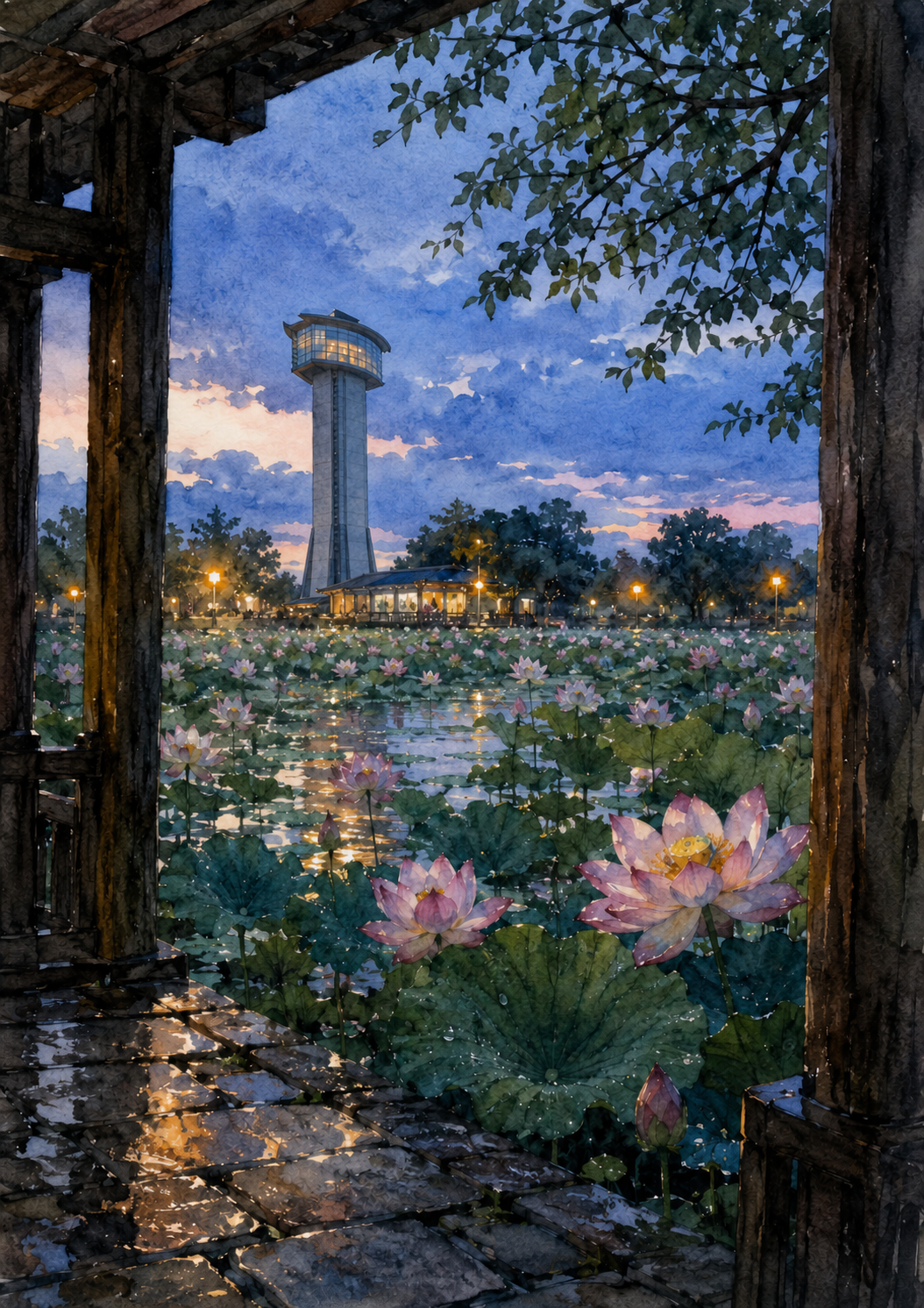
Lotus Light Beyond the Old Gate
Critique
Introduction This painting presents a lotus pond at twilight, viewed through the dark remains of a wooden structure. An illuminated observation tower rises beyond the water, while pink blossoms and broad leaves fill the foreground. The work combines a landscape with weathered architecture to create a layered image of continuity and change. Description Heavy posts, beams, and broken flooring frame the scene on three sides. Overhanging branches cross the blue evening sky, and scattered lamps trace the far shore. The tower stands left of center above a low pavilion. Lotus flowers appear at different stages, from closed buds to open blooms. Analysis The dark wooden frame establishes strong depth and directs attention toward the luminous distance. Its irregular verticals contrast with the tower's clean geometry, while the rounded leaves and blossoms soften both structures. Cool blues dominate the sky and water; warm lamps and pink flowers provide measured accents. Repeated highlights connect wet boards, pond reflections, and petals. Dense, tactile brushwork unifies the many surfaces without flattening their spatial order. Interpretation and Evaluation The weathered threshold may be read as a record of time, set against flowers that renew across the pond. The tower introduces modern vertical ambition, yet it remains balanced by the horizontal water and abundant plant life. The composition is inventive, the color design is controlled, and the rendering of moisture and evening light is persuasive. The contrast of decay, cultivation, and illumination gives the scene interpretive depth. Conclusion What first appears to be a picturesque lotus garden gradually becomes a meditation on different forms of endurance. Through layered framing, coherent color, and detailed technique, the painting holds natural renewal and built history in a productive balance.
Same Subcategory
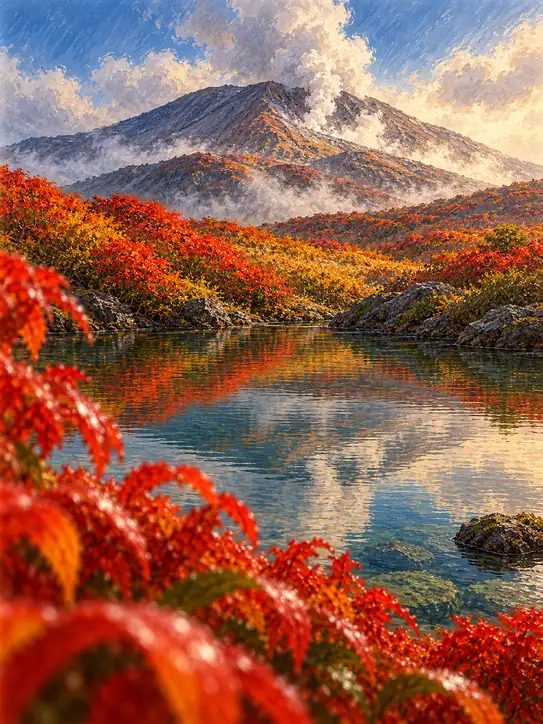 The Mountain Breathes Through Autumn
Similar Artworks
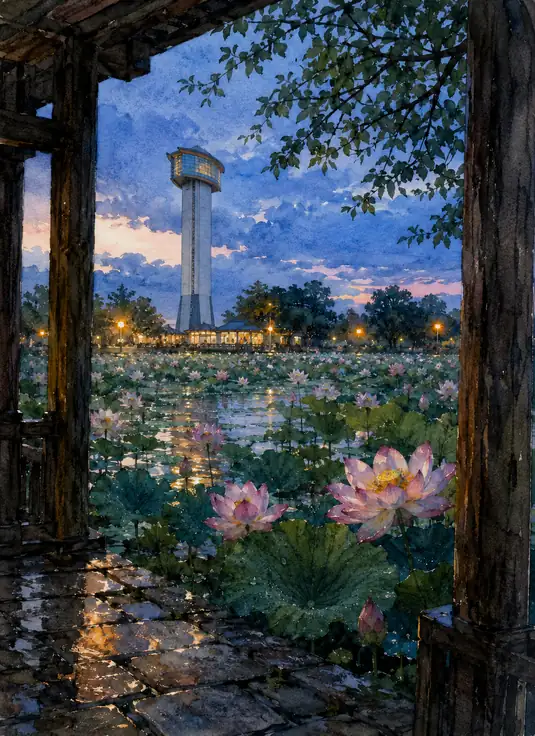 Dawn Blooms in a Thousand-Year Dream
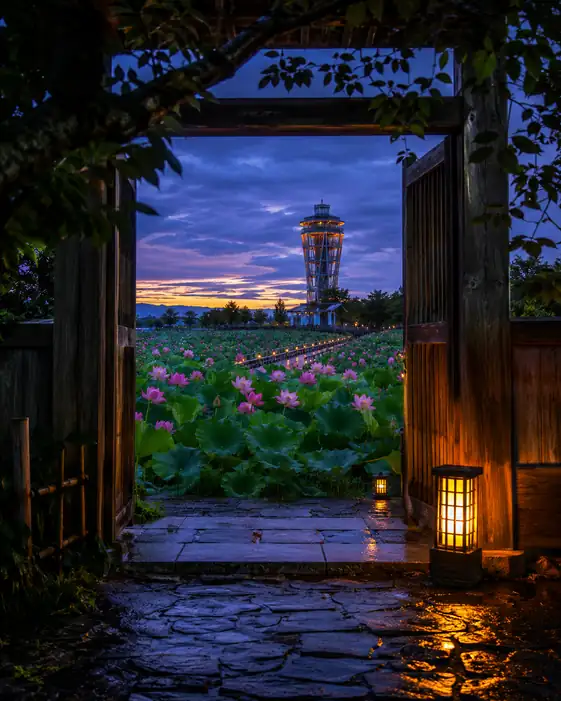 A Lantern Opens onto Lotus Dusk
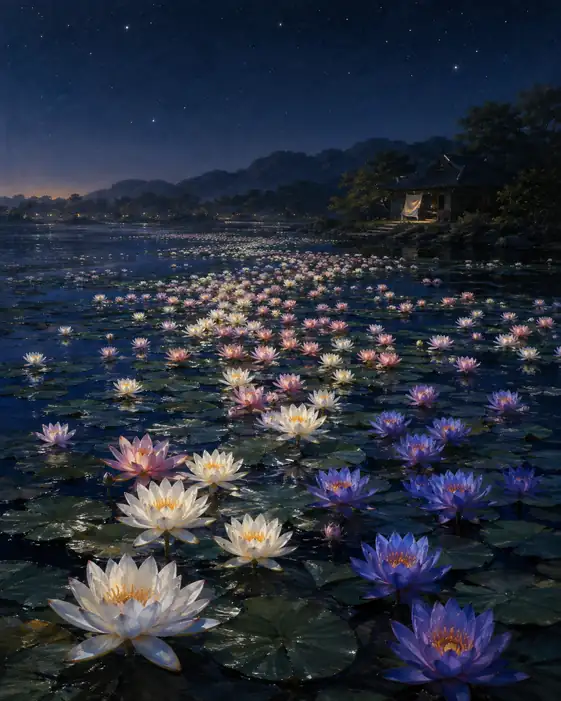 Moonlight Haven and the River of Lilies
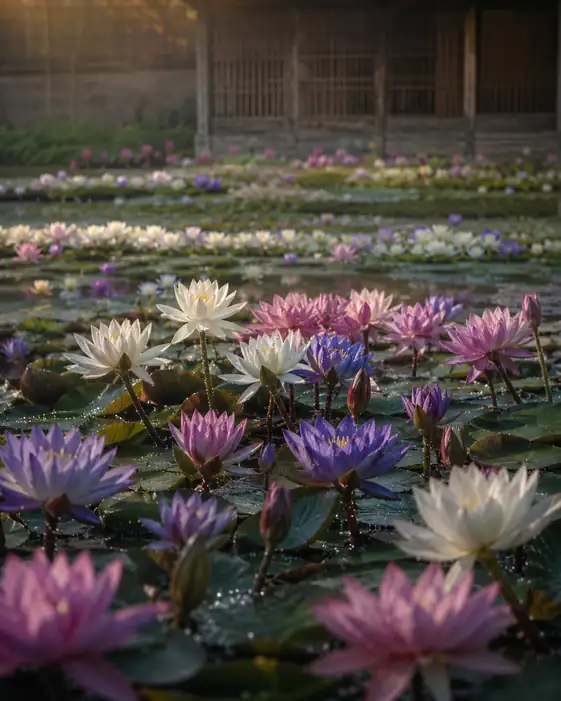 Morning Radiance over the Lily Pavilion
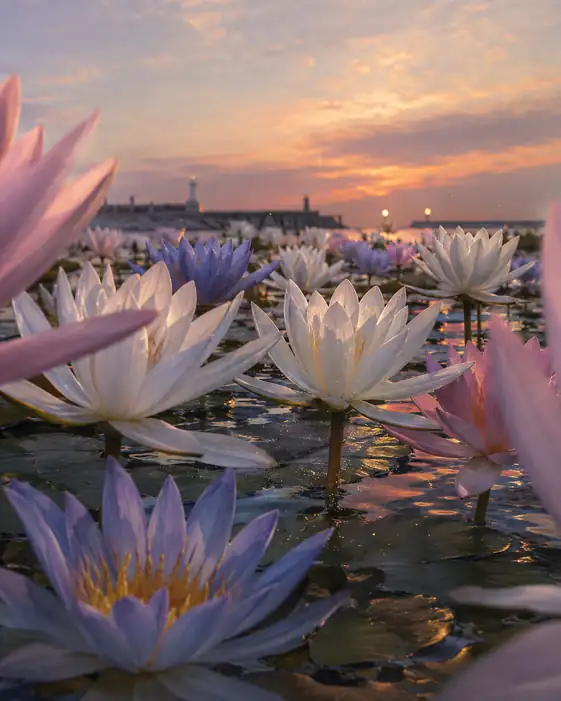 Lilies of the Twilight Harbor
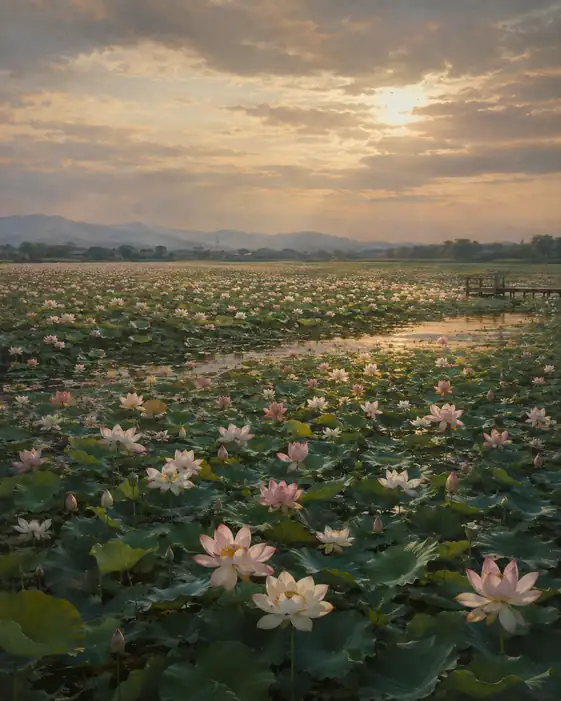 Sunset Radiance over the Vast Lotus Marsh
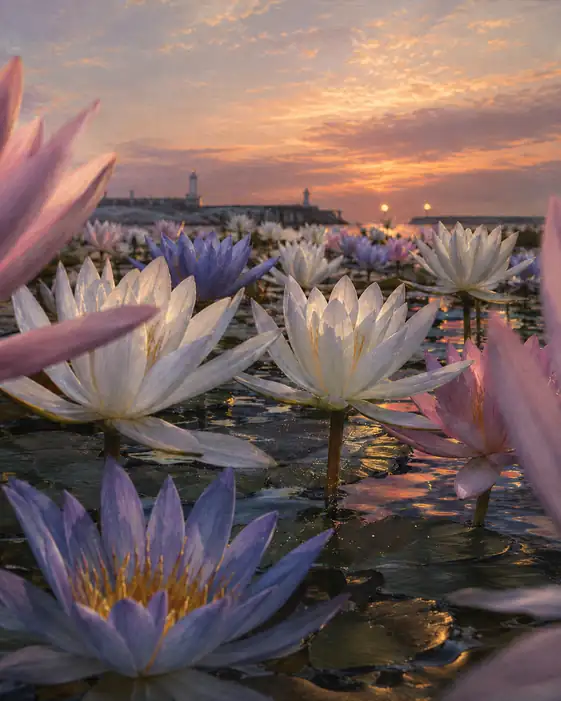 Water Lilies under the Sunset Harbor
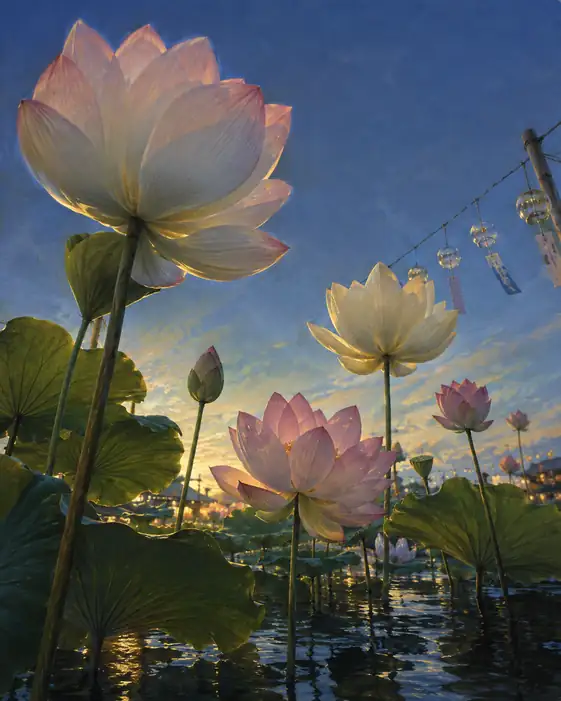 Lotus Blooms and Wind Chimes at Twilight
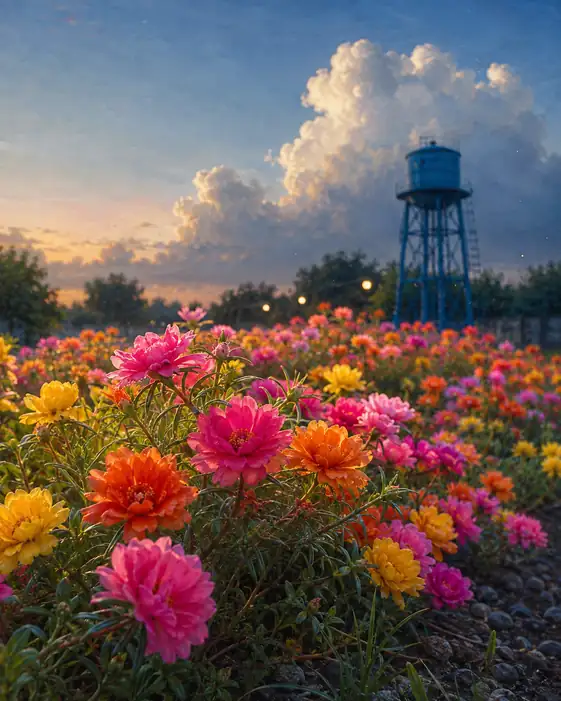 Rose Moss under the Water Tower and Cloud
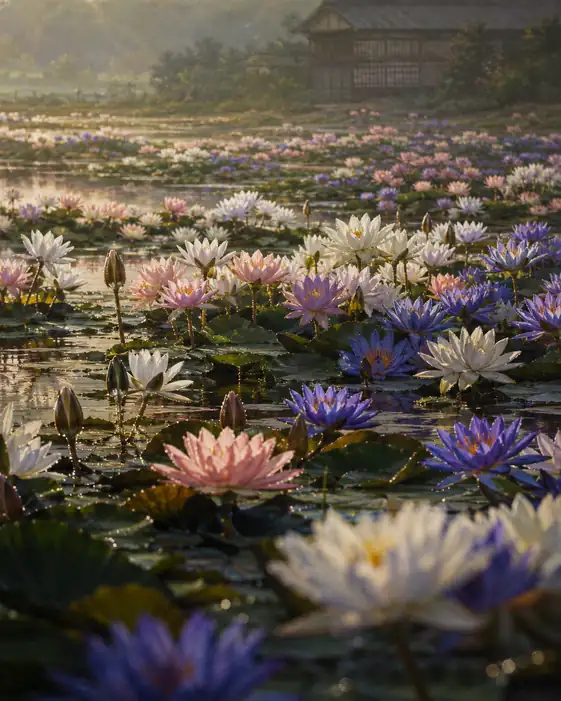 Golden Dawn over the Lily Pavilion