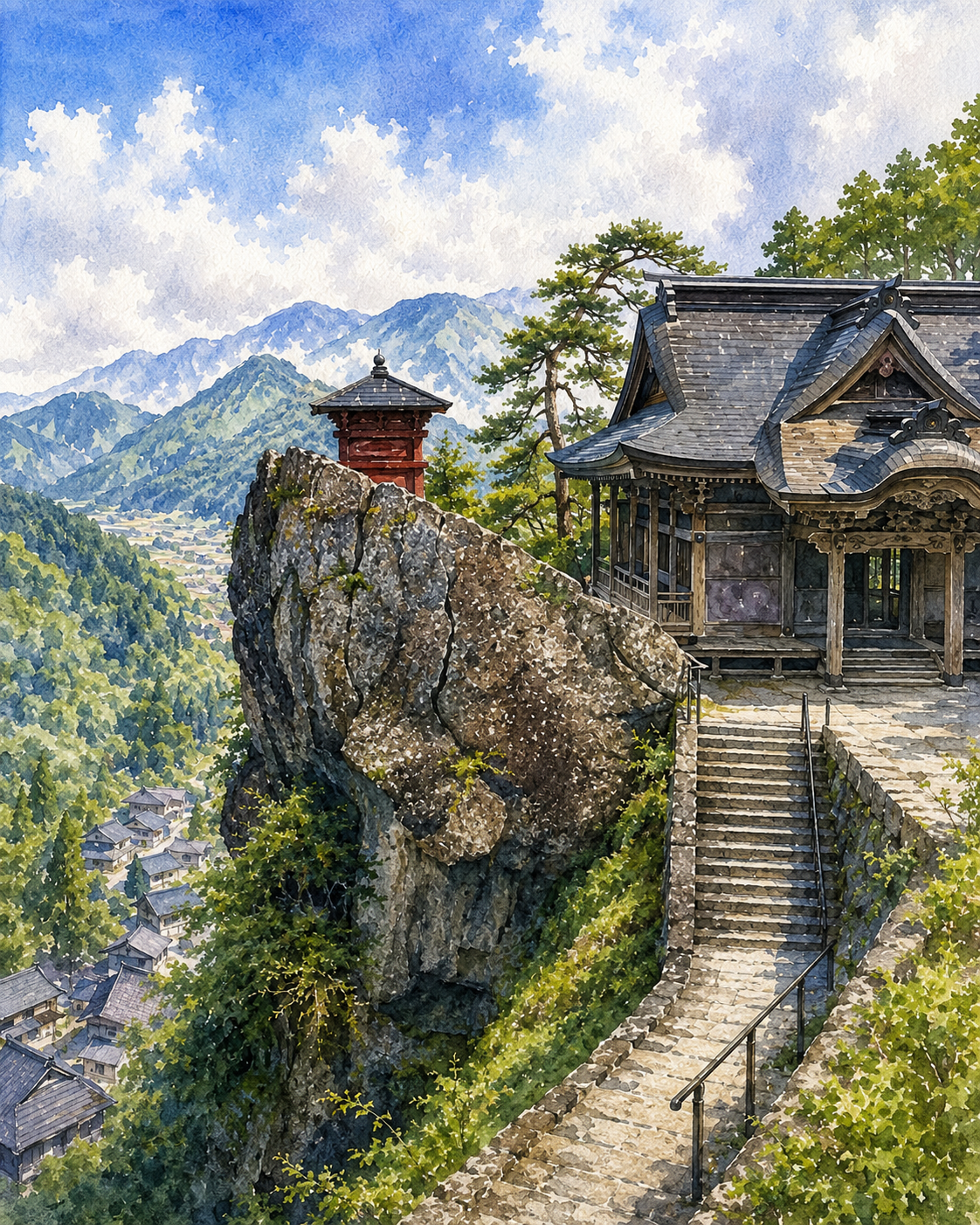
Under the Cloud, the Sacred Door
Critique
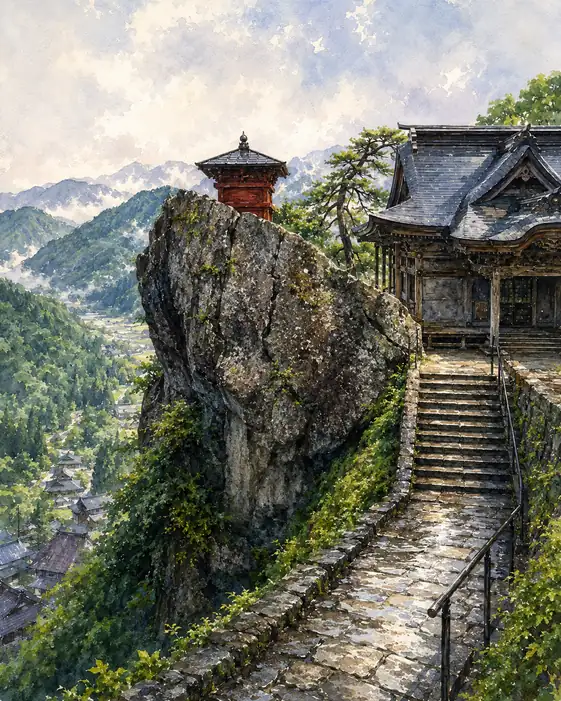
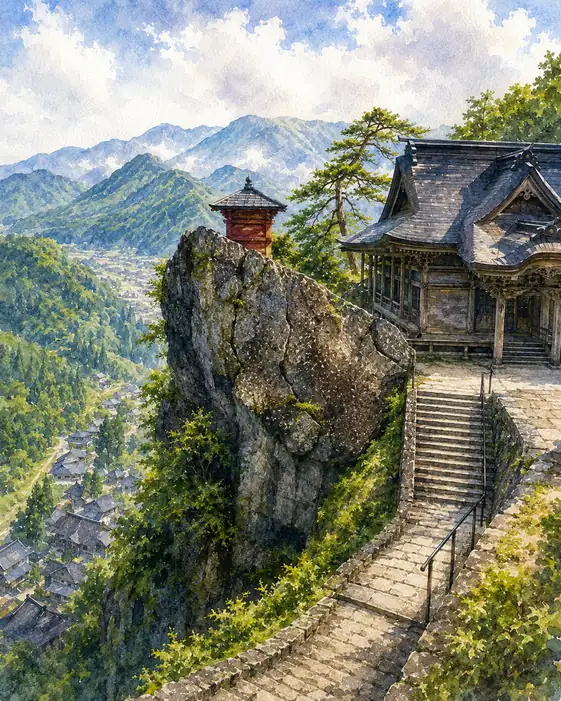
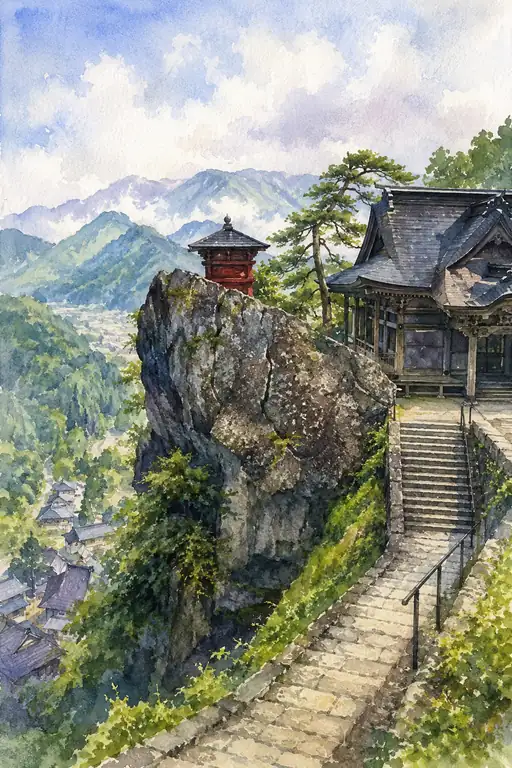
Introduction Beneath blue sky and towering cloud, a mountain hall, giant rock, and red shrine appear with unusual frontal clarity. The visible façade and stairs reveal ordered sacred space within difficult terrain. Description A gray-brown rock at left carries cracks, pale markings, and vegetation. The red shrine rises behind it. At right, the hall exposes entrance, columns, carved beams, and several curved roofs. Stairs ascend almost straight from below between black rails. Village houses appear among trees far left, backed by green peaks and blue ranges. Large white cloud fills the upper half. Analysis Hall and stairs form one axis; rock and shrine form another. Converging steps lead directly to the entrance, while the rock's slope lifts attention toward red. Bright sky receives dense detail below. Red returns vision to center, and dark tiles strengthen mountain greens. Reduced village roofs and pale ridges establish elevation. Interpretation and Evaluation The frontal hall becomes a place people enter and maintain, not mysterious scenery. Beside it, the monolith preserves geological power beyond human order. Their pairing suggests faith arising from coexistence rather than opposition. Looking over the village implies protection. Growing summer cloud contrasts with old architecture and keeps the present day moving. Conclusion Clear presentation balances religious symbol with architectural fact. Stairs promise access, while cliff and valley recall difficulty. Roof curves echo cloud, and cracks answer timber lines, joining natural and made forms. Sunlit spots give stone and tile changing time. The maintained sanctuary feels both remote and vividly alive.
Same Subcategory
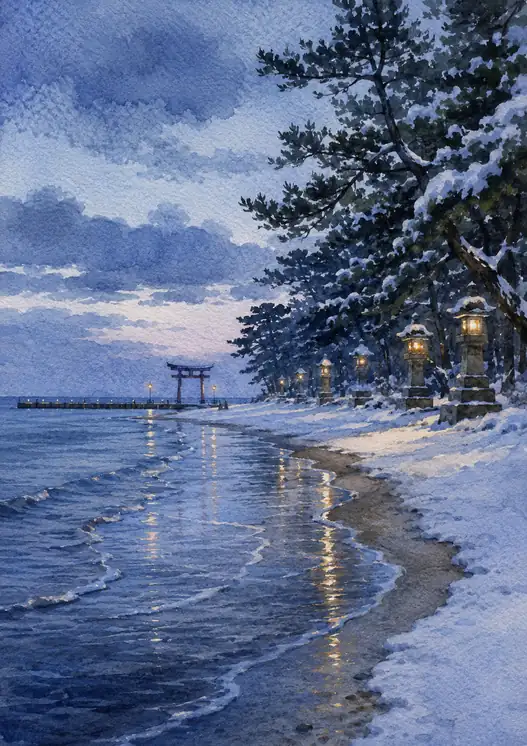 Lanterns Waiting at Winter's Edge
Similar Artworks
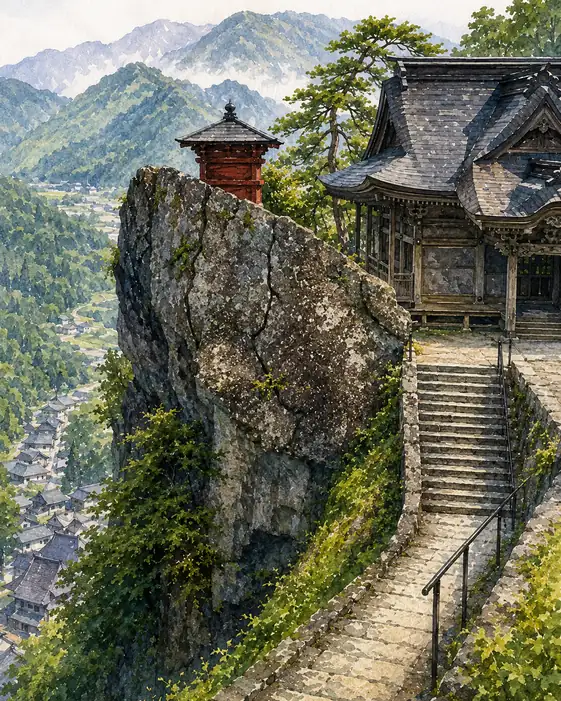 The Stone Remembers Every Ascent
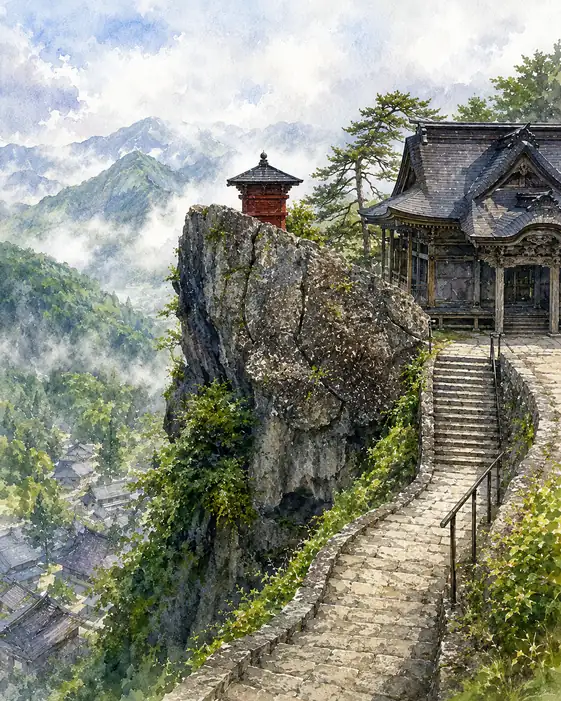 A Shrine Held Between Clouds
 A Lone Vermilion Glow on Yamadera's Cliff Edge
 The Mountain Grants a Narrow Path
 Where the Valley Learns to Pray
 Where Prayer Rests on Stone
 At the Edge Where Prayer Dwells
 The Mountain Leaves No Easy Prayer
 Every Roof Is Another Prayer
 Faith Finds a Foothold in Stone